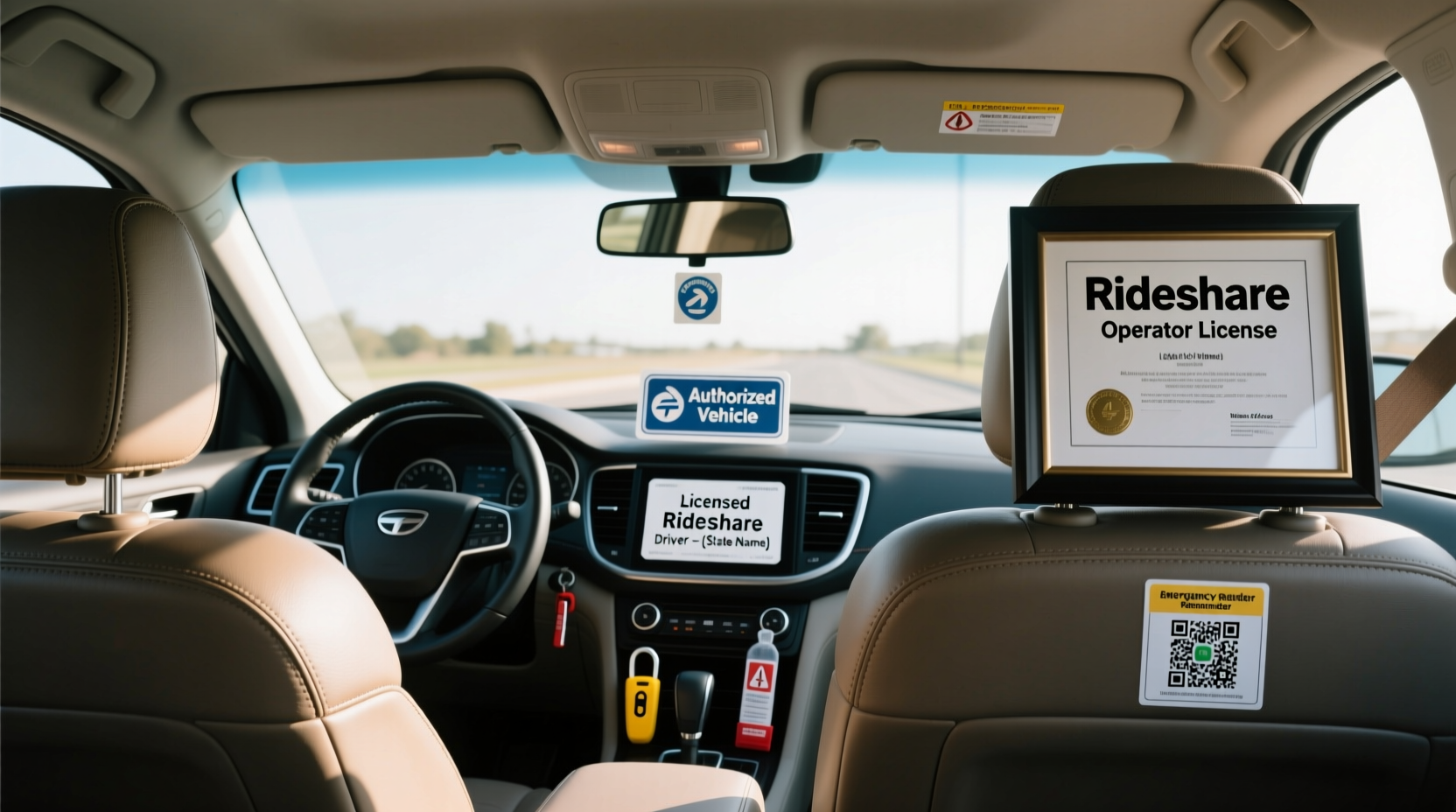
For ride-share drivers in the U.S. and Canada, rideshare vehicle interior legality requirements are not optional—they’re enforceable, jurisdiction-specific mandates tied directly to platform eligibility, insurance validity, and passenger safety compliance. As of 2024, every major city with active Uber, Lyft, or Bolt operations enforces minimum interior standards: no visible tears or exposed foam in seating, functional climate control, working seatbelts for all passengers, unobstructed floor space, and absence of strong odors or biohazards. Violations can trigger immediate deactivation—even without prior warning. This guide details exactly what qualifies as a legal rideshare interior across 12 key metropolitan areas, how to self-audit before inspection, common pitfalls that cause failed vehicle checks, and where to verify real-time, legally binding rules for your ZIP code or municipality.
Why Rideshare Interior Legality Matters—Beyond Platform Policy
Rideshare interior legality isn’t merely about satisfying Uber or Lyft’s internal vehicle standards. It intersects three legally enforceable domains: (1) state motor vehicle codes, which define occupant safety equipment requirements; (2) local transportation authority ordinances, such as NYC TLC or Chicago DTA rules governing for-hire vehicles; and (3) commercial insurance policy conditions, where failure to maintain a ‘roadworthy and passenger-appropriate’ interior may void coverage during a claim.
For example, California Vehicle Code §27150 requires all commercial passenger vehicles to provide ‘clean, safe, and sanitary conditions’—a provision courts have upheld in disputes involving mold, pet hair accumulation, or unrepaired upholstery damage. Similarly, Toronto Municipal Code Chapter 545 mandates ‘no loose debris, stains, or persistent odor’ in licensed private transportation vehicles—a standard enforced via random roadside inspections and verified through third-party audit reports.
Core Legal Requirements: What Every Interior Must Meet (U.S. & Canada)
While enforcement rigor varies by locality, five universal criteria form the baseline for rideshare interior legality:
- Seating Integrity: No rips, holes, or exposed padding on driver or passenger seats; headrests must be present and secure.
- Seatbelt Functionality: All belts must retract, latch, and lock properly—not just appear intact. Visual inspection alone is insufficient; many jurisdictions require physical testing.
- Floor & Surface Conditions: Floor mats must be secured (not loose or torn); carpeting must be free of mold, mildew, or biohazard contamination (e.g., blood, bodily fluids).
- Air Quality & Odor Control: No persistent smoke, pet, food, or chemical odors detectable upon entry. HVAC systems must deliver conditioned air to all rows.
- Interior Cleanliness: Vacuumed carpets, wiped surfaces, and sanitized high-touch points (door handles, armrests, seat controls) required between shifts in high-frequency markets like Seattle and Montreal.
Crucially, ‘clean’ is defined objectively—not subjectively. In New York City, TLC inspectors use a standardized odor assessment protocol (TLC Bulletin #2023-08) involving timed sniff tests and digital VOC meters. In contrast, Austin, TX, relies on documented cleaning logs submitted monthly via the City’s Mobility Portal.
Regional Variations: Key Differences Across Major Markets
Legality isn’t uniform—and assuming ‘what works in Atlanta works in Vancouver’ risks deactivation or fines. Below is a comparative overview of enforceable interior standards in seven high-volume jurisdictions:
| City/Region | Enforcing Authority | Key Interior Requirements | Verification Method | Penalty for Noncompliance |
|---|---|---|---|---|
| New York City | TLC (Taxi & Limousine Commission) | No visible stains >2” diameter; HVAC airflow ≥25 CFM per seat; seatbelt webbing must show no fraying | In-person inspection + VOC meter test | $250 fine + 7-day suspension per violation |
| Los Angeles | LADOT Shared Mobility Division | Child seat anchors (LATCH) required if vehicle model year ≥2003; no aftermarket seat covers obscuring airbag labels | Photo upload via LADOT portal + random field audit | Platform deactivation until re-certification |
| Chicago | DTA (Department of Transportation Administration) | Interior lighting must illuminate footwells at night; all cupholders must be functional | Annual in-person inspection + video walkthrough | $500 civil penalty + mandatory retraining |
| Toronto | Toronto Licensing & Standards | No animal hair accumulation exceeding 0.5g per 100cm² (tested via adhesive tape sampling) | Third-party certified cleaning report + photo evidence | License suspension up to 30 days |
| Miami-Dade County | MDCRide Program Office | UV-resistant window tint on rear windows only; no reflective or mirrored interior trim | Mobile app photo verification + quarterly spot check | Immediate deactivation + $125 reinstatement fee |
How to Conduct a Legally Compliant Interior Self-Audit
Proactive verification prevents reactive penalties. Follow this 12-point checklist—designed to mirror official inspection protocols:
- Photograph all seating surfaces under natural light (no flash); zoom in to detect micro-tears.
- Press firmly on each seat cushion—listen for creaks or sags indicating broken springs or collapsed foam.
- Pull each seatbelt fully out and release; confirm smooth retraction and audible ‘click’ upon latching.
- Use a white cotton glove to wipe door panels, center console, and seatbacks—check for discoloration or residue.
- Run HVAC on max fan for 60 seconds—place hand near each vent to verify consistent airflow.
- Sniff interior at three points: driver’s seat, rear left, and cargo area—with windows closed for 2 minutes prior.
- Inspect floor mats for tears, warping, or trapped debris (lift edges and examine backing).
- Verify all interior lights function—including map lights, dome light, and trunk illumination.
- Check for missing or cracked plastic trim pieces—especially around air vents and door handles.
- Confirm no personal items (e.g., gym bags, pet carriers) remain inside during inspection windows.
- Document vacuuming, wiping, and sanitizing using dated timestamps and geotagged photos.
- Cross-reference your vehicle’s VIN against local regulatory databases (e.g., NYC TLC Vehicle Search, Toronto Licensing Portal).
Tip: Save your audit log as a PDF with embedded metadata. Some cities—like Portland, OR—accept digital logs in lieu of in-person checks if submitted 72 hours pre-inspection.
Common Misconceptions About Rideshare Interior Legality
Myths persist—and they carry real consequences. Here’s what’s false—and why:
- “If my car passes Uber’s vehicle inspection, it’s legally compliant.” False. Uber’s standards are contractual, not legal. A vehicle approved by Uber may still violate municipal health codes or insurance clauses—especially regarding odor or biohazard exposure.
- “Cleaning once per week is enough.” False. In cities like San Francisco and Vancouver, drivers must demonstrate cleaning after every 4-hour shift or 3 consecutive trips—whichever occurs first.
- “Aftermarket seat covers make interiors safer.” False. Many jurisdictions prohibit non-OEM covers that obscure airbag deployment labels or interfere with seatbelt geometry. Always verify material flammability ratings (FMVSS 302 compliance required in 32 U.S. states).
- “Odor is subjective—inspectors can’t enforce it.” False. Digital VOC (volatile organic compound) meters are now standard in NYC, Boston, and Toronto. Readings above 0.3 ppm trigger automatic violation flags.
What Changes Are Coming in 2024–2025?
Regulatory frameworks are tightening—not relaxing. Three emerging trends will reshape rideshare interior legality:
- EV-Specific Interior Rules: California’s upcoming AB-2422 (effective Jan 2025) requires EV drivers to install noise-dampening floor liners to prevent cabin resonance from affecting passenger comfort—a measurable acoustic standard.
- Digital Audit Trails: The Canadian province of Ontario now mandates GPS-timestamped cleaning logs uploaded to the provincial licensing portal—retroactive verification is no longer accepted.
- Biohazard Response Protocols: Following updated CDC guidance, cities including Atlanta and Denver now require drivers to complete state-certified biohazard response training if transporting passengers with medical conditions—documented proof must be kept for 24 months.
Drivers should monitor official updates via primary sources—not forums or aggregator blogs. Reliable channels include: NYC TLC Alerts, LADOT Shared Mobility Updates, and Toronto Licensing Bulletins.
How to Verify Your Local Requirements—Step-by-Step
Don’t rely on hearsay. Use this method to obtain authoritative, current information:
- Identify your enforcing agency: Search “[Your City] for-hire vehicle regulations” or “[Your State] rideshare interior code.” Avoid .com sites—prioritize .gov, .org (official municipal), or .ca (Canadian government) domains.
- Find the latest bulletin or amendment: Look for publication dates within the last 90 days. If the page lacks a date, contact the agency directly via phone or online form.
- Check for vehicle class specificity: Rules differ for sedans vs. SUVs vs. wheelchair-accessible vehicles (WAVs). Confirm your classification matches cited requirements.
- Request written confirmation: Email the agency with your VIN and license plate; ask, “Does my vehicle meet all interior legality requirements under [Code Section] as of [today’s date]?” Keep the reply for your records.
- Re-validate quarterly: Regulations change—especially after incidents or audits. Set calendar reminders to repeat this process every 90 days.
Frequently Asked Questions (FAQ)
- Do child safety seats affect interior legality?
- Yes—if installed permanently or semi-permanently. Most jurisdictions require LATCH anchor visibility and certification documentation. Removable seats pose no issue unless left unsecured during non-child trips.
- Can I use air fresheners to mask odors?
- No. Synthetic fragrances often elevate VOC readings and may trigger violations. Only EPA Safer Choice–certified enzymatic cleaners are permitted in regulated markets like Boston and Toronto.
- What if my car has leather seats with minor cracking?
- Cracking >1mm deep or exposing substrate violates seating integrity rules in 9 of 12 major U.S. cities. Professional reconditioning—not dye or filler—is required for compliance.
- Are smoking bans enforced inside rideshare vehicles?
- Yes—and strictly. In California, Colorado, and Ontario, interior smoking constitutes a Class B misdemeanor with fines up to $1,000 and license revocation. Vaping is included under these statutes.
- Do service animals impact interior legality?
- No—provided the animal is trained, under control, and does not cause damage or hygiene issues. Drivers cannot refuse service, but may request documentation if behavior raises legitimate safety concerns.





 浙公网安备
33010002000092号
浙公网安备
33010002000092号 浙B2-20120091-4