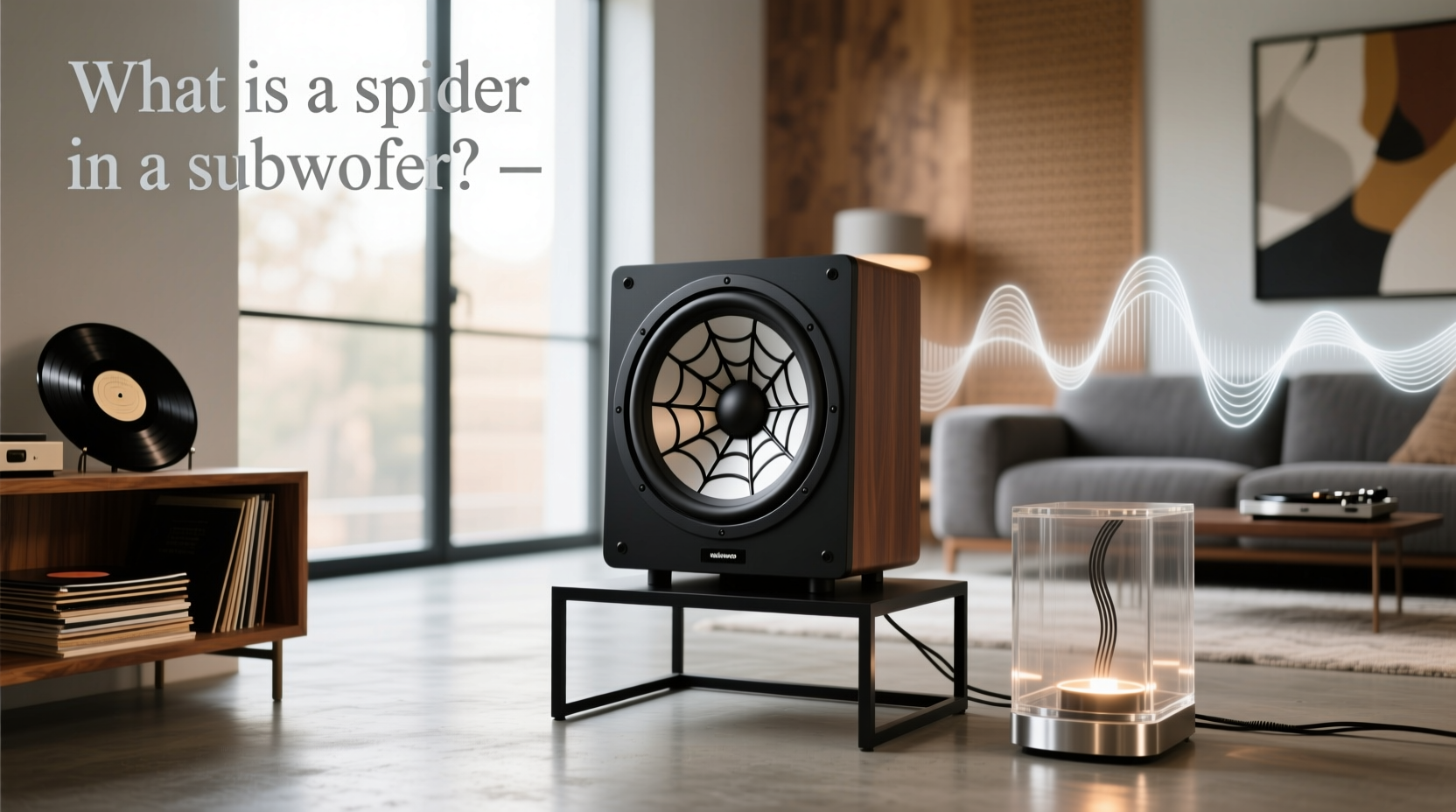
If you're repairing or upgrading a subwoofer, knowing what to look for in a replacement spider saves time and prevents misalignment issues. The spider is the corrugated fabric suspension connecting the voice coil to the basket, keeping the coil centered during movement. For typical users, matching size (diameter), roll type (linear vs. progressive), and stiffness to the original spec is enough. Over-engineering with double spiders or exotic materials rarely improves sound unless you're pushing extreme power or SPL competitions. If you’re a typical user, you don’t need to overthink this.
About the Spider in a Subwoofer
A subwoofer’s spider is a critical mechanical component made of durable, heat-resistant fabric—often Nomex or treated cotton—with concentric ridges that allow controlled flexing. It anchors the voice coil to the speaker frame (basket) while letting the cone move up and down. Its primary job is centering: ensuring the voice coil remains perfectly aligned within the narrow magnetic gap during excursion. Without it, the coil could rub against the pole piece, causing distortion, overheating, or permanent damage.
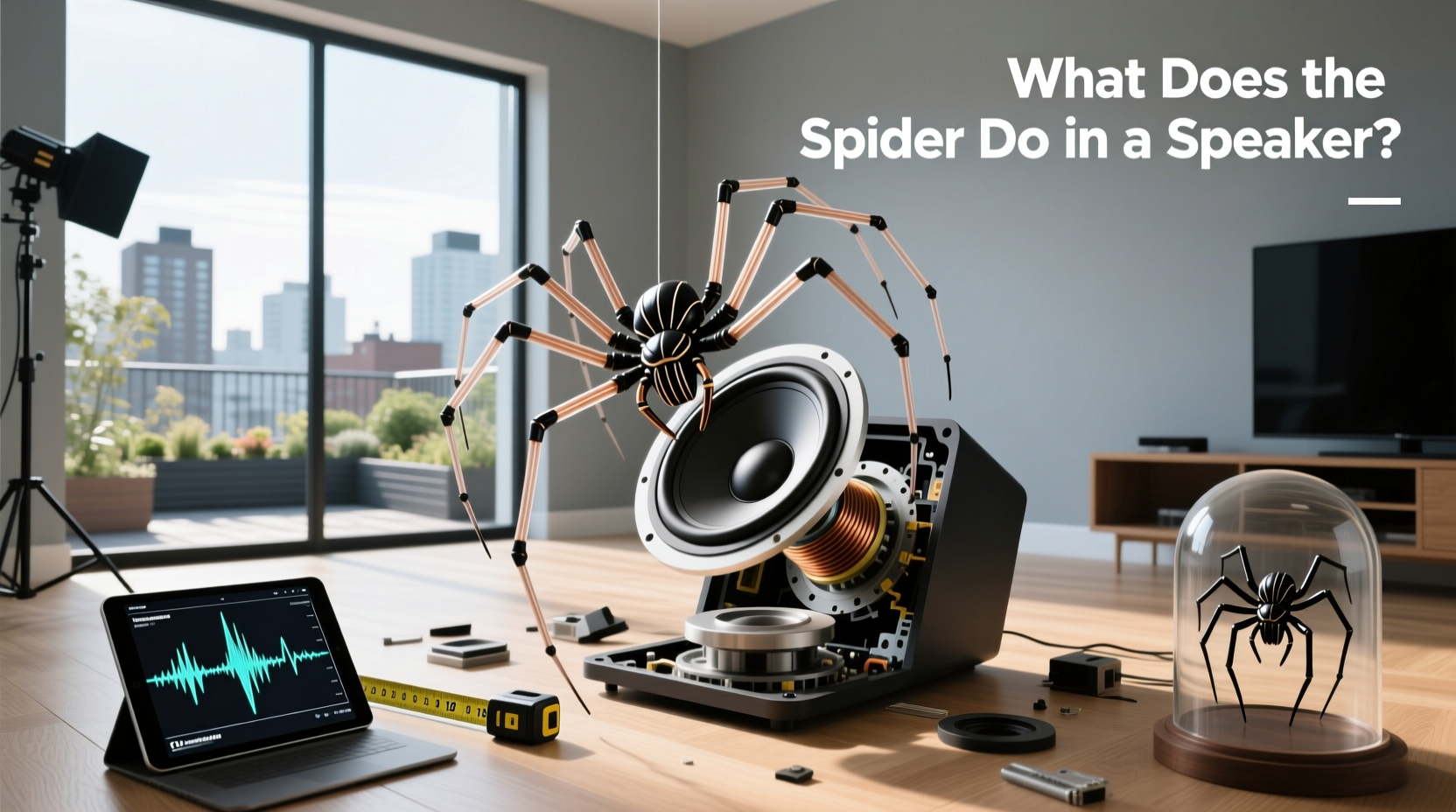
The spider also acts as a spring, providing restoring force that returns the cone to rest after movement. This compliance affects how freely the cone moves, influencing bass response, efficiency, and power handling. Stiffer spiders resist deeper excursions but offer tighter control; looser ones allow more movement but require precise alignment. Manufacturers tune the spider along with the surround and voice coil to achieve specific performance goals—like deep extension, high output, or accuracy.
Why the Subwoofer Spider Is Gaining Popularity
Lately, interest in subwoofer spiders has grown among DIY audio enthusiasts and repair-focused buyers. Over the past year, search volume for terms like "replace subwoofer spider" and "spider rebuild kit" has increased steadily, reflecting a broader trend toward speaker restoration rather than replacement. As new subwoofers become harder to source in some regions due to supply chain shifts, repairing damaged units offers a cost-effective alternative.
This change signal isn't about innovation—it's about accessibility. More vendors now offer individual components like spiders online, especially through niche car audio suppliers and direct-to-consumer brands. Platforms like Reddit and YouTube host active communities sharing teardowns and rebuilds 1, making once-obscure repairs common knowledge. If you’re a typical user, you don’t need to overthink this.
Types and Variants
Spiders vary by shape, material, and configuration—each affecting performance differently.
Linear Roll Spiders
- Pros: Consistent restoring force across motion range; ideal for accurate, linear bass reproduction.
- Cons: Limited maximum excursion compared to progressive types; less suited for high-SPL applications.
- Best for: Home theater subs where clarity matters more than raw volume.
Progressive Roll Spiders
- Pros: Softer initial resistance allows greater cone travel; stiffens progressively at outer limits, protecting the coil.
- Cons: Can introduce subtle nonlinearity in low-frequency response.
- Best for: Car audio or competition systems needing high Xmax (maximum linear excursion).
Double Spiders
- Pros: Two layers provide enhanced stability and linearity during extreme excursions; reduce risk of coil tilt.
- Cons: Increase moving mass slightly, potentially reducing sensitivity; require exact alignment during installation.
- Best for: High-power setups where reliability under stress is critical.
If you’re a typical user, you don’t need to overthink this. Matching the original design usually yields better results than upgrading.
Key Features and Specifications to Evaluate
When selecting a replacement spider, focus only on parameters that affect fit and function.
Diameter
When it’s worth caring about: Must match the basket and voice coil diameter exactly (e.g., 8", 10", 12"). Even small mismatches prevent proper mounting.
When you don’t need to overthink it: If replacing like-for-like using manufacturer part numbers.
Roll Type
When it’s worth caring about: Switching from linear to progressive changes suspension behavior and may alter tuning.
When you don’t need to overthink it: Replacing with the same type as original.
Stiffness (Compliance)
When it’s worth caring about: In custom builds where Thiele/Small parameters matter for enclosure tuning.
When you don’t need to overthink it: General repairs—stick with OEM specs.
Material
When it’s worth caring about: Heat resistance matters in high-power scenarios; Nomex handles thermal stress better than cotton-based fabrics.
When you don’t need to overthink it: Standard home or car audio use with moderate power levels.
Pros and Cons
| Aspect | Advantages | Drawbacks |
|---|---|---|
| Replacement Availability | Enables repair instead of full driver replacement | Requires technical skill; not plug-and-play |
| Cost Efficiency | Often 30–60% cheaper than new subwoofer | Savings depend on labor/time investment |
| Performance Tuning | Potential to modify Xmax or damping characteristics | Rarely improves stock system without full recalibration |
| Compatibility | Exact OEM matches preserve original performance | Aftermarket variants may have subtle fit issues |
This piece isn’t for keyword collectors. It’s for people who will actually use the product.
How to Choose a Subwoofer Spider
Selecting the right spider comes down to practical compatibility—not theoretical performance gains. Follow these steps.
Step-by-Step Checklist
- Identify your subwoofer model and manufacturer.
- Locate the original spider dimensions (diameter, height, mounting style).
- Determine roll type (linear or progressive) by visual inspection or datasheet.
- Check material if operating under high heat/load conditions.
- Source from reputable supplier with clear specifications.
- Verify return policy before purchase.
Decision Flow
- If repairing a blown sub: Match original specs exactly → prioritize availability.
- If modifying for higher output: Consider progressive or double spider → ensure enclosure can handle increased excursion.
- If maintaining factory sound: Stick with OEM-equivalent → avoid unverified upgrades.
Recommendations by Scenario
- Home Theater Use: Linear roll, standard stiffness, OEM size.
- Car Audio Daily Driver: Progressive roll for added excursion headroom.
- SPL Competitions: Double spider setup with heat-resistant material.
Red Flags / What to Avoid
- Generic “universal fit” claims without exact measurements.
- Vendors listing only diameter but omitting roll type or thickness.
- Products lacking clear photos or material descriptions.
- Deviating from known-good designs without testing capability.
If you’re a typical user, you don’t need to overthink this. Most performance differences are negligible outside specialized use cases.
Price & Market Insights
Spider prices vary significantly based on size, brand, and complexity. Basic 10-inch linear spiders may cost $15–$25, while double or custom-profile units can reach $40–$60. Prices may vary by region/model/seller, especially when sourced internationally. Premium materials like Nomex add 20–30% to base cost. Note that kits often include adhesives and alignment tools, improving success rate for first-time rebuilders.
There’s no standardized pricing tier across manufacturers. Some boutique suppliers charge more for hand-tested units, while others compete on volume. Always check manufacturer specs and compare actual dimensions—not just nominal size—before purchasing.
Top-Seller & Competitive Analysis
Several brands dominate the aftermarket spider market, focusing on reliability and precision fitment.
| Brand | Specialty | Price Range | Notable Feature |
|---|---|---|---|
| PSI C.A.R.A. | Custom and OEM replacements | $18–$50 | Detailed fit guides per model |
| The Lord of Bass | High-excursion performance | $25–$55 | Focused on SQL/car audio builds |
| EMAUDIO | Broad inventory, global shipping | $15–$45 | Included repair accessories |
| eBay Generic | Budget options | $10–$20 | Limited documentation; mixed reviews |
While all offer functional products, verified fitment data separates reliable choices from risky bets. PSI and The Lord of Bass publish detailed cross-references, reducing mismatch errors. EMAUDIO emphasizes ease of use for beginners. Generic sellers may vary by region/model/seller and lack consistency.
Customer Feedback Synthesis
Analysis of community discussions reveals consistent patterns.
Common Praises
- “Saved me $100+ by avoiding a full replacement.”
- “Precise fit—glued right in without adjustments.”
- “Noticeable improvement in tightness after replacing a worn spider.”
Frequent Complaints
- “Ordered ‘compatible’ but hole pattern didn’t match.”
- “No instructions or adhesive included.”
- “Too stiff—changed the sound character unexpectedly.”
Most negative experiences stem from incomplete specs or poor verification. Buyers who double-checked dimensions reported higher satisfaction. If you’re a typical user, you don’t need to overthink this—as long as you verify fit first.
Sourcing & Supplier Tips
Buy from suppliers who list full technical details: outer diameter, inner diameter, height, roll count, material, and compatible models. Direct-from-manufacturer sites (like PSI or The Lord of Bass) tend to be more transparent than third-party marketplaces. Look for vendors offering downloadable spec sheets or customer support for fit confirmation.
Consider sourcing kits that include glue, centering tools, and burn-in instructions. These reduce failure risk during reassembly. Verify retailer return policy—if specs were inaccurate, you should be able to send it back. Check manufacturer specs directly when possible.
Maintenance, Safety & Legal Considerations
Spiders degrade slowly over time due to heat, humidity, and mechanical fatigue. There’s no routine maintenance required, but inspect them during any cone service. A torn or deformed spider must be replaced to prevent further damage.
Safety-wise, always disconnect power before working inside an active subwoofer. When rebuilding, ensure the voice coil moves freely without rubbing post-installation. Test at low volume first.
No legal restrictions govern spider replacement. However, modified drivers used commercially (e.g., in paid events) may void equipment warranties. Confirm local regulations if deploying in public venues.
Conclusion
If you need to restore a damaged subwoofer and maintain its original performance, choose a replacement spider that matches the OEM design in size, roll type, and stiffness. If you’re building for extreme output and have alignment tools, consider a progressive or double spider. Otherwise, stick with proven equivalents. If you’re a typical user, you don’t need to overthink this.
Everything You Need to Know
What does the spider do in a subwoofer?
The spider centers the voice coil within the magnetic gap while allowing controlled cone movement. It acts as a suspension spring, returning the cone to rest and preventing misalignment that could cause rubbing or distortion.
Can I replace a subwoofer spider myself?
Yes, but it requires precision and patience. You'll need tools for disassembly, adhesive, and a way to center the voice coil during reattachment. Success depends on matching the new spider exactly to the original and following proper repair procedures.
Does a stiffer spider improve bass quality?
Not necessarily. Stiffer spiders increase control and reduce excursion, which can tighten bass but limit depth. Softer spiders allow more movement but require good alignment. The best choice matches the system’s intended use and enclosure design.
Are all spiders interchangeable between subwoofers?
No. Spiders must match in diameter, roll type, thickness, and mounting configuration. Even within the same inch size (e.g., 12”), designs differ between models. Always verify compatibility before purchasing.
Where can I buy genuine replacement spiders?
Reputable sources include specialized audio parts suppliers like PSI C.A.R.A., The Lord of Bass, and EMAUDIO. Some manufacturers sell directly. Always check product descriptions for detailed specs and compatibility lists.





 浙公网安备
33010002000092号
浙公网安备
33010002000092号 浙B2-20120091-4