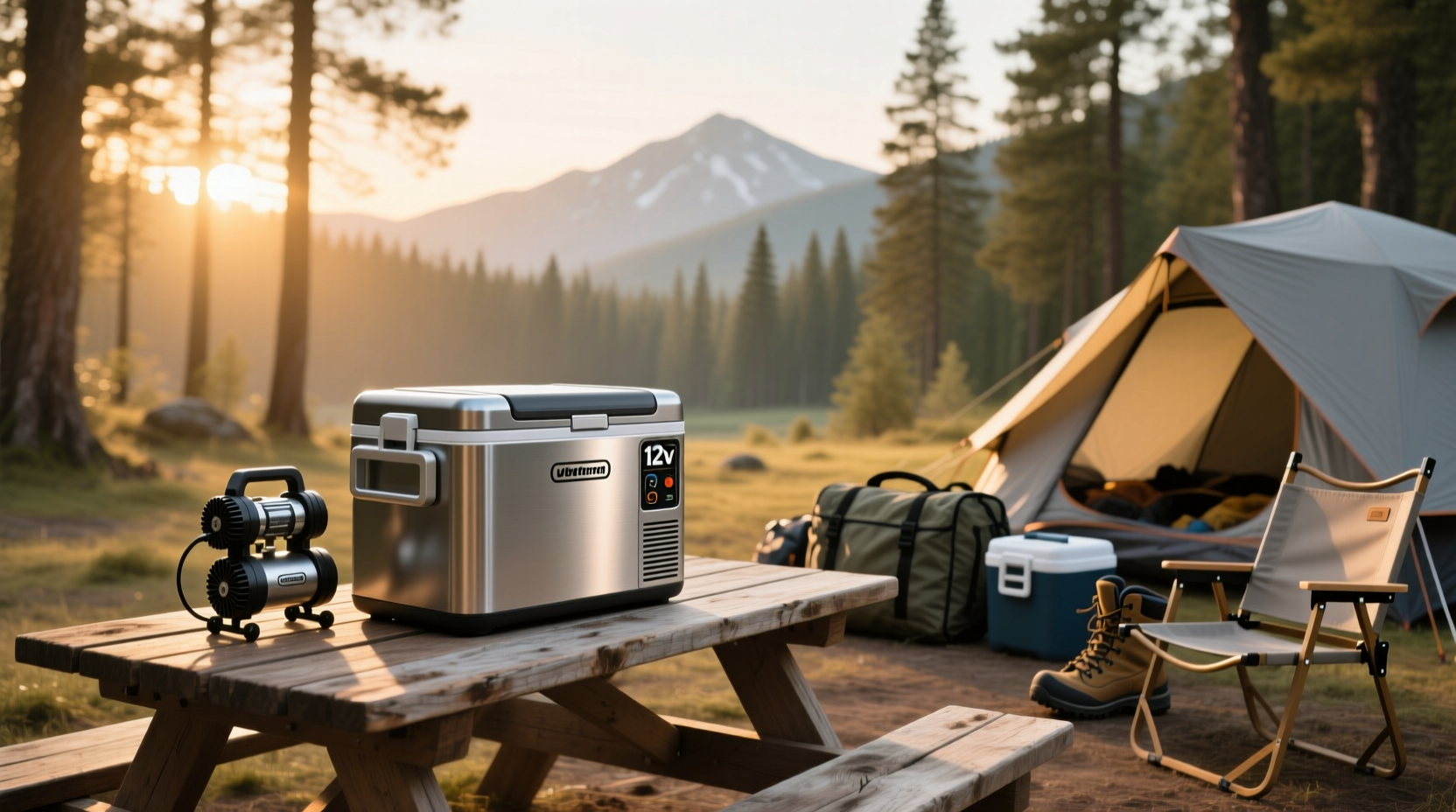
✅ If you're searching for reliable cooling on the road, a 12V compressor fridge is one of the most efficient solutions for off-grid adventures, van life, or extended camping trips. Unlike traditional absorption fridges or basic thermoelectric coolers, these units use advanced compressor technology powered directly from a 12-volt DC battery system—making them ideal for cars, RVs, boats, and solar setups. They maintain consistent temperatures, can freeze items, and operate efficiently even in high ambient heat. Understanding how they work, what size fits your needs, and how to power them safely is essential before investing.
How Does a 12V Compressor Fridge Work?
A 12V compressor fridge operates using a vapor-compression refrigeration cycle similar to household refrigerators but designed to run on low-voltage DC power. The core component is a brushless DC compressor that circulates refrigerant through an evaporator, condenser, and expansion valve. When electricity flows (from a vehicle battery or auxiliary power source), the compressor pressurizes the refrigerant, causing it to release heat outside the unit while absorbing heat from inside—cooling the interior chamber.
This process allows the fridge to reach sub-zero temperatures, typically down to -20°C (-4°F), enabling true freezing capability. Most models include digital thermostats, allowing users to set precise temperature controls for fridge or freezer modes. Advanced versions offer dual-zone compartments, Wi-Fi monitoring, and energy-saving algorithms that adapt cooling cycles based on usage patterns and external conditions ⚙️.
Why Choose a Compressor Over Other Cooling Types?
When comparing portable cooling options, three main technologies exist: absorption, thermoelectric (Peltier), and compressor-based systems. Each has distinct advantages and limitations:
- Thermoelectric Coolers: These rely on the Peltier effect to transfer heat and are inexpensive and quiet. However, they only cool about 15–20°C below ambient temperature, cannot freeze, and consume more power per liter of capacity than compressors ❗.
- Absorption Fridges: Often found in older caravans, these use heat (from gas, 12V, or 230V) to drive the refrigeration cycle. While they operate quietly, they are less efficient, take longer to cool, and must remain level to function properly. They also pose safety concerns due to ammonia-based coolants 🌐.
- Compressor Fridges: Offer superior cooling performance, faster cooldown times, better energy efficiency, and full freezing capability regardless of orientation. Their main trade-off is higher initial cost and slight operational noise during compressor cycling ✨.
For anyone needing dependable refrigeration in mobile environments—especially where food safety, long-term storage, or medical supplies are involved—a 12V compressor fridge is the optimal choice.
Key Applications and Use Cases
These fridges are engineered for versatility across various off-grid and mobile scenarios:
Campervans & Motorhomes 🚐
In self-contained living vehicles, a 12V compressor fridge runs off the leisure battery without requiring shore power or propane. Modern installations integrate with solar charge controllers and battery monitors to ensure sustainable operation. Many campervan builders now standardize on compressor units due to their reliability and compatibility with lithium battery banks 🔋.
Overlanding & Off-Road Adventures 🌍
Durable models withstand vibration, dust, and extreme temperatures. Ruggedized casings, shock-absorbing mounts, and IP-rated electronics protect against harsh terrain. Users often pair them with dual-battery systems so engine cranking power isn’t drained by fridge operation 🚘.
Marine Environments ⛵
Boats benefit greatly from 12/24V compatible compressor fridges that resist corrosion and perform well in humid, salty air. Some marine-specific models feature stainless steel exteriors and anti-sway mechanisms to prevent coolant line damage during rough seas.
Solar-Powered Setups ☀️
Because compressor fridges draw relatively low average current (typically 2–5 Ah/hour depending on size and insulation), they integrate seamlessly into solar-charged systems. A 50Ah lithium battery paired with a 100W solar panel can sustain a mid-sized unit for 24–48 hours without additional charging, assuming moderate door openings and ambient temperatures below 30°C.
Power Requirements and Electrical Setup
Understanding power consumption is critical to avoid draining your vehicle’s starting battery. Here’s what you need to know:
Voltage Compatibility ⚡
Most 12V compressor fridges actually support a wide input range—commonly 10–30V DC—to accommodate both 12V and 24V systems. This makes them suitable for trucks, commercial vans, and larger RVs with dual-battery configurations. Always verify voltage tolerance in product specifications before connecting.
Current Draw and Battery Life
While peak startup current may briefly spike to 5–7 amps, average draw is much lower because the compressor cycles on and off. For example:
| Fridge Size (L) | Average Current Draw (Amps/hour) | Estimated Runtime on 100Ah Lead-Acid (50% DoD) | Runtime on 100Ah Lithium (90% DoD) |
|---|---|---|---|
| 25 L | 2.5 Ah | ~20 hours | ~36 hours |
| 40 L | 3.8 Ah | ~13 hours | ~24 hours |
| 60 L | 5.0 Ah | ~10 hours | ~18 hours |
Note: Deep-cycle lead-acid batteries should not be discharged beyond 50% to extend lifespan, whereas lithium iron phosphate (LiFePO4) batteries tolerate up to 90% depth of discharge safely.
Wiring and Circuit Protection
Proper installation requires fused power leads connected directly to the battery (not cigarette sockets, which overheat). Use copper wire gauges appropriate for the distance and expected load—for runs under 3 meters, 4 AWG is typical. Install an inline fuse within 30 cm of the battery terminal rated at 20–30A depending on manufacturer specs 🔧.
Selecting the Right Size and Features
Choosing the correct capacity depends on trip duration, number of users, and available space:
- Up to 30L: Ideal for solo travelers or weekend trips; fits under seats or in small cabinets.
- 30–50L: Best for couples or families on week-long outings; accommodates fresh produce, meats, and drinks.
- 50L+: Suited for full-time van lifers or large groups; often includes separate freezer zones.
Additional features to consider:
- Dual-Zone Models: Allow independent temperature control between fridge and freezer compartments.
- Digital Displays: Provide real-time temp feedback and battery voltage monitoring.
- Wi-Fi/App Control: Enables remote adjustments via smartphone (useful when pre-cooling before arrival).
- Auto-Reconnect After Power Loss: Resumes settings after brief disconnections.
- Insulation Quality: Look for thick polyurethane foam walls (>40mm) to minimize heat ingress.
Installation Tips and Best Practices
Maximize efficiency and longevity with proper setup:
- Ventilation: Leave at least 10 cm clearance around vents (especially rear/bottom) to allow heat dissipation.
- Level Placement: Though not required like absorption units, operating level improves compressor longevity.
- Pre-Cool Before Travel: Chill contents and interior overnight using AC power if available.
- Minimize Door Openings: Organize items for quick access; keep frequently used goods near the top.
- Use Reflective Covers: Reduce solar gain when parked in direct sunlight.
Common Misconceptions About 12V Compressor Fridges
Despite growing popularity, several myths persist:
- Myth: They Drain Your Car Battery Instantly.
Reality: With proper wiring and a secondary battery bank, runtime can exceed multiple days. Smart setups include voltage cutoffs (e.g., disconnect at 11.8V for lead-acid) to preserve starting ability. - Myth: They’re Too Noisy for Sleeping Areas.
Modern brushless compressors produce around 40–45 dB—comparable to a quiet library—and only run intermittently. - Myth: Only Works When Engine Is Running.
They operate whenever connected to a charged battery, whether engine-on or off, as long as voltage remains stable.
Environmental and Climate Considerations
Ambient temperature significantly affects performance. In hot climates (>35°C), cooling efficiency drops, increasing duty cycle and power draw. High-end models compensate with adaptive algorithms that optimize compressor speed. Units rated IPX5 or higher resist moisture ingress, crucial in tropical or coastal regions.
From an environmental standpoint, many newer fridges use eco-friendly refrigerants like R134a or R600a (isobutane), which have lower global warming potential than older halogenated gases 1. Additionally, their compatibility with renewable energy reduces reliance on fossil fuels.
Maintenance and Long-Term Reliability
Compressor fridges require minimal maintenance but benefit from periodic checks:
- Clean condenser coils every 6 months to remove dust buildup.
- Inspect seals annually for cracks or warping that could compromise insulation.
- Store unplugged and dry during prolonged non-use to prevent mold.
- Avoid overloading shelves, which restricts airflow and increases strain on the compressor.
Lifespan averages 10–15 years with proper care—significantly longer than thermoelectric units. Manufacturers typically offer 3–5 year warranties, reflecting confidence in durability.
Alternatives and Hybrid Options
Some users opt for hybrid fridges that accept multiple power sources:
- 12V/24V/230V Models: Switch automatically between DC and AC inputs, useful when switching between driving and shore power.
- DC + Solar-Ready Controllers: Integrate with MPPT chargers to prioritize solar input and monitor energy flow.
- Portable vs Fixed Installation: Portable units offer flexibility but may lack mounting hardware; built-in models provide seamless integration but require permanent modification.
Cost vs Value Analysis
Initial prices range from £200 for compact 20L units to over £1,000 for premium dual-zone 80L models. While cheaper alternatives exist, long-term value comes from energy efficiency, reliability, and reduced spoilage risk. Investing in a quality compressor fridge often pays off through fewer battery upgrades, less fuel consumption (no need to idle engine), and greater comfort during extended trips.
Final Recommendations
Before purchasing, assess your actual needs:
- Evaluate daily power availability (solar, alternator recharge, shore power).
- Measure installation space including ventilation gaps.
- Determine whether single or dual-zone cooling is necessary.
- Confirm compatibility with existing electrical architecture (battery type, fuse box, cabling).
A well-chosen 12V compressor fridge enhances safety, convenience, and enjoyment in any mobile lifestyle. Prioritize build quality, energy rating, and user reviews over brand names or flashy features.
Frequently Asked Questions
- Can I run a 12V compressor fridge from my car’s starter battery?
- It's not recommended for prolonged use. Doing so risks depleting the battery and leaving you unable to start the engine. Use a dedicated deep-cycle or lithium auxiliary battery instead.
- Do 12V compressor fridges work when the car is turned off?
- Yes, as long as they're connected to a charged battery. However, always use a dual-battery system or voltage-sensitive relay to prevent excessive drain on the starter battery.
- How long will a 12V compressor fridge run on a battery?
- Runtime depends on fridge size, ambient temperature, and battery capacity. A 40L unit draws ~3.8Ah/hour; on a 100Ah lithium battery (at 90% DoD), this provides roughly 24 hours of mixed-use operation.
- Are 12V compressor fridges safe for off-grid solar systems?
- Yes, especially when paired with LiFePO4 batteries and MPPT solar controllers. Their consistent power draw and efficiency make them among the most solar-compatible appliances available.
- Can I install a 12V compressor fridge myself?
- Yes, if you have basic electrical skills. Follow manufacturer wiring guidelines, use proper gauge cables, add fuses close to the battery, and ensure adequate ventilation. Consult a certified auto-electrician if unsure.





 浙公网安备
33010002000092号
浙公网安备
33010002000092号 浙B2-20120091-4