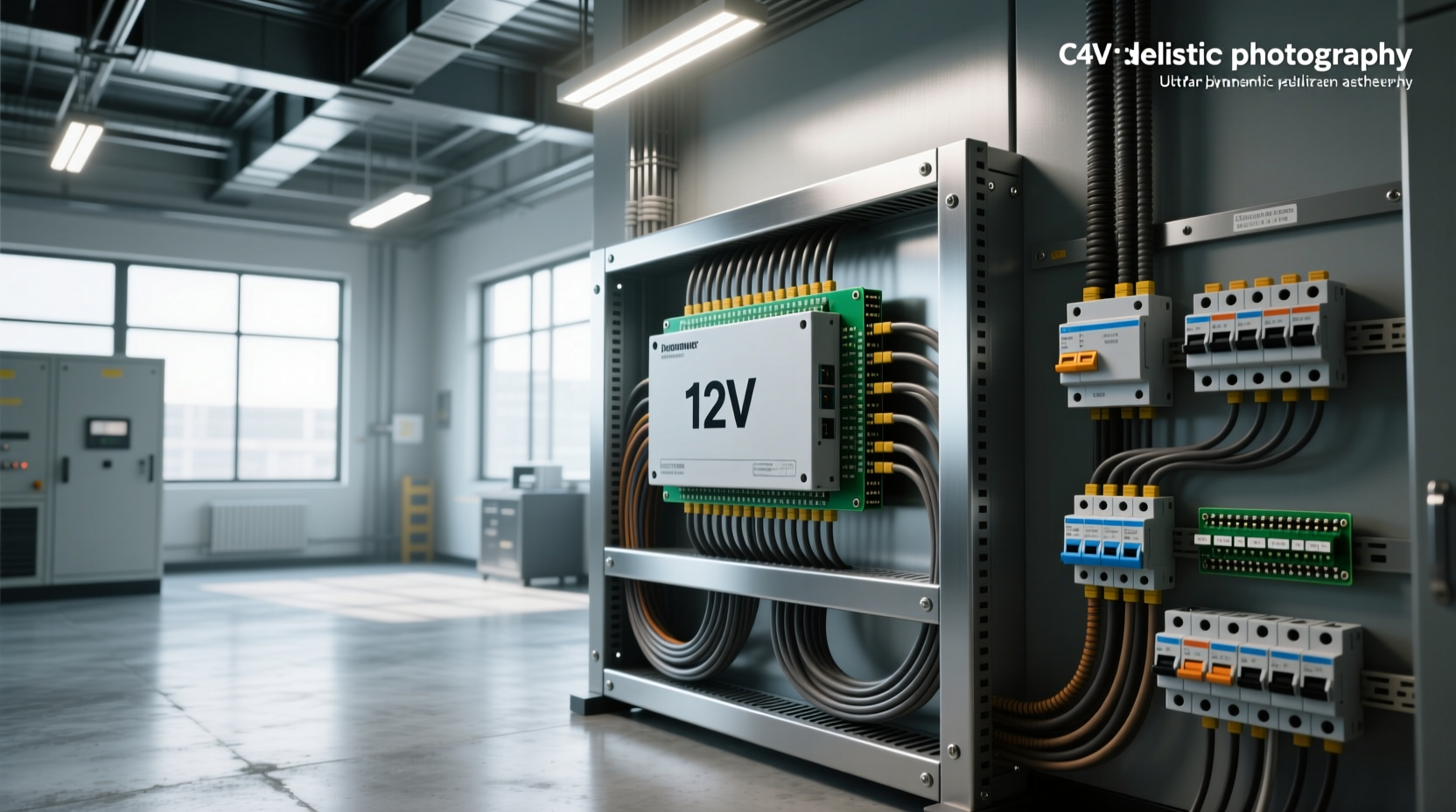
When upgrading or building a custom vehicle electrical system, one of the most impactful components you can install is a 12V power distribution module (PDM). Unlike traditional fuse boxes and relay clusters, a modern PDM uses solid-state switching to distribute power more efficiently, reduce wiring complexity, and enhance diagnostic capabilities ⚡. Whether you're modifying a daily driver, building a race car, or designing an off-road rig, understanding how a 12V power distribution module works—and when to use one—is essential for reliable electrical performance.
What Exactly Is a 12V Power Distribution Module?
A power distribution module (PDM) is an electronic control unit that manages and routes 12-volt electrical power to various systems in a vehicle. Instead of relying on physical fuses and electromechanical relays, many PDMs use semiconductor switches (like MOSFETs) controlled by microprocessors. This allows for precise timing, remote activation, current monitoring, and even fault detection.
In essence, a 12V PDM acts as a centralized hub that replaces multiple discrete components—fuses, relays, junction blocks, and sometimes even switch panels—into a single compact unit ✅. It receives input from ignition sources, switches, or control modules and delivers power to loads such as fuel pumps, cooling fans, lights, ECUs, winches, and audio systems.
How Does a 12V Power Distribution Module Work?
The internal operation of a PDM revolves around three core functions: input sensing, logic processing, and output switching ⚙️.
- Input Sensing: The PDM monitors low-current trigger signals from dash switches, engine control units (ECUs), or sensors. These signals tell the module which circuits should be activated.
- Logic Processing: An onboard microcontroller evaluates these inputs based on pre-programmed rules (such as time delays, interlocks, or safety thresholds).
- Output Switching: Once a command is validated, the PDM engages solid-state switches to deliver full current to the connected device—without arcing, contact wear, or voltage drop typical of mechanical relays.
Many advanced 12V PDMs also include features like:
- Overcurrent protection with automatic reset
- Real-time current monitoring via CAN bus or app interfaces
- Programmable on/off sequences (e.g., delay fuel pump startup until oil pressure builds)
- Fault logging and error reporting
- Daisy-chaining multiple modules for larger systems
Why Replace Fuses and Relays With a PDM?
Traditional automotive electrical systems rely heavily on fuses and relays, which have been standard for decades. While functional, they come with several limitations that a 12V power distribution module addresses 👥.
| Feature | Fuse & Relay System | 12V Power Distribution Module |
|---|---|---|
| Wiring Complexity | High – numerous wires, splices, and connectors | Low – centralized control reduces wire runs |
| Reliability | Moderate – contacts corrode, relays stick or fail | High – no moving parts; self-diagnostic alerts |
| Space Requirements | Bulky – large fuse boxes and relay panels | Compact – modular designs save space |
| Customization | Limited – hardwired configurations | Flexible – programmable outputs and logic |
| Troubleshooting | Manual – visual inspection, multimeter checks | Digital – real-time feedback and error logs |
By consolidating these functions into a single intelligent unit, a PDM not only reduces clutter but also increases system predictability and serviceability 🔍.
Common Applications for 12V Power Distribution Modules
While originally developed for motorsports and high-performance builds, 12V PDMs are now used across a wide range of applications:
Race Cars and Track Vehicles 🏁
In racing environments, every ounce of weight and millisecond of response time matters. A PDM eliminates dozens of relays and meters of wiring, reducing overall vehicle mass and improving reliability under vibration and extreme temperatures. Many race teams integrate PDMs with data acquisition systems to monitor electrical load trends during events.
Off-Road and Overlanding Builds 🌍
For overlanders adding auxiliary lighting, compressors, fridges, and communication gear, managing power becomes complex. A 12V PDM allows users to group accessories by priority (e.g., fridge stays on, lights turn off after ignition), schedule automatic shutdowns, and receive alerts if a device draws excessive current—critical when operating far from support.
Classic Car Restorations ✨
Restoring vintage vehicles often involves retrofitting modern electronics without compromising original aesthetics. A hidden PDM enables clean installations where switches control functions digitally, avoiding the need to drill new holes or run messy harnesses under dashboards.
EV Conversions and Hybrid Systems 🔋
As electric vehicle (EV) conversions grow in popularity, builders face challenges integrating 12V auxiliary systems with high-voltage traction batteries. A 12V PDM helps manage DC-DC converters, battery isolators, and accessory loads safely and efficiently, especially when combined with CAN-based monitoring systems.
Key Features to Look for in a 12V Power Distribution Module
Not all PDMs are created equal. When evaluating options, consider the following technical and practical factors:
Number of Outputs and Input Triggers
Choose a module with enough switched outputs to cover your current and future needs. Common configurations range from 4 to 32 channels. Also check how many independent input triggers it supports—for example, separate signals for ignition-on, start-cycle, and accessory modes.
Voltage and Current Ratings
Ensure each output channel can handle the peak current draw of the connected device. Some PDMs offer fused or limited-current ports for sensitive electronics, while others provide high-amperage outputs (up to 60A+) for heavy loads like starter solenoids or air horns.
Communication Interfaces
Advanced PDMs support communication protocols like CAN bus (Controller Area Network), allowing integration with dash displays, data loggers, or smartphone apps. This enables remote diagnostics, live current readings, and firmware updates.
Environmental Protection
Modules used in engine bays or exposed locations should have robust sealing against moisture, dust, and vibration. Look for IP65 or higher ingress protection ratings and operating temperature ranges suitable for your climate.
Expandability and Master/Slave Configurations
For large builds, some systems allow daisy-chaining a master PDM with slave units. This lets you place smaller modules near loads (e.g., rear axle or roof rack), minimizing long power runs and voltage drops.
Installation Best Practices for 12V PDMs
Proper installation is crucial to realizing the benefits of a power distribution module 🔧.
Power Supply Wiring
Always connect the main power input using appropriately sized copper wire (typically 4 AWG to 0 AWG depending on total load). Use ring terminals crimped and soldered for durability, and secure connections with lock washers. Install an inline fuse or circuit breaker within 18 inches of the battery positive terminal.
Grounding Strategy
A poor ground connection can cause erratic behavior or damage. Connect the PDM’s ground directly to the chassis or battery negative post using short, heavy-gauge wire (e.g., 4–6 AWG). Avoid daisy-chaining grounds through other components.
Trigger Signal Sources
Use clean, stable ignition-switched sources for control signals. Avoid tapping into circuits that experience voltage spikes or noise. Some PDMs accept PWM (pulse-width modulation) inputs for dimming or speed control.
Programming and Configuration
Before powering up, configure settings via software or onboard buttons. Set default states (on/off at startup), define time delays, and assign safety interlocks (e.g., prevent radiator fan from running unless engine is running).
Myths and Misconceptions About 12V PDMs
Despite growing adoption, several myths persist about power distribution modules:
- “PDMs are only for race cars.” While popular in motorsports, their benefits apply to any vehicle with complex electrical demands—including daily drivers with aftermarket audio or towing packages.
- “They’re too expensive for average users.” Entry-level models start around $100, comparable to buying individual relays and fuse blocks for a mid-sized build. Long-term savings come from reduced labor and troubleshooting time.
- “Solid-state means fragile.” On the contrary, MOSFET-based switches are highly resistant to shock and vibration. Most industrial-grade PDMs undergo rigorous environmental testing.
- “You need a laptop to use them.” While programmable models exist, many offer plug-and-play operation with basic functionality out of the box.
Cost Considerations and Value Comparison
Pricing for 12V power distribution modules varies widely based on brand, channel count, and features 📊. Basic 8-channel units may cost under $150, while fully programmable 32-channel systems with CAN connectivity can exceed $2,000.
However, total cost of ownership includes more than just purchase price:
- Labor savings from simplified wiring
- Reduced risk of electrical fires due to better overload protection
- Fewer roadside breakdowns caused by failed relays or corroded fuses
- Easier upgrades—adding a new accessory often requires only software reconfiguration
For DIY enthusiasts, investing in a mid-range PDM can pay off quickly in both reliability and convenience.
Where to Buy a 12V Power Distribution Module
These modules are available through specialty retailers focusing on performance electronics, off-road equipment, and motorsport supplies 🛒. Popular outlets include AutoZone, Advance Auto Parts, NAPA Auto Parts, and dedicated online vendors specializing in clean wiring solutions. Always verify compatibility with your vehicle’s voltage system (most are designed for 12V nominal, though some support 24V systems).
When shopping, compare:
- Channel configuration vs. your load requirements
- Availability of technical documentation and customer support
- Return policies and warranty coverage (ideally 1–2 years minimum)
- User reviews discussing real-world durability and ease of setup
Future Trends in Automotive Power Management
As vehicles become more electrified and software-defined, the role of intelligent power distribution will expand. Future developments may include:
- Integration with vehicle telematics for predictive maintenance
- AI-driven load prioritization during low-battery conditions
- Wireless control via Bluetooth or Wi-Fi for mobile adjustments
- Standardization across OEM platforms, similar to ECU architectures
The shift toward smarter, lighter, and safer electrical systems makes the 12V power distribution module not just a performance upgrade—but a glimpse into the future of automotive design.
Frequently Asked Questions (FAQs)
- ❓ Can I install a 12V power distribution module myself?
- Yes, if you have intermediate electrical knowledge. You’ll need to understand wire gauging, grounding principles, and basic circuit logic. Follow manufacturer instructions carefully and double-check all connections before powering up.
- ❓ What happens if a channel in the PDM fails?
- Most units isolate faults to individual channels, preventing cascading failures. Failed outputs typically shut down safely, and many PDMs provide error codes or LED indicators to identify the issue.
- ❓ Do I still need fuses with a power distribution module?
- Yes—while PDMs have built-in electronic protection, a main fuse or circuit breaker is required near the battery to protect the primary power feed in case of short circuits.
- ❓ Are 12V PDMs waterproof?
- Not all are. Check the IP (Ingress Protection) rating. Units rated IP65 or higher resist water jets and dust, making them suitable for under-hood or exterior mounting.
- ❓ Can a PDM work with a lithium battery system?
- Yes, most 12V PDMs are compatible with AGM, gel, and lithium iron phosphate (LiFePO4) batteries, provided the voltage stays within specified limits (typically 9–16V).





 浙公网安备
33010002000092号
浙公网安备
33010002000092号 浙B2-20120091-4