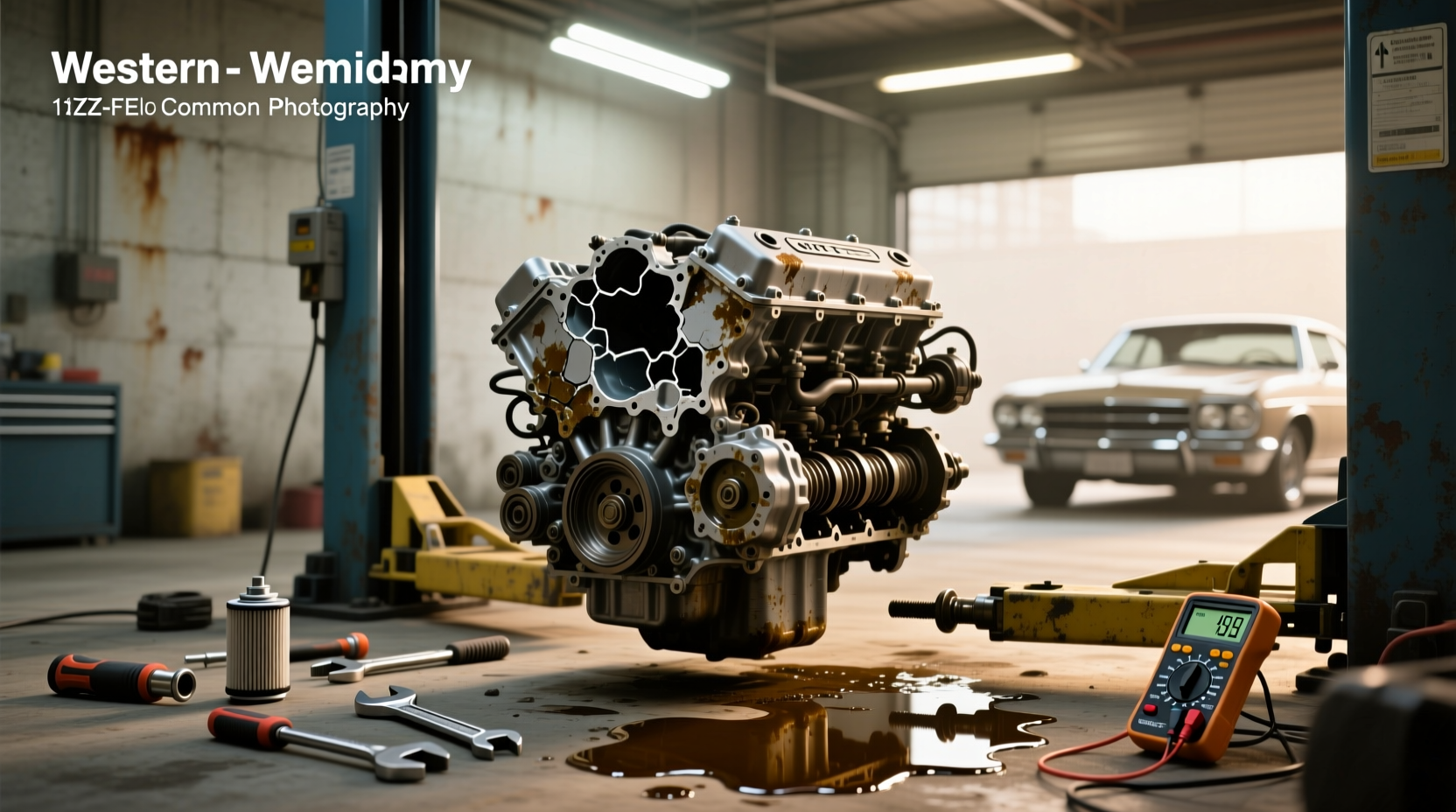
The Toyota 1ZZ-FE engine, a 1.8-liter DOHC inline-four introduced in 1998, is widely recognized for its fuel efficiency and use across popular models like the Corolla, Matrix, Celica, and Pontiac Vibe 1. While generally reliable, certain model years—particularly those produced between 1998 and 2005—have experienced recurring mechanical issues, most notably excessive oil consumption due to faulty piston rings ⚙️. Understanding these common 1ZZ-FE engine problems can help owners diagnose symptoms early, avoid costly repairs, and extend engine lifespan through proper maintenance.
Overview of the 1ZZ-FE Engine
Manufactured at Toyota’s plant in Shimane, Japan, the 1ZZ-FE was designed as a lightweight, economical powerplant to replace the older 7A-FE engine ✨. It features an aluminum block with press-fit cast iron cylinder liners, dual overhead camshafts (DOHC), four valves per cylinder, and multi-point fuel injection 2. From 2000 onward, many versions were equipped with VVT-i (Variable Valve Timing with intelligence), improving low-end torque and fuel economy.
Key specifications include:
| Specification | Details |
|---|---|
| Engine Type | 1.8L (1,794 cc) Inline-4, DOHC, 16-valve |
| Bore × Stroke | 79 mm × 91.5 mm (3.11 in × 3.60 in) |
| Compression Ratio | 10.0:1 |
| Power Output | 110–130 hp (82–97 kW) |
| Torque | 110–125 lb-ft (149–169 Nm) |
| Fuel System | Multi-point fuel injection (MPFI) |
| Valvetrain | VVT-i (on later models) |
| Cooling System | Water-cooled |
| OEM Applications | Toyota Corolla, Matrix, Celica, MR2 Spyder, Pontiac Vibe, Geo Prism |
This engine powered millions of vehicles globally and remains a common find in used car markets and JDM (Japanese Domestic Market) imports 🌐. Its design prioritized durability and ease of service, making it appealing for daily drivers and budget-conscious owners.
Common 1ZZ-FE Engine Problems
Despite its reputation for longevity, several known weaknesses affect specific production batches. These issues are often tied to manufacturing timelines and usage patterns rather than inherent design flaws.
1. Excessive Oil Consumption (1998–2005 Models)
One of the most frequently reported 1zz fe engine problems is high oil consumption, particularly in engines built before mid-2005 ❗. Some vehicles burned up to one quart of oil every 1,000 miles, even without visible leaks or smoke.
Root Cause: The issue stems from poorly designed piston rings that fail to seal properly under heat and pressure 🔧. Over time, carbon buildup restricts ring movement, leading to blow-by gases entering the crankcase and increased oil burning in the combustion chamber.
Toyota acknowledged this defect and issued Technical Service Bulletin (TSB) EG-026-04, which outlined revised piston ring kits and repair procedures 3. Engines manufactured after July 2005 typically feature updated ring designs and are less prone to this issue.
Symptoms include:
- Low oil level between changes
- Blue-tinted exhaust smoke on startup or acceleration
- Fouled spark plugs
- Increased emissions readings
Solutions:
- Preventive Maintenance: Use high-detergent synthetic blend or full synthetic oil (e.g., 5W-30) and change it every 5,000 miles to reduce sludge formation.
- Sea Foam or Similar Additives: Periodic intake and crankcase cleaning may free sticky rings if caught early 🧼.
- Piston Ring Replacement: For severe cases, a partial engine rebuild involving honing cylinders and installing updated pistons/rings is required.
2. VVT-i System Failures
The Variable Valve Timing system improves performance and efficiency but introduces additional complexity ⚡. Issues usually appear after 80,000 miles.
Common Failure Points:
- VVT-i Solenoid: Clogs due to dirty oil, causing delayed or incorrect timing adjustments.
- Oil Control Valve (OCV): Malfunctions lead to check engine lights (P0011, P0016 codes).
- Timing Chain Tensioner: Wears prematurely, increasing noise and risking misalignment.
Symptoms:
- Rough idle
- Reduced fuel economy
- Check engine light with camshaft timing codes
- Lack of low-end power
Prevention & Repair:
- Replace VVT-i solenoids preventively around 100,000 miles.
- Use OEM-grade oil filters and maintain clean oil.
- Inspect timing chain tensioner during valve cover gasket replacement.
3. Head Gasket Leaks
Though less common than in some other engines, head gasket failure does occur—usually due to overheating or poor coolant maintenance.
Warning Signs:
- White smoke from exhaust
- Coolant loss without external leaks
- Bubbling in radiator or overflow tank
- Misfires or rough running
Unlike engines with known weak head gaskets, the 1ZZ-FE rarely suffers spontaneous failures. Most incidents follow neglect—such as extended intervals between coolant flushes or driving with a malfunctioning thermostat.
4. Timing Chain Wear and Noise
The 1ZZ-FE uses a timing chain instead of a belt, theoretically lasting the life of the engine. However, inadequate lubrication or infrequent oil changes can accelerate wear.
Indicators:
- Grinding or rattling noise at cold startup
- Chain slap heard from front of engine
- Check engine light with cam/crank correlation codes
Replacing the timing chain kit (chain, guides, tensioner, sprockets) is labor-intensive but recommended if noise persists after oil service.
5. PCV Valve and Crankcase Ventilation Issues
A clogged Positive Crankcase Ventilation (PCV) valve can contribute to oil consumption and sludge buildup, especially in stop-and-go driving conditions.
Best Practice: Replace the PCV valve every 60,000 miles or during each major service interval. Inspect hoses for cracking or blockage.
Which Cars Have the 1ZZ-FE Engine?
The 1ZZ-FE was used in a range of compact and sporty models worldwide 👥. Knowing your vehicle’s fitment helps identify whether your engine falls into a higher-risk production batch.
- Toyota Corolla (1998–2008, various trims)
- Toyota Matrix (2003–2008)
- Toyota Celica (2000–2005, GT trim)
- Toyota MR2 Spyder (2000–2005)
- Pontiac Vibe (2003–2008, joint GM-Toyota venture)
- Geo Prism (late 1990s, limited availability)
Notably, the Pontiac Vibe shares the same platform and engine as the Matrix, meaning maintenance insights apply across both models 🚗.
Reliability and Expected Lifespan
When properly maintained, the 1ZZ-FE engine can exceed 200,000 miles without major repairs ✅. Forums such as r/mr2 and r/Celica report numerous examples of engines reaching 250,000+ miles with only routine servicing 4.
However, longevity depends heavily on:
- Oil change frequency and quality
- Coolant system upkeep
- Driving habits (city vs highway)
- Original build date (pre- vs post-2005)
Engines made after mid-2005 benefit from improved piston ring design and better VVT-i components, reducing the likelihood of oil burn and timing issues.
How to Buy a Used 1ZZ-FE Engine Safely
Many buyers turn to eBay, Alibaba.com, or JDM suppliers when replacing a damaged engine 🛒. But not all used 1ZZ-FE units are equal.
What to Look For:
- Model Year: Prefer engines from 2006 or later to avoid early oil consumption issues.
- Mileage: Under 100,000 miles is ideal; verify with documentation if possible.
- Origin: JDM-sourced engines often have lower mileage and cleaner operating histories.
- Condition: Ask for compression test results and oil consumption history.
Red Flags:
- No maintenance records
- Visible oil leaks or corrosion
- Engine hasn’t been tested post-removal
- Price significantly below market average ($800–$1,300 typical for core units)
Reputable sellers on Alibaba.com or specialized JDM exporters often provide inspection videos and allow third-party verification 📍.
Maintenance Tips to Prevent 1ZZ-FE Engine Problems
Proactive care is the best defense against premature wear. Follow these guidelines to maximize reliability:
- Change Oil Every 5,000 Miles: Use API-certified 5W-30 motor oil and OEM-style filters.
- Flush Coolant Every 30,000–50,000 Miles: Prevents corrosion and maintains optimal temperature regulation.
- Inspect VVT-i Components: Clean or replace OCVs and solenoids around 90,000–100,000 miles.
- Monitor Oil Level Monthly: Early detection of consumption allows timely intervention.
- Replace PCV Valve Regularly: Ensures proper crankcase ventilation and reduces sludge.
- Address Check Engine Lights Promptly: Diagnose codes related to cam timing, misfires, or knock sensors immediately.
Performance Upgrades and Modifications
While the stock 1ZZ-FE produces modest power (~125 hp), enthusiasts have explored mild tuning options ⚙️.
Popular modifications include:
- Cold air intake
- Performance exhaust systems
- ECU reflashing (limited gains due to factory tuning constraints)
- TRD supercharger (available for select models like the Corolla XRS)
Note: Forced induction places extra stress on already-sensitive piston rings. If considering a supercharger, ensure the engine has updated internals or low mileage.
Comparison: 1ZZ-FE vs 2ZZ-GE
Often compared, the 2ZZ-GE is a higher-performance variant used in the Celica GT-S, Matrix XRS, and Lotus Elise.
| Feature | 1ZZ-FE | 2ZZ-GE |
|---|---|---|
| Displacement | 1.8L | 1.8L |
| Horsepower | 110–130 hp | 180 hp |
| Redline | 6,200 rpm | 8,600 rpm |
| Compression Ratio | 10.0:1 | 11.5:1 |
| Lift System | VVT-i | VVTL-i (lift + timing) |
| Reliability | High (post-2005) | Good, but more sensitive to maintenance |
The 2ZZ offers exciting performance but requires stricter maintenance and is more expensive to repair. The 1ZZ-FE remains the better choice for reliability-focused drivers.
Frequently Asked Questions (FAQs)
- ❓ Is the 1ZZ-FE engine reliable?
- Yes, especially models produced after mid-2005. Earlier versions had oil consumption issues, but with proper maintenance, most 1ZZ-FE engines last well beyond 200,000 miles.
- ❓ What causes oil burning in the 1ZZ-FE?
- Faulty piston rings in pre-2005 engines are the primary cause. Carbon buildup restricts ring movement, allowing oil to enter combustion chambers.
- ❓ Can I fix oil consumption without rebuilding the engine?
- In mild cases, switching to synthetic oil and using detergents like Sea Foam may help. However, persistent burning usually requires piston ring replacement.
- ❓ How much does it cost to rebuild a 1ZZ-FE engine?
- A full rebuild typically costs $2,000–$3,500 depending on labor rates and parts quality. Used long blocks range from $1,000–$1,700 on platforms like eBay or Alibaba.com.
- ❓ Does the 1ZZ-FE have a timing belt or chain?
- The 1ZZ-FE uses a timing chain, which should last the engine's lifetime under normal conditions. However, tensioner wear may require replacement around 150,000 miles.





 浙公网安备
33010002000092号
浙公网安备
33010002000092号 浙B2-20120091-4