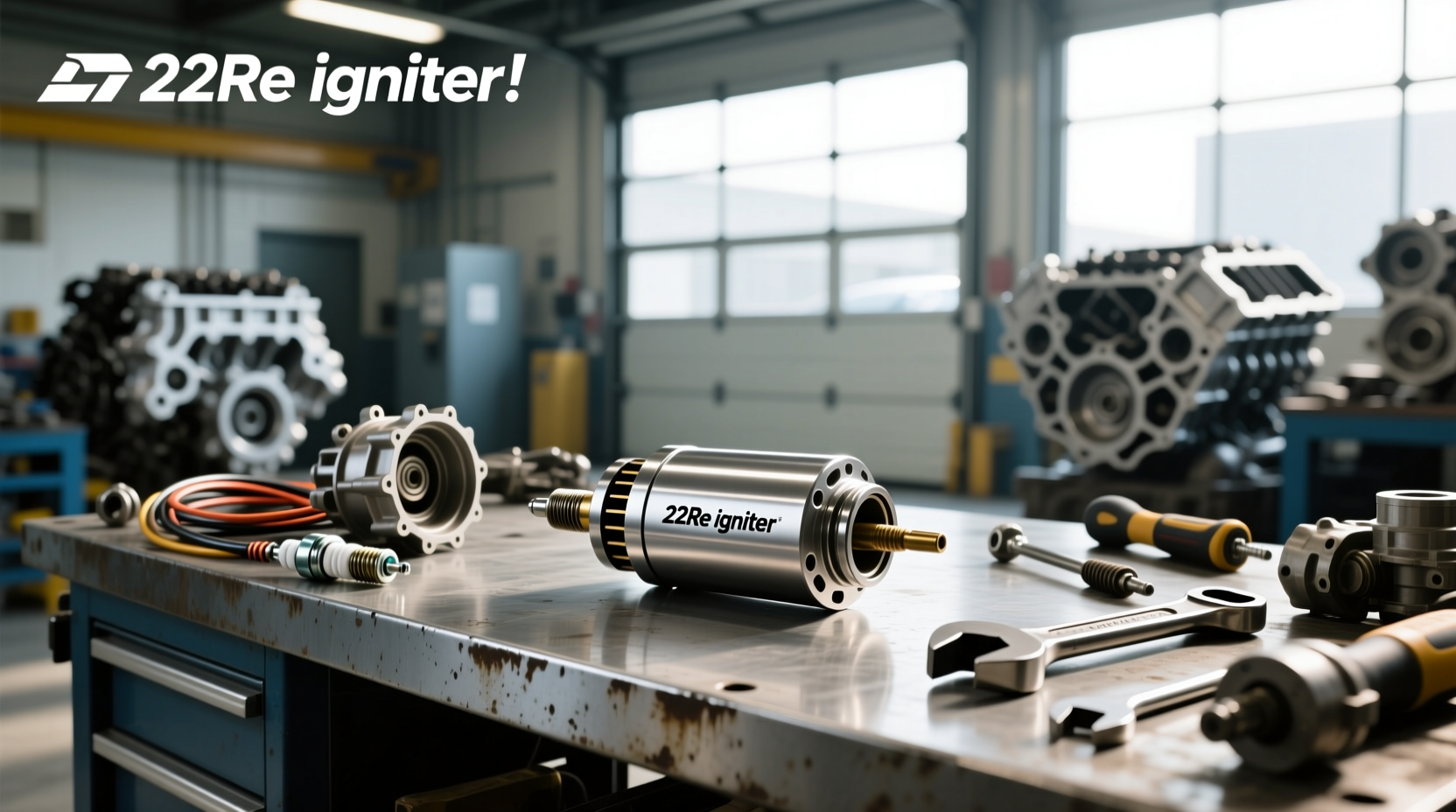
If your Toyota pickup or 4Runner with a 22RE engine is experiencing intermittent stalling, rough idling, or no-start conditions, the igniter (also known as ignition control module) could be the culprit. A faulty 22RE igniter disrupts spark delivery by failing to properly signal the ignition coil, leading to misfires and poor performance. This comprehensive guide covers everything you need to know about diagnosing, replacing, and upgrading the 22RE igniter—ensuring reliable ignition system operation for classic Toyota trucks from the 1980s and early 1990s.
What Is a 22RE Igniter and How Does It Work?
The 22RE igniter is an electronic component located inside or mounted externally on the distributor of Toyota’s 2.4L 4-cylinder 22RE engine. Its primary function is to act as a switch that controls the flow of current through the ignition coil’s primary winding. When triggered by the signal generator (pickup coil) inside the distributor, the igniter rapidly interrupts the circuit, causing the coil to generate high voltage needed for spark at the spark plugs ⚡.
This solid-state module replaced older mechanical points systems, offering greater reliability and reduced maintenance. However, like all electronic components exposed to heat and vibration, the igniter can degrade over time—especially in vehicles used for off-roading or frequent short trips where thermal cycling accelerates wear.
Common Symptoms of a Failing 22RE Igniter
Because the igniter plays a critical role in spark generation, its failure often mimics other ignition or fuel system problems. Recognizing these signs early helps prevent being stranded:
- Engine stalls unexpectedly, especially when hot (a classic symptom known as “heat soak”)
- Intermittent starting issues—vehicle starts fine one moment, then won’t crank the next
- Rough idle or misfiring under load or acceleration
- No spark at the plugs despite a functioning battery and coil
- Check Engine light may flash in later model years (though pre-OBD1 systems lack standardized diagnostics)
These symptoms are often temperature-dependent. For example, an igniter might work perfectly when cold but fail after 20 minutes of driving due to internal semiconductor breakdown under heat.
How to Test a 22RE Igniter: Step-by-Step Diagnosis
Before replacing parts, proper testing saves money and avoids unnecessary labor. Here’s how to verify if the igniter is at fault:
- Check for Spark: Remove a spark plug wire, insert a spare plug into the boot, ground it to the engine block, and crank the engine. No visible spark suggests an issue in the primary ignition circuit.
- Inspect Wiring and Connections: Corroded or loose connectors at the distributor can mimic igniter failure. Ensure the harness feeding the igniter has continuity and proper voltage (usually 12V from the EFI relay).
- Use a Multimeter to Test Resistance: While not always definitive, measuring resistance between terminals (per factory service manual specs) can reveal open or shorted circuits within the igniter.
- Swap Test with a Known-Good Unit: If available, install a working igniter temporarily. If the problem disappears, the original unit was faulty.
- Oscilloscope Analysis (Advanced): Professionals use ignition pattern analysis to detect weak or erratic signals caused by failing igniters.
Note: A good ignition coil does not rule out igniter failure. The two components work together, but each can fail independently.
Original Equipment vs. Aftermarket 22RE Igniters
When replacement becomes necessary, users face choices between OEM (Toyota-branded), Japanese aftermarket (e.g., Denso, Nippon Denso), and budget-friendly universal modules. Each has trade-offs:
| Option Type | Pros | Cons | Avg. Lifespan |
|---|---|---|---|
| OEM Toyota | Precise fit, factory calibration, long-term reliability | High cost, limited availability | 7–10 years |
| Denso/Nippondenso | Same supplier as OEM, excellent durability | Slightly higher price than generic | 6–9 years |
| Universal/Budget Modules | Low upfront cost, widely available | Inconsistent quality, prone to early failure | 1–3 years |
Many owners report better longevity with genuine Denso units even if not branded as Toyota OEM. Look for part numbers such as 89620-35140 or 19070-35090, which are commonly associated with 1984–1988 models.
Compatibility: Which 22RE Igniter Fits Your Vehicle?
Not all igniters are interchangeable across model years. Key variables include:
- Model Year: Pre-1984 models may use different distributors (contact breaker style), while 1984–1995 models use electronic ignition.
- Distributor Design: Some igniters mount internally (built-in), others externally (side-mounted). Confirm physical layout before purchase.
- Engine Variant: The 22R (carbureted) and 22RE (fuel-injected) share similar ignition systems, but wiring harnesses differ slightly.
For example, the 89620-35280 igniter fits 1991–1992 22RE engines, whereas earlier models typically use 89620-35140. Always cross-reference your VIN or consult a repair manual specific to your year and trim.
Can You Upgrade the 22RE Ignition System?
Yes—and many enthusiasts do. Stock igniters provide adequate performance for daily driving, but upgrades improve spark energy, especially beneficial for modified engines or those running leaner air/fuel mixtures.
Popular Upgrade Paths
- FAST I91 E-Core Coil + Matching Igniter: Offers up to 70% more spark energy than stock1. Requires compatible igniter due to increased current draw.
- GM HEI Module Conversion: Replaces the factory igniter with a robust GM High Energy Ignition (HEI) unit. Needs minor rewiring but improves durability and cold-start performance.
- MSD 6A or Crane FireBox: Aftermarket CD (capacitive discharge) systems deliver hotter sparks and multiple firing events. Ideal for high-compression or forced induction builds.
⚠️ Caution: Upgraded coils may damage stock igniters due to higher current demands. Always pair performance coils with matched control modules.
Step-by-Step: Replacing the 22RE Igniter
Replacement difficulty varies based on whether the igniter is internal or external. External units are simpler; internal ones require distributor removal.
External Mount (Easier)
- Disconnect the negative battery terminal 🔧.
- Locate the igniter on the side of the distributor.
- Unplug the electrical connector.
- Remove mounting screws (usually two).
- Install new igniter, reconnect harness, and retest.
Internal Mount (More Involved)
- Mark rotor position and remove distributor cap.
- Remove distributor assembly from engine.
- Disassemble distributor to access internal igniter.
- Replace module and reassemble carefully, ensuring rotor alignment.
- Reinstall distributor and verify timing.
⏱️ Time estimate: 30 minutes (external), 2–3 hours (internal). Use dielectric grease on connectors to prevent moisture ingress.
Common Misconceptions About 22RE Igniters
Several myths persist in online forums and repair communities:
- Myth: All 22R/22RE igniters are the same. Reality: There are multiple revisions with varying pinouts and resistance values. Swapping without verification risks damage.
- Myth: Igniters last forever. Reality: Average lifespan is 5–8 years under normal conditions. Heat and vibration reduce longevity.
- Myth: A new coil fixes no-spark issues. Reality: If the igniter isn’t signaling the coil, even a brand-new coil won’t produce spark.
Where to Buy Reliable 22RE Igniters
Purchasing options range from local auto parts stores to online marketplaces. Consider these factors:
- Local Stores (Advance Auto Parts, NAPA): Allow immediate pickup and return policies. May carry standard brands like Standard Motor Products (SMP UC15).
- Specialty Online Retailers: Sites focused on Toyota restoration often stock OEM-spec components with better documentation.
- Auction Platforms: Used OEM igniters from Japan (JDM) are sometimes sold as “tested” units. Verify seller reputation and warranty terms.
🛒 Price ranges vary: $25–$45 for basic aftermarket, $75+ for OEM or performance units. Avoid listings under $15 unless verified by trusted sellers.
Maintenance Tips to Extend Igniter Life
While eventual failure is inevitable, these practices help prolong service life:
- Keep the engine bay clean: Dirt and oil buildup trap heat around the distributor.
- Ensure proper ventilation: Blocked airflow increases underhood temperatures.
- Use heat-resistant wiring looms: Protects harnesses near exhaust manifolds.
- Regularly inspect connections: Corrosion increases resistance and causes overheating.
FAQs About the 22RE Igniter
- Can I drive with a bad igniter?
- No—not reliably. A failing igniter causes misfires, stalling, and potential catalytic converter damage from unburned fuel.
- Is the 22RE igniter the same as the ignition coil?
- No. The igniter controls the coil’s primary circuit. They are separate components, though sometimes sold together.
- Do upgraded igniters improve fuel economy?
- Not directly. However, restoring full spark efficiency can improve combustion, potentially increasing MPG slightly in poorly tuned engines.
- Can I test the igniter without tools?
- Only indirectly. If the engine runs when cold but dies when hot, let it cool and restart—if it works again, the igniter is likely failing.
- Are there interchange options from other Toyota engines?
- Limited. Some Supra or Cressida igniters share specs, but pin configuration and mounting must match exactly.





 浙公网安备
33010002000092号
浙公网安备
33010002000092号 浙B2-20120091-4