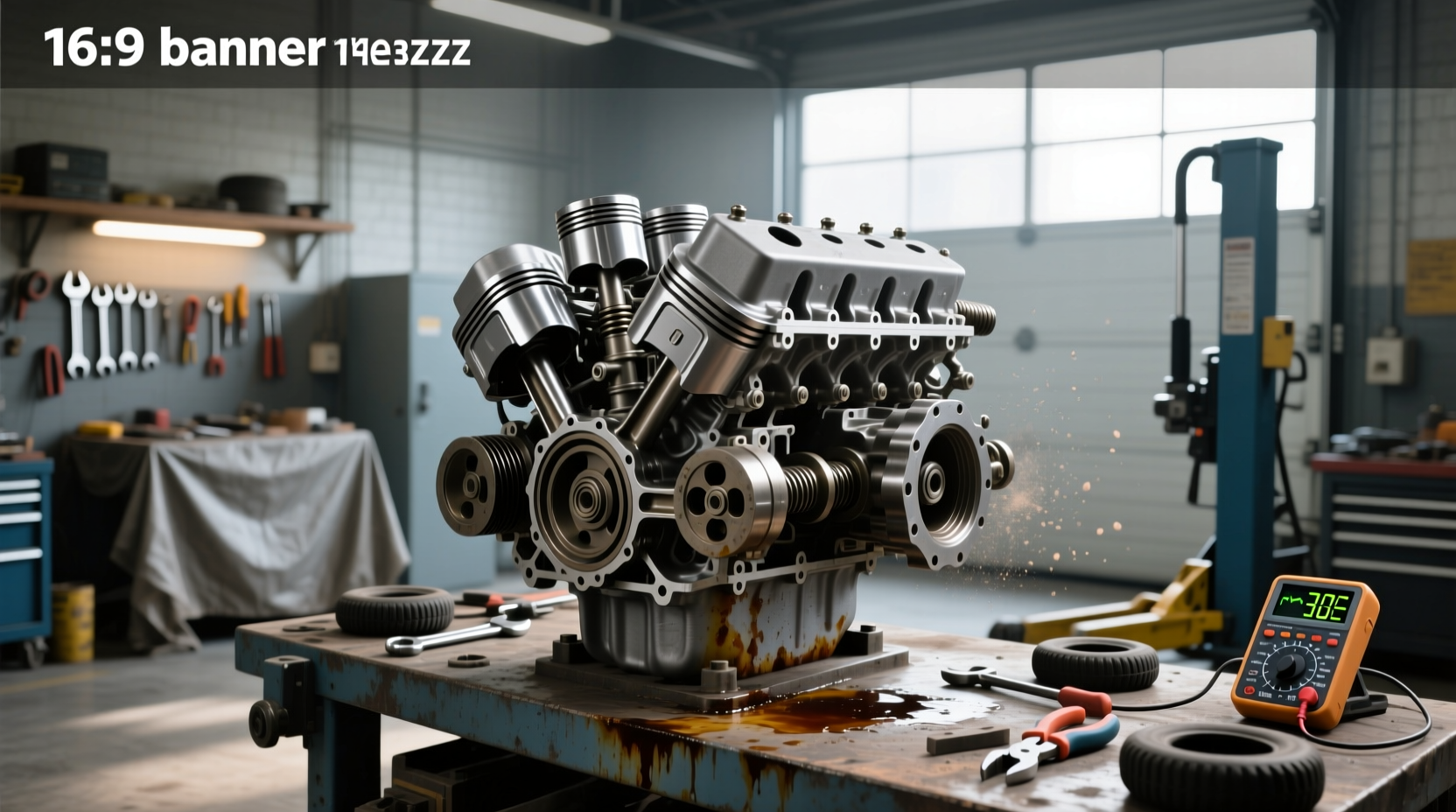
One of the most frequently asked questions among Toyota Corolla and RunX owners is: what are the common 3ZZ engine problems? The 3ZZ-FE, a 1.6L inline-4 engine from Toyota’s ZZ family produced between 2000 and 2012, is known for its fuel efficiency and smooth operation—but it’s not without its flaws. While generally reliable, certain mechanical weaknesses have emerged over time, especially in high-mileage vehicles. Among the most reported issues are excessive oil consumption, timing chain wear, head gasket degradation, and carbon buildup on intake valves. Understanding these problems early can help prevent costly repairs and extend engine life.
Overview of the Toyota 3ZZ-FE Engine
The Toyota 3ZZ-FE is part of the broader ZZ engine series, which includes the 1ZZ, 2ZZ, and 4ZZ variants. Introduced around 2000, the 3ZZ-FE was primarily used in compact models like the Toyota Corolla (E120/E140), Corolla RunX, and Corolla Verso—especially in South African, European, and select Asian markets1. With a displacement of 1,598 cc, an aluminum DOHC cylinder head, and multi-point fuel injection, this naturally aspirated engine produces approximately 109 horsepower and 150 Nm of torque, making it suitable for daily commuting and light-duty use.
⚙️ Key Specifications:
- Engine Code: 3ZZ-FE
- Displacement: 1.6L (1,598 cc)
- Cylinder Arrangement: Inline-4
- Valvetrain: DOHC, 16-valve
- Compression Ratio: 10.0:1
- Fuel System: Multi-point fuel injection
- Cooling: Water-cooled
- Redline: ~6,000 RPM
This engine shares design elements with other ZZ-family units but differs notably from the higher-performance 2ZZ-GE, which featured Yamaha-developed VVTL-i technology. The 3ZZ-FE focuses on economy and durability rather than sporty output.
Common 3ZZ Engine Problems: What Owners Should Watch For
Despite Toyota's reputation for reliability, no engine is immune to wear and design-related flaws. Based on user reports from forums such as Reddit, mechanic diagnostics, and service records, several recurring issues affect the 3ZZ-FE, particularly after 100,000 km (62,000 miles).
🔧 1. Excessive Oil Consumption
One of the most widely reported concerns is high oil usage, often beginning around the 100,000–150,000 km mark. Some owners report burning up to a liter of oil every 1,500–2,000 km, requiring frequent top-ups.
Possible Causes:
- Worn piston rings or cylinder walls: Over time, low-tension oil control rings may degrade, allowing oil to enter the combustion chamber.
- PCV (Positive Crankcase Ventilation) system malfunction: A clogged or stuck valve can increase crankcase pressure, forcing oil into areas where it shouldn't go.
- Valve stem seal deterioration: These seals prevent oil from leaking down the valve guides; when worn, they contribute to blue smoke during startup or acceleration.
✅ Solution Tips:
- Check dipstick regularly and log oil levels between changes.
- Use high-quality synthetic oil (e.g., 5W-30 or 10W-30) to reduce sludge and improve ring sealing.
- Inspect PCV valve and hoses during routine maintenance.
- If consumption persists beyond 1 qt per 1,500 miles, consider a compression test or leak-down test to assess internal wear.
⚙️ 2. Timing Chain Wear and Tensioner Failure
Unlike many modern engines that use rubber belts, the 3ZZ-FE uses a chain-driven camshaft. While chains typically last longer, they rely on hydraulic tensioners and guides that can fail prematurely.
Symptoms of Timing Chain Issues:
- Grinding or rattling noise at cold start
- Check Engine Light (CEL) with codes related to camshaft timing (P0011, P0021)
- Misfires or rough idle
- Reduced power or poor fuel economy
The root cause often lies in delayed oil changes or using incorrect viscosity oils, leading to sludge buildup that restricts oil flow to the tensioner. Once the tensioner fails, the chain can jump teeth, causing serious engine damage.
✅ Preventive Measures:
- Change oil every 7,500–10,000 km using API-certified motor oil.
- Listen for unusual noises upon startup—early detection can save thousands.
- Consider replacing the timing chain assembly (including guides and tensioner) preemptively at 150,000 km if symptoms appear.
🧼 3. Carbon Buildup on Intake Valves
Because the 3ZZ-FE uses port fuel injection (not direct injection), fuel doesn’t wash over the back of intake valves. Combined with blow-by gases from the crankcase ventilation system, this leads to carbon deposits accumulating on intake valves, especially in stop-and-go driving conditions.
Effects:
- Reduced airflow and inefficient combustion
- Hesitation during acceleration
- Increased fuel consumption
- Stalling or rough idling
While less severe than in GDI engines, this issue still affects performance over time.
✅ Mitigation Strategies:
- Perform periodic induction cleaning (every 60,000–80,000 km).
- Use fuel additives designed for intake cleaning (e.g., Chevron Techron, Red Line SI-1).
- Drive at highway speeds regularly to promote self-cleaning.
- In severe cases, walnut blasting may be required to remove heavy deposits.
❗ 4. Head Gasket Leaks
Though less common than in some other engines, there are documented cases of head gasket failure in the 3ZZ-FE, particularly under sustained overheating conditions or due to coolant neglect.
Warning Signs:
- White smoke from exhaust (coolant burning)
- Overheating despite full coolant level
- Bubbles in radiator or overflow tank
- Milky appearance on oil cap (emulsified oil)
The aluminum head expands more than the cast iron liners under heat stress, potentially compromising the gasket seal if thermal cycling occurs frequently.
✅ How to Prevent It:
- Maintain proper coolant concentration (50/50 mix) and replace every 3–5 years.
- Inspect radiator cap, thermostat, and water pump for proper function.
- Avoid prolonged idling or towing heavy loads in hot climates without adequate cooling.
🔋 5. EGR and Throttle Body Clogging
The Exhaust Gas Recirculation (EGR) system helps reduce NOx emissions by reintroducing exhaust gas into the intake manifold. However, soot accumulation can clog the EGR valve and passages, leading to drivability issues.
Similarly, the throttle body bore and plate can become coated with grime, disrupting airflow and causing erratic idle behavior.
✅ Maintenance Tips:
- Clean EGR valve and intake plenum every 80,000–100,000 km.
- Use carburetor cleaner or dedicated throttle body spray for cleaning.
- Reset idle relearn procedure after cleaning to ensure correct IAC (Idle Air Control) calibration.
📍 Regional Variations and Model Applications
The 3ZZ-FE was not sold globally under all trim levels. Its usage varied significantly by region:
| Region | Model | Years | Notes |
|---|---|---|---|
| South Africa | Corolla, RunX, Verso | 2003–2009 | Most common market for 3ZZ-FE |
| Europe | Corolla (E120/E140) | 2000–2007 | Limited availability; mostly base trims |
| Asia (India, Thailand) | Corolla Altis | 2004–2008 | Replaced by ZR-series post-2008 |
| North America | N/A | - | Not offered; 1ZZ-FE used instead |
These regional differences mean parts availability and service expertise vary. In countries like South Africa, mechanics are familiar with 3ZZ repairs, whereas in North America, finding specialists may require more effort.
🛠️ Repair vs. Replacement: When to Consider Each Option
Facing major engine trouble raises a critical decision: repair or replace?
When to Repair:
- You’re experiencing moderate oil consumption (<1L/2000km) with otherwise healthy compression.
- Noises are isolated to the timing cover—potential fix with tensioner/guide replacement.
- Carbon cleaning resolves performance issues.
- Budget is limited and vehicle has sentimental or functional value.
When to Replace (or Swap):
- Severe internal damage (e.g., spun bearing, cracked block).
- Head gasket failure with warped cylinder head.
- Repeated repairs becoming costly (> $1,500 USD).
- You want improved reliability—some owners swap in newer ZR engines.
🛒 Used or remanufactured 3ZZ engines are available online through platforms like Alibaba and local suppliers, typically priced between $2,000–$3,000 USD depending on condition and location 2. Always verify core condition and warranty terms before purchase.
✨ Is the 3ZZ-FE a Reliable Engine? Separating Myth from Reality
There’s ongoing debate in online communities like r/Toyota about whether the 3ZZ-FE is a “disposable” engine3. Critics point to oil burn and timing chain risks, while defenders highlight longevity with proper care.
The truth lies in the middle: The 3ZZ-FE is reasonably reliable if maintained well. It lacks the robustness of older pushrod engines but benefits from Toyota’s conservative engineering. Many examples exceed 200,000 km with only routine servicing.
However, unlike the bulletproof 1NZ or later ZR engines, the 3ZZ-FE shows age-related wear earlier, particularly in harsh environments or with inconsistent maintenance.
📌 Owner Tips and Long-Term Care Checklist
To maximize your 3ZZ-FE’s lifespan, follow this proactive maintenance plan:
- Oil Changes: Every 7,500–10,000 km with quality synthetic blend or full synthetic (API SN/SP grade).
- Coolant Flush: Replace every 4 years or 80,000 km.
- Timing Chain Inspection: Listen for startup rattle; inspect tensioner by 120,000 km.
- Induction Service: Clean intake, EGR, and throttle body every 80,000 km.
- PCV Valve: Replace every 60,000 km.
- Spark Plugs: Use OEM-type iridium plugs every 100,000 km.
- Air Filter: Inspect annually; replace if dirty.
- Fuel Filter: Though integrated, ensure injectors are cleaned periodically.
🔍 Frequently Asked Questions About the 3ZZ Engine
- ❓ Is the 3ZZ a good engine?
- The 3ZZ-FE is a decent, economical engine for city driving. It offers smooth power delivery and decent fuel efficiency. However, it’s prone to oil consumption and timing chain issues past 100,000 km. With regular maintenance, it can last well beyond 200,000 km.
- ❓ Which car uses the 3ZZ engine?
- The 3ZZ-FE was primarily used in the Toyota Corolla (E120/E140), Corolla RunX, and Corolla Verso from 2000 to 2012, especially in South Africa, Europe, and parts of Asia. It was not offered in North American Corollas.
- ❓ How much horsepower does a 3ZZ engine have?
- The 3ZZ-FE produces 109 horsepower (81 kW) at 6,000 RPM and 150 Nm (111 lb-ft) of torque at 4,400 RPM. This makes it suitable for light commuting but not ideal for spirited driving.
- ❓ Can the 3ZZ engine be upgraded?
- While not a performance-oriented engine, modest upgrades like cold air intakes, exhaust systems, and ECU tuning can yield minor gains. However, due to its design focus on economy, significant power increases are limited without forced induction or internal modifications.
- ❓ What’s the difference between 1ZZ, 2ZZ, and 3ZZ engines?
- The 1ZZ-FE (1.8L) and 3ZZ-FE (1.6L) are similar economy-focused engines. The 2ZZ-GE is a high-revving 1.8L unit with VVTL-i, used in Celica and Matrix XRS, producing up to 180 hp. The 3ZZ is smaller and less powerful than both.





 浙公网安备
33010002000092号
浙公网安备
33010002000092号 浙B2-20120091-4