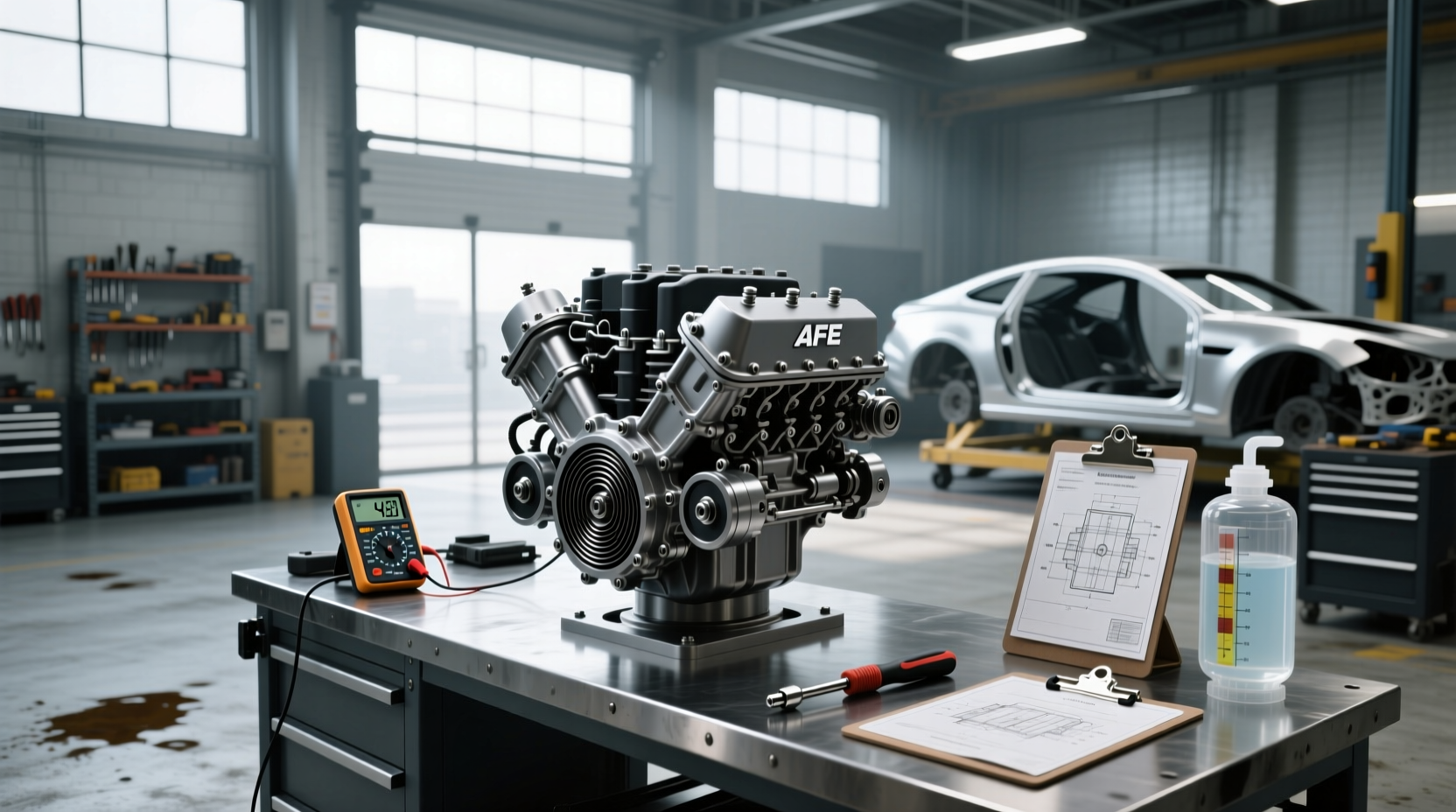
If you're searching for 4afe engine specs, you're likely maintaining, repairing, or upgrading a Toyota Corolla, Sprinter, or another compact model from the late 1980s to early 2000s. The 4A-FE is a 1.6L inline-four gasoline engine produced by Toyota as part of its A-series family, known for durability, fuel efficiency, and straightforward mechanics. This article provides a complete breakdown of the 4A-FE engine’s technical specifications, real-world performance, common problems, maintenance best practices, and how it compares to similar engines like the 5A-FE and 4A-GE. Whether you’re diagnosing an issue, sourcing parts, or considering an engine swap, this guide delivers actionable insights based on technical data and owner experiences.
Understanding the Toyota 4A-FE Engine
The Toyota 4A-FE is one of the most widely used engines in the A-series lineup. Introduced in 1987, it was designed to balance fuel economy, reliability, and modest performance for compact sedans and hatchbacks. The "4" indicates the engine generation, "A" denotes the engine family, "F" stands for improved efficiency and economy, and "E" signifies electronic fuel injection (EFI). This naming convention helps identify key features at a glance1.
Primarily found in the Toyota Corolla (AE92, AE101, AE111), Toyota Sprinter, and some variants of the Celica, the 4A-FE became a staple in global markets due to its low maintenance needs and long service life. Unlike high-performance variants like the 4A-GE, the 4A-FE prioritizes smooth daily driving over sporty output, making it ideal for commuters and fleet operators.
Complete 4A-FE Engine Specifications
Beneath its simple design lies a well-engineered powertrain. Below is a detailed table summarizing the core technical parameters of the 4A-FE engine across major production years.
| Specification | Detail |
|---|---|
| Engine Code | 4A-FE |
| Configuration | Inline-4 (Straight-Four) |
| Displacement | 1.6 L (1587 cc / 96.8 cu-in) |
| Bore × Stroke | 81.0 mm × 77.0 mm |
| Valvetrain | DOHC, 16-valve (4 valves per cylinder) |
| Compression Ratio | 9.5:1 |
| Fuel System | Electronic Fuel Injection (EFI) |
| Aspiration | Naturally Aspirated |
| Max Power Output | 105–115 hp (78–86 kW) @ 5,600–6,000 rpm |
| Max Torque | 100–107 lb-ft (135–145 Nm) @ 4,400–4,800 rpm |
| Redline | 6,500 rpm |
| Oil Capacity | 3.7–4.0 quarts (with filter) |
| Cooling System | Liquid-cooled |
| Ignition System | Distributor-based (early models), Distributorless (later OBD-II versions) |
| Firing Order | 1-3-4-2 |
| Engine Weight | Approx. 130–140 kg (287–309 lbs) |
These specs remained largely consistent across model years, though minor tuning differences exist between Japanese Domestic Market (JDM) and export versions. For example, North American models often had slightly detuned outputs to meet emissions standards.
Performance and Real-World Driving Experience
The 4A-FE isn’t built for speed, but it excels in reliability and drivability. With around 110 horsepower, it provides adequate acceleration for city driving and highway cruising, especially in lightweight platforms like the Corolla AE101. Drivers report smooth throttle response and quiet operation when the engine is well-maintained.
⛽ Fuel Efficiency: One of the engine’s strongest points is fuel economy. In mixed driving conditions, vehicles equipped with the 4A-FE typically achieve 28–34 mpg (8.3–6.9 L/100km), with highway runs reaching up to 38 mpg under optimal conditions. This efficiency stems from the lean-burn combustion design and precise EFI tuning.
⚙️ Transmission Pairings: The 4A-FE was commonly mated to either a 5-speed manual (C50, C56) or a 4-speed automatic (A245E, A132L). Manual versions offer better control and fuel economy, while automatics provide ease of use in traffic. Both transmissions are robust and widely supported with aftermarket rebuild kits.
Common 4A-FE Engine Problems and How to Address Them
No engine is immune to wear, and the 4A-FE has a few known weak points. Recognizing these early can prevent costly repairs.
- Intake Manifold Gasket Leaks: Over time, the rubber gaskets degrade, leading to vacuum leaks. Symptoms include rough idle, stalling, and poor fuel economy. Replacement is straightforward and should be done during major services.
- Distributor Cap and Rotor Wear: Early 4A-FE models use a mechanical distributor. Cracks or carbon tracking in the cap can cause misfires. Inspect every 30,000 miles and replace if necessary.
- Timing Belt Failures: The 4A-FE is an interference engine, meaning a broken timing belt can result in valve-to-piston contact. Toyota recommends replacement every 60,000–90,000 miles. Always inspect tensioners and water pumps during this service.
- Oil Consumption in High-Mileage Units: Engines with over 150,000 miles may develop increased oil consumption due to worn piston rings or valve seals. Blue smoke on startup is a telltale sign.
- Throttle Body Carbon Buildup: Especially in stop-and-go traffic, carbon accumulates on the throttle plate, causing hesitation. Cleaning every 50,000 miles prevents drivability issues.
Maintenance Tips for Longevity
The 4A-FE can easily surpass 200,000 miles with proper care. Follow these best practices:
✅ Use Quality Oil: Stick to 5W-30 or 10W-30 API-certified motor oil. Change every 5,000 miles (or 7,500 under ideal conditions) to protect internal components.🔧 Inspect Belts and Hoses: Check the serpentine belt, timing cover, and coolant hoses annually for cracks or bulges.
🧼 Keep the Fuel System Clean: Use top-tier gasoline or add a fuel injector cleaner every 15,000 miles to maintain efficient combustion.
📍 Monitor Coolant Levels: The aluminum head is prone to warping if overheated. Flush the cooling system every 60,000 miles to prevent corrosion.
📌 Replace Spark Plugs on Schedule: OEM-recommended interval is 30,000 miles. Use NGK or Denso equivalents for optimal performance.
4A-FE vs. 5A-FE: Key Differences
A frequent point of confusion is the difference between the 4A-FE and the 5A-FE. While both belong to Toyota’s A-family, they serve different vehicle segments.
| Feature | 4A-FE | 5A-FE |
|---|---|---|
| Displacement | 1.6L (1587cc) | 1.5L (1498cc) |
| Horsepower | 105–115 hp | 85–100 hp |
| Torque | 100–107 lb-ft | 95–98 lb-ft |
| Bore × Stroke | 81.0 × 77.0 mm | 78.7 × 77.0 mm |
| Typical Applications | Corolla AE92, AE101, AE111 | Corolla AE100, Tercel |
| Fuel Efficiency | Slightly lower due to larger displacement | Marginally better in city driving |
The 4A-FE offers more power, while the 5A-FE is slightly more compact and suited for lighter chassis. Neither is inherently superior—the choice depends on your vehicle and performance expectations.
4A-FE vs. 4A-GE: Performance Comparison
The 4A-GE is the high-performance sibling of the 4A-FE, famously used in the Corolla GT-S (AE86). While they share the same displacement, their purposes differ drastically.
- 4A-FE: Focused on economy and reliability. Uses a mild cam profile and standard intake manifold.
- 4A-GE: Tuned for performance with higher compression (9.4–10.3:1), aggressive cams, and multi-point fuel injection. Produces 112–165 hp depending on version (e.g., 20-valve “Red Top”).
While the 4A-GE is desirable for enthusiasts, it requires more maintenance and is less fuel-efficient. The 4A-FE remains the better choice for daily drivers seeking dependability.
Engine Swaps and Compatibility
The 4A-FE is a popular candidate for swaps due to its compact size and widespread availability. Common applications include:
- AE86 Chassis: Often swapped to replace aging 4A-GE engines. Requires wiring harness adaptation and ECU tuning.
- Classic Toyotas: Used in older Celicas or Coronas where original engines are no longer viable.
- Kart or Lightweight Vehicles: Some builders use it in custom projects due to its balance of power and weight.
When swapping, ensure compatibility with the transmission, mounts, and ECU. JDM-sourced engines are preferred for their lower mileage and better maintenance history.
Where to Find a 4A-FE Engine
Due to its age, new 4A-FE engines are no longer available. However, used and remanufactured units are accessible through:
🛒 JDM Importers: Many online suppliers specialize in low-mileage Japanese engines. Verify the seller’s reputation and request service records.🏭 Local Salvage Yards: Check local auto recyclers for Corollas or Sprinters from the 1990s–2000s.
🌐 Online Marketplaces: Platforms like eBay list complete engine assemblies, but scrutinize photos and descriptions carefully.
👥 Forums and Owner Groups: Communities such as Toyota Nation or Club4AG are excellent resources for trusted sellers and technical advice.
How to Verify a Used 4A-FE Engine's Condition
When purchasing a used engine, perform these checks:
- Compression Test: Should read 170–200 psi per cylinder, with no more than 10% variation.
- Leak-Down Test: Identifies internal sealing issues, especially in high-mileage units.
- Visual Inspection: Look for oil leaks, cracked housings, or signs of overheating (discoloration).
- Verify Timing Belt History: Ask for proof of replacement; if unknown, budget for immediate service.
- Check for Modifications: Aftermarket ECU tunes or exhaust changes may affect longevity.
Frequently Asked Questions (FAQs)
Below are common questions about the 4A-FE engine, answered concisely based on technical data and user experience.
Is the 4A-FE engine reliable?
Yes, the 4A-FE is highly reliable when maintained properly. It’s known for lasting over 200,000 miles with regular oil changes and timely servicing.
What does FE mean in Toyota engines?
"F" stands for improved economy and efficiency, while "E" indicates electronic fuel injection. So, 4A-FE means a 1.6L A-series engine optimized for fuel economy with EFI.
Can I interchange a 4A-FE with a 7A-FE?
Partial interchangeability exists, but differences in mounting points, wiring, and ECU compatibility require modifications. Professional guidance is recommended.
Does the 4A-FE have a timing belt or chain?
The 4A-FE uses a timing belt, not a chain. It must be replaced every 60,000–90,000 miles to prevent engine damage.
What cars have the 4A-FE engine?
The 4A-FE was primarily used in Toyota Corolla (AE92, AE101, AE111), Toyota Sprinter, and some Paseo/Cynos models from the late 1980s to early 2000s.





 浙公网安备
33010002000092号
浙公网安备
33010002000092号 浙B2-20120091-4