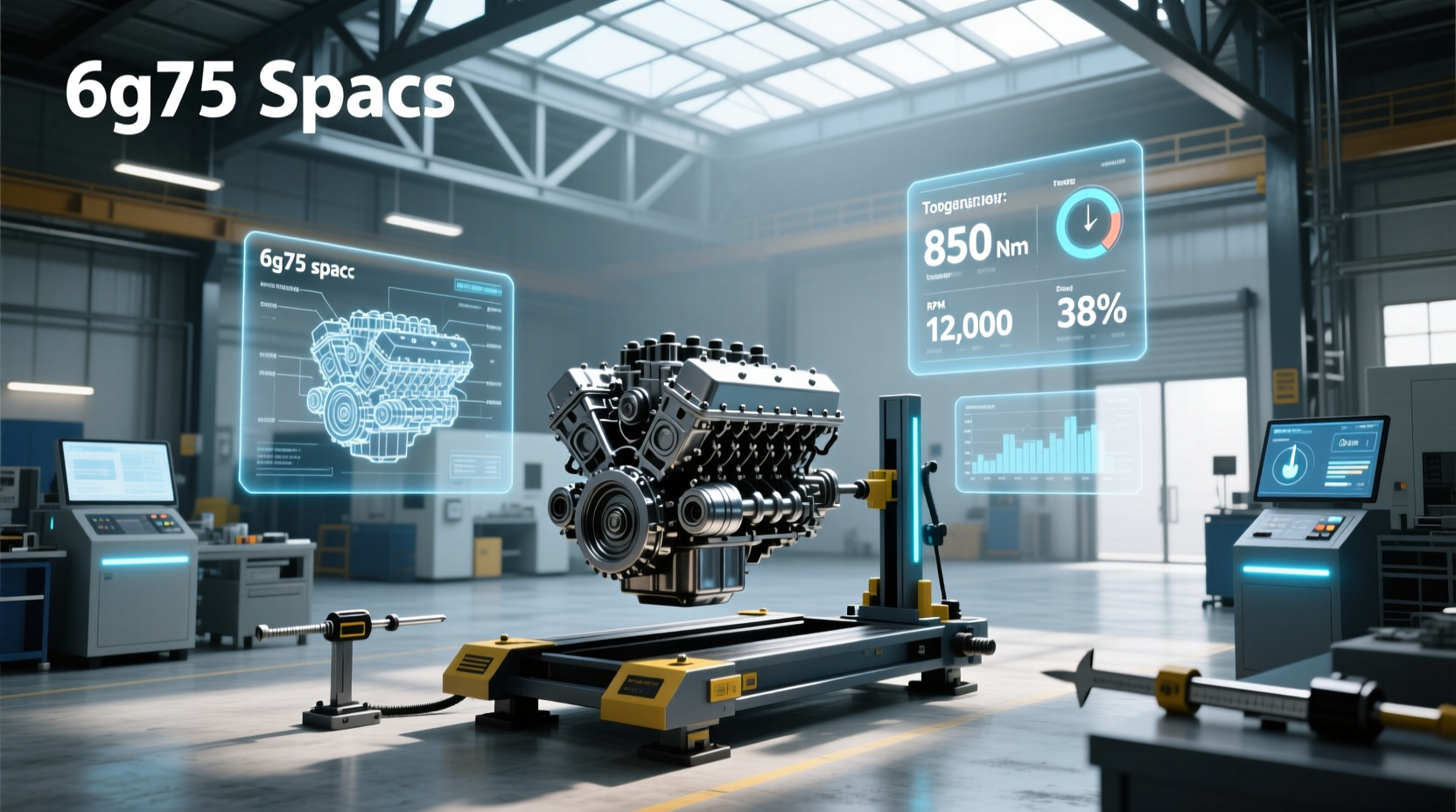
The Mitsubishi 6G75 engine is a 3.8L V6 powerplant known for its robust performance in SUVs and sedans such as the Mitsubishi Endeavor, Montero (Pajero), Galant Ralliart, and Eclipse GT. With output ranging from 215 to 275 horsepower and 250 to 290 lb-ft of torque depending on model year and tuning, this SOHC 24-valve V6 features an iron block with aluminum cylinder heads and MIVEC variable valve timing in later versions ⚙️. Designed for durability and smooth operation, it has earned a reputation among enthusiasts for strong low-end torque and long-term reliability when properly maintained ✅. However, common issues like head gasket failures, oil consumption, and cooling system weaknesses are frequently discussed in owner forums and repair logs ❗.
Understanding the Mitsubishi 6G75 Engine
The 6G75 belongs to Mitsubishi’s long-running 6G7 series—also known as the Cyclone V6 family—which was produced between 1986 and 2021 across five displacements 1. Introduced in the early 2000s, the 6G75 specifically replaced the 3.5L 6G74 in several applications, offering increased displacement via a larger bore while retaining similar architecture. It's primarily used in front-wheel-drive or all-wheel-drive configurations, distinguishing it from rear-wheel-drive-oriented engines in tuner circles.
This engine uses a cast-iron engine block for strength and heat resistance, paired with aluminum cylinder heads to reduce overall weight and improve thermal efficiency. The single overhead camshaft (SOHC) design operates four valves per cylinder through rocker arms, simplifying maintenance compared to DOHC setups but limiting high-RPM breathing potential. Fuel delivery is handled by multi-port fuel injection, though some variants do not feature direct injection technology.
Detailed 6G75 Engine Specifications
Beyond basic displacement, understanding the full technical profile helps owners assess compatibility, performance upgrades, and service needs. Below is a comprehensive breakdown of key specifications:
| Specification | Value / Detail |
|---|---|
| Engine Code | 6G75 |
| Configuration | V6 (60° bank angle) |
| Displacement | 3,828 cc (3.8L) |
| Bore × Stroke | 95.0 mm × 90.0 mm (3.74 in × 3.54 in) |
| Compression Ratio | 9.5:1 – 10.5:1 (varies by application) |
| Valvetrain | SOHC, 24 valves (4 per cylinder) |
| Aspiration | Naturally aspirated |
| Fuel System | Multi-port fuel injection (MPI) |
| MIVEC | Yes (on select models like Eclipse GT) |
| Cooling System | Water-cooled |
| Lubrication | Wet sump |
| Block Material | Cast iron |
| Head Material | Aluminum alloy |
| Dry Weight | Approx. 155–165 kg (342–364 lbs) |
| Firing Order | 1-2-3-4-5-6 |
| Redline | 6,500 RPM (stock) |
Horsepower and Torque Output by Model
Power output varies significantly based on vehicle application and whether MIVEC (Mitsubishi Innovative Valve timing Electronic Control) is equipped. This system adjusts intake valve timing for improved efficiency and mid-range responsiveness.
- Mitsubishi Endeavor (2004–2011): 230 hp @ 5,000 rpm / 250 lb-ft @ 4,100 rpm — non-MIVEC version
- Mitsubishi Montero / Pajero (V70/V80 series): 215–225 hp depending on market and emissions tuning
- Mitsubishi Eclipse GT (2006–2012): 263 hp @ 6,000 rpm / 260 lb-ft @ 4,500 rpm — equipped with MIVEC
- Mitsubishi Galant Ralliart (2004–2005): 242 hp @ 5,700 rpm / 251 lb-ft @ 4,000 rpm
- Mitsubishi 380 (Australia): 246 hp @ 5,500 rpm / 258 lb-ft @ 4,500 rpm
These figures highlight how factory calibration impacts real-world performance. While peak numbers may seem modest by modern turbocharged standards, the engine delivers strong linear power delivery and excellent low-end torque, making it well-suited for towing and daily driving scenarios 🚚.
Applications and Vehicle Compatibility
The 6G75 was designed primarily for transverse FWD/AWD layouts, meaning it fits into unibody platforms rather than traditional body-on-frame trucks. Key vehicles include:
- Mitsubishi Endeavor (2004–2011)
- Mitsubishi Eclipse (third and fourth generations, GT trim)
- Mitsubishi Galant (Ralliart trim, 2004–2005)
- Mitsubishi Montero (third generation, North American and international markets)
- Mitsubishi Pajero (V70/V80, certain trims)
- Mitsubishi 380 (Australian-market sedan)
Due to its front-wheel-drive orientation, swapping the 6G75 into RWD chassis requires significant fabrication work—including custom mounts, transmission adapters, and driveshaft modifications. Some enthusiasts have completed such swaps using Toyota or Nissan platforms, but these remain niche projects due to complexity 🔧.
Reliability Overview: Strengths and Weaknesses
The 6G75 is generally considered reliable beyond 150,000 miles when maintained properly. Owners report longevity exceeding 200,000 miles without major repairs under routine care. However, certain failure points emerge over time:
✅ Strengths
- Durable Iron Block: Resists warping under thermal stress better than aluminum blocks.
- Smooth Power Delivery: Well-balanced V6 layout reduces vibration.
- Proven Design: Shares lineage with earlier 6G7 engines that powered millions of vehicles worldwide.
- Aftermarket Support: Gaining traction in enthusiast communities; rebuild kits and performance parts available.
❗ Common Problems
- Head Gasket Failure: Particularly in pre-MIVEC models, overheating can lead to warped heads or blown head gaskets. Regular coolant flushes and thermostat checks help prevent this.
- Oil Leaks: Valve cover gaskets and rear main seal tend to degrade after 100,000+ miles.
- Cooling System Failures: Radiator hoses, water pumps, and electric fans may fail prematurely if neglected.
- MIVEC Solenoid Issues: In later models, clogged solenoids can trigger check engine lights or reduced performance.
- Timing Belt Maintenance: Interference engine — failure can result in bent valves. Replacement every 60,000–100,000 miles is critical ⏱️.
Maintenance Tips for Longevity
To maximize the lifespan of a 6G75 engine, follow these best practices:
- Stick to a strict maintenance schedule: Replace spark plugs, air filter, and fuel filter at manufacturer intervals (typically every 30,000–60,000 miles).
- Change engine oil regularly: Use high-quality synthetic blend or full synthetic 5W-30 or 10W-30, especially in hot climates or towing conditions.
- Inspect cooling system annually: Check radiator, hoses, thermostat, and coolant concentration to avoid overheating.
- Replace timing belt and components: Include water pump, tensioners, and idler pulleys during replacement to save labor costs.
- Monitor for early warning signs: Look for white exhaust smoke (coolant burning), milky oil residue (head gasket leak), or rough idle.
Performance Potential and Modifications
While not originally built as a performance engine, the 6G75 offers solid potential for mild to moderate upgrades. Enthusiasts have achieved over 400 horsepower naturally aspirated with ported heads, aggressive cams, and tuned intakes/exhausts. Forced induction setups (turbo or supercharger) exist but require intercooling, upgraded fuel systems, and ECU tuning.
Popular bolt-on modifications include:
- Cold air intake systems
- High-flow exhaust manifolds and cat-back systems
- Performance throttle bodies
- Ported cylinder heads
- Upgraded ignition coils and spark plugs
For serious builds, forged internals (pistons, rods) are recommended above 350 hp to handle increased cylinder pressure. Standalone engine management systems (like Haltech or AEM) provide greater control than stock ECUs, especially with forced induction.
Purchasing a Used or Rebuilt 6G75 Engine
When replacing a damaged engine, buyers often consider used, remanufactured, or crate options. Each has trade-offs:
- Used Engines: Sourced from junkyards or import dismantlers (e.g., Japan Partner). Prices range $1,500–$3,000 USD. Risk of unknown history; inspect compression and oil condition before purchase 📍.
- Rebuilt Engines: Professionally restored with new bearings, seals, gaskets, and possibly pistons. Sold by companies like Powertrain Products. Cost: $4,000–$5,000 with warranty ✅.
- Short Blocks: Core assemblies including block, crank, pistons, rods. Useful for custom builds. Available on eBay and Alibaba.com starting around $1,200 🛒.
Before buying, verify VIN compatibility, drivetrain layout (FWD vs AWD), and accessory drive configuration. Also confirm whether the engine includes ECU, harness, or sensors.
Comparison with Similar Engines
How does the 6G75 stack up against competitors?
vs 6G74 (3.5L V6)
The 6G74 predates the 6G75 and shares much of its architecture. The main difference is displacement—smaller bore results in less torque. The 6G75 improves upon the 6G74 with updated emissions controls and optional MIVEC.
vs Honda J35A Series
Both are 3.5L-class V6s, but Honda’s J-series uses SOHC with i-VTEC and typically produces more horsepower. However, the 6G75’s iron block offers greater durability under load, appealing to off-road and towing users.
vs Nissan VK56DD (5.6L)
The VK56 is larger and more powerful but heavier and less fuel-efficient. The 6G75 excels in balance between size and output for midsize SUVs.
Frequently Asked Questions (FAQs)
- What is the horsepower of a Mitsubishi 6G75 engine?
- Horsepower ranges from 215 hp in base Montero models to 263 hp in the Eclipse GT thanks to MIVEC technology.
- Is the 6G75 engine reliable?
- Yes, when maintained properly. Many reach 200,000+ miles, though head gasket and cooling issues should be monitored.
- Does the 6G75 have an interference engine design?
- Yes, the 6G75 is an interference engine. If the timing belt breaks, internal damage is likely. Timely replacement is essential.
- Can I swap a 6G75 into a different car?
- Possible but complex. Due to its FWD layout, swapping into RWD vehicles requires extensive modification. Compatibility depends on space, transmission, and electronics.
- What kind of fuel economy does the 6G75 get?
- In combined driving, expect 15–19 mpg depending on vehicle weight and transmission. Heavier SUVs like the Endeavor average closer to 16 mpg.





 浙公网安备
33010002000092号
浙公网安备
33010002000092号 浙B2-20120091-4