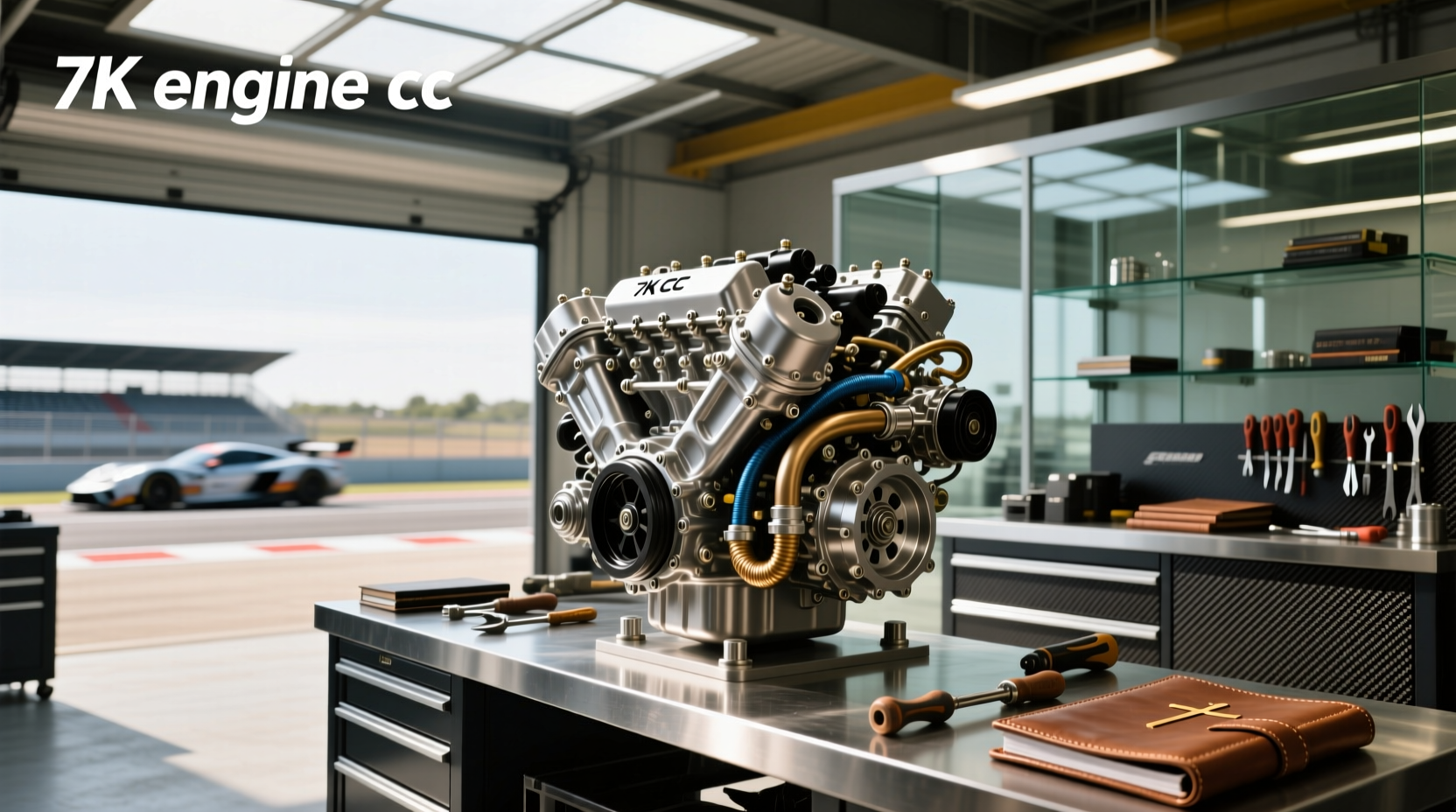
The Toyota 7K engine has a displacement of 1,781 cc, which is commonly rounded to 1.8 liters. This inline-four, SOHC gasoline engine belongs to Toyota's long-running K-series family and was introduced in the mid-1980s as an evolution of earlier K engines like the 4K and 5K 1. Designed primarily for commercial vans and light-duty trucks, the 7K engine delivers reliable low-end torque and moderate horsepower—typically between 80 and 90 hp depending on configuration. Whether you're searching for a replacement engine, considering a swap, or troubleshooting performance issues, understanding the 7k engine cc and its technical layout is essential for informed decision-making.
Understanding the Toyota 7K Engine: Origins and Design
The 7K engine is part of Toyota’s K-series, a line of pushrod-operated, two-valve-per-cylinder engines known for durability and simplicity. Introduced in 1983, the 7K replaced smaller variants like the 5K in many applications where more power and load capacity were needed 2. Unlike overhead cam (OHC) designs, the 7K uses a cam-in-block setup with pushrods to actuate valves—a design choice that reduces complexity and maintenance costs but limits high-RPM efficiency.
This engine features a bore of 80.5 mm and a stroke of 87.5 mm, giving it a slightly undersquare configuration that favors torque over peak horsepower. The total swept volume of 1,781 cc places it firmly in the 1.8L category, making it suitable for vehicles requiring steady pulling power rather than sporty acceleration. It was typically paired with 4-speed manual or 3-speed automatic transmissions, especially in work-oriented models such as the Toyota LiteAce, TownAce, and Deliboy.
Technical Specifications at a Glance
| Specification | Value |
|---|---|
| Engine Type | Inline-4, SOHC, Pushrod |
| Displacement | 1,781 cc (1.8L) |
| Bore × Stroke | 80.5 mm × 87.5 mm |
| Compression Ratio | 9.0:1 – 9.6:1 (varies by model year) |
| Power Output | 80–90 hp @ 5,000 rpm |
| Torque | 147–160 Nm @ 3,200 rpm |
| Fuel System | Carbureted or EFI (Electronic Fuel Injection) |
| Valvetrain | 2 valves per cylinder, pushrod-operated |
| Cooling System | Water-cooled |
| Oil Capacity | Approx. 4.0–4.3 liters |
These specifications reflect the engine’s focus on reliability and fuel-efficient operation under consistent loads. While not powerful by modern standards, the 7K remains popular among owners of older Toyota commercial vehicles due to its straightforward repair process and wide availability of parts.
Common Applications of the 7K Engine
The 7K engine was widely used across several Toyota models from the early 1980s through the early 2000s. Its primary deployment was in light commercial vans and utility vehicles designed for cargo transport and passenger hauling in developing markets. Some notable vehicle platforms include:
- Toyota LiteAce (Model codes: M20, M30, M50) – A compact van often used for deliveries and urban transport.
- Toyota TownAce (KR42, KR52V) – Slightly larger than the LiteAce, frequently equipped with the fuel-injected 7K-E variant 3.
- Toyota MasterAce Surf – A recreational variant of the TownAce, sometimes found with upgraded suspension and interior trim.
- Toyota Deliboy – A front-wheel-drive delivery van popular in Japan and exported to Southeast Asia.
In some cases, the 7K was also adapted into kei truck conversions or swapped into older Corollas (KE50/KE70) for increased utility 4. These swaps are still discussed in enthusiast forums today, particularly among DIY mechanics looking to upgrade from weaker 3K or 4K engines.
Fuel System Variants: Carbureted vs. EFI Models
One important distinction within the 7K family is the type of fuel delivery system. Two main versions exist:
- 7K-C: Carbureted version, simpler to maintain but less precise in fuel metering. More prone to cold-start issues and slightly lower fuel economy.
- 7K-E: Electronically Fuel Injected (EFI), introduced later for improved emissions control, smoother idle, and better throttle response.
The 7K-E generally produces closer to 90 hp and offers better drivability, especially in stop-and-go traffic. However, it requires a functioning ECU, oxygen sensor, and fuel pump relay system—components that can fail over time and complicate repairs in regions without easy access to diagnostics tools.
When sourcing a used 7K engine, verifying whether it’s a C or E model is critical. An EFI-equipped engine may come with wiring harnesses, sensors, and ECUs, which must be compatible with your target vehicle if performing a swap.
Performance Characteristics and Real-World Expectations
With output ranging from 80 to 90 horsepower, the 7K engine isn’t built for speed. Instead, its strength lies in consistent torque delivery at low RPMs—ideal for carrying heavy loads or climbing hills without straining. Peak torque arrives around 3,200 rpm, meaning drivers don’t need to rev the engine hard to feel responsive acceleration.
Fuel consumption averages between 8–11 L/100 km (21–29 mpg) in mixed driving conditions, depending on vehicle weight, transmission type, and driving habits. Heavier vans like the TownAce will naturally consume more, especially when fully loaded.
While modest by today’s standards, this efficiency comes from the engine’s simple design and relatively low friction losses. There are no complex timing chains, variable valve timing, or turbochargers to manage—just a robust iron block and aluminum head combination that resists wear over decades of service.
Reliability and Common Issues
The 7K engine is generally considered durable, especially when maintained properly. Many examples have surpassed 200,000 kilometers (124,000 miles) with only routine servicing. However, certain weaknesses should be monitored:
- Oil Leaks: Valve cover gaskets and rear main seals tend to degrade after prolonged use. Regular inspection helps prevent messy leaks and oil loss.
- Overheating Risks: If the cooling system is neglected (radiator clogs, water pump failure), the engine can overheat due to its cast-iron construction retaining heat.
- Timing Chain Wear: Though less common than in OHC engines, the timing chain can stretch over time, leading to misfires or poor idling.
- Carburetor Tuning (7K-C only): Requires periodic adjustment; jets can clog with old fuel deposits.
- ECU Failures (7K-E only): Electronic components may fail after years of exposure to heat and vibration.
Despite these potential issues, most problems are preventable with basic maintenance: regular oil changes, coolant flushes, air filter replacements, and belt inspections go a long way toward extending engine life.
Aftermarket Support and Modifications
Although the 7K is not a high-performance engine, there is a niche community of enthusiasts who modify it for improved output or swap it into other vehicles. Common modifications include:
- Intake and Exhaust Upgrades: Larger diameter manifolds and free-flow exhaust systems help improve breathing.
- Carburetor Swaps: Replacing stock carburetors with dual-throat units (e.g., Mikuni/Solex) for better airflow.
- Turbocharging: Some builders add small turbo kits to increase power output significantly 5. However, this requires reinforced internals and careful tuning to avoid detonation.
- Transmission Swaps: Pairing the 7K with stronger gearboxes like the W58 allows for higher-speed cruising and better highway performance.
It’s worth noting that major power gains require substantial investment. Without internal upgrades (pistons, rods, head porting), forced induction can lead to premature engine failure. For most users, sticking to bolt-on improvements or using the engine as a reliable replacement makes more sense.
Availability and Pricing Considerations
Used 7K engines remain available globally, particularly in Japan, Kenya, Nigeria, Indonesia, and the Philippines—markets where these vans were heavily deployed. Online marketplaces and salvage yards list complete engines with or without accessories (alternator, starter, ECU).
Pricing varies based on condition and completeness:
- Rebuilt Core (no accessories): $300–$500
- Complete Long Block (with head, intake, exhaust): $600–$900
- Turn-Key Unit (wiring, ECU, sensors included): $1,000+
Shipping costs can add significantly, especially for international buyers. Always confirm engine hours, origin, and compatibility before purchasing. Engines from non-emission-controlled markets may lack certain sensors required for registration in stricter regions.
How to Verify a Used 7K Engine Before Purchase
Buying a used 7K engine carries risk unless inspected thoroughly. Here are key steps to evaluate condition:
- Check Compression: Perform a compression test on all four cylinders. Readings should be within 10% of each other and above 130 psi.
- Inspect for Oil Leaks: Look under the valve cover, oil pan, and rear main seal area for signs of seepage.
- Examine Belts and Hoses: Cracked belts or swollen hoses suggest neglect.
- Verify VIN and Model Match: Ensure the engine code (e.g., 7K-E) matches your vehicle’s requirements.
- Test Electrical Components (if applicable): For EFI models, check if the ECU powers up and injectors click when energized.
If possible, request a video of the engine running. Listen for knocking, excessive lifter noise, or smoke from the exhaust—blue smoke indicates oil burning, while white smoke could mean coolant leakage.
Is the 7K Engine Right for Your Needs?
The answer depends on your use case. The 7K engine excels in:
- Replacing a failed engine in a vintage Toyota van
- Low-budget transportation projects
- Regions with limited access to advanced diagnostics or spare parts
However, it may not suit those seeking:
- High horsepower or towing capacity beyond 1.5 tons
- Fuel economy better than 8 L/100 km
- Modern emissions compliance in regulated countries
For daily drivers in developed nations, newer engines offer superior refinement and efficiency. But for rural operators, fleet managers, or restorers, the 7K remains a practical, field-serviceable option.
Frequently Asked Questions (FAQs)
- What is the exact displacement of the Toyota 7K engine in cubic centimeters?
- The Toyota 7K engine has a displacement of 1,781 cc, commonly referred to as a 1.8-liter engine.
- How much horsepower does a 7K engine produce?
- Depending on the version, the 7K engine produces between 80 and 90 horsepower. The fuel-injected 7K-E typically outputs closer to 90 hp.
- Can I swap a 7K engine into a KE50 or KE70 Corolla?
- Yes, many enthusiasts have performed this swap to gain more torque and reliability. However, modifications to the mounting points, transmission linkage, and wiring may be necessary.
- Is the 7K engine fuel injected or carbureted?
- The 7K came in both configurations: the 7K-C is carbureted, while the 7K-E features electronic fuel injection (EFI).
- What are common problems with the Toyota 7K engine?
- Common issues include oil leaks (valve cover gasket, rear main seal), overheating due to cooling system neglect, and timing chain wear. EFI models may experience ECU or sensor failures.





 浙公网安备
33010002000092号
浙公网安备
33010002000092号 浙B2-20120091-4