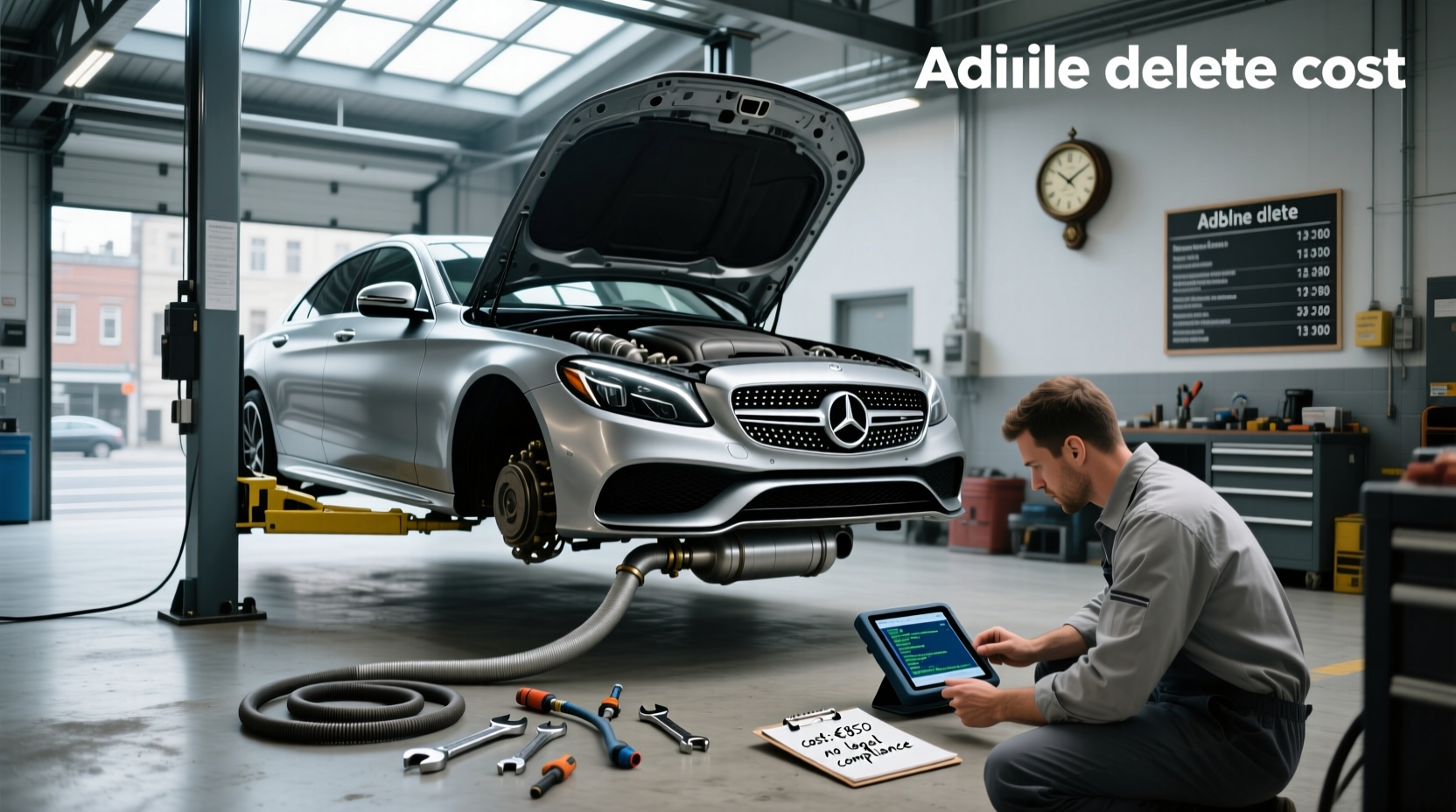
Disabling or removing the AdBlue system—commonly referred to as an AdBlue delete—typically costs between $100 and $500, depending on whether it's a software reflash or a full hardware removal. While some vehicle owners consider this option to avoid repair costs or urea tank issues, it’s crucial to understand that tampering with emissions controls is illegal in most countries, including the U.S. and EU nations, and can lead to fines, failed inspections, and environmental harm 1. This article breaks down the true cost of an AdBlue delete, explores common methods like ECU remapping and emulator installation, and examines the long-term consequences for your diesel vehicle’s performance, legality, and resale value.
What Is an AdBlue Delete?
An AdBlue delete refers to the process of disabling or removing the Selective Catalytic Reduction (SCR) system in modern diesel vehicles. AdBlue, also known as Diesel Exhaust Fluid (DEF), is a urea-based solution injected into the exhaust stream to convert harmful nitrogen oxides (NOx) into nitrogen and water vapor. The SCR system relies on sensors, injectors, and a dedicated fluid tank to function properly.
When owners experience repeated AdBlue-related faults—such as clogged injectors, frozen tanks, or costly component replacements—they may explore deleting the system entirely. A typical AdBlue delete cost varies based on method: software tuning usually ranges from $100–$300, while complete physical removal involving tank extraction and wiring modifications can exceed $500 2.
Common Methods of AdBlue Deletion
There are two primary approaches to performing an AdBlue delete: software-based and hardware-based. Each has different implications for cost, complexity, and detectability.
🔧 Software Delete (ECU Remapping)
This is the most common and affordable method. It involves reprogramming the Engine Control Unit (ECU) to ignore signals from the SCR system. Specialized tools like Kess, K-Tech, or Hexprog II are used to flash new firmware that disables AdBlue monitoring functions.
- Average AdBlue delete software cost: $100–$300
- Time required: 30 minutes to 2 hours
- Tools needed: ECU tuning device, laptop, vehicle-specific software license
- Reversibility: Often reversible if original ECU map is saved
While convenient, this approach doesn’t remove any physical components. Warning lights may be suppressed, but diagnostic trouble codes (DTCs) could still be logged internally, making detection possible during official scans.
🏭 Physical Removal (Hardware Delete)
A full hardware delete goes beyond software changes. It includes:
- Removing the AdBlue tank and pump assembly
- Disconnecting or bypassing the injector nozzle
- Replacing or modifying exhaust aftertreatment components (e.g., SCR catalyst)
- Installing emulator devices to simulate sensor readings
This type of AdBlue delete kit cost can range from $400–$1,500 when factoring in parts and labor. Some industrial vehicles, like Scania trucks or Daewoo construction equipment, require specialized emulators priced over $1,000 due to proprietary CAN-bus protocols 3.
| Delete Type | Avg. Cost Range | Labor Time | Detectable? | Legal Status |
|---|---|---|---|---|
| Software Only | $100–$300 | 1–2 hrs | Yes (via deep scan) | Illegal |
| Emulator + Tune | $200–$600 | 2–4 hrs | Highly likely | Illegal |
| Full Hardware Remove | $500–$1,500+ | 6–12 hrs | Very high chance | Illegal |
Why Do People Consider an AdBlue Delete?
Despite legal and environmental concerns, many diesel vehicle owners look into AdBlue removal cost due to real-world frustrations:
📍 High Maintenance Costs
The SCR system adds complexity. Components like the dosing valve, NOx sensors, and DEF pump degrade over time. Replacing a faulty AdBlue injector can cost $800–$1,500 at dealerships. For fleet operators or van owners, these recurring expenses make deletion seem appealing—even if only for off-road use.
⚡ Cold Weather Issues
AdBlue freezes at around 12°F (-11°C). In colder climates, drivers report starting difficulties, inaccurate level readings, and heater circuit failures. Some opt for a delete simply to eliminate winter-related breakdowns.
🌐 Regulatory Loopholes (Misunderstood)
Some believe that converting a vehicle to “off-road only” usage legitimizes deletion. However, once a vehicle is certified for on-road use, removing emissions equipment—even if not driven on public roads—often violates federal regulations unless formally decommissioned.
Is an AdBlue Delete Detectable?
Yes, modern OBD-II systems store extensive data beyond what’s visible on dashboards. Even with successful software deletes:
- OBD2 scanners used during emissions tests can reveal mismatched calibration IDs
- Missing NOx reduction efficiency data triggers red flags
- Emulators often fail under load testing or dynamic driving cycles
- Physical absence of the tank or lines is obvious during undercarriage inspection
In the U.S., the Environmental Protection Agency (EPA) conducts random audits and imposes penalties up to $45,000 per violation for tampering with emissions systems 4. In Europe, MOT-style tests now include checks for deleted SCR functionality.
Legal and Environmental Consequences
Deleting AdBlue isn’t just risky—it’s against the law in most developed markets.
🌍 Environmental Impact
SCR systems reduce NOx emissions by up to 90%. Removing them increases smog-forming pollutants linked to respiratory diseases and acid rain. A single deleted truck can emit several times the legal limit, undermining air quality efforts in urban areas.
❗ Legal Penalties by Region
- United States: Violates Clean Air Act; fines apply per vehicle modified
- European Union: Not road legal; fails periodic technical inspections (e.g., UK MOT)
- Canada: Prohibited under Canadian Environmental Protection Act (CEPA)
- Australia: Illegal modification under ADR standards; subject to recall or impoundment
Additionally, insurance companies may deny claims if deletion is discovered post-accident, especially if the vehicle was used commercially.
Alternatives to Deleting AdBlue
Before considering a permanent delete, evaluate less extreme solutions that address root problems without breaking laws.
🛒 Use OEM-Compatible Fluid
Poor-quality DEF can cause deposits and injector clogs. Always use ISO 22241-compliant fluid from reputable suppliers. Avoid discount brands with unknown additives.
🧼 Regular System Flushing
If contamination is suspected, professional flushing of the AdBlue lines and injector can restore function. Kits are available for DIY cleaning, though results vary.
📦 Insulated Tank Covers
For cold climates, thermal wraps help prevent freezing. Some aftermarket kits include heating elements powered by the vehicle battery during parking.
🔍 Diagnostic Reprogramming (Not Deletion)
Certain tuners offer conservative recalibrations that reduce AdBlue consumption without disabling the system. These maintain compliance while improving reliability.
Resale Value and Future Implications
Vehicles with deleted emissions systems face major hurdles when resold:
- Pre-purchase inspections often uncover tampering through ECU checksum mismatches
- Dealerships refuse trade-ins on non-compliant vehicles
- Online marketplaces (e.g., Autotrader) prohibit listings of modified emissions systems
- Import/export restrictions apply in many countries
Even if functional, a deleted vehicle may lose 20–40% of its market value compared to a stock counterpart, particularly in regulated regions.
Regional Differences in Enforcement
While the law generally prohibits AdBlue deletion, enforcement varies:
- Germany: Strict TÜV inspections include SCR verification; deletion leads to immediate failure
- UK: MOT test introduced NOx measurement in 2020; deleted vans fail automatically
- U.S.: California Air Resources Board (CARB) actively pursues modifiers; other states follow EPA guidelines
- Rural Areas: Less frequent testing may create false sense of security, but roadside scanners are expanding
Always verify local requirements before modifying any emissions-related system.
Myths vs. Reality About AdBlue Deletes
Misinformation spreads easily in forums and social media groups. Let’s clarify common misconceptions.
❌ Myth: "It Improves Fuel Economy"
Reality: No credible evidence shows improved MPG after deletion. Any perceived gain likely stems from altered engine mapping unrelated to SCR disablement.
❌ Myth: "It Boosts Power"
Reality: SCR systems don’t restrict power output. Any performance increase comes from separate tuning—not the delete itself.
❌ Myth: "It’s Undetectable If Done Right"
Reality: Modern regulatory tools can identify unauthorized calibrations. Manufacturers log calibration fingerprints accessible via dealer-level diagnostics.
How to Spot a Vehicle With a Deleted AdBlue System
If you're buying a used diesel vehicle, here are signs of potential deletion:
- No AdBlue filler cap under the hood or near the fuel door
- Missing warning lights despite low mileage or age
- Unusual exhaust note or excessive smoke under load
- Inconsistent service records showing no DEF top-ups
- ECU checksum errors during independent scan
Request a full diagnostic report from a trusted mechanic before purchase.
Conclusion: Weighing Cost Against Risk
The average cost of an AdBlue delete ranges from $100 for basic software flashing to over $1,500 for comprehensive hardware removal. While it may solve short-term maintenance headaches, the long-term risks—including legal penalties, environmental damage, reduced resale value, and detectability—far outweigh the benefits for most owners. Instead, focus on proper maintenance, using high-quality DEF, and exploring warranty-covered repairs. If your SCR system fails repeatedly, consult an authorized technician before making irreversible changes.
Frequently Asked Questions
- ❓ Can I pass an emissions test with an AdBlue delete?
- No. Vehicles with disabled SCR systems typically emit NOx levels far above legal limits and will fail official emissions testing in regulated regions.
- ❓ Is AdBlue delete reversible?
- Software deletes can often be reversed if the original ECU file was backed up. Hardware removal is harder to undo and may require replacing missing components.
- ❓ Does deleting AdBlue void my warranty?
- Yes. Modifying emissions systems voids manufacturer warranties and may disqualify you from recall services.
- ❓ Are there legal ways to disable AdBlue?
- Only if the vehicle is permanently converted to off-road use and deregistered from public road use, which varies by jurisdiction.
- ❓ What happens if I get caught with a deleted system?
- You may face fines, mandatory restoration costs, failed inspections, and potential liability in case of accidents or recalls.





 浙公网安备
33010002000092号
浙公网安备
33010002000092号 浙B2-20120091-4