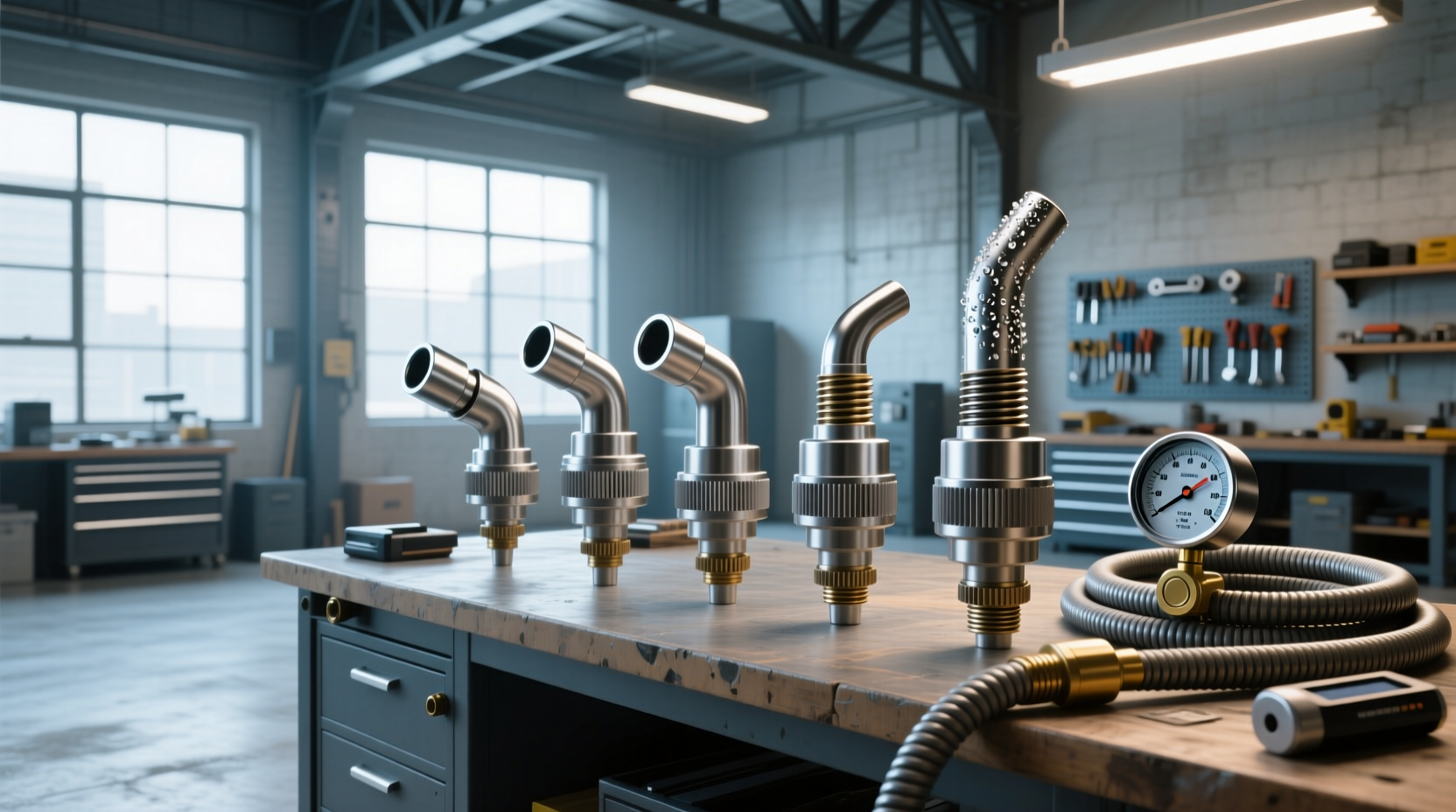
If you're trying to understand air compressor nozzle types and which one works best for inflating tires, using blow-off guns, or adapting to different valve systems, you're not alone. The most common types include standard Schrader chucks, Presta-specific nozzles, dual-valve heads, quick-connect air chucks, and specialty push-on fittings. Each serves a distinct purpose depending on your equipment and application—whether it’s automotive maintenance, bicycle care, or industrial use. This guide breaks down every major nozzle type by function, design, pros and cons, and real-world usability so you can make an informed decision without confusion or guesswork.
Why Nozzle Type Matters for Your Air Compressor Setup
Choosing the correct air compressor nozzle isn't just about fit—it affects safety, efficiency, and accuracy. A mismatched or low-quality nozzle can lead to air leaks, inaccurate pressure readings, slow inflation, or even damage to tire valves. For example, attempting to inflate a Presta valve (common on high-performance bikes) with a standard Schrader-only chuck often results in poor sealing or bent stems. Similarly, using a basic twist-on connector when a locking chuck would provide faster, more secure attachment wastes time and increases frustration.
The term "nozzle" is often used interchangeably with “air chuck,” “inflator head,” or “valve adapter.” While these components are part of the same system, understanding the differences helps clarify what you actually need. Most compressors come with a default Schrader-compatible nozzle, but many users end up upgrading or adding secondary attachments based on evolving needs.
Common Air Compressor Nozzle Types: Features & Use Cases
Beyond basic inflation, nozzle design influences ease of use, durability, response time, and compatibility across vehicles and tools. Below is a detailed breakdown of the primary nozzle types available today.
Schrader Valve Chuck (Standard Automotive)
🛒 Most Common | Compatible with Cars, SUVs, Trucks, Motorcycles
The Schrader valve is the industry standard for automotive tires. It features a spring-loaded pin inside the valve core that opens when pressed by the nozzle. Correspondingly, most air compressor nozzles are designed around this system.
- Twist-On (Threaded) Chucks: These screw onto the tire valve stem to create a seal. They’re inexpensive and widely used but require two hands and extra time to attach and detach.
- Push-On (Straight-On) Chucks: Simply press the nozzle straight onto the valve. Faster than twist-ons, but may leak if not held firmly. Common at gas stations.
- Locking (Auto-Lock) Chucks: Feature a built-in mechanism that locks onto the valve upon contact. Offers hands-free operation and better sealing. Often found on higher-end portable inflators and professional-grade hoses.
✅ Best for: Everyday car owners, fleet maintenance, DIYers who value speed and reliability.
❗ Limitation: Not compatible with Presta valves unless paired with an adapter.
Presta Valve Nozzles (Bicycle-Specific)
🚲 Niche but Essential for Cyclists
Presta valves are thinner and taller than Schrader valves, commonly found on road bikes, mountain bikes, and some e-bikes. Because they lack an internal spring, they rely on external pressure to open.
- Dedicated Presta Nozzles: Designed specifically to fit the narrow diameter and thread pattern of Presta valves. Often include a small lever to tighten the connection manually.
- Universal Dual-Valve Heads: Combine both Schrader and Presta compatibility in one unit. Typically feature a switch or internal sleeve that adjusts automatically based on valve type inserted.
✅ Best for: Bike enthusiasts, multi-sport households, mobile repair kits.
❗ Caution: Never force a Schrader chuck onto a Presta valve—it can bend or break the delicate stem.
Dual-Purpose (Schrader + Presta) Nozzles
🔄 Versatility Across Vehicle Types
As more people own both cars and bicycles, demand has grown for all-in-one solutions. Dual-purpose nozzles eliminate the need to carry multiple attachments.
- Mechanical Switch Models: Require flipping a collar or sliding a ring to toggle between modes. Ensures proper alignment and prevents cross-compatibility errors.
- Automatic Sensing Heads: Detect valve size upon insertion and adjust sealing mechanism accordingly. More advanced and generally more reliable.
⚙️ Design Tip: Look for models with brass internals and rubber O-rings for long-term leak resistance.
📌 User Benefit: Ideal for garages serving mixed fleets (cars, bikes, scooters).
Quick-Connect Air Chucks (For Permanent Hose Installations)
🔧 Speed and Repeatability in Workshop Settings
These nozzles integrate with standard 1/4-inch NPT quick-disconnect couplers, allowing fast tool changes. Instead of screwing a new hose each time, users snap on pre-configured inflators, blow guns, or grease fittings.
- Male vs Female Ends: Ensure compatibility with your compressor’s outlet. Most chucks have male ends that plug into female couplers.
- Modular Systems: Enable building custom toolsets—e.g., one hose with a locking tire chuck, another with a blow gun.
🏭 Best in: Auto shops, home garages with frequent tool switching.
⏱️ Time Saved: Up to 70% reduction in setup time per task compared to threaded connections.
Extension Nozzles & Hose Adapters
📏 Reach and Flexibility for Tight Spaces
Sometimes the compressor hose won’t reach the valve due to wheel well obstructions or compact vehicle designs. Extension nozzles solve this problem.
- Rigid Metal Extensions: Short brass tubes that screw between the hose and chuck. Durable but limited flexibility.
- Flexible Hose Extensions: Add several inches of bendable tubing. Useful for rear axles or recessed valves.
- Swivel Connectors: Allow angular movement during inflation, reducing strain on the valve stem.
🧰 Pro Tip: Pair extensions with a digital gauge to maintain pressure accuracy over longer lines.
Specialty Nozzles: Pin-Type, Push-Fit, and Inflation Tips
🎯 For Non-Tire Applications
Not all air compressor nozzles are meant for tires. Some serve niche purposes:
- Pin-Type Nozzles: Used for inflating sports balls, air mattresses, or inflatable toys. Feature a small protruding pin to depress the internal valve.
- Push-Fit (Barb) Nozzles: Fit directly into rubber bladders or plastic ports without threading. Common in HVAC or pool float inflation.
- Flat Blown Nozzles: Wide openings for directing airflow—used in cleaning debris from engines or drying surfaces.
🌐 Note: These typically don’t measure pressure and should not be used for tire inflation.
How to Choose the Right Nozzle for Your Needs
Selecting the appropriate nozzle involves evaluating four key factors: vehicle type, frequency of use, desired speed, and portability requirements.
Step 1: Identify Your Primary Use Case
📍 Car Owners: Stick with a locking Schrader chuck for fastest, safest inflation.
📍 Bike Riders: Invest in a dedicated Presta or dual-mode nozzle.
📍 Multi-Vehicle Households: Opt for a universal dual-valve head.
📍 Workshop Technicians: Build a kit with quick-connect chucks and modular extensions.
Step 2: Evaluate Connection Style Trade-offs
| Nozzle Type | Seal Quality | Speed | Durability | Price Range |
|---|---|---|---|---|
| Twist-On Schrader | Moderate | Slow | High | $5–$12 |
| Push-On Schrader | Low–Moderate | Fast | Medium | $4–$10 |
| Locking Schrader | High | Very Fast | High | $12–$25 |
| Dual-Valve (Auto) | High | Fast | Medium–High | $15–$30 |
| Presta-Specific | High | Moderate | High | $8–$20 |
| Quick-Connect Modular | High | Very Fast | High | $18–$40+ |
This comparison highlights that while basic nozzles save money upfront, investing in locking or modular systems pays off in repeated use scenarios.
Step 3: Check Material Quality and Seal Integrity
Brass-bodied nozzles resist corrosion and handle high pressures better than plastic or zinc alloy versions. Internal rubber seals (O-rings) degrade over time—choose units where these are replaceable. Poor seals cause gradual air loss, leading to underinflated tires, which reduces fuel economy and increases wear.
🔍 Inspection Tip: Examine the nozzle tip for smooth machining. Burrs or rough edges can damage valve cores.
Common Misconceptions About Air Compressor Nozzles
Despite being a simple component, several myths persist:
- Myth 1: All nozzles work with all valves. ❌
Reality: Schrader and Presta are physically incompatible without adapters. - Myth 2: Push-on chucks are as reliable as locking ones. ❌
Reality: Without mechanical lock, they depend on user grip and can release unexpectedly. - Myth 3: Nozzles don’t affect pressure accuracy. ❌
Reality: Leaks between nozzle and valve result in false PSI readings, especially on analog gauges. - Myth 4: You can’t upgrade your existing hose. ❌
Reality: Many users successfully retrofit hoses with metal push-fit connectors for instant upgrades 1.
Troubleshooting Nozzle Issues
Even quality nozzles can develop problems. Here’s how to diagnose and fix common issues:
Air Leaks During Inflation
Possible causes:
- Worn O-ring – Replace the seal.
- Dirty valve stem – Clean with compressed air or cloth.
- Mismatched valve type – Confirm Schrader vs. Presta compatibility.
- Loose connection – Use a locking chuck instead of push-on.
Nozzle Won’t Stay Attached
If the chuck detaches mid-inflation:
- Check for damaged locking mechanism.
- Ensure valve stem isn’t bent or corroded.
- Verify correct orientation—some dual-head models must be switched manually.
Inaccurate Pressure Readings
Pressure discrepancies often stem from:
- Leakage before the gauge (between nozzle and tire).
- Low-quality analog dials—consider upgrading to digital readouts.
- Hose length affecting response time in long setups.
Can You Upgrade Your Current Air Compressor Nozzle?
Yes—most air compressor hoses use standardized 1/4-inch NPT threads, making upgrades straightforward. Steps to upgrade:
- Unscrew the old nozzle from the hose end.
- Clean the threaded port and inspect for damage.
- Screw on the new nozzle by hand, then tighten gently with a wrench (avoid over-torquing).
- Test for leaks using soapy water solution.
⚡ Popular Upgrade Path: Replace factory plastic push-on chucks with metal locking chucks for improved performance and longevity.
Regional Differences and Standards
While Schrader valves dominate globally, some regions see higher Presta usage due to cycling culture (e.g., Western Europe). Industrial applications may use DIN or French-style valves, though these are rare in consumer markets. Always verify local vehicle standards if importing equipment or traveling internationally.
Maintenance Tips for Long-Lasting Nozzles
To extend nozzle life and ensure consistent performance:
- 🧼 Wipe clean after each use to prevent dust buildup.
- Store in a dry place to avoid moisture-induced corrosion.
- Replace O-rings annually or when signs of cracking appear.
- Avoid dropping—impact can misalign internal mechanisms.
Final Recommendations Based on User Scenarios
Here’s a quick reference guide based on typical user profiles:
- Occasional Car Owner: Standard locking Schrader chuck with integrated gauge.
- Cyclist with Commuter Bike: Dual-mode auto-sensing head with LED light.
- Fleet Manager: Multiple quick-connect chucks with color-coded hoses.
- DIY Mechanic: Kit with Schrader, Presta, extension, and ball-foot chucks.
Frequently Asked Questions (FAQs)
- ❓ What is the nozzle called that you put on a tire valve?
- The device is commonly referred to as an air chuck, tire inflator nozzle, or valve adapter. When it includes a pressure gauge, it's often called a gauge chuck or inflator head.
- ❓ How do I attach a tire inflator to an air compressor at home?
- Most inflators connect via a standard 1/4-inch male NPT thread. Simply screw the nozzle onto the hose end securely. If using a quick-connect system, snap the fitting into the female coupler on your hose.
- ❓ Can I use the same nozzle for car and bike tires?
- Only if it’s a dual-purpose model designed for both Schrader (car) and Presta (bike) valves. Using a car-only nozzle on a Presta valve risks damage and improper inflation.
- ❓ Why does my air compressor nozzle leak air?
- Leaks usually occur due to worn O-rings, dirt in the valve stem, or using the wrong nozzle type. Inspect the seal, clean the connection point, and consider upgrading to a locking chuck.
- ❓ Are metal nozzles better than plastic ones?
- Metal (especially brass) nozzles are more durable, heat-resistant, and less prone to cracking than plastic. They also provide better sealing and longer service life, especially under frequent use.





 浙公网安备
33010002000092号
浙公网安备
33010002000092号 浙B2-20120091-4