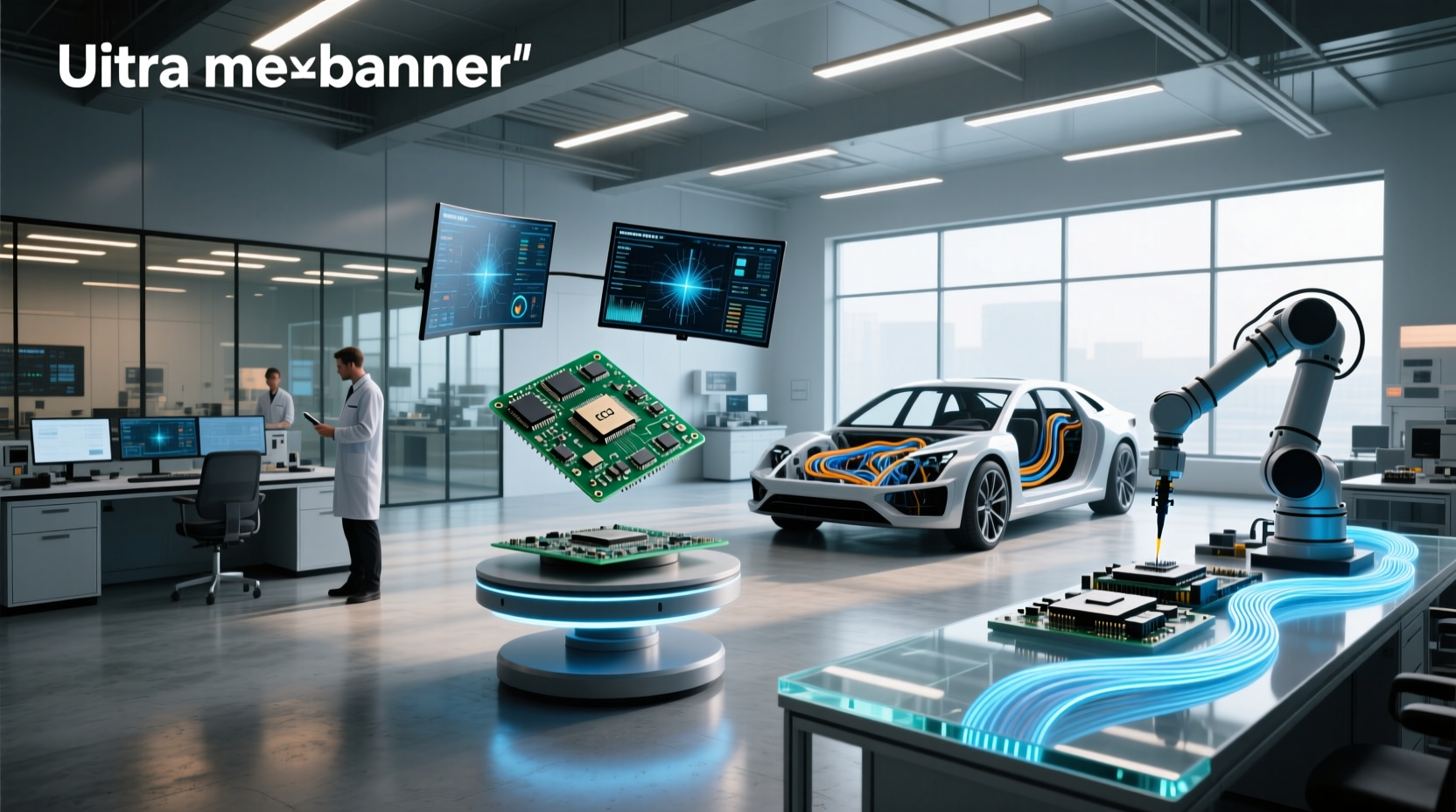
Automotive electronics engineering is the backbone of modern vehicle functionality, integrating electrical and electronic systems to control everything from engine performance to advanced driver assistance. As cars evolve into software-driven machines, understanding automotive electronics engineering has become essential for engineers, technicians, and even informed consumers. This field combines principles of electrical engineering, computer science, and mechanical systems to design, test, and maintain electronic components within automobiles. In this comprehensive guide, we’ll break down the core domains, common challenges, industry trends, and practical knowledge needed to navigate this rapidly advancing sector.
What Exactly Is Automotive Electronics Engineering?
Automotive electronics engineering focuses on developing and managing electronic systems used in vehicles. These systems are responsible for monitoring, controlling, and optimizing various functions across the car. Unlike traditional mechanical systems, modern vehicles rely heavily on embedded electronics to deliver efficiency, safety, connectivity, and comfort 1.
The scope includes powertrain control, infotainment, safety systems, body electronics, and communication networks like CAN (Controller Area Network). Engineers in this domain work on hardware design, firmware development, signal processing, diagnostics, and integration with mechanical subsystems. With the rise of electric vehicles (EVs), autonomous driving, and connected car technologies, the demand for skilled professionals in automotive electronics engineering continues to grow.
Key Categories of Automotive Electronic Systems
Modern vehicles contain hundreds of electronic control units (ECUs) distributed throughout the chassis. These ECUs communicate via high-speed networks and manage specific functions. The four primary categories include:
⚡ Powertrain Electronics
This category manages the engine and transmission systems. Key components include:
- Engine Control Unit (ECU): Regulates fuel injection, ignition timing, air-fuel ratio, and emissions.
- Transmission Control Module (TCM): Controls gear shifting in automatic transmissions. \li>Hybrid/EV Management Systems: Monitor battery state-of-charge, regenerative braking, and motor control.
These systems ensure optimal performance while meeting emission standards and improving fuel economy.
🔧 Safety and Chassis Electronics
Safety-critical systems fall under this umbrella, including:
- Anti-lock Braking System (ABS)
- Electronic Stability Control (ESC)
- Advanced Driver Assistance Systems (ADAS) such as adaptive cruise control, lane departure warning, and automatic emergency braking.
- Airbag Control Modules
These systems use sensors (radar, cameras, ultrasonic) and real-time data processing to prevent accidents and protect occupants.
✨ Infotainment and Connectivity
This area covers user-facing technology designed for convenience and entertainment:
- In-dash navigation and touchscreen interfaces
- Bluetooth, Wi-Fi, and cellular connectivity
- Voice recognition and smartphone integration (e.g., Apple CarPlay, Android Auto)
- Digital radio and audio amplifiers
While often seen as secondary to safety or performance, infotainment systems now play a major role in brand perception and customer satisfaction.
⚙️ Body and Convenience Electronics
These systems enhance daily usability and comfort:
- Power windows, locks, and mirrors
- Lighting control (adaptive headlights, LED management)
- Climate control systems
- Remote keyless entry and push-button start
Body control modules (BCMs) coordinate these features, often using low-power microcontrollers and LIN bus communication.
How Do Automotive Electronic Systems Communicate?
With dozens of ECUs operating simultaneously, reliable communication is critical. Several standardized protocols enable seamless interaction between components:
| Protocol | Data Rate | Primary Use Case |
|---|---|---|
| CAN (Controller Area Network) | 500 kbps – 1 Mbps | Engine, ABS, transmission control |
| LIN (Local Interconnect Network) | 20 kbps | Body electronics (windows, seats) |
| FlexRay | 10 Mbps | High-speed ADAS and drive-by-wire |
| MOST (Media Oriented Systems Transport) | 25–150 Mbps | Infotainment audio/video streaming |
| Ethernet (100BASE-T1 / 1000BASE-T1) | 100 Mbps – 1 Gbps | Autonomous driving, OTA updates |
As vehicles adopt more sensors and computing power, Ethernet is becoming increasingly important due to its high bandwidth and scalability. However, legacy systems still rely heavily on CAN and LIN buses, especially in cost-sensitive applications.
Career Paths in Automotive Electronics Engineering
For those interested in entering the field, several career trajectories exist depending on educational background and specialization:
👥 Roles and Responsibilities
- Embedded Systems Engineer: Develops firmware for ECUs using C/C++ and real-time operating systems (RTOS).
- Hardware Design Engineer: Designs PCBs, selects microcontrollers, and ensures electromagnetic compatibility (EMC).
- Validation & Testing Engineer: Conducts functional testing, fault injection, and compliance checks (e.g., ISO 26262).
- Software Integration Engineer: Integrates multiple ECUs and verifies system-level behavior.
- ADAS Algorithm Developer: Works on sensor fusion, object detection, and path planning for autonomous features.
📌 Educational Requirements
A bachelor’s degree in electrical engineering, computer engineering, or mechatronics is typically required. Many employers prefer candidates with master’s degrees, particularly for research or algorithm development roles. Relevant coursework includes:
- Digital signal processing
- Microcontroller programming
- Control systems theory
- Communication protocols (CAN, SPI, I2C)
- Functional safety standards (ISO 26262)
Hands-on experience through internships, university projects, or open-source contributions significantly improves employability.
Common Challenges in Automotive Electronics Engineering
Despite rapid innovation, engineers face persistent technical and regulatory hurdles:
❗ Electromagnetic Interference (EMI)
Dense packaging of electronic components increases the risk of EMI, which can disrupt sensor readings or cause false triggers in safety systems. Shielding, proper grounding, and filtering are essential mitigation strategies.
🔍 Functional Safety Compliance
The ISO 26262 standard defines safety requirements for electrical/electronic systems in road vehicles. Engineers must follow rigorous processes for hazard analysis, risk assessment (ASIL levels), and validation. Non-compliance can lead to recalls or legal liability.
🌐 Cybersecurity Risks
Connected vehicles are vulnerable to hacking through Bluetooth, Wi-Fi, or OBD-II ports. Secure boot, encrypted communication, and intrusion detection systems are now mandatory in new designs.
🔋 Power Management in EVs
Electric vehicles require efficient power distribution between propulsion, climate control, and auxiliary systems. Battery management systems (BMS) must monitor cell voltages, temperature, and state of health to prevent degradation or thermal runaway.
Trends Shaping the Future of Automotive Electronics
The industry is undergoing a transformation driven by electrification, autonomy, and digitalization. Key trends include:
📈 Centralized Architectures
Instead of hundreds of distributed ECUs, automakers are moving toward zone-based or centralized computing platforms. Companies like Tesla and Volkswagen use powerful domain controllers or vehicle computers that consolidate functions previously handled by separate modules.
🚗 Over-the-Air (OTA) Updates
Similar to smartphones, modern vehicles receive software updates wirelessly. This allows manufacturers to fix bugs, improve performance, and add features post-purchase. However, it requires robust cybersecurity measures and reliable connectivity.
AI Mode Integration
Artificial intelligence is being used for predictive maintenance, voice assistants, and autonomous decision-making. Machine learning models process vast amounts of sensor data to detect anomalies or optimize energy usage.
🏭 Remanufacturing and Repair
Due to the high cost of replacement ECUs, remanufacturing has become a viable alternative. Specialized shops test, repair, and reprogram failed units to OEM specifications, reducing waste and saving money 2.
How to Diagnose Common Automotive Electronic Issues
Even well-designed systems can fail. Here’s how to identify and troubleshoot common problems:
🛠️ Step-by-Step Diagnostic Process
- Check Dashboard Warnings: Look for check engine lights, ABS warnings, or message center alerts.
- Use an OBD-II Scanner: Retrieve diagnostic trouble codes (DTCs) from the ECU. Codes starting with ‘P’ indicate powertrain issues; ‘C’ for chassis; ‘B’ for body; ‘U’ for network faults.
- Inspect Wiring and Connectors: Corrosion, loose pins, or damaged insulation can cause intermittent faults.
- Test Power Supply: Verify voltage at the ECU connector (typically 12V nominal).
- Monitor Live Data: Observe sensor readings (e.g., oxygen sensor, throttle position) to detect anomalies.
- Perform Actuator Tests: Command components like fuel injectors or relays to verify operation.
📍 When to Seek Professional Help
While DIY repairs are possible for simple tasks (e.g., replacing a fuse), complex issues involving ADAS calibration, airbag systems, or CAN bus errors should be handled by trained technicians. Misdiagnosis can lead to safety risks or further damage.
Regional Differences and Standards
Regulations and market preferences vary by region, affecting electronic system design:
- United States: Emphasis on OBD-II compliance, NHTSA safety mandates, and FMVSS standards.
- Europe: Strict adherence to Euro NCAP safety ratings and GDPR for data privacy in connected cars.
- Asia: Rapid adoption of telematics and mobile-first infotainment interfaces, especially in China and Japan.
Engineers working in global companies must account for these variations during product development.
Myths and Misconceptions About Automotive Electronics
Several myths persist among consumers and even some technicians:
- Myth: More ECUs mean better performance.
Reality: Excessive decentralization increases complexity and failure points. Modern trends favor consolidation. - Myth: Aftermarket upgrades always improve functionality.
Reality: Poorly integrated accessories can interfere with factory systems or void warranties. - Myth: Software updates can fix any hardware issue.
Reality: Firmware cannot compensate for failing sensors, corroded connectors, or damaged circuits.
Resources for Learning Automotive Electronics Engineering
For self-learners and students, numerous resources are available:
- Online Courses: Platforms like Coursera and edX offer courses on embedded systems and vehicle networking.
- Development Kits: Tools like Arduino, Raspberry Pi, and CAN shields allow hands-on experimentation.
- Technical Documentation: SAE International and IEEE publish standards and research papers on automotive electronics.
- Forums and Communities: Sites like Stack Overflow, EEVblog, and Reddit’s r/autoservice provide peer support.
Conclusion
Automotive electronics engineering is a dynamic and technically demanding field that sits at the intersection of mechanics, electronics, and software. From ensuring engine efficiency to enabling self-driving capabilities, these systems define the modern driving experience. Whether you're pursuing a career in the industry, maintaining your own vehicle, or simply seeking to understand how today's cars work, grasping the fundamentals of automotive electronics is invaluable. As vehicles continue to evolve, staying informed about emerging technologies, safety standards, and diagnostic methods will remain crucial.
Frequently Asked Questions
- What does an automotive electronics engineer do?
- An automotive electronics engineer designs, develops, and tests electronic systems in vehicles, including engine controls, safety features, infotainment, and communication networks. They work on both hardware and software aspects to ensure reliability, safety, and performance.
- How is automotive electronics different from general electronics?
- Automotive electronics must operate reliably in harsh environments—extreme temperatures, vibration, moisture, and electrical noise. They also adhere to strict safety and regulatory standards like ISO 26262, which are not typically required in consumer electronics.
- Can I study automotive electronics engineering online?
- Yes, many universities and platforms offer online courses in related fields such as embedded systems, vehicle dynamics, and electronic controls. While full degree programs may require labs, foundational knowledge can be gained remotely.
- Are automotive ECUs repairable?
- Yes, many ECUs can be repaired or remanufactured by diagnosing faulty components (e.g., capacitors, processors), replacing them, and reprogramming the unit. This is often more cost-effective than replacement.
- What skills are essential for a career in automotive electronics?
- Key skills include proficiency in C/C++ programming, circuit design, familiarity with communication protocols (CAN, LIN), understanding of control systems, and knowledge of functional safety standards like ISO 26262.





 浙公网安备
33010002000092号
浙公网安备
33010002000092号 浙B2-20120091-4