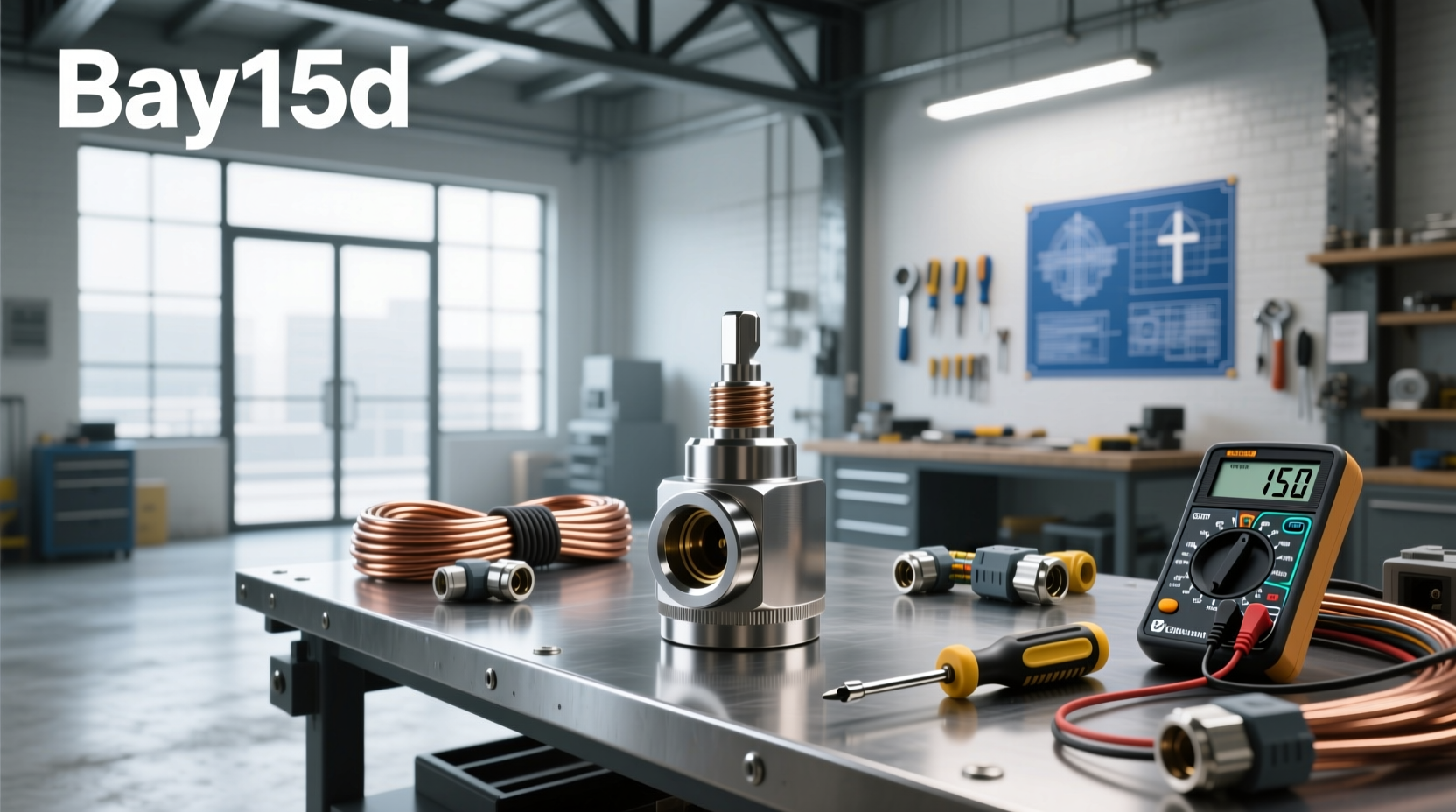
If you're searching for information on a BAY15D socket, you're likely replacing a navigation or signal light on a marine vessel, RV, or specialty vehicle. The BAY15D (also written as BAy15d or BA15d) is a double-contact bayonet base bulb commonly found in red, green, and white navigation lights on boats, particularly those using fixtures from brands like Aqua Signal, Hella, Perko, and Mase. Unlike standard automotive bulbs, the BAY15D features offset pins that ensure correct orientation during installation—a critical safety feature for maritime lighting compliance ✅.
This guide will walk you through everything you need to know about BAY15D sockets: their physical design, electrical specifications, common applications, LED replacement options, compatibility concerns, and best practices for selecting and installing the right bulb. Whether you’re upgrading from halogen to LED, troubleshooting a flickering light, or ensuring your boat meets Coast Guard visibility requirements, understanding the nuances of the BAY15D system is essential 🔧.
What Exactly Is a BAY15D Socket?
The term “BAY15D” refers to a specific type of bulb base, not the socket itself—though people often use “BAY15D socket” when referring to the fixture designed to accept this bulb type. Let’s clarify:
- B = Bayonet mount
- A = Two raised alignment pins (or lugs)
- Y = Pin configuration (offset/double contact)
- 15 = Approximate diameter in millimeters (15 mm)
- D = Double contacts (two electrical connections at the base)
The key distinguishing feature of the BAY15D is its asymmetric pin layout: the two base pins are offset rather than directly opposite each other. This prevents incorrect insertion and ensures proper polarity, which is crucial for colored navigation lights where the red (port) and green (starboard) must face the correct direction 🌐.
It's important not to confuse BAY15D with similar-looking bases such as BA15S (single contact, symmetrical pins) or the more common automotive 1157 bulb, which has a different pin spacing and function despite some visual similarity ⚠️.
Where Are BAY15D Sockets Commonly Used?
BAY15D sockets appear primarily in marine environments but also show up in select industrial, recreational, and emergency vehicles. Key applications include:
Marine Navigation Lights ✅
This is the most frequent use case. Boats required to display sidelights (red on port, green on starboard), stern lights (white), and sometimes tri-color masthead lights utilize BAY15D-based systems. These lights must meet international COLREGs (Collision Regulations) standards for beam angle, intensity, and visibility range (typically 2–3 nautical miles).
Fixtures from manufacturers like Aqua Signal Series 40/50/55, Hella 2984/2986, and Perko Fig. 0375 rely on BAY15D bulbs. Older models originally used incandescent or halogen lamps (e.g., 25W T8), but modern upgrades favor LEDs due to energy efficiency and longevity ⚡.
RV and Specialty Vehicle Lighting 🏭
Some recreational vehicles, trailers, and off-road equipment use BAY15D-style bulbs for marker or clearance lights, especially if they follow European design standards. While less common than in marine contexts, confusion can arise when owners attempt replacements without verifying base type.
Industrial Signal Lamps 👥
In control panels, machinery status indicators, or tower-mounted warning lights, BAY15D bases may be used where vibration resistance and secure locking are needed. Their bayonet design resists loosening under constant movement, making them suitable for harsh environments.
Understanding Voltage, Wattage, and Brightness Specifications
When replacing a bulb in a BAY15D socket, three electrical parameters are critical: voltage rating, power draw (wattage), and luminous output (lumens). Getting these wrong can lead to premature failure, circuit overload, or non-compliance with safety regulations.
Voltage Compatibility: 12V vs. 24V Systems ⚙️
Most marine vessels operate on either 12V DC or 24V DC electrical systems. Always verify your boat’s nominal voltage before purchasing a replacement bulb. Many modern LED BAY15D bulbs are labeled as 12–24V DC compatible, meaning they’ll work across both platforms. However, older halogen bulbs were typically rated for one voltage only (e.g., 12V 25W or 24V 25W).
Using a 12V bulb on a 24V system will cause immediate burnout. Conversely, a 24V bulb on a 12V system will glow dimly or not at all. Always match or exceed voltage compatibility.
Wattage and Power Draw Comparison
Traditional halogen BAY15D bulbs often consume 25 watts. Modern LED equivalents usually draw between 3–6 watts while delivering equal or greater brightness. This reduction significantly lowers strain on onboard batteries and wiring.
| Bulb Type | Typical Wattage | Lumens Output | Lifespan (hours) |
|---|---|---|---|
| Halogen (T8 25W) | 25 W | ~200–250 lm | 1,000–2,000 |
| LED (Standard) | 3–6 W | 300–400 lm | 30,000+ |
| LED (High-Output) | 6–10 W | 400–600 lm | 50,000+ |
Note: Some high-output LED versions claim visibility up to 3+ nautical miles, meeting USCG requirements for powered vessels over 12 meters 1.
Lumen Requirements and Visibility Standards 🔍
For navigation lights, brightness isn’t just about preference—it’s regulated. According to COLREGs Annex I, sidelights must provide at least 1 candela (cd) of intensity within a 112.5° arc. Many OEM bulbs produce around 25–30 cd, while upgraded LEDs can reach 30–50 cd or higher.
Look for bulbs tested and certified to ABYC (American Boat & Yacht Council) or ISO 21717 standards. Reputable suppliers often list beam angles (e.g., 110° horizontal, 20° vertical) and candlepower ratings to help ensure compliance.
Can You Use an LED Bulb in a BAY15D Socket? Yes, But With Caveats ✨
Yes, LED bulbs are fully compatible with BAY15D sockets—but only if they are specifically designed for that base and application. Simply dropping in any generic LED can lead to problems:
- Polarity Sensitivity: LEDs are diodes and require correct polarity. Although the BAY15D socket enforces mechanical orientation, reverse-wired circuits can still damage LEDs.
- Heat Dissipation: Poorly designed LED bulbs trap heat in enclosed fixtures, shortening lifespan.
- Optical Alignment: Some cheap LEDs emit light in all directions, failing to focus the beam correctly through the lens.
- Color Rendering: Red and green LEDs must emit precise wavelengths to pass inspection. Off-color tints may not comply.
Additionally, consider whether your fixture requires a sectored bulb. Traditional navigation lights use internal baffles or lenses to create directional beams. A full-emission LED might wash out the sectoring, causing stray light that violates regulations ❗.
Tips for Choosing the Right BAY15D LED Replacement
Selecting a reliable LED replacement involves more than matching the base. Here’s what to evaluate:
1. Base Accuracy and Pin Offset ✅
Ensure the product explicitly states “BAY15D” or “double contact indexed bayonet.” Avoid listings that say “BA15D” without confirming offset pins, as some vendors misuse terminology. Measure pin distance: true BAY15D has ~7mm and ~13mm offsets around the 15mm diameter base.
2. Color Temperature and Chromatic Compliance 🎨
For white anchor or stern lights, choose cool white (6000K–7000K) for maximum visibility. For red and green sidelights, ensure the LED emits within regulated color bands:
- Red: 620–750 nm wavelength
-
: 495–570 nm wavelength
Some premium LEDs integrate multiple chips (tri-color) into a single bulb for masthead units.
3. Lens and Beam Pattern Design 🔦
The best LED replacements replicate the original filament position and beam spread. Look for terms like “filament-matched,” “directional emitter,” or “optically focused.” Avoid omnidirectional bulbs unless your fixture has robust internal reflectors.
4. Dimmability and Compatibility with Existing Switches ⚡
If your navigation lights are controlled by a dimmer or PWM (pulse-width modulation) circuit, confirm the LED supports it. Non-dimmable LEDs may flicker or fail prematurely.
5. Build Quality and IP Rating 🛠️
Marine-grade LEDs should have waterproof seals (IP67 or higher), corrosion-resistant bases, and shock-absorbing housings. Check for potted drivers and conformal coating on circuit boards.
Common Mistakes When Replacing BAY15D Bulbs
Even experienced boaters make errors when upgrading BAY15D bulbs. Here are frequent pitfalls and how to avoid them:
Mistake #1: Assuming All Bayonet Bases Are Interchangeable ❌
BA15S, BAU15S, BAY15D, and 1157 all look similar but aren't interchangeable. Inserting a BA15S into a BAY15D socket may seem to fit but results in poor contact and intermittent operation.
Mistake #2: Ignoring Fixture Ventilation 🌬️
Enclosed navigation lights trap heat. Even efficient LEDs generate thermal stress. Choose low-wattage models (<6W) and avoid overdriving circuits.
Mistake #3: Skipping Polarity Checks 🔋
Before inserting an LED, verify positive/negative wiring at the socket terminals. Reverse polarity kills LEDs instantly. Use a multimeter to test if unsure.
Mistake #4: Using Non-Sectored LEDs in Sectorized Fixtures 🚫
Older navigation lights depend on precise internal baffling. An LED that floods the chamber with light can create illegal glare outside the designated arc.
How to Test and Install a BAY15D Bulb Safely
Follow these steps to replace a BAY15D bulb without damaging the socket or violating safety codes:
- Disconnect Power: Turn off the boat’s main switch or unplug the light circuit.
- Remove the Lens or Housing: Use appropriate tools to open the fixture without cracking plastic.
- Inspect the Socket: Look for corrosion, bent contacts, or melted insulation. Clean with electrical contact cleaner if needed 🧼.
- Align the Pins: Match the bulb’s offset pins to the socket slots. Do not force insertion.
- Push and Twist: Gently push down and rotate clockwise (~30°) until it locks.
- Reconnect and Test: Restore power and observe beam pattern and color accuracy.
If the light doesn’t turn on, check fuse, wiring continuity, and polarity. If it flickers, suspect poor grounding or incompatible driver electronics.
Frequently Asked Questions (FAQ)
- Can I use a BAY15D LED bulb in an old Aqua Signal mast light?
- Yes, provided the LED is designed for navigational use with correct beam patterning and color compliance. Opt for a sectored or OEM-replacement model rather than a generic LED.
- Is BAY15D the same as 1157?
- No. While both are dual-contact bayonets, the 1157 has symmetrical pins and different dimensions. BAY15D uses offset pins to prevent misalignment, making them mechanically incompatible.
- What does 'indexed' mean in BAY15D context?
- 'Indexed' refers to the offset pin design that aligns the bulb in one specific orientation, ensuring correct electrical polarity and optical alignment in directional fixtures.
- Do BAY15D LED bulbs require resistors or decoders?
- Generally no, unless your boat has a CAN bus system that monitors bulb integrity. In such cases, flickering may occur, requiring load resistors or error-canceling modules.
- How long do BAY15D LED navigation bulbs last?
- Quality marine LEDs last 30,000 to 50,000 hours—over 10 years of typical seasonal use. Lifespan depends on heat management, moisture exposure, and voltage stability.





 浙公网安备
33010002000092号
浙公网安备
33010002000092号 浙B2-20120091-4