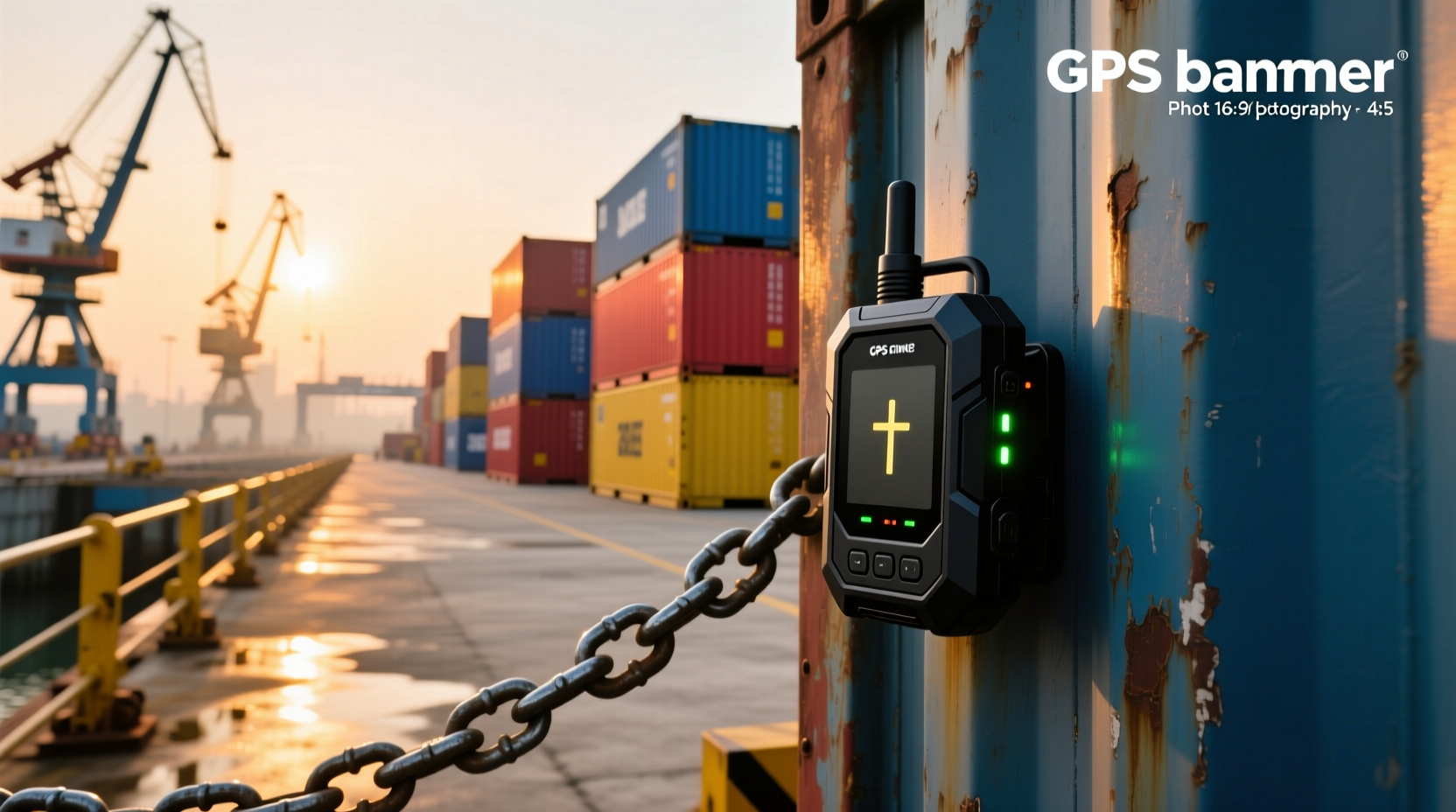
When managing global supply chains, knowing the real-time location and condition of shipping containers is critical. A reliable container GPS tracking device provides continuous visibility across land and sea, helping prevent theft, reduce delays, and improve operational efficiency. These trackers combine GPS, cellular or satellite communication, and sensors to deliver accurate location data, temperature readings, shock detection, and door status alerts—essential for high-value or time-sensitive shipments1. Whether you're a logistics manager, freight forwarder, or importer, selecting the right device involves evaluating durability, battery life, connectivity options, and integration capabilities with existing fleet management systems.
Why Use GPS Tracking for Shipping Containers?
Global trade relies on the seamless movement of goods across multiple transport modes—ships, trains, trucks—and through various ports and customs checkpoints. During these transitions, containers can go missing, be delayed, or even tampered with. Traditional methods like manual logs or port check-ins offer limited insight and are often outdated by the time they’re reported. In contrast, a dedicated GPS tracking device for containers enables end-to-end monitoring from origin to destination.
One major benefit is improved security. According to industry reports, cargo theft costs the U.S. economy over $50 billion annually, with intermodal containers being frequent targets2. A GPS tracker allows immediate response if a container deviates from its planned route or is opened unexpectedly. Additionally, real-time tracking supports better customer service by enabling accurate delivery estimates and proactive issue resolution.
How Do Container GPS Trackers Work?
A typical container GPS tracking system consists of a ruggedized hardware unit attached to the container, usually magnetically or via mounting brackets. The device uses built-in GPS receivers to determine its geographic position. This data is then transmitted using either cellular networks (GSM/LTE-M/NB-IoT) or satellite communication, depending on coverage availability.
In areas with strong cellular signal—such as urban centers or major highways—cellular-based trackers provide frequent updates at lower cost. However, during oceanic transit or remote overland routes, satellite-connected devices become essential because they maintain connectivity where cell towers are absent. Some advanced models automatically switch between cellular and satellite modes based on signal strength and location, ensuring uninterrupted tracking throughout the journey.
Data transmission frequency can vary. Basic units may report every few hours to conserve battery, while premium trackers support real-time updates every few minutes when powered externally (e.g., via solar panels). Most devices also include internal batteries that last months or even years under normal reporting intervals.
Key Features to Evaluate in a GPS Tracking Device
Not all GPS trackers are created equal. When comparing options for container use, several technical and operational factors should guide your decision:
📍 Durability and Environmental Protection
Shipping containers face extreme conditions: saltwater exposure, temperature swings (-40°C to +85°C), vibration, and physical impacts. Therefore, any GPS tracking device must have a high ingress protection (IP) rating—ideally IP67 or higher—to resist dust and water immersion. Rugged enclosures made from UV-resistant polymers or aluminum alloys help ensure long-term reliability.
🔋 Battery Life and Power Options
Battery-powered trackers typically last between 3 months and 3 years, depending on update frequency and environmental conditions. For extended deployments, look for models with low-power modes or configurable reporting schedules. Solar-assisted trackers extend operational life significantly, especially on long-haul routes with consistent sunlight exposure.
Some devices support external power inputs, which is useful when containers are regularly connected to refrigerated units (reefers) or terminal power sources. However, reliance on external power limits flexibility during unpowered storage or transport phases.
📡 Connectivity: Cellular vs Satellite
Cellular tracking is cost-effective and widely available in developed regions but fails during transoceanic shipping or in rural areas without network coverage. Satellite-based systems (like Iridium or Globalstar) fill this gap but come at a higher hardware and subscription cost. Hybrid models that combine both technologies offer the best balance of coverage and affordability, switching intelligently between networks as needed.
| Feature | Cellular-Only Tracker | Satellite Tracker | Hybrid Tracker |
|---|---|---|---|
| Global Coverage | Limited (no ocean coverage) | Full global | Full global |
| Update Frequency | Every 5–60 mins | Every 15–120 mins | Adaptive |
| Monthly Cost | $5–$15 | $25–$50 | $20–$40 |
| Battery Life | 6–24 months | 3–12 months | 1–3 years |
| Best For | Domestic/Regional Moves | Transoceanic Shipments | Mixed-Mode Logistics |
⚙️ Sensor Integration and Data Logging
Advanced container GPS devices go beyond location tracking. Integrated sensors monitor environmental conditions such as:
- 🌡️ Temperature (critical for pharmaceuticals, food, chemicals)
- 💧 Humidity (important for electronics or textiles)
- 📦 Door open/close status (via reed switches or accelerometers)
- 🚨 Shock and tilt detection (indicates potential tampering or rough handling)
Data logging ensures that even if the signal is lost temporarily, information is stored locally and uploaded once connectivity resumes. This feature is particularly valuable during long sea voyages where intermittent connectivity is expected.
🌐 Platform Compatibility and Alerts
The value of a GPS tracker depends not just on data collection but also on how easily it can be accessed and acted upon. Most providers offer web or mobile dashboards where users can view container locations on maps, set geofences, and receive automated alerts via email or SMS.
Geofencing allows you to define virtual boundaries around ports, warehouses, or cities. If a container enters or leaves a zone, an alert is triggered. Similarly, motion detection alerts notify managers if a stationary container starts moving unexpectedly—useful for preventing unauthorized relocation.
Common Use Cases and Industry Applications
Different industries leverage container GPS tracking for specific purposes:
🏭 Logistics and Freight Forwarding
For third-party logistics (3PL) providers, GPS tracking enhances transparency for clients. Real-time updates allow accurate Estimated Times of Arrival (ETAs), reducing demurrage and detention charges caused by miscommunication. It also simplifies proof-of-delivery processes and supports compliance with contractual SLAs.
🛒 Retail and E-commerce Supply Chains
Retailers managing inventory from overseas suppliers use GPS trackers to anticipate stock arrivals and plan warehouse staffing accordingly. With rising consumer expectations for fast delivery, having precise shipment visibility helps avoid stockouts and improves demand forecasting accuracy.
🏥 Healthcare and Pharmaceuticals
Cold chain integrity is vital for vaccines, biologics, and other temperature-sensitive medical products. A GPS tracking device equipped with temperature sensors ensures that required ranges (e.g., 2–8°C) are maintained throughout transit. Any deviation triggers immediate corrective action, preserving product efficacy and meeting regulatory requirements like GDP (Good Distribution Practice).
🔧 Industrial Equipment and High-Value Cargo
Heavy machinery, construction equipment, and luxury goods are prime targets for theft. GPS-enabled asset tracking deters criminals and aids law enforcement in recovery efforts. Some insurers even offer reduced premiums for companies that implement active tracking solutions.
Installation and Deployment Best Practices
Proper installation affects both performance and longevity. Here are key considerations:
- 📌 Mounting Location: Attach the device inside the container near the front door, away from direct contact with cargo. Avoid placing metal objects nearby that could block GPS signals.
- 🧲 Magnetic vs Permanent Mount: Magnetic mounts allow quick deployment and reuse across containers, while permanent installations (screws or epoxy) offer greater resistance to tampering.
- 🔋 Battery Check Schedule: Even long-life batteries degrade over time. Establish a routine inspection process before reloading containers.
- 🌐 Network Configuration: Verify that the SIM card or satellite module is activated and roaming-enabled for international travel.
Before deploying a large number of units, conduct field tests under realistic conditions to validate signal acquisition, battery consumption, and alert responsiveness.
Limitations and Challenges of Current Technology
Despite advancements, GPS tracking for containers has limitations:
- ❌ Signal Obstruction: Inside steel-walled containers, GPS signals can be weak or blocked entirely. Devices often rely on cached last-known positions until they regain sky view after unloading.
- ❌ Cost of Ownership: Beyond upfront hardware costs ($100–$300 per unit), ongoing subscription fees for data plans add up, especially for satellite-linked devices.
- ❌ Tampering Risk: While most trackers are designed to be discreet, determined thieves may locate and disable them. Anti-tamper alarms help, but aren’t foolproof.
- ❌ Data Overload: Without proper filtering, constant alerts can overwhelm operations teams. Effective implementation requires configuring meaningful thresholds and escalation protocols.
Choosing the Right Device: Decision Framework
To select the best container GPS tracking solution, ask yourself the following questions:
- What is the primary route? Domestic moves may only need cellular; global shipments require satellite or hybrid.
- How sensitive is the cargo? Perishable or high-value items justify investment in sensor-rich models.
- What is the budget? Consider total cost of ownership, including hardware, installation, and monthly service fees.
- Do you need real-time updates? Frequent polling increases accuracy but drains battery and raises costs.
- Is integration with existing software necessary? Ensure compatibility with TMS (Transportation Management Systems) or ERP platforms via APIs.
No single device fits all scenarios. Evaluate pilot programs with a small batch of containers before scaling up.
Legal and Ethical Considerations
While tracking assets is generally legal, privacy laws vary by jurisdiction. In some countries, monitoring containers carrying personal belongings (e.g., household goods in moving containers) may require disclosure to the owner. Additionally, covertly tracking individuals (even within company vehicles) can violate wiretapping or surveillance statutes. Always consult legal counsel before implementing tracking policies involving people or private property.
Future Trends in Container Tracking Technology
Emerging innovations are enhancing the capabilities of GPS tracking systems:
- ✨ eSIM and Multi-Network Support: Embedded SIMs allow automatic switching between carriers, improving connectivity resilience.
- ✨ AI-Powered Analytics: Machine learning algorithms predict delays based on historical traffic, weather, and port congestion patterns.
- ✨ Blockchain Integration: Immutable logs of container movements enhance trust among stakeholders in complex supply chains.
- ✨ Low Earth Orbit (LEO) Satellites: New constellations promise faster, cheaper satellite communications for remote tracking.
As IoT adoption grows, container tracking will shift from reactive monitoring to proactive supply chain optimization.
Frequently Asked Questions (FAQs)
- Can a container GPS tracker work underwater or inside a sealed container?
- No GPS signal can penetrate steel walls or water effectively. Trackers store data internally and transmit it once exposed to the sky or after opening the container.
- How long do batteries last in container GPS devices?
- Battery life ranges from 3 months to 5 years, depending on reporting frequency, environment, and whether solar charging is available.
- Are there monthly fees for using a GPS tracking device?
- Yes, most devices require a data plan subscription, typically ranging from $5/month for basic cellular to $50/month for satellite services.
- Can I track a container in real time across oceans?
- Only satellite-enabled or hybrid trackers provide real-time updates during sea transit. Cellular-only devices lose connection once out of range.
- Is it possible to hide a GPS tracker on a shipping container?
- Yes, many compact, magnetic devices can be discreetly placed inside or under the container, though concealment doesn't guarantee immunity from detection.





 浙公网安备
33010002000092号
浙公网安备
33010002000092号 浙B2-20120091-4