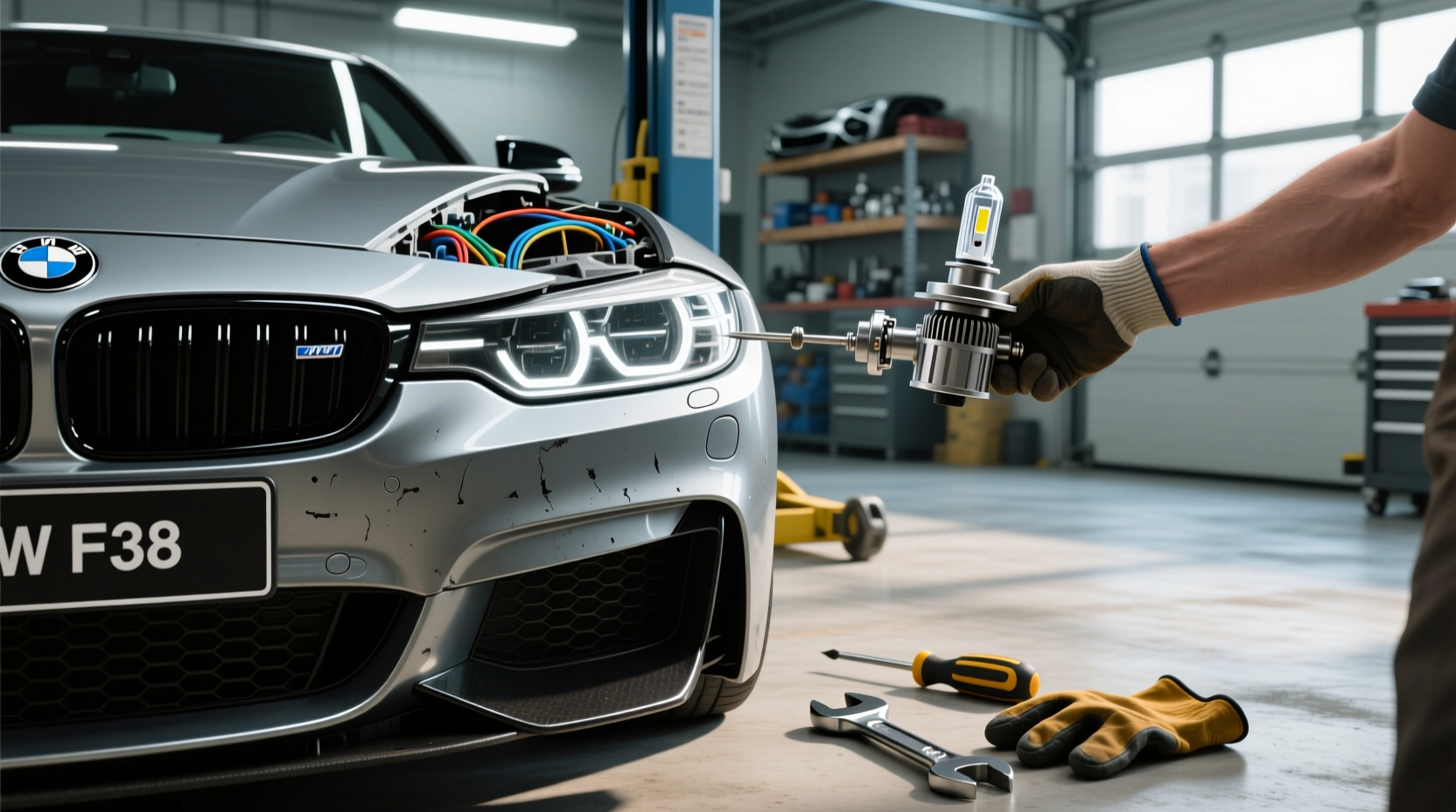
If you're searching for f30 headlight replacement, you’re likely dealing with dim lighting, aging projectors, or a desire to upgrade your 2012–2019 BMW 3 Series (F30) for better visibility and aesthetics. The good news is that replacing or upgrading your F30 headlights is entirely feasible as a DIY project, but it requires understanding key differences in bulb types (halogen vs. HID vs. LED), housing compatibility, wiring needs, and potential coding requirements. Whether you're switching from factory halogen to full LED assemblies or swapping out damaged units, knowing what to look for—like LCI vs. pre-LCI designations, plug-and-play functionality, and OEM+ fitment—can save time, prevent errors, and ensure optimal performance.
Why Replace or Upgrade Your F30 Headlights?
There are several reasons drivers consider F30 headlight replacement. Some are practical, others aesthetic, and many involve both. Understanding your motivation helps determine whether a simple bulb swap will suffice or if a full housing replacement is necessary.
- Diminished Performance: Over time, projector lenses haze over, reflectors degrade, and halogen bulbs lose brightness. This reduces nighttime visibility and increases driver fatigue.
- Outdated Technology: Base-model F30s came with halogen low beams, which lack the clarity and reach of modern LED or HID systems.
- Aesthetic Appeal: Later models (LCI) feature sleeker LED DRL signatures. Many owners seek an OEM+ look by installing LCI-style or CSL-inspired units.
- Damaged Units: Cracks, moisture intrusion, or impact damage necessitate full assembly replacement rather than internal repair.
- Safety Compliance: Misaligned or degraded lights can fail inspections or reduce conspicuity in poor weather.
Understanding F30 Headlight Types and Generational Differences
One of the most critical factors in any BMW F30 headlight replacement is identifying your car’s original configuration. There are two major variants across the 2012–2019 production run: pre-LCI (Life Cycle Impulse) and post-LCI models, each with distinct headlight designs and technologies.
Pre-LCI (2012–2015) vs. LCI (2016–2019)
The visual and functional differences between these generations affect compatibility and upgrade paths:
- Pre-LCI (2012–2015): Features round fog light housings and simpler headlight clusters. Available with halogen, Xenon (HID), or optional LED daytime running lights (DRLs), but not full LED low beams unless specified on higher trims.
- LCI (2016–2019): Introduced updated front fascia with angular fog light intakes and standard LED low/high beams on most trims. These include dynamic turn signals and more refined DRL patterns.
Swapping between them isn’t always plug-and-play. For example, adding LCI LED headlights to a pre-LCI F30 may require retrofitting new wiring harnesses, updating the Light Module (FRM), or coding via tools like BimmerCode or ISTA.
Bulb Type Breakdown: Halogen vs. HID vs. LED
Your replacement strategy depends heavily on your current setup:
| Type | Low Beam Bulb | High Beam Bulb | Pros | Cons |
|---|---|---|---|---|
| Halogen | H7 | H7 | Inexpensive, easy to replace | Poor output, short lifespan, yellow tint |
| HID/Xenon | D1S | H7 | Bright white light, long life, OEM quality | Requires ballasts, warm-up delay, costly replacement |
| LED | Integrated Array | Integrated Array | Instant on, high efficiency, modern look | Expensive, complex integration, potential coding needed |
For true upgrades, moving from halogen to either HID or full LED assemblies offers significant gains in illumination and style.
Replacement Options: Bulbs vs. Assemblies vs. Retrofit Kits
When considering f30 headlight replacement, there are three primary approaches:
1. Bulb-Only Replacement (e.g., H7 LED Bulbs)
Some owners attempt to upgrade halogen headlights by installing aftermarket LED bulbs in place of stock H7s. While this seems cost-effective, it comes with caveats:
- Beam Pattern Issues: Halogen projectors are designed for filament-based light sources. LED bulbs often scatter light, causing glare and failing DOT/ECE regulations.
- CAN-Bus Errors: Lower power draw of LEDs may trigger “bulb out” warnings without resistors or coding.
- Heat Management: Poorly designed LED bulbs can overheat inside enclosed housings.
This method is generally not recommended for low beams in reflector or projector halogen units. It works better for fogs or parking lights.
2. Full Headlight Assembly Swap
Replacing the entire headlight unit ensures proper optics, alignment, and technology integration. Common choices include:
- OEM LCI LED Headlights: Direct replacements for later models; can be retrofitted to earlier F30s with modifications.
- Aftermarket LED Assemblies: Offer styles like CSL, DTM, or laser-inspired looks. Quality varies significantly—some use proper projectors, others fake the appearance with surface LEDs.
- Used OEM Units: Salvage-yard options can save money but risk moisture damage or mismatched wear.
Key considerations:
- Plug-and-Play Compatibility: True plug-and-play means no rewiring. Verify connector types match your chassis.
- Side-Specific Fitment: Left and right units differ due to beam cutoff design. Order correctly.
- AFS (Adaptive Front Lighting System): If your car has AFS, replacement units must support swiveling mechanisms.
3. Professional Retrofit (Projector + LED Integration)
For enthusiasts seeking maximum performance without changing the outer lens, a professional retrofit involves opening the headlight housing and installing high-quality LED projectors (e.g., Morimoto). Benefits include:
- Superior beam control and output
- Maintains factory appearance
- Can be tuned for perfect alignment
Drawbacks:
- Labor-intensive and expensive
- Breaks factory seal; resealing is critical to prevent condensation
- Requires expertise in disassembly and optical alignment
Step-by-Step Guide to Replacing F30 Headlights
Replacing a headlight on the F30 platform is more involved than on some vehicles due to tight engine bay packaging. Here's a realistic overview of the process ⚙️:
- Prepare Tools: You’ll need T30 and T25 Torx bits, a flathead screwdriver, gloves, and possibly wheel well liner clips.
- Remove Front Wheel: Access to the rear of the headlight is limited. Removing the front wheel provides space to work behind the liner.
- Detach Inner Fender Liner: Unclip the plastic covers behind the wheel well. Be gentle—plastic degrades over time.
- Locate Mounting Bolts: Four bolts secure each headlight: two at the top near the hood latch, one inner side near the radiator, and one accessible only from behind the wheel well.
- Disconnect Electrical Connectors: Unplug the main harness, washer nozzle (if equipped), and any auxiliary connectors.
- Remove Old Unit: Gently pull the headlight forward while guiding it out of the bumper channel.
- Install New Unit: Align tabs and pins, reconnect all plugs, and torque bolts to ~1.5–2.0 Nm to avoid cracking.
- Reassemble & Test: Reverse removal steps, then check beam pattern and operation.
⏱️ Expect 45–90 minutes per side depending on experience. First-time users should allow extra time.
Common Pitfalls and How to Avoid Them
Many f30 headlight replacement attempts go wrong due to overlooked details. Here are frequent issues:
- Misordered Parts: Ordering a left-side unit for the right or getting a halogen-only housing when you need Xenon compatibility. Always verify part numbers against realoem.com or ETK diagrams.
- Ignoring Coding Needs: Adding LED headlights to a halogen-equipped F30 may require programming the FRM module to recognize the new system and disable error messages.
- Poor Sealant Application: After installation, ensure the gap between headlight and fender is sealed properly to prevent water ingress.
- Incorrect Beam Alignment: Even OEM units can misalign during install. Use a wall test at 25 feet: top of low beam should be level with center of headlight.
- Buying Low-Quality Aftermarket: Some brands cut corners on lens clarity, UV coating, or internal reflectors. Look for IP67 ratings, clear branding, and verified reviews discussing longevity.
Cost Considerations and Value Trade-offs
Prices vary widely based on source and type ✅:
- Used OEM Units: $100–$300. Risky but budget-friendly. Inspect for cloudiness and moisture rings.
- New Aftermarket Assemblies: $500–$1,200/pair. Brands like DEPO, Spyder, Anzo offer mixed reliability. Read user reports on forums like Bimmerpost or Reddit r/F30.
- Genuine OEM LCI LED: $900–$1,400/pair. Best fit, finish, and durability. Often sourced from dealers or specialty recyclers.
- Professional Retrofit: $1,500+. Highest performance but niche appeal.
Consider total cost: labor (if not DIY), alignment tools, potential coding devices (like BimmerLink), and warranty terms.
Where to Buy F30 Headlights: Trusted Sources and Red Flags
🛒 Purchasing decisions matter. While eBay and AliExpress list many options, vet sellers carefully:
- Check Feedback: Look for consistent ratings and detailed photos from buyers.
- Ask About Warranty: Reputable vendors offer 1-year minimum coverage against defects.
- Beware of "OEM Style": This usually means imitation. True OEM parts carry BMW part numbers and branding.
- Preferred Suppliers: Companies like ECS Tuning, The Bimmer Bin, Bayoptiks, and Bimmer Plug have established reputations for accurate listings and fitment data.
Legal and Safety Implications
Not all upgrades are road-legal. In the U.S., FMVSS 108 regulates headlight performance. Aftermarket units must meet beam pattern, intensity, and labeling standards. Non-compliant lights can result in failed inspections or citations.
🔧 Tip: Look for DOT/SAE or E-mark certification on packaging. Avoid units with excessive blue tint or glare—these often violate regulations.
Final Recommendations Based on Use Case
No single solution fits all. Here’s how to decide:
- On a Tight Budget? Stick with OEM halogen bulbs or used OEM assemblies. Avoid cheap LED bulbs in halogen housings.
- Want Better Visibility? Invest in genuine LCI LED headlights or a professional retrofit.
- Seeking Sporty Styling? Choose reputable aftermarket CSL or DTM-style units with proven beam performance.
- Keeping Long-Term Value? OEM replacements preserve resale appeal better than flashy aftermarket designs.
Frequently Asked Questions
- Can I install LED headlights on a halogen F30 without coding?
- No, most LED headlight assemblies require coding to disable bulb monitoring and activate features like DRLs. Failure to code typically results in error messages.
- Are LCI headlights compatible with pre-LCI F30 models?
- Physically, yes—with minor trimming sometimes needed. Electrically, they may require harness adapters or FRM updates. Coding is almost always necessary.
- How do I know if my F30 has halogen or Xenon headlights?
- Check the lens: Xenon units have a distinctive blue tint when off and say "D1S" on the cap. Alternatively, consult your VIN via realoem.com or check iDrive settings under vehicle status.
- Do I need to remove the bumper to replace F30 headlights?
- No, but removing the front wheel and inner fender liner gives much better access to mounting bolts, making the job far easier.
- What tools are required for F30 headlight replacement?
- You'll need T25 and T30 Torx drivers, gloves, and basic hand tools. A socket extension helps reach rear bolts. No special BMW tools are required.





 浙公网安备
33010002000092号
浙公网安备
33010002000092号 浙B2-20120091-4