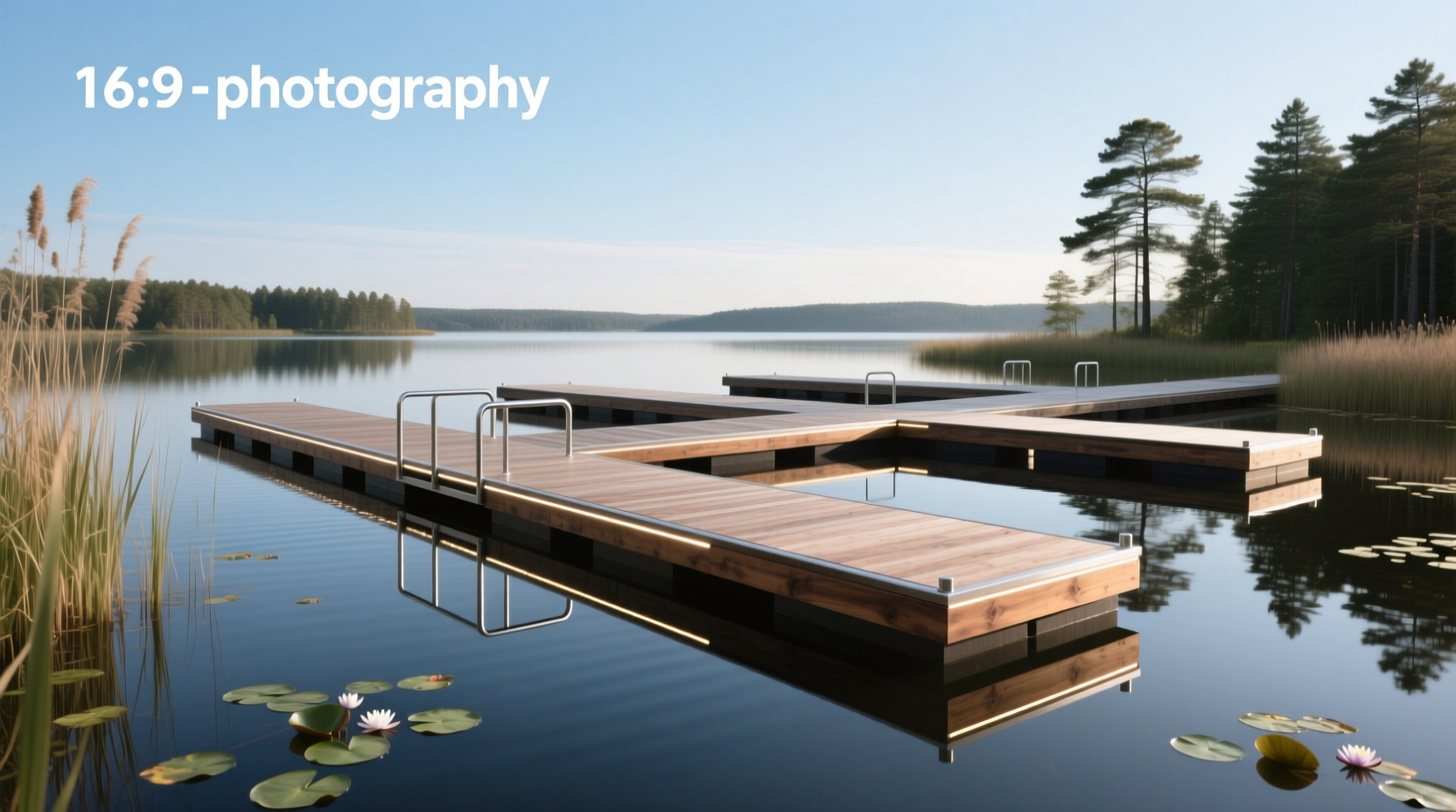
Floating dock blocks are modular, buoyant platforms designed to support docks on water without fixed pilings, making them ideal for fluctuating water levels and soft lakebeds. Unlike traditional docks that rely on permanent posts driven into the lake floor, floating dock systems use sealed, high-density materials like polyethylene or foam-filled drums to stay afloat 1. These blocks form the foundation of a stable, movable structure that can be repositioned seasonally or as water conditions change. Whether you're building a small fishing platform or a full-sized boat-access dock, understanding how to select, assemble, and maintain floating dock blocks is essential for long-term performance and safety.
How Floating Dock Blocks Work
Floating dock blocks function by displacing water to generate buoyancy. Each block acts as an independent float, supporting weight based on its volume and material density. Most modern systems use closed-cell foam or air-filled chambers encased in durable plastic shells—typically made from UV-resistant high-density polyethylene (HDPE). This construction prevents water ingress and resists degradation from sunlight, algae, and temperature swings 2.
The principle behind their operation follows Archimedes’ law: the upward buoyant force equals the weight of the displaced water. For example, a standard 4' x 4' dock block with a volume of about 64 cubic feet can displace roughly 4,000 pounds of water. However, only a portion of this capacity is usable—typically around 50–70%—to ensure stability and prevent submersion under load. Manufacturers often rate each block at 1,500 to 2,500 lbs net lift depending on design and size.
These blocks connect via interlocking mechanisms—such as male-female edges, snap clips, or threaded rods—to create rigid, expandable platforms. Some advanced models include integrated channels for attaching decking, handrails, ladders, or even pontoon-style boat lifts. The modularity allows users to customize shapes and sizes, from simple rectangular piers to L-shaped configurations or multi-dock complexes.
Key Factors When Choosing Floating Dock Blocks
Selecting the right floating dock blocks involves evaluating several technical and environmental variables. Making an informed decision ensures your dock remains safe, functional, and cost-effective over time.
Buoyancy and Load Capacity ⚖️
One of the most critical considerations is total load capacity. This includes not just the weight of people and furniture but also any attached accessories like boat lifts, solar lighting, or moored vessels. A typical residential dock may need to support 50–100 lbs per square foot. For instance, a 12' x 20' dock (240 sq ft) should handle between 12,000 and 24,000 lbs of live and dead load combined.
To calculate required buoyancy, divide total expected weight by the number of blocks. If using 4' x 4' units (16 sq ft each), a 240 sq ft dock needs 15 blocks. To support 18,000 lbs, each block must provide at least 1,200 lbs of net flotation. Always add a 25–30% safety margin to account for wave action, uneven loading, or future additions.
Material Durability and UV Resistance 🌞
The longevity of floating dock blocks depends heavily on material quality. HDPE is the industry standard due to its resistance to cracking, fading, and chemical exposure. Cheaper alternatives may use recycled plastics or thin-walled designs that degrade faster under prolonged sun exposure.
Look for products labeled with UV inhibitors or those tested to ASTM G154 standards for accelerated weathering. Blocks exposed to direct sunlight for years can become brittle if not properly stabilized. Also check wall thickness—premium models range from 0.25” to 0.5”, while budget options may be below 0.2”.
Connection System Reliability 🔗
A strong connection system prevents lateral movement and maintains structural integrity. Common types include:
- Pin-and-Socket: Metal pins inserted into sockets for vertical alignment; requires tools for assembly.
- Cam Locks: Rotating levers that clamp adjacent blocks together; tool-free but less rigid.
- Threaded Rods: Steel rods run through internal channels and tightened with nuts; highly secure but more complex to install.
- Interlocking Edges: Molded male/female profiles snapped together; quick but prone to wear over time.
For larger or frequently used docks, opt for rod-based or hybrid systems that combine mechanical fasteners with molded locks.
Environmental Conditions 🌊
Water type (fresh vs. salt), ice presence, wave exposure, and seasonal fluctuations all affect performance. In areas with freezing winters, floating docks must be removed before ice forms to prevent crushing damage. Systems left in place during freeze-thaw cycles risk being pushed ashore or cracked by shifting ice sheets.
In windy or open-water locations, consider adding stabilizing anchors or cross-bracing. Some manufacturers offer wave-dampening designs with submerged skirts or baffles to reduce rocking motion.
Common Applications and Use Cases
Floating dock blocks serve a wide range of purposes beyond basic shoreline access. Understanding these applications helps determine which features matter most for your project.
Residential Boat Access ✅
Homeowners with waterfront property often use floating docks to launch kayaks, board paddleboards, or moor small powerboats. In such cases, ease of entry and exit becomes crucial. Adding non-slip decking, handrails, and fold-down ladders improves usability. Some systems integrate drive-on platforms where boats can be floated directly onto the dock surface—ideal for shallow entries or aging boaters who struggle with swimming or climbing.
Commercial Marinas and Rental Facilities 👥
Marina operators require higher durability and load ratings due to constant traffic and heavier equipment. Commercial-grade blocks typically feature thicker walls, reinforced connectors, and corrosion-resistant hardware. They’re also designed for rapid reconfiguration, allowing seasonal layout changes or emergency repairs without dismantling entire sections.
Fishing Platforms and Eco-Tourism Sites 🎣
In remote lakes or protected wetlands, floating docks offer low-impact access without disturbing sediment or aquatic life. Lightweight, portable blocks can be transported by trailer or even helicopter to off-grid locations. Their minimal footprint makes them suitable for conservation areas where permanent structures are restricted.
Municipal and Public Waterfront Projects 🏭
Cities installing public access points for swimmers, divers, or ferry stops often choose modular floating systems for adaptability. These installations may include ADA-compliant ramps, lighting, signage, and emergency call stations—all supported by robust dock block frameworks.
Installation Best Practices and Pitfalls to Avoid
Proper installation determines both immediate usability and long-term reliability. Even high-quality blocks fail when assembled incorrectly.
Site Assessment First 🔍
Before purchasing any components, evaluate the site’s depth profile, bottom composition, wind exposure, and tidal range. Soft mud bottoms may require wider base blocks to prevent sinking. Steep drop-offs demand longer gangways or adjustable link bridges.
Assembly Sequence Matters ⚙️
Always assemble blocks on land or in shallow water before floating them into position. Misaligned connections are difficult to correct once the structure is afloat. Use temporary supports or sawhorses to keep modules level during joining.
Anchoring Is Critical 📌
Without proper anchoring, floating docks drift with currents or wind. Standard methods include:
- Stake Anchors: Driven into firm lakebeds; effective in sandy or clay soils.
- Screw Anchors: Helical plates screwed into soft bottoms; high holding power. \li> Weighted Anchors: Concrete blocks or steel cages placed on the bottom; simple but can shift over time.
Use at least two anchor points per dock section, ideally positioned diagonally. Connect with marine-grade nylon rope (minimum 3/8” diameter) and allow slack for water level changes—typically 1:3 ratio (1 foot vertical change per 3 feet of tether length).
Avoid Overloading Corners ⚠️
Placing heavy items like boat motors, generators, or seating clusters at the edges increases tipping risk. Distribute weight evenly across the center zone whenever possible. If corner loads are unavoidable, reinforce with additional flotation underneath.
Cost Considerations and Budget Planning
Pricing varies widely based on material, size, and brand. As of 2025, basic 4' x 4' floating dock blocks range from $80 to $200 each. Premium models with integrated decking or lifting capabilities exceed $300. Expect to pay $1,500–$5,000 for a complete 12' x 20' residential setup, including anchors, hardware, and optional accessories.
While lower-cost options exist—especially on global marketplaces like Alibaba—be cautious of unspecified load ratings, lack of UV protection, or poor weld seams. Investing in certified, tested products reduces replacement costs and liability risks down the line.
| Feature | Budget Option | Premium Option |
|---|---|---|
| Material | Recycled PE | Virgin HDPE |
| Wall Thickness | < 0.2" | 0.3" – 0.5" |
| Load Capacity | 1,000 – 1,500 lbs/block | 2,000 – 2,500 lbs/block |
| UV Protection | Limited | Full stabilization |
| Price Range | $80 – $120 | $180 – $300+ |
Maintenance and Longevity Tips
With proper care, floating dock blocks last 10–20 years. Routine maintenance extends service life and prevents sudden failures.
- Inspect Annually: Check for cracks, warping, or loose connectors every spring before deployment.
- Clean Surfaces: Remove algae, dirt, and bird droppings with mild soap and water; avoid pressure washers that can erode plastic.
- Store Properly: In freezing climates, remove docks before winter and store flat on racks to prevent deformation.
- Rotate Blocks: Periodically swap front and rear blocks to distribute sun and wear evenly.
Alternatives to Modular Floating Dock Blocks
While floating blocks dominate the market, other solutions exist for specific scenarios:
- Piling Docks: Fixed wooden or composite decks mounted on steel or concrete posts; better for deep, stable bottoms but vulnerable to ice and erosion.
- Hybrid Systems: Combine floating sections near shore with piling-supported ends in deeper water; balances flexibility and rigidity.
- Inflatable Docks: Temporary rafts made from PVC bladders; lightweight but unsuitable for permanent use.
Environmental and Regulatory Compliance
Before installing any floating structure, verify local regulations. Many jurisdictions require permits for docks extending beyond 100 feet or occupying more than 1,000 sq ft. Some states restrict materials that could leach chemicals or break apart into microplastics.
Choose recyclable HDPE blocks with no toxic additives. Avoid painted finishes unless they’re marine-grade and non-leaching. Follow guidelines from agencies like the U.S. Army Corps of Engineers or state environmental departments when operating in protected waters.
Frequently Asked Questions
- Can floating dock blocks be used in saltwater?
- Yes, but only if made from UV-stabilized, marine-grade HDPE. Salt accelerates degradation in lower-quality plastics, so inspect more frequently and rinse with fresh water after exposure.
- How do I repair a damaged floating dock block?
- If the outer shell cracks but the foam core remains dry, seal it with marine epoxy. If water enters, the block loses buoyancy and should be replaced. Never patch large holes or structural fractures.
- Are floating dock blocks safe for children and pets?
- When properly anchored and equipped with railings, they are generally safe. Choose models with textured, non-slip surfaces and rounded edges to minimize injury risk.
- Can I expand my floating dock later?
- Most modular systems allow expansion, provided you retain the same brand and connection type. Keep spare connectors and alignment tools on hand for future additions.
- Do floating docks move with waves?
- All floating docks experience some motion. Excessive rocking indicates insufficient anchoring or under-sizing. Add stabilizers or increase anchor weight to reduce sway.





 浙公网安备
33010002000092号
浙公网安备
33010002000092号 浙B2-20120091-4