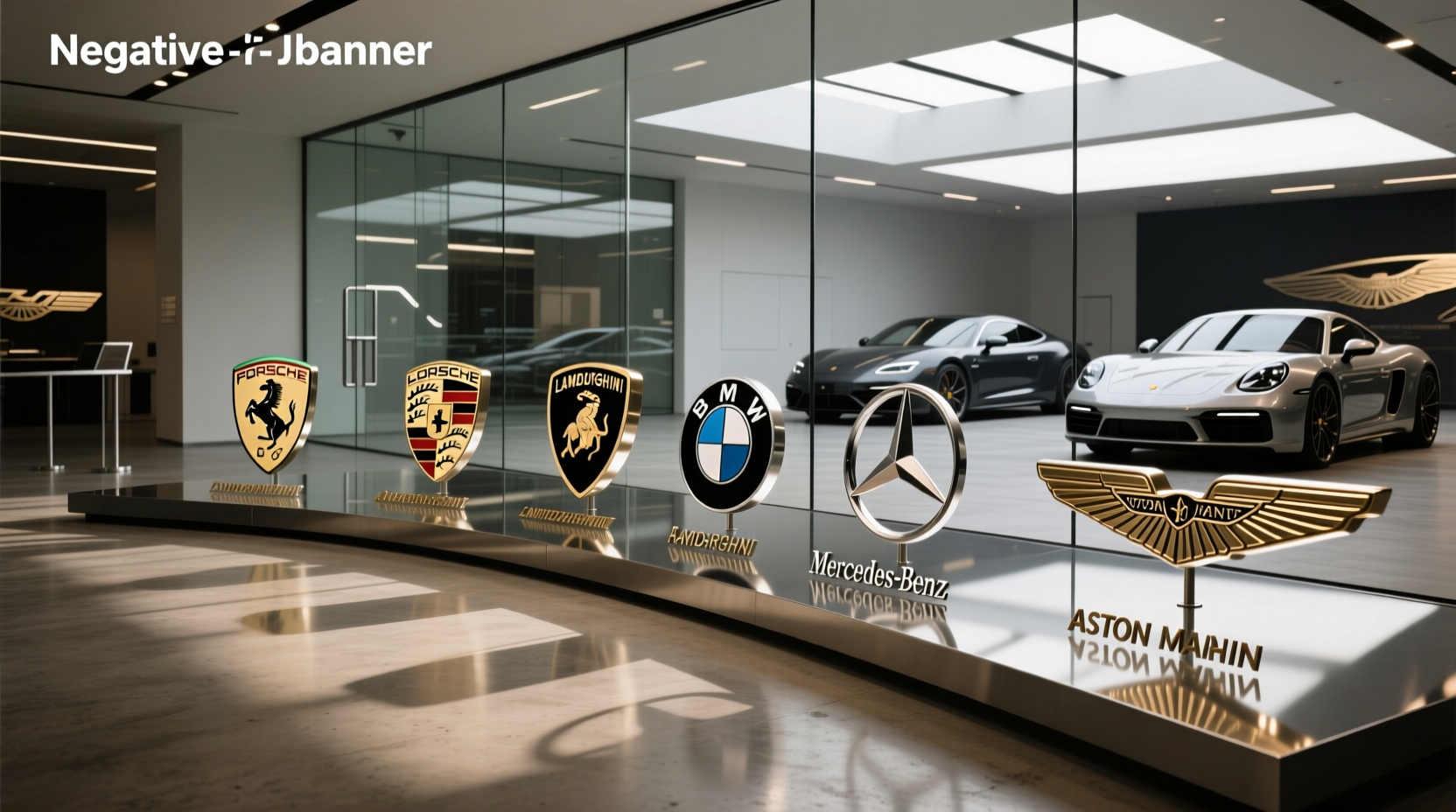
When searching for foreign car logos with names, many users want more than just a visual list—they seek context, origin, and meaning behind the emblems they see on roads worldwide. This guide delivers a comprehensive breakdown of international car brand logos, including European, Asian, and other non-domestic manufacturers, explaining not only what each logo represents but also why certain designs were chosen, how they’ve evolved, and how to distinguish similar-looking emblems across regions ✅.
Why Understanding Foreign Car Logos Matters
Recognizing foreign car logos isn't just useful for trivia or casual observation—it plays a practical role in vehicle identification, purchasing decisions, and even maintenance. For example, mistaking a Hyundai for a Kia (or vice versa) might seem harmless, but it can lead to ordering incorrect parts 🛠️. Similarly, identifying whether a luxury emblem belongs to a German, Italian, or Swedish manufacturer helps assess expected performance, reliability, and service costs.
Moreover, car logos often reflect national pride, engineering philosophy, or historical legacy. The prancing horse of Ferrari speaks to speed and heritage, while BMW’s Bavarian flag design ties directly to its origin in Munich 🌍. Knowing these nuances enhances appreciation and informs smarter consumer choices.
Defining 'Foreign' in Automotive Context
The term “foreign car” is relative and depends on the user's location. In the United States, any vehicle not produced by General Motors, Ford, or Stellantis (formerly Chrysler) is typically considered foreign 🔧. However, globalization has blurred this line: a Honda Accord may be assembled in Ohio, yet still carry a Japanese logo and design ethos. Therefore, when people search for foreign car logos with names, they usually mean brands originating outside their home country—especially those from Europe, Japan, South Korea, and emerging markets like China and India.
Regional Classification of Major Foreign Car Brands
To simplify recognition, we categorize major foreign automakers by region of origin. Each section includes the official logo, brand name, country, and brief background.
European Car Logos and Their Origins
Europe dominates the luxury and performance segments. Many European logos incorporate heraldic symbols, national colors, or geographic references.
| Brand | Country | Logo Meaning | Notable Models |
|---|---|---|---|
| BMW | Germany | Bavarian flag quarters; often mistaken for a propeller | 3 Series, X5, i8 |
| Mercedes-Benz | Germany | Three-pointed star symbolizing land, sea, air dominance | C-Class, S-Class, GLE |
| Audi | Germany | Four interlocking rings representing Auto Union merger | A4, Q7, e-tron |
| Porsche | Germany | Stuttgart coat of arms with black horse | 911, Cayenne, Taycan |
| Ferrari | Italy | Prancing horse from WWI pilot Francesco Baracca | 488, F8 Tributo, SF90 |
| Lamborghini | Italy | Taurus, reflecting founder’s zodiac sign | Aventador, Huracán, Urus |
| Alfa Romeo | Italy | Milanese cross and serpent from city’s coat of arms | Giulia, Stelvio |
| Jaguar | UK | Leaping feline, symbolizing agility | F-Type, I-PACE, XF |
| Land Rover | UK | Green badge with bold lettering; off-road identity | Range Rover, Defender |
| Volvo | Sweden | Iron symbol (♂), historically used in alchemy and warfare | XC60, S90, EX90 |
| Saab | Sweden | Griffin head from original aircraft company | 9-3, 9-5 (discontinued) |
| Renault | France | Diamond shape representing front grille view | Clio, Megane, Zoe |
| Peugeot | France | Leaping lion, dating back to 1847 | 208, 3008, 508 |
| Fiat | Italy | Red “F.I.A.T.” acronym for Fabbrica Italiana Automobili Torino | 500, Panda, Tipo |
| Bentley | UK | Winged “B” with checkered motif from Le Mans heritage | Continental GT, Bentayga |
Asian Foreign Car Logos: Japan, South Korea, and Beyond
Japanese and South Korean brands dominate global sales volume. Their logos tend to emphasize symmetry, futurism, and corporate identity rather than mythological imagery.
| Brand | Country | Logo Meaning | Notable Models |
|---|---|---|---|
| Toyota | Japan | Three interlocking ovals: heart of customer, product, technological advancement | Camry, Corolla, RAV4 |
| Honda | Japan | Golden wing, symbolizing flight and innovation | Civic, Accord, CR-V |
| Nissan | Japan | Circle with red slanted “NISSAN” text; simplicity and visibility | Altima, Rogue, Leaf |
| Mazda | Japan | Rotary-inspired “wings” or stylized “M” | Mazda3, CX-5, MX-5 Miata |
| Subaru | Japan | Cluster of six stars representing Pleiades constellation | Outback, Forester, WRX |
| Mitsubishi | Japan | Three red diamonds: family crest of founder Yataro Iwasaki | Outlander, Eclipse Cross |
| Hyundai | South Korea | Stylized “H” with two people shaking hands inside | Elantra, Tucson, Palisade |
| Kia | South Korea | Script logo with upward tilt, symbolizing progress | Forte, Sportage, Telluride |
| Lexus | Japan | Italicized “L” with oval surround; luxury division of Toyota | ES, RX, LS |
| Infiniti | Japan | Wave-like “INFINITI” script; Nissan’s premium arm | Q50, QX60 |
| Genesis | South Korea | Abstract “G” resembling wings or crest; Hyundai’s luxury line | G70, GV70, GV80 |
Other International Car Logos
While Europe and Asia lead in brand recognition, several other countries have established automotive identities:
- China: BYD (Build Your Dreams), Geely, NIO, XPeng — increasingly visible globally, especially in EV markets 🚗⚡
- India: Tata Motors (owner of Jaguar Land Rover), Mahindra — known for rugged SUVs and budget vehicles
- Sweden: Koenigsegg — hypercar maker with a cloverleaf-inspired logo
- Czech Republic: Škoda — bird-wing logo symbolizing freedom and motion
How Car Logos Evolve Over Time
Car emblems are not static. Most undergo redesigns every 10–20 years to reflect modern aesthetics, electrification trends, or corporate rebranding. For instance:
- Mercedes-Benz simplified its logo in 2020, removing the outer ring for digital clarity ✨
- BMW introduced a flatter, transparent version of its roundel for electric models like the iX
- Volkswagen adopted a minimalist flat logo in 2019, signaling shift toward digital-first branding
These changes help brands stay relevant but can confuse consumers trying to identify older vs. newer models based on emblems alone.
Common Misidentifications and How to Avoid Them
Some foreign car logos look strikingly similar. Here are frequent mix-ups and tips to tell them apart:
BMW vs. SAAB (Historical)
Older SAAB grilles resembled BMW’s kidney shape, but SAAB used a centered Griffin head within a shield. BMW always features the Bavarian cross pattern.
Hyundai vs. Kia
Both Korean brands use silver-toned emblems, but Hyundai’s logo contains a hidden handshake within an “H,” while Kia uses a cursive script with no internal graphic.
Acura vs. Alpha Romeo
Acura (Honda’s luxury arm) uses a capital “A” with a shield, while Alfa Romeo features a red cross and green serpent. Location matters: Acura is rare outside North America.
Infiniti vs. Lexus
Infiniti uses flowing script; Lexus uses sharp, italicized block letters. Both are Japanese luxury marques, but Infiniti leans sporty, Lexus emphasizes refinement.
Using Logos to Identify Vehicle Origin and Class
A car’s logo can signal more than just its brand—it often hints at engineering priorities:
- German logos (e.g., BMW, Mercedes, Audi): Emphasize precision, technology, and performance heritage ⚙️
- Italian logos (e.g., Ferrari, Lamborghini, Maserati): Focus on passion, design, and exclusivity
- Japanese logos (e.g., Toyota, Honda): Prioritize reliability, efficiency, and mass-market appeal
- Swedish logos (e.g., Volvo, Koenigsegg): Highlight safety, functionality, or extreme performance
This insight helps buyers align expectations: a Mercedes-Benz S-Class promises comfort and tech, while a Subaru WRX prioritizes all-wheel drive and rally-bred handling.
Where to Find Reliable Lists of Car Logos and Names
Many websites offer car logo galleries, but accuracy varies. Trusted sources include:
- carlogos.org: Comprehensive database with high-resolution images and historical versions 📎
- Kelley Blue Book (KBB): Provides context on logo meanings, especially for luxury brands 📊
- 1000logos.net: Detailed design history and evolution timelines 🔍
Always cross-reference multiple sites if unsure, especially for lesser-known or defunct brands.
Practical Tips for Learning Foreign Car Logos
Whether you're a new driver, auto enthusiast, or traveler, here’s how to build recognition skills:
- Start Regionally: Focus on one continent at a time (e.g., European luxury first).
- Use Flashcards: Apps like Anki or physical cards help memorize shapes and meanings.
- Watch Comparison Videos: YouTube channels often show side-by-side comparisons of similar emblems.
- Visit Dealerships: Seeing real badges up close improves retention.
- Play Identification Games: Some apps gamify logo guessing with scoring systems.
Conclusion: Why Logo Knowledge Enhances Car Literacy
Understanding foreign car logos with names goes beyond visual recognition—it builds automotive literacy. From distinguishing between closely related brands to appreciating cultural symbolism, this knowledge empowers informed decisions, prevents miscommunication, and enriches the driving experience. Whether you're shopping abroad, importing a vehicle, or simply curious about global brands, recognizing these emblems opens a window into the world’s diverse automotive landscape 🌐.
Frequently Asked Questions
- What brands of cars are considered foreign?
- A "foreign" car typically refers to any brand not originating from the buyer’s home country. In the U.S., this includes most European, Japanese, Korean, and Chinese manufacturers such as Toyota, BMW, Hyundai, and BYD.
- What is the meaning behind common foreign car logos?
- Logos often reflect national heritage or brand values. For example, BMW’s roundel represents Bavaria, Ferrari’s prancing horse honors a WWI ace, and Subaru’s six stars denote the Pleiades constellation.
- How can I tell if a car logo is European or Asian?
- European logos often feature heraldic elements (coats of arms, animals, flags), while Asian logos tend to be more minimalist, using stylized letters or abstract shapes. German brands favor technical precision in design; Japanese brands emphasize balance and harmony.
- Are there any foreign car brands made in the USA?
- Yes. Honda, Toyota, BMW, and Mercedes-Benz all operate manufacturing plants in the United States. However, their logos and brand origins remain foreign.
- Do car logos change over time?
- Yes. Most brands update their logos periodically for modernization, digital compatibility, or rebranding. For example, Volkswagen and BMW have introduced flatter, simpler versions for electric vehicles.





 浙公网安备
33010002000092号
浙公网安备
33010002000092号 浙B2-20120091-4