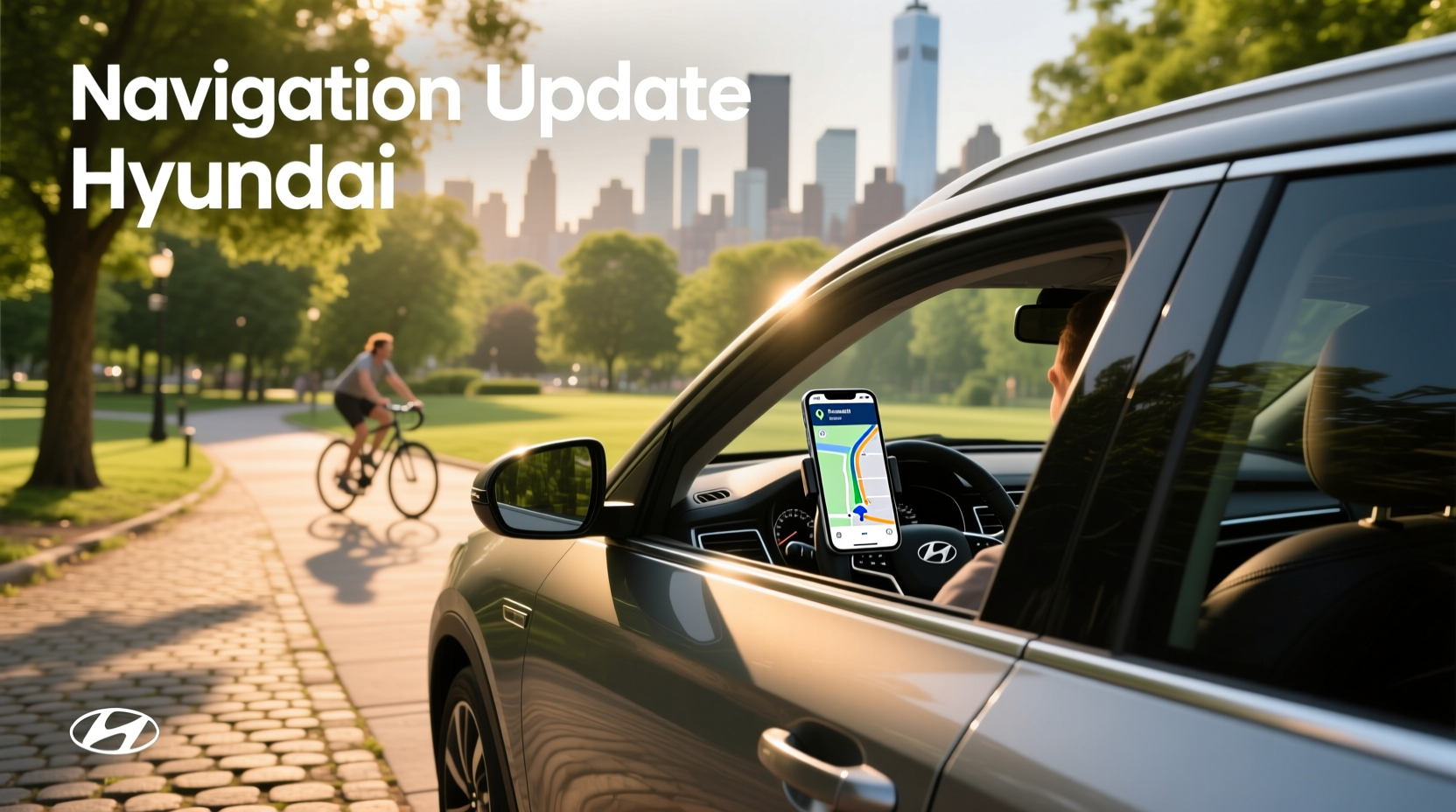
If you're searching for how to perform a navigation update on your Hyundai, you're not alone. Many Hyundai owners face outdated maps, inaccurate routing, or unresponsive infotainment systems—especially in models from 2010 to 2017. The good news: Hyundai provides official over-the-air (OTA) and USB-based software updates for compatible vehicles, allowing you to keep your GPS navigation, voice recognition, and connectivity features current without visiting a dealership. This guide walks you through every step of the process—including how to check compatibility, download the correct update file using your VIN, and install it correctly—all while avoiding common pitfalls like bricking your system or installing incompatible firmware.
Understanding Hyundai's Factory Navigation Systems
Before diving into updates, it’s important to understand which type of infotainment system your Hyundai uses. Not all models support over-the-air navigation updates, and some require physical media or USB installation. Hyundai has used several different head units across its lineup since 2010, including Blue Link, Touch Tracer, and more recent Android Auto-integrated systems.
Models such as the Hyundai Accent (2010–2017), Solaris, and Verna often came with factory-installed DVD-based navigation that relies on map data stored on internal memory or SD cards. These systems do not automatically update like modern smartphones; instead, they rely on periodic software releases from Hyundai. Newer models (2018 and later) equipped with connected services may receive OTA updates directly through the vehicle’s telematics module.
To determine your system type, navigate to the settings menu on your car’s display screen. Look under sections labeled General, System Info, or Software Information. There, you’ll find details about the current version number, build date, and whether your unit supports online updates.
Can You Update Hyundai Navigation Yourself?
✅ Yes, but only if your model and region support self-updates. Hyundai allows owners to manually download and install navigation software updates via their official portal at update.hyundai.com1. However, this service is region-locked and not available globally. For example, users in North America, Europe, and South Korea typically have access, while availability in India, Southeast Asia, or Africa may be limited or absent.
The key requirement is your Vehicle Identification Number (VIN). Hyundai uses the VIN to verify eligibility and deliver the correct firmware package tailored to your specific model year, trim level, and installed hardware. Attempting to install an update meant for a different configuration can result in boot failures or permanent damage to the infotainment system.
Step-by-Step: How to Download and Install a Navigation Update
- Visit the Official Update Portal: Go to update.hyundai.com using a desktop or mobile browser.
- Enter Your VIN: Input your 17-digit VIN carefully. It's usually located on the driver’s side dashboard near the windshield or inside the driver’s door jamb.
- Select Your Vehicle: After validation, select your Hyundai model and confirm the installed navigation system type.
- Download the Update File: If an update is available, download the full package to a computer. Files are typically large (over 1GB), so ensure stable internet.
- Prepare a USB Drive: Use a high-quality USB flash drive (minimum 4GB, formatted as FAT32). Copy the downloaded update folder directly to the root directory—do not alter any file names or subfolders.
- Install in the Vehicle: Turn off the engine, insert the USB into the front dashboard port, then go to [Settings] > [General] > [SW Info/Update] > [Update]. Follow on-screen prompts. ⚠️ Do not turn off the ignition during installation.
- Reboot and Verify: Once complete, the system will restart. Confirm the new version appears in the software info section.
This method applies specifically to eligible factory systems. It does not apply to aftermarket Android head units sold on platforms like Alibaba.com or regional electronics retailers—even if marketed as “for Hyundai Accent” or “with CarPlay.” Those devices use separate update mechanisms managed by third-party vendors.
Aftermarket vs Factory Navigation: Key Differences
Many search results for “navigation update Hyundai” lead to third-party Android stereos (e.g., 2G+64G Android 13 units for Hyundai Accent 2006–2011). While these offer advanced features like wireless Apple CarPlay, Google Maps, and app ecosystems, they are not part of Hyundai’s official update program.
| Feature | Factory Navigation | Aftermarket Android Unit |
|---|---|---|
| Update Method | Official website (USB or OTA) | Vendor-specific app or manual APK install |
| Map Provider | Hyundai/HERE Technologies | Google Maps, Waze, etc. |
| Firmware Control | Hyundai Motors | Third-party manufacturer |
| Warranty Impact | No effect | Potential voiding of audio system warranty |
| Integration | Full OEM integration (steering wheel controls, HVAC display) | Limited or partial integration |
If you’ve already replaced your factory radio with an aftermarket unit (such as those advertised on Alibaba.com for ₹3,600–₹9,200), you cannot use Hyundai’s official update site. Instead, refer to the vendor’s documentation for firmware upgrades. Be cautious: low-cost units may lack long-term software support or security patches.
Common Issues During Hyundai Navigation Updates
- Update Fails Mid-Process: Often caused by power loss or corrupted USB. Always use a reliable drive and keep the car powered (accessory mode ON).
- “No Update Available” Message: This could mean your system is already up-to-date—or your region doesn’t support downloads. Check release notes periodically.
- Screen Freezes After Update: Perform a hard reset by disconnecting the battery for 10 minutes or pressing a hidden reset button behind the unit.
- Incompatible Firmware: Never force-install updates from other VINs or models. Mismatched files can render the system unusable.
- USB Not Recognized: Format the drive to FAT32, avoid exFAT or NTFS. Some vehicles reject drives over 32GB.
Regional Availability and Language Support
Hyundai’s navigation update availability varies significantly by market. In Europe, map updates are generally released annually and cover countries like Germany, France, Italy, and Spain. In North America, updates include the U.S., Canada, and Mexico. However, regions such as India or Indonesia may not receive regular updates due to lower demand or licensing restrictions with map providers like HERE or TomTom.
Language options are also tied to regional versions. For instance, a navigation update downloaded for a U.S.-spec Sonata will default to English, while a Korean-spec model includes Korean语音 guidance. Changing languages post-update is possible only if the firmware includes multiple language packs.
How Often Are Hyundai Navigation Updates Released?
There is no fixed schedule. Major map revisions typically occur once per year, though minor bug fixes or interface improvements may appear more frequently. Hyundai does not publish a public roadmap, so owners must manually check the update portal every 6–12 months.
Unlike smartphone apps like Google Maps, factory navigation systems do not provide real-time traffic rerouting based on live data unless paired with a connected phone via Bluetooth or USB. Even with updated maps, static routing limitations remain a drawback compared to cloud-based navigation.
Alternatives to Factory Navigation Updates
If your Hyundai lacks update support or you’re frustrated with outdated interfaces, consider these alternatives:
- Use Smartphone Mirroring (CarPlay/Android Auto): Most Hyundai models from 2015 onward support wired or wireless projection. This bypasses the factory GPS entirely and uses your phone’s internet-connected apps like Google Maps or Waze.
- Install a Standalone GPS Device: Portable units from Garmin or TomTom offer lifetime map updates and better route calculation than older factory systems.
- Replace the Head Unit: For deeper integration, professional installation of a DIN-compatible Android unit allows full access to modern apps—but requires wiring harness modifications and potential loss of OEM features.
Tips for a Successful Update
- Backup Settings First: Note down saved favorites, Bluetooth pairings, and radio presets before updating.
- Use a Name-Branded USB Drive: Avoid cheap no-name sticks. SanDisk, Samsung, or Kingston drives have higher reliability.
- Avoid Public Wi-Fi When Downloading: Large files should be downloaded over secure home networks to prevent corruption.
- Check Power Level: Ensure your car battery is healthy. A weak battery may shut down during update, causing irreversible damage.
- Wait for Completion: Installation can take 20–60 minutes. Do not interact with the screen until the process finishes.
When to Contact a Dealer or Technician
If the update fails repeatedly, or your system becomes unresponsive, contact an authorized Hyundai service center. They have diagnostic tools to reflash the unit or replace it under warranty if necessary. Attempting DIY repairs on sealed head units can cause further damage.
Dealerships may charge for labor if the issue stems from user error (e.g., incorrect update procedure), but software-related malfunctions covered under warranty should be resolved at no cost.
Future Trends: Over-the-Air Updates and Connected Services
Newer Hyundai models (2020+) with Bluelink Connected Care subscriptions are moving toward seamless OTA updates. These allow automatic delivery of navigation, safety, and performance enhancements without user intervention. As Hyundai expands its electric vehicle lineup (like the Kona Electric and IONIQ series), continuous software evolution becomes critical—similar to Tesla or Rivian architectures.
Owners of newer vehicles should ensure their Bluelink subscription is active to receive timely updates. Disabling connectivity disables access to emergency services, remote start, and navigation refreshes.
Conclusion
Performing a navigation update on your Hyundai is feasible for many owners, provided you use the official update portal and follow proper procedures. Always verify your VIN eligibility, prepare a clean USB drive, and never interrupt the installation. While factory systems lag behind smartphones in functionality, keeping them updated ensures safer, more accurate driving experiences—especially in rural or low-signal areas where offline maps matter most.
For those with outdated or unsupported systems, integrating smartphone-based navigation remains the most practical solution. Whether you choose to stick with OEM software or upgrade to an aftermarket platform depends on your budget, technical comfort, and long-term ownership plans.
Frequently Asked Questions
- Can I update Hyundai navigation without going to the dealer?
- Yes, if your vehicle is supported and you have internet access. Use the official Hyundai update portal with your VIN to download and install via USB.
- Does the Hyundai Accent have Android Auto?
- Most Hyundai Accent models from 2018 onward support Android Auto, either wired or wirelessly depending on trim. Earlier models require aftermarket stereo replacement.
- How do I connect Google Maps to my Hyundai car?
- Use Android Auto by connecting your phone via USB or Bluetooth (if wireless is enabled). Once connected, launch Google Maps on your phone—it will mirror to the car display.
- What happens if I install the wrong navigation update?
- Installing incompatible firmware can brick your infotainment system, requiring professional repair or replacement. Always match the update to your exact model and VIN.
- Are Hyundai navigation updates free?
- Yes, map and software updates from Hyundai are typically free for eligible vehicles. Aftermarket units may require paid subscriptions or one-time fees for updates.





 浙公网安备
33010002000092号
浙公网安备
33010002000092号 浙B2-20120091-4