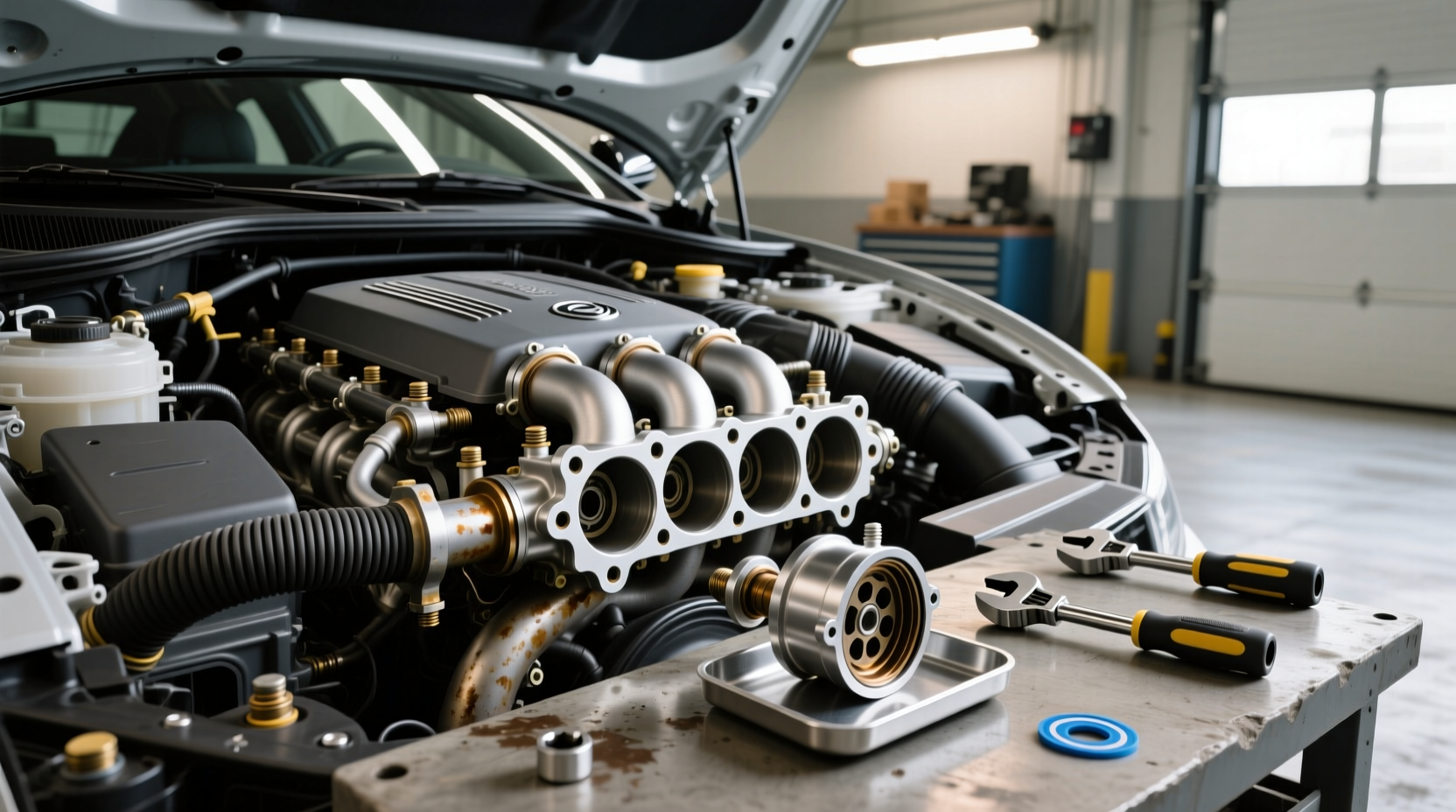
If your car is experiencing rough idling, poor fuel economy, or a check engine light with diagnostic trouble code P2004, you may be dealing with a faulty intake manifold runner control (IMRC) valve. This small but critical component regulates airflow into the engine by adjusting the length of the intake runners based on engine speed. When it fails, performance suffers. In this comprehensive guide, we’ll walk through everything you need to know about intake manifold runner control valve replacement, including symptoms of failure, testing methods, replacement procedures, cost considerations, and common misconceptions—so you can make informed decisions and avoid unnecessary repairs.
What Is an Intake Manifold Runner Control Valve?
The intake manifold runner control (IMRC) valve is part of a variable intake system used in many modern gasoline engines. Its primary function is to optimize engine performance across different RPM ranges by changing the effective length of the intake runners 1.
At low engine speeds, longer intake runners help increase torque by creating stronger pressure waves that improve air-fuel mixture delivery. At higher RPMs, shorter runners allow more air to enter quickly for increased horsepower. The IMRC valve controls flaps inside the intake manifold that open or close these runners via vacuum or electric actuation, depending on the vehicle design ⚙️.
This system is commonly found in vehicles from manufacturers like Ford, GM, BMW, Volkswagen, Jeep, and Chrysler. While designs vary, the underlying principle remains consistent: dynamic airflow management improves efficiency and power output.
Common Symptoms of a Failing IMRC Valve
When the IMRC valve malfunctions, several noticeable symptoms can appear. Recognizing them early helps prevent further damage and costly repairs ❗.
- Check Engine Light (CEL): One of the most common indicators. A malfunctioning IMRC valve often triggers OBD-II codes such as P2004 (Intake Manifold Runner Control Stuck Open), P2005, P2006, or P2015 2.
- Reduced Engine Performance: You might notice sluggish acceleration or hesitation during throttle application due to improper air distribution.
- Poor Fuel Economy: If the engine isn’t operating efficiently because of incorrect runner positioning, fuel consumption increases noticeably ✈️.
- Engine Misfires or Rough Idle: Especially at startup or idle, where airflow imbalances cause unstable combustion cycles.
- Unusual Noises: Some drivers report fluttering, whistling, or tapping sounds coming from the engine bay when the IMRC flaps stick or bind.
These signs don’t always mean the IMRC valve itself is bad—it could be the solenoid, vacuum lines, wiring, or even carbon buildup restricting movement. That’s why proper diagnosis is essential before any replacement.
Can You Drive With a Faulty IMRC Valve?
Yes, in most cases, you can still drive with a failed IMRC valve—but not without consequences 🚗.
The engine will typically default to a fixed runner position (usually 'open') once the ECU detects a fault. While this allows continued operation, performance will be compromised. Low-end torque suffers significantly since the long-runner mode isn't available. Additionally, prolonged driving under these conditions may lead to increased emissions, higher engine temperatures, and potential strain on other components like oxygen sensors or catalytic converters.
We recommend addressing the issue within a few hundred miles of noticing symptoms. Ignoring it won’t cause immediate breakdowns in most cases, but it reduces drivability and may fail emissions tests in regulated areas.
How to Test an Intake Manifold Runner Control Valve
Before replacing parts, perform basic diagnostics to confirm the source of the problem 🔍.
- Scan for Trouble Codes: Use an OBD-II scanner to retrieve stored codes. Focus on P2004–P2010 range related to IMRC systems.
- Visual Inspection: Check for cracked vacuum hoses, disconnected electrical connectors, or physical damage to the valve or actuator arm.
- Listen for Actuator Movement: With the engine running or key-on-engine-off (depending on system type), listen near the intake manifold for a clicking or sweeping sound when RPM changes occur.
- Manual Movement Test: Disconnect the actuator linkage and try moving the flap shaft by hand. It should move smoothly between open and closed positions. Binding indicates internal wear or carbon clogging.
- Vacuum Test (if applicable): Apply vacuum using a hand pump to the diaphragm. The valve should hold vacuum and move the flaps accordingly. Leaks indicate a failed diaphragm.
- Solenoid Resistance Check: Using a multimeter, measure resistance across the solenoid terminals. Compare readings to factory specifications (typically 10–30 ohms).
If all mechanical parts move freely and vacuum/electrical signals are present, the issue may lie in the PCM (Powertrain Control Module) or sensor feedback loop. However, in over 80% of cases, the root cause is either a stuck valve or a defective solenoid.
Step-by-Step Replacement Procedure
Replacing the IMRC valve varies slightly by make and model, but general steps apply to most applications ✅.
Tools & Materials Needed
- Socket set and ratchet
- Wrenches (metric and standard)
- Screwdrivers (flathead and Phillips)
- Replacement IMRC valve
- Gasket or seal (if required)
- Clean rag and carburetor cleaner (for cleaning ports)
- Multimeter (for testing post-installation)
General Replacement Steps
- Disconnect Battery: Always start by disconnecting the negative terminal to prevent short circuits.
- Remove Air Intake Box: Provides better access to the intake manifold area.
- Locate the IMRC Valve: Usually mounted on the side or top of the intake manifold with an electrical connector and possibly vacuum lines.
- Disconnect Electrical Connector: Press the release tab and pull straight off.
- Remove Fasteners: Typically two bolts secure the valve. Remove them carefully.
- Extract Old Valve: Gently wiggle it out, being cautious not to drop debris into the manifold.
- Clean Mounting Surface: Wipe away old gasket material and inspect for cracks or warping.
- Install New Valve: Position the new unit with a fresh gasket if needed. Reinstall bolts and tighten to specification.
- Reconnect Wiring: Ensure the connector clicks securely into place.
- Reassemble Components: Replace airbox and reconnect battery.
- Clear Codes & Test Drive: Use a scan tool to erase DTCs, then take the vehicle for a test drive across various RPM ranges.
For example, on a 2009 Ford Fusion with a 2.3L engine, the process takes about 45 minutes with moderate mechanical skill. On a VW Tiguan or BMW X5, additional shielding or sensors may need removal, increasing time to 1.5–2 hours ⏱️.
Cost of IMRC Valve Replacement
Understanding costs helps avoid surprise bills 💰.
| Component | Average Cost (USD) | Notes |
|---|---|---|
| Aftermarket IMRC Valve | $40–$100 | Dorman, Standard Motor Products, SMP brands |
| OEM Replacement | $100–$250 | Dealer-sourced; longer warranty |
| Labor (if outsourced) | $80–$180 | 1–2 hours at $80–$100/hour |
| Total Estimated Cost | $120–$400 | DIY saves ~60% on labor |
Some vehicles, like certain Chrysler models, have known issues with plastic gears inside the actuator breaking prematurely. Aftermarket kits often include upgraded metal gears to prevent repeat failures. Research your specific model year before purchasing.
Common Misconceptions About IMRC Valves
Several myths persist among DIYers and even some mechanics:
- Myth: Replacing the Solenoid Fixes Everything – While the solenoid controls vacuum flow, the valve or flap mechanism itself may be seized. Don’t assume the solenoid is the culprit without inspection.
- Myth: All IMRC Systems Are Vacuum-Operated – Many newer vehicles use electronic actuators instead. These require different testing procedures and are more sensitive to voltage fluctuations.
- Myth: You Must Replace the Entire Intake Manifold – In most cases, only the valve or actuator needs replacement. Full manifold swaps are rare unless there’s structural damage or extensive carbon buildup.
- Myth: Carbon Cleaning Alone Will Fix It – While cleaning can restore mobility temporarily, worn seals or broken linkages require hardware replacement.
Preventive Maintenance Tips
To extend the life of your IMRC system:
- Change engine oil regularly—dirty oil leads to sludge and vapor contamination in the intake tract.
- Use high-quality fuel with detergent additives to reduce carbon deposits.
- Inspect vacuum lines during routine maintenance for cracks or leaks.
- Address check engine lights promptly to prevent long-term exposure to incorrect air-fuel ratios.
- Consider periodic induction service every 30,000–50,000 miles to clean intake passages.
Regional Considerations and Emissions Compliance
In regions with strict emissions standards (e.g., California, EU countries), a faulty IMRC valve can cause your vehicle to fail mandatory inspections 🌍.
The OBD-II system continuously monitors the IMRC operation. If the flaps aren’t responding correctly, the readiness monitor won’t complete, blocking pass/fail determination during smog checks. Even if the car runs fine, it may be deemed non-compliant until repairs are verified.
Additionally, colder climates may exacerbate sticking issues due to moisture freezing in vacuum lines or around pivot points. Using fuel additives with moisture dispersants can help mitigate this risk.
When to Seek Professional Help
While many owners successfully replace the IMRC valve themselves, consider professional assistance if:
- You lack experience with engine components.
- Your vehicle has complex engine covers or shielded wiring harnesses.
- Diagnostic codes persist after replacement (could indicate PCM recalibration needed).
- There’s evidence of deeper intake manifold issues like cracking or internal debris.
A certified technician has access to advanced scan tools that can command the IMRC system directly, allowing real-time actuation tests and calibration verification.
Conclusion
The intake manifold runner control valve replacement is a manageable repair for most intermediate DIYers and can restore lost performance and fuel efficiency. By understanding the symptoms, performing accurate diagnostics, and following correct procedures, you can avoid unnecessary part replacements and labor costs. Whether you choose OEM or aftermarket parts, ensure compatibility with your vehicle’s year, make, and engine type. Regular maintenance and prompt attention to warning signs go a long way in preserving the longevity of your engine’s variable intake system.
Frequently Asked Questions
- Can I replace the intake manifold runner control valve myself?
- Yes, if you have basic mechanical skills and the right tools. Most replacements take under two hours and involve removing a few bolts and electrical connections. Just ensure you disconnect the battery first and double-check connections upon reassembly.
- How much does it cost to fix a P2004 code related to the IMRC valve?
- Repair costs typically range from $120 to $400. This includes $40–$250 for the part and $80–$180 for labor if done professionally. DIY replacement significantly reduces total expense.
- Is it safe to drive with the IMRC valve stuck open?
- Driving is possible but not ideal. The engine enters limp mode with reduced low-end power and potentially worse fuel economy. Long-term driving may stress other systems, so repair within a few hundred miles is recommended.
- What causes the IMRC valve to fail?
- Common causes include carbon buildup restricting movement, broken plastic gears in the actuator, vacuum leaks, electrical faults in the solenoid, or exposure to contaminated crankcase vapors over time.
- Do I need to reset the ECU after replacing the IMRC valve?
- Not always, but it’s good practice. Clear stored trouble codes with an OBD-II scanner. The ECU usually relearns normal operation within a few drive cycles, though some models benefit from a quick throttle relearn procedure.





 浙公网安备
33010002000092号
浙公网安备
33010002000092号 浙B2-20120091-4