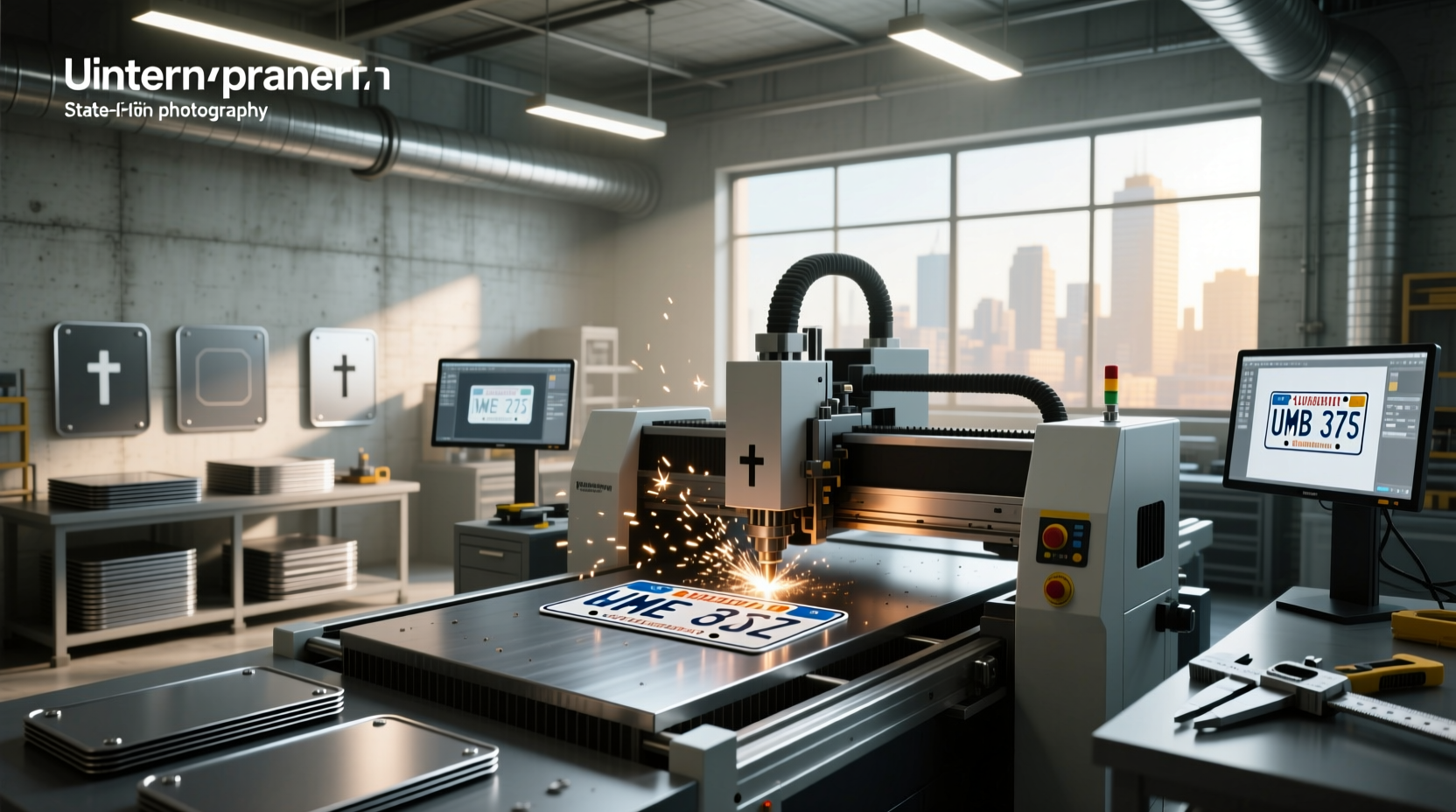
When setting up a vehicle registration service or starting a license plate production business, one of the most critical investments is a number plate making machine. These systems are designed to precisely emboss alphanumeric characters onto metal plates—typically aluminum—ensuring compliance with regional legal standards while maintaining durability and readability. Whether you're exploring a small-scale operation or industrial production line, understanding how these machines function, what specifications matter, and which features align with your needs is essential for long-term efficiency and regulatory compliance ✅.
What Is a Number Plate Embossing Machine?
A number plate embossing machine applies pressure to stamp raised characters into a flat metal sheet, creating a three-dimensional effect that enhances visibility and meets official identification requirements. This process, known as cold forming or mechanical embossing, uses custom dies (molds) shaped like letters and numbers to press into the surface of an aluminum blank. The result is a permanent, tamper-resistant plate used on cars, trucks, motorcycles, and commercial fleets 🚗.
These machines differ from simple printing devices—they physically alter the substrate rather than applying ink or adhesive film. As such, they are central to government-authorized plate manufacturing and trusted by DMVs, law enforcement agencies, and certified third-party issuers worldwide 🔧.
Key Components of a Typical Number Plate Making System
To understand how a car number plate embossing machine operates, it’s important to break down its core components:
- Hydraulic Press Unit: Provides controlled force (often between 5–20 tons) to deform the metal without cracking it ⚙️.
- Dies (Clapper Dies or Mold Sets): Interchangeable steel tools engraved with specific fonts and layouts matching local regulations ✏️.
- Control Panel: Digital interface allowing operators to adjust stroke depth, pressure, and cycle timing ⌨️. \li> Worktable & Alignment Guides: Ensures consistent positioning of blanks for uniform character placement 📏.
- Hot Foil Stamping Attachment (Optional): Applies reflective or colored coatings after embossing for enhanced legibility at night ✨.
Some advanced models integrate both embossing and hot stamping in one automated sequence, reducing manual handling and increasing throughput.
Types of Number Plate Machines Based on Operation Mode
Not all license plate production machines are built the same. Depending on scale, budget, and technical capacity, users can choose among several types:
Manual Embossing Machines
Designed for low-volume operations such as local garages or mobile registration units, these require operator input to position the die and activate the press. They are compact, affordable, and easy to maintain but slower—typically producing 10–20 plates per hour 👥.
Best for: Small workshops, rural offices, temporary issuance points.
Semi-Automatic Machines
These combine manual loading with automated pressing cycles. Once the blank and die are set, the machine completes the embossing process independently. Output ranges from 30–60 plates/hour, offering a balance between cost and productivity ⏱️.
Best for: Regional transport departments, fleet management centers.
Full Automatic Production Lines
Integrated systems that feed blanks, emboss, stamp with foil, and eject finished plates without human intervention. Capable of over 100 plates per hour, these are found in national mints or large contract manufacturers 🏭.
Best for: High-demand environments, centralized government facilities.
| Mechanism Type | Avg. Output (Plates/Hr) | Power Requirement | Ideal Use Case |
|---|---|---|---|
| Manual | 10–20 | None / Hand-operated | Mobile services, repair shops |
| Semi-Automatic | 30–60 | 230V AC | Local DMV offices |
| Automatic Line | 80–150+ | 3-phase industrial power | National production centers |
Materials Used in Embossed License Plates
The success of any number plate making machine depends heavily on the material being processed. Most jurisdictions mandate aluminum due to its corrosion resistance, lightweight nature, and formability under pressure.
Aluminum Grades Commonly Used
- AA1050 or AA1100: Pure aluminum with excellent ductility; ideal for deep embossing without fracturing.
- AA3003 or AA5052: Slightly alloyed for added strength, often used in harsh climates where impact resistance matters.
Thickness typically ranges from 1.0 mm to 2.0 mm. Thinner sheets (≤1.2 mm) work well with lower-tonnage presses, while thicker plates may require hydraulic systems rated above 15 tons.
Before embossing, blanks are usually coated with a primer and laminated with retroreflective sheeting—a requirement in many countries to ensure nighttime visibility 🔍.
Embossing vs. Printing: Which Method Should You Choose?
A common point of confusion involves choosing between embossed plates and digitally printed alternatives. While both meet visual ID needs, they serve different purposes:
Embossed Plates
- ✅ Physically raised characters improve tactile recognition and reduce counterfeiting.
- ✅ Long-lasting; withstand weather, abrasion, and UV exposure.
- ✅ Required by law in many regions (e.g., USA, UK, Canada).
- ❌ Higher initial equipment cost.
- ❌ Requires trained operators and proper die inventory.
Printed Plates
- ✅ Faster setup; no need for physical dies.
- ✅ Suitable for temporary tags or specialty designs.
- ❌ Less durable; prone to fading and peeling.
- ❌ Not accepted for permanent registration in regulated markets.
For official use, embossing remains the gold standard. However, hybrid systems now exist that emboss first, then apply color via thermal transfer or inkjet—offering both permanence and customization.
How to Select the Right Machine for Your Needs
Choosing a number plate embossing machine isn’t just about price—it's about matching functionality to operational demands. Consider these factors before purchasing:
1. Compliance With Local Regulations ❗
Licensing authorities enforce strict rules regarding font style, character spacing, height, and reflectivity. Ensure the machine supports dies that conform to your jurisdiction’s standards (e.g., FE-Schrift in Germany, Charles Wright in the U.S.). Some vendors offer region-specific mold kits upon request.
2. Power Supply Compatibility ⚡
Most semi-automatic machines run on standard 230V single-phase power, making them suitable for office or garage environments. Fully automatic lines often require 400V three-phase electricity, limiting installation to industrial zones.
3. Maintenance & Spare Parts Availability 🛠️
Look for machines using standardized hydraulic components and controllers (e.g., Siemens, Parker). Avoid proprietary systems that lock you into a single supplier for repairs. CE certification indicates adherence to European safety norms and easier servicing across borders.
4. Integration With Hot Foil Stamping ✨
If your region requires black-on-white or yellow-on-black contrast with reflective finishes, verify whether the machine includes—or can be upgraded with—a hot stamping module. This adds approximately $1,000–$3,000 to the base cost but significantly improves output quality.
5. Production Volume Requirements 📈
Estimate daily plate demand. A county office issuing 20 new registrations/day doesn't need a $100,000 fully automated line. Conversely, a national contractor fulfilling 10,000 plates/month will benefit from higher-capacity equipment despite the upfront investment.
Common Misconceptions About Number Plate Machines
Several myths persist around embossed number plate machine capabilities and usage. Let’s clarify them:
Misconception 1: “Any Metal Can Be Used”
No. Steel or iron plates may seem stronger, but they corrode faster and require much higher tonnage to emboss. Aluminum is preferred globally for its optimal balance of malleability and durability.
Misconception 2: “One Die Fits All Countries”
Each country has unique typography and layout rules. A machine configured for Indian plates won’t automatically produce compliant UK DVLA formats without changing dies and adjusting alignment guides.
Misconception 3: “Embossing Machines Are Obsolete Due to Digital Printing”
While digital methods grow in niche areas, embossed plates remain legally required in most developed nations. Their resistance to tampering and longevity make them irreplaceable for official IDs.
Global Variations in Plate Design and Machine Setup
There is no universal license plate format. What works in one country may not comply elsewhere:
- United States: Each state sets its own design; machines must support variable-width dies for formats like ABC-123 or 1ABC234.
- European Union: Standardized blue EU strip on the left; font is typically FE-Schrift to prevent alteration.
- India: Uses Bharat Series (BH); requires bilingual text (English + regional language), affecting die complexity.
- Gulf States: Often include Arabic script alongside Latin characters, requiring dual-language dies.
Always confirm the exact plate dimensions, font specifications, and numbering sequence with your licensing authority before sourcing equipment.
Setting Up a Number Plate Production Workflow
A functional workflow goes beyond just buying a machine. Here’s a step-by-step guide:
- Obtain Authorization: Register with your national or regional motor vehicle department to gain legal permission to issue plates.
- Purchase Equipment: Acquire the embossing machine, die sets, raw materials (aluminum blanks, reflective films), and optional accessories like labeling printers.
- Train Staff: Operators should understand safety protocols, die changes, pressure calibration, and quality checks.
- Implement Quality Control: Inspect each plate for clarity, depth consistency, and edge deformation.
- Maintain Records: Track issued serials to prevent duplication and support audits.
Some governments mandate secure storage of dies and encrypted data logs to prevent unauthorized production—a crucial consideration for security planning.
Cost Overview: What to Expect When Buying
Pricing varies widely based on automation level and origin:
- Manual Presses: $1,500 – $4,000
- Semi-Automatic Units: $5,000 – $15,000
- Full Production Lines: $50,000 – $200,000+
Lower-cost options from suppliers in China or India may save money initially but could lack CE certification, reliable customer support, or spare parts availability. Always request test samples and service agreements before finalizing purchases.
Where to Buy a Reliable Number Plate Making Machine
Reputable suppliers include specialized industrial machinery platforms such as Alibaba.com, where numerous manufacturers list CE-certified models with verified transaction histories 🌐. Look for sellers offering:
- Product videos demonstrating real-time operation
- Clear technical specifications (voltage, pressure, dimensions)
- Warranty terms and post-sale support
- Export experience and shipping logistics assistance
Platforms like IndiaMART also connect buyers with domestic manufacturers, particularly useful for localized installations within South Asia.
Maintenance Tips for Long-Term Reliability
To extend the life of your automatic number plate embossing machine, follow these best practices:
- Clean dies regularly to remove aluminum residue buildup.
- Lubricate moving parts (guide rods, hydraulic pistons) monthly.
- Check electrical connections and grounding annually.
- Store spare dies in dry, temperature-controlled conditions.
- Replace worn seals and hoses proactively.
Well-maintained machines can operate reliably for over a decade, minimizing downtime and replacement costs.
Environmental and Safety Considerations
Operating a car license plate making machine involves moderate risks:
- Noise Levels: Hydraulic presses generate noise during compression; hearing protection is recommended in high-volume settings.
- Pinch Points: Keep hands clear during operation; use safety guards and emergency stop buttons.
- Material Waste: Recycle aluminum scraps responsibly through certified recyclers.
Ensure compliance with OSHA (U.S.) or equivalent workplace safety regulations when installing equipment.
Future Trends in License Plate Manufacturing
Though traditional embossing remains dominant, emerging technologies are shaping the future:
- Smart Plates: Embedded RFID chips for automated toll collection and parking validation.
- Digital Displays: Experimental e-ink plates that update remotely (still in pilot stages).
- AI-Powered Inspection: Cameras and software that detect embossing defects in real time.
While full digitization is years away, modern embossing machines are increasingly compatible with digital workflows, including barcode integration and database-linked serial tracking.
Frequently Asked Questions (FAQs)
- Can you make embossed number plates without a machine?
- No, creating legally compliant embossed plates requires a dedicated embossing press capable of applying uniform pressure. Hand tools cannot achieve the precision or durability needed for official use.
- What materials are used for embossed license plates?
- Most embossed plates use aluminum alloys such as AA1050, AA1100, or AA5052 due to their malleability and corrosion resistance. Blanks are pre-coated with reflective sheeting before embossing.
- Can I customize an embossed number plate?
- Customization is limited to authorized formats only. Personalized messages (vanity plates) are allowed in some regions but must still follow strict size, font, and spacing rules enforced by the embossing dies.
- How fast can a number plate embossing machine produce plates?
- Output depends on automation level: manual units do 10–20/hr, semi-automatic 30–60/hr, and full lines exceed 100/hr under continuous operation.
- Are used number plate machines worth buying?
- Used machines can be cost-effective if thoroughly inspected for wear, especially in hydraulic systems and die alignment mechanisms. Request performance tests before purchase.





 浙公网安备
33010002000092号
浙公网安备
33010002000092号 浙B2-20120091-4