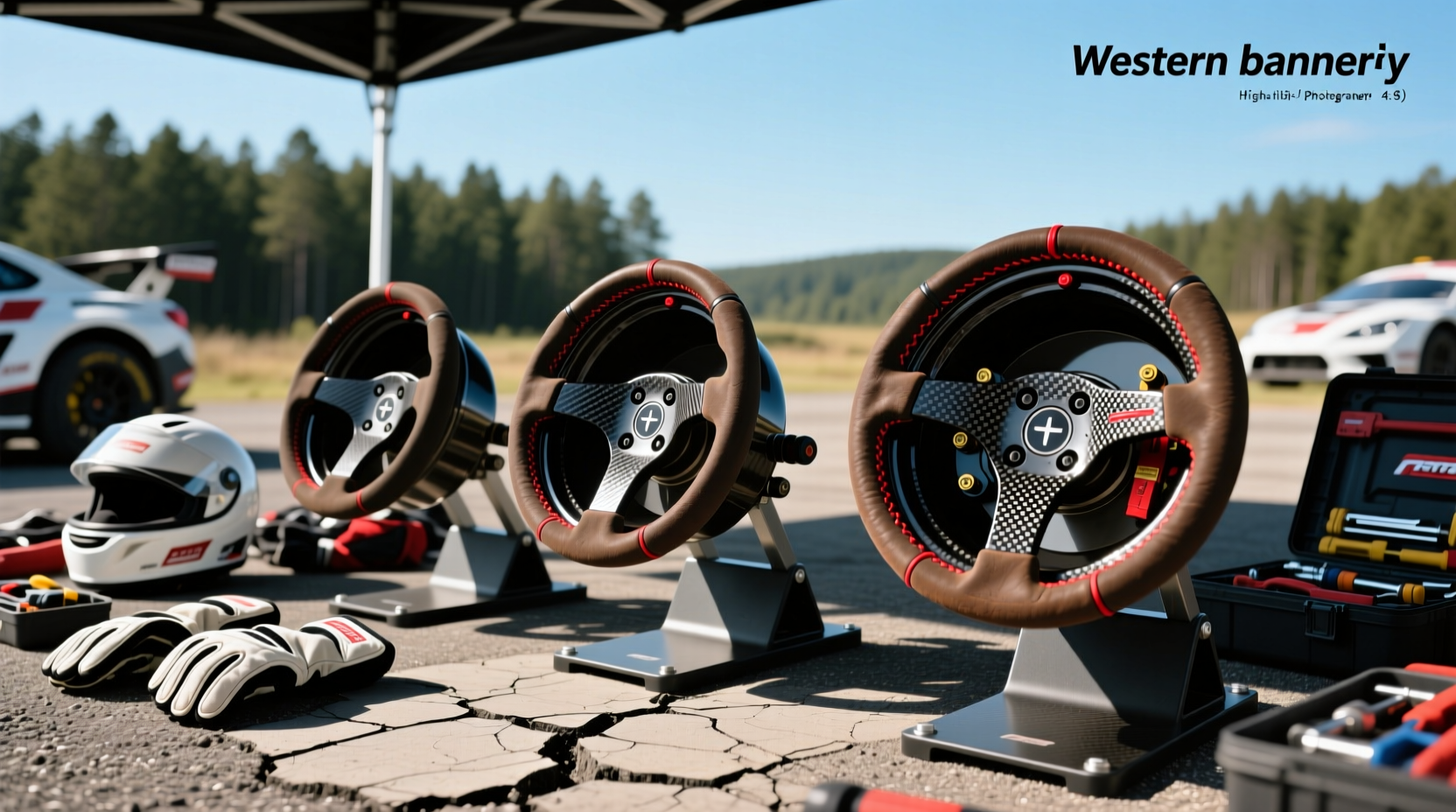
If you're searching for rally steering wheels, you're likely looking to upgrade your vehicle for enhanced control, durability, and a motorsport-inspired feel—especially for off-road, track, or performance street use. Unlike standard OEM wheels, rally steering wheels are designed with a focus on grip, responsiveness, and structural integrity under high-stress conditions. Most commonly available in 380mm diameter, these wheels often feature suede, leather, or Alcantara surfaces, three-spoke designs, and universal 6-bolt hubs for broad compatibility ✅.
What Defines a Rally Steering Wheel?
A rally steering wheel is engineered for precision handling in demanding environments such as gravel stages, dirt tracks, or drift events. Unlike typical road car steering wheels, which prioritize comfort and integration with infotainment systems, rally variants emphasize ergonomics, reduced rotational inertia, and secure hand placement during rapid directional changes ⚙️.
The most common size seen across both professional builds and aftermarket options is 380mm (approximately 15 inches), which balances leverage and responsiveness. This dimension allows drivers to execute quick corrections without over-rotating the wheel—a critical factor when navigating tight corners at speed.
Key characteristics include:
- Flat-bottom design: Improves leg clearance when entering/exiting the vehicle and provides a visual orientation cue
- Thick rim padding: Enhances grip and reduces hand fatigue during long drives \li> Three-spoke construction: Offers structural rigidity while minimizing weight
- Universal mounting pattern (typically 6-bolt): Enables installation across various vehicles using an adapter hub
- Durable surface materials: Suede, perforated leather, or synthetic Alcantara resist sweat and slippage
Materials Used in Rally Steering Wheels: Pros and Cons
The choice of material significantly impacts both performance and longevity. Let's break down the most common types found in 380mm rally wheels:
| Material | Pros | Cons |
|---|---|---|
| Suede / Microsuede | Superior grip even with sweaty hands, lightweight, modern aesthetic | Less durable than leather, harder to clean, may degrade faster in UV exposure |
| Leather (Perforated or Solid) | Durable, ages well, comfortable in varied climates | Can become slippery when wet, requires conditioning |
| Alcantara® | High-end grip, premium look, widely used in factory performance trims | Expensive, stains easily, needs specialized cleaning products |
| Wood (Vintage Style) | Classic appearance, excellent tactile feedback, stable in temperature extremes | Poor grip when damp, heavier than synthetic options, not ideal for competitive use |
| Aluminum Core Construction | Extremely lightweight, highly rigid, resistant to deformation | Often paired with minimal padding; can be uncomfortable over time |
For serious off-road or competitive applications, suede or Alcantara tends to be preferred due to their consistent grip. However, wood-grain wheels remain popular among classic rally restorations or show vehicles where aesthetics take precedence over function 🔧.
Compatibility: Will a 380mm Rally Wheel Fit Your Car?
While many rally steering wheels come in a standard 380mm diameter with a 6-bolt backplate, they are not plug-and-play replacements for factory units. You’ll typically need two additional components:
- Steering Wheel Hub Adapter (Also Called a Boss Kit): Matches the bolt pattern of the wheel to your vehicle’s steering column. These are model-specific and available for most European, Japanese, and American vehicles.
- Quick-Release Mechanism (Optional but Recommended): Allows easy removal of the wheel for security or driver access. Commonly uses a splined shaft and locking collar system.
Before purchasing, verify:
- Your vehicle’s steering column spline count (e.g., 24-spline, 28-spline)
- Whether airbag deletion is acceptable (most aftermarket rally wheels do not support OEM airbags)
- If your car requires clockspring alignment for turn signals and horn functionality
⚠️ Important: Installing a non-OEM steering wheel usually disables the factory airbag. In many regions, this may affect insurance coverage or fail safety inspections. Always check local regulations before modifying primary safety systems ❗.
Top Brands Offering Rally Steering Wheels
Several manufacturers specialize in motorsport-grade steering wheels. While no brand endorsement is implied, understanding their design philosophies helps inform decisions:
- OMP Racing: Known for the Velocita series, offering suede or leather finishes in 380mm. Features triple aluminum spokes and integrated horn button. Widely used in amateur rally and circuit racing.
- NRG Innovations: Produces lightweight forged aluminum wheels like the RST-025MB. Emphasizes strength-to-weight ratio and modular design for custom setups.
- Sparco: Offers the R368 Offroad model with deep dish and aggressive texture. Designed specifically for rough terrain applications.
- Momo: Blends heritage styling with modern engineering. The Montecarlo 380 is a street-rally hybrid suitable for JDM and European builds.
- Simoni Racing: Provides Defender-style rugged wheels with reinforced cores. Popular in vintage Land Rover rally conversions.
Prices vary significantly—from around €75 for basic universal models to over €1,200 for Singer-style replicas or limited-run pieces. Expect to pay €200–€400 for a quality competition-grade wheel from OMP, NRG, or Sparco.
Installation Considerations and Safety
Swapping to a rally steering wheel isn't just about looks—it affects vehicle dynamics and safety systems. Here’s what to consider before installing:
Horn Functionality
Most rally wheels include a central horn button, but it must be wired correctly through the hub adapter. Some kits integrate contact brushes; others require manual wiring. Test continuity after installation to ensure reliable operation.
Turn Signal and Wiper Controls
Factory stalks rely on precise clockspring alignment. After changing the wheel, realign the clockspring to prevent signal failure or wiper malfunction. Misalignment can damage the spiral cable inside.
Steering Angle Feedback
A larger-diameter wheel like a 380mm unit increases leverage, which may reduce perceived steering effort. However, it also requires more rotation to reach full lock—this could impact maneuverability in tight spaces.
Legal and Insurance Implications
In countries like the UK, Germany, and Australia, removing the driver’s airbag by replacing the OEM wheel may render the vehicle non-compliant with roadworthiness standards. Even if technically legal, insurers might deny claims if an accident involves modified safety equipment.
📌 Recommendation: If you plan to drive daily, consider keeping the stock wheel for regular use and switching to the rally wheel only at track days or organized events.
When Should You Not Install a Rally Steering Wheel?
Despite their appeal, rally steering wheels aren’t suitable for every driver or vehicle. Avoid installation if:
- You frequently drive in heavy rain or snow (reduced grip with bare hands on suede/Alcantara)
- Your car lacks a roll bar or harness mounting points (increased risk in rollover scenarios)
- You share the vehicle with family members unfamiliar with non-standard controls
- You’re unable to properly align the clockspring or lack tools for torque-sensitive fasteners
- You live in a region with strict periodic inspection laws (e.g., TÜV in Germany)
Additionally, some modern cars use CAN bus communication between the steering wheel and ECU. Removing the original wheel may trigger error codes related to driver assistance systems (lane keep assist, adaptive cruise), requiring software resets or module reprogramming.
How to Maintain Your Rally Steering Wheel
Proper care extends lifespan and maintains grip quality:
- For Suede/Alcantara: Use a dedicated fabric cleaner and soft brush. Avoid soaking; spot clean only. Reapply protective spray periodically to resist staining.
- For Leather: Condition every 3–6 months with pH-balanced conditioner. Wipe down after use if exposed to moisture.
- For Wood Trim: Dust regularly with microfiber cloth. Apply wood polish sparingly to prevent drying or cracking.
- General Maintenance: Inspect mounting bolts monthly for loosening. Check wiring connections if equipped with buttons.
Store the vehicle in shaded areas when possible to minimize UV degradation of synthetic materials.
Rally vs. Track vs. Drift Steering Wheels: Understanding the Differences
Though often grouped together, these categories serve distinct purposes:
- Rally Wheels: Prioritize durability and all-weather grip. Often have thicker padding and flatter profiles for ease of entry/exit in rough conditions.
- Circuit/Track Wheels: Focus on minimal weight and direct feedback. May use carbon fiber rims or ultra-thin padding.
- Drift Wheels: Typically smaller (350–360mm) to allow faster spin during countersteer maneuvers. Sometimes feature extended top horns for two-handed flicks.
Choosing the wrong type can compromise performance. For example, a lightweight track-only wheel may lack cushioning needed for prolonged vibration absorption on unpaved roads.
Where to Buy Rally Steering Wheels
Reputable suppliers include authorized dealers, motorsport retailers, and specialty tuners. Look for sellers who provide:
- Technical specifications (diameter, offset, weight, material composition)
- Compatibility charts or hub adapter recommendations
- Warranty information and return policies
- Customer support for fitment questions
Avoid marketplaces that don’t disclose manufacturer details or offer unusually low prices—these may indicate counterfeit or substandard products. Stick to established brands and verified distributors to ensure authenticity and structural reliability.
Frequently Asked Questions (FAQs)
- Can I install a rally steering wheel on any car?
- Yes, provided you use the correct hub adapter and address airbag, horn, and clockspring compatibility. However, legal and insurance implications may restrict road use in some regions.
- Is a 380mm steering wheel too big for normal driving?
- It depends on preference and vehicle type. A 380mm wheel offers more leverage but requires more hand movement to turn fully. It’s manageable for daily driving but optimized for performance scenarios.
- Do rally steering wheels improve driving performance?
- They enhance tactile feedback and grip, especially in high-G or off-road situations. However, actual performance gains depend on driving skill, suspension setup, and tire condition—not just the wheel itself.
- Why do rally wheels cost so much?
- Premium materials, low-volume production, and motorsport certification contribute to higher costs. Lightweight alloys and fire-resistant composites also increase manufacturing expenses.
- Can I reuse my stock airbag with an aftermarket rally wheel?
- No. Aftermarket rally wheels are not designed to house OEM airbags. Replacing the wheel effectively removes the driver’s airbag unless a compatible replacement system is installed—an uncommon and complex modification.





 浙公网安备
33010002000092号
浙公网安备
33010002000092号 浙B2-20120091-4