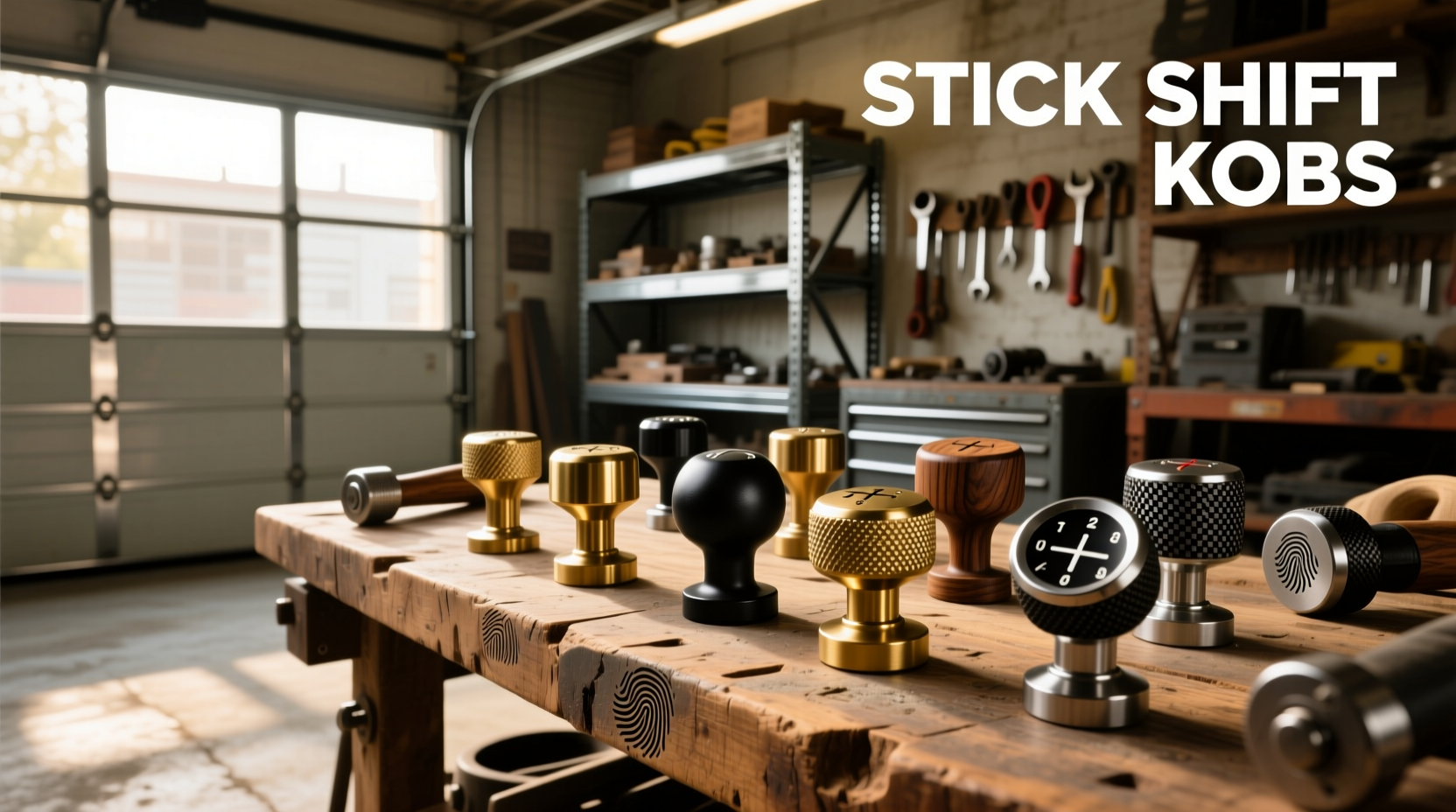
If you're searching for stick shift knobs that improve grip, style, or shifting precision, you're not alone. Many manual transmission drivers upgrade their gear shifter knob to enhance comfort or personalize their interior. However, not all shift knobs are interchangeable—compatibility depends on your car’s thread pattern, shift boot clearance, and desired weight. Understanding how to select the right manual gear shift knob can save time, prevent misfits, and ensure a secure, functional upgrade.
What Is a Stick Shift Knob?
A stick shift knob, also known as a gear shift knob or shifter knob, is the handle attached to the top of the gear selector in a manual transmission vehicle. It allows the driver to change gears by moving the lever through a specific pattern, typically while depressing the clutch pedal 1. While factory-installed knobs are designed for general use, many drivers opt for aftermarket versions to improve ergonomics, aesthetics, or performance.
Aftermarket stick shift knobs come in various materials—including aluminum, leather, carbon fiber, and weighted metals—and are often chosen for customization or improved tactile feedback during gear changes. Some models even include built-in features like LED lighting or engraved gear patterns for easier identification.
Are Stick Shift Knobs Universal?
Despite marketing claims, not all manual shift knobs are universal. While many are labeled as 'universal fit,' actual compatibility depends on several mechanical factors:
- Thread size and pitch: The most critical factor. Common thread sizes include M8x1.25, M10x1.25, and M12x1.25 mm. European cars often use metric threads, while some American or older models may differ.
- Shaft length: Aftermarket knobs must accommodate the height of your existing shifter rod. Too short, and the knob won’t screw on fully; too long, and it may interfere with the shift boot or cabin space.
- Mounting style: Most modern knobs screw directly onto the shifter, but some vehicles (especially older models or certain sports cars) use a retaining pin or clip system.
To determine compatibility, consult your vehicle’s service manual or measure the existing shifter stud using a thread pitch gauge. Alternatively, many reputable aftermarket brands provide vehicle-specific fitment guides based on make, model, and year.
Common Materials and Their Pros and Cons
The material of a stick shift knob affects durability, feel, temperature response, and overall driving experience. Here's a breakdown of popular options:
| Material | Pros | Cons |
|---|---|---|
| Aluminum | Lightweight, durable, modern look, good heat dissipation | Can feel cold in winter, less cushioned than padded materials |
| Leather/Wrapped PU | Comfortable grip, warm to touch, classic appearance | May wear over time, susceptible to moisture damage |
| Carbon Fiber | Premium look, lightweight, stiff for precise shifts | Expensive, can be brittle under impact |
| Plastic/Acrylic | Inexpensive, customizable shapes and colors | Less durable, may crack or become loose over time |
| Weighted Metal (Steel/Brass) | Improves shift smoothness, reduces overshifting, satisfying heft | May add stress to linkage if too heavy, limited design variety |
For daily drivers, a leather-wrapped or aluminum knob offers a balance of comfort and longevity. Enthusiasts who track-drive or prefer crisp shifts often favor heavier metal knobs, which can dampen excessive movement and improve gate accuracy.
How to Replace a Manual Shift Knob
Replacing a stick shift knob is typically a simple DIY task that takes under 10 minutes with basic tools. Follow these steps to ensure a safe and correct installation:
- Check if the knob unscrews: Most modern vehicles use a threaded connection. Try turning the knob counterclockwise by hand. If it doesn’t budge, it may be secured with an internal set screw or retaining pin.
- Remove any locking mechanism: Some knobs have a small Allen screw on the side. Use the appropriate hex key to loosen it before twisting off the knob.
- Clean the shifter stud: Once removed, wipe down the exposed thread to remove dirt or old thread locker residue.
- Test fit the new knob: Screw the new knob on by hand first. Ensure it threads smoothly without cross-threading. If resistance occurs, stop immediately and re-align.
- Secure the knob: Tighten firmly by hand, then use a wrench or socket if needed—but avoid over-tightening, which can strip the threads.
- Reinstall trim or boot if necessary: Make sure the shift boot isn’t pinched and that the knob clears it fully in all gears.
⚙️ Pro Tip: Apply a small amount of thread locker (low strength, blue type) to prevent vibration loosening, especially on performance or high-mileage vehicles.
Do Weighted Shift Knobs Improve Performance?
Many drivers install weighted gear shift knobs believing they enhance shifting precision. There’s truth to this, but with caveats.
A heavier knob increases momentum during shifts, helping the lever move more completely into each gear gate. This can reduce missed shifts, particularly in older transmissions with worn bushings or vague feedback. Brands like RÄZO offer models ranging from 46g to 400g, allowing fine-tuning based on preference 2.
However, excessive weight can strain shift linkage components over time, especially in cars not designed for added mass. A general guideline is to stay within 300–400 grams unless your vehicle manufacturer specifies otherwise.
⚡ Real-World Benefit: On a 5-speed Honda Civic or Subaru WRX, a 250g brass knob may make 2nd-to-3rd shifts smoother and more deliberate, reducing fatigue on long drives.
Legal and Safety Considerations
While upgrading your stick shift knob is generally allowed, there are legal and safety aspects to consider:
- Obstruction risk: Oversized or oddly shaped knobs (e.g., large balls, vertical levers) may interfere with quick gear changes in emergencies or violate local vehicle codes.
- No numbers or labels: In some regions, having a shift pattern indicator (P-R-N-D or 1-2-3-4-5-R) is required. Removing this information could be an issue during inspections, though enforcement varies widely.
- Distraction concerns: Flashing LED knobs or overly decorative designs might be considered distracting in jurisdictions with strict distracted driving laws.
📍 Regional Note: In the UK and EU, regulations focus more on functionality than appearance. In the US, rules vary by state—California, for example, has stricter standards on modifications affecting control layout.
Always verify local regulations before installing non-standard knobs, especially for heavily modified or show vehicles.
Popular Upgrades by Vehicle Type
Certain vehicles have strong aftermarket support due to enthusiast followings. Here are common applications:
- Ford Focus Mk2 / Fiesta MK6: OEM-style replacement sleeves are available for worn factory knobs, restoring grip without changing aesthetics.
- Subaru WRX/STI (2015–2022): 6-speed PU leather knobs are popular for replacing aging stock units, offering better palm fit and durability.
- Volkswagen Golf MK6/MK7: LED-equipped plastic-metal hybrid knobs allow illumination of the gear pattern at night.
- Toyota Supra / BMW E46: Carbon fiber or billet aluminum knobs are favored for track-focused builds.
When shopping, search using your vehicle’s make, model, and transmission type (e.g., “6-speed manual shift knob for Subaru WRX 2017”) to filter compatible options.
Where to Buy Stick Shift Knobs
Aftermarket knobs are available from specialty automotive retailers, performance parts stores, and online marketplaces. When purchasing:
- Verify fitment details: Look for product pages that list exact thread specs and compatible models.
- Read user reviews: Pay attention to comments about thread quality, finish durability, and real-world fit issues.
- Check return policies: Misfit knobs are common; choose sellers with hassle-free returns.
- Avoid ultra-cheap imports: Poor threading or weak materials can lead to wobbling or detachment while driving.
🛒 Buying Tip: Platforms specializing in JDM or Euro performance parts (e.g., Top JDM Store, Trendyol, Races-Shop) often carry higher-quality options than generic e-commerce sites.
Common Myths About Stick Shift Knobs
Several misconceptions persist about aftermarket shifter knobs. Let’s clarify them:
- Myth: All black ball knobs are universal.
Reality: While many follow similar dimensions, thread pitch and shaft depth still vary between brands and models. - Myth: Bigger knobs improve shifting speed.
Reality: Oversized knobs can slow transitions due to increased swing radius and reduced leverage control. - Myth: You need tools to remove every knob.
Reality: Many modern cars use hand-tightened threaded knobs—no tools required for removal or installation. - Myth: Aluminum knobs are always better than plastic.
Reality: Plastic can offer superior shock absorption and noise damping in some cases, depending on design.
Maintenance and Longevity Tips
To extend the life of your stick shift knob:
- Inspect monthly: Check for looseness, especially after spirited driving.
- Clean regularly: Use mild soap and water for leather or plastic; aluminum and carbon fiber respond well to isopropyl alcohol wipes.
- Avoid harsh chemicals: Ammonia-based cleaners can degrade finishes or cause discoloration.
- Tighten when needed: Vibration can loosen threaded connections over time—re-torque every few months.
- Weekly: Visual check for cracks or wobble
- Monthly: Clean surface and inspect thread security
- Annually: Disassemble (if possible) and inspect internal hardware
Final Considerations Before Buying
Before purchasing a new stick shift knob, ask yourself:
- Does my car have a standard threaded shifter?
- What is the correct thread size and pitch?
- Will the new knob clear the shift boot in all gears?
- Is the weight appropriate for my transmission type?
- Does local law restrict shape or labeling?
✅ Quick Checklist:
- Measure or confirm thread specs
- Verify height and diameter clearance
- Choose material based on climate and use
- Prefer products with clear fitment data
- Install securely and test all gears
Frequently Asked Questions
- ❓ Can I install a stick shift knob myself?
- Yes, most stick shift knobs can be installed without tools by unscrewing the old one and threading on the new. Always verify the mounting type first—some use set screws or pins.
- ❓ Are gear shift knobs with no numbers illegal?
- Not inherently, but some states require visible gear indicators. If the knob removes the only shift pattern label, it may fail inspection. Keep the pattern visible via dash marking or boot label.
- ❓ How do I know what thread size I need?
- Remove your current knob and measure the shifter stud with a caliper and thread gauge. Common sizes are M8x1.25, M10x1.25, and M12x1.25 mm. Refer to your vehicle manual or fitment guides.
- ❓ Do weighted shift knobs damage the transmission?
- Not if used within reason. Knobs under 400g are generally safe. Excessive weight may accelerate wear on linkages or bushings over time, especially in non-reinforced setups.
- ❓ Can I use a universal shift knob on any car?
- Universal doesn't mean compatible with all. 'Universal' usually means multiple adapters are included. Always confirm thread match and physical clearance before purchase.




 浙公网安备
33010002000092号
 浙B2-20120091-4