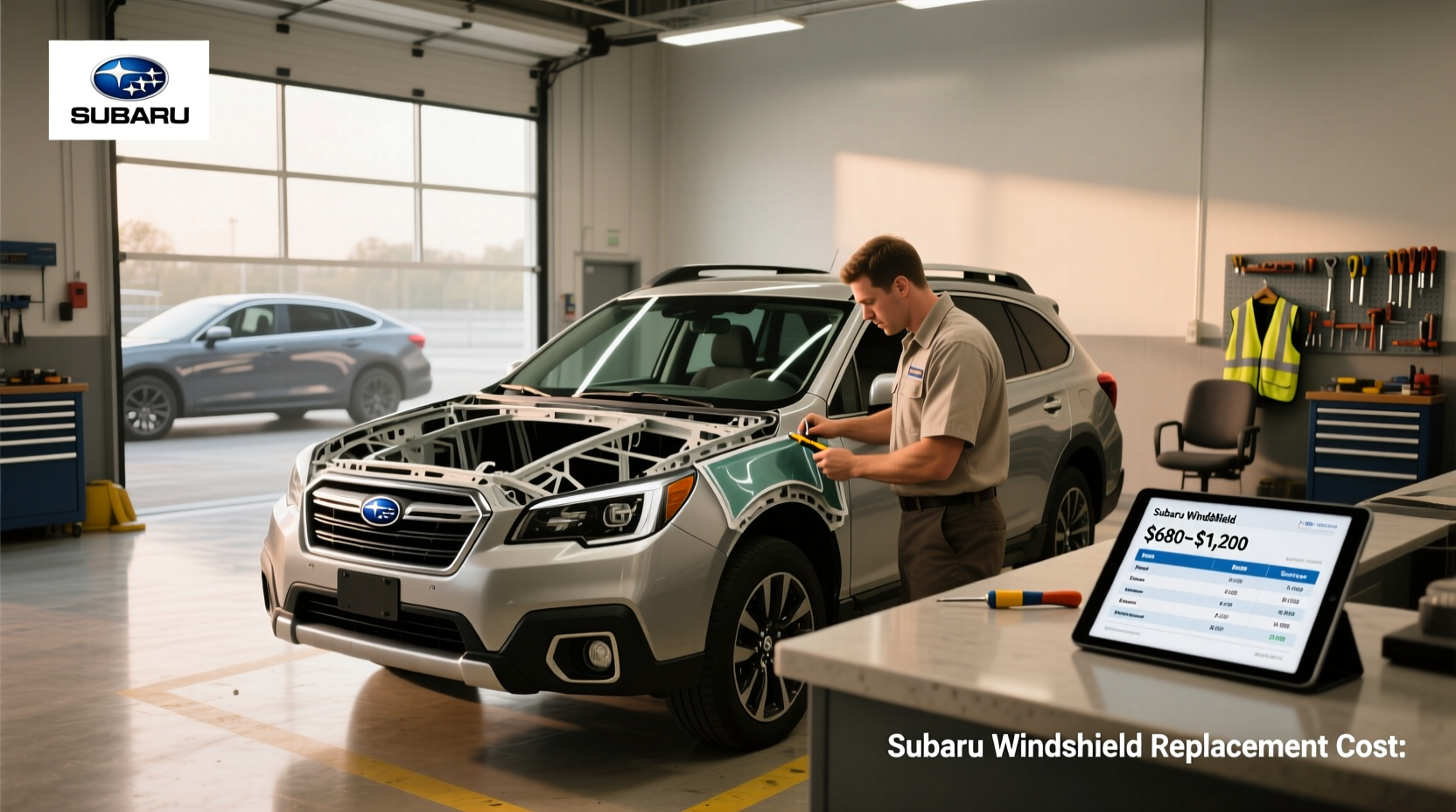
Facing a cracked or damaged windshield on your Subaru? You're likely wondering: how much does Subaru windshield replacement cost, and what factors influence the final price? On average, expect to pay between $500 and $1,300 for a complete replacement, with many owners reporting final bills near $800–$1,100 when advanced safety systems like EyeSight require recalibration. This range depends heavily on whether you choose OEM (Original Equipment Manufacturer) glass, aftermarket alternatives, labor rates in your region, and crucially, whether your vehicle is equipped with driver-assistance technology that must be recalibrated after installation ⚙️.
This guide breaks down every component affecting Subaru windshield replacement cost, compares repair vs. replacement scenarios, explains the impact of features like wiper deicers and camera integration, and helps you make an informed decision—whether using insurance, paying out of pocket, or evaluating service providers like Safelite versus dealership technicians. We’ll also address common concerns such as durability differences between glass suppliers, ongoing class-action lawsuits related to premature cracking, and how to avoid costly mistakes during the process.
What Determines the Final Price of a Subaru Windshield Replacement?
The total cost isn’t just about the glass itself—it’s a combination of parts, labor, technology requirements, and location-based variables. Let’s break it down into key components:
1. Type of Windshield Glass: OEM vs Aftermarket
The most significant factor in pricing is whether you opt for genuine OEM glass from Subaru or a third-party equivalent.
- OEM Windshields: Manufactured by companies like Carlex or Fuyao under contract for Subaru, these match factory specifications exactly. They often include integrated features such as rain sensors, antenna wiring, or heating elements for deicers. For example, a 2024–2025 Subaru Crosstrek front windshield (Part #65010FN00B) lists at over $670 MSRP through official parts channels🛒.
- Aftermarket Windshields: Produced by non-OEM suppliers, these can cost 20–40% less than OEM options. However, some users report faster pitting and reduced optical clarity over time, especially in sandy or high-debris environments👥. While functional, they may not integrate seamlessly with advanced electronics.
- Recycled/Used Glass: Rarely recommended due to structural integrity risks and lack of warranty coverage. Not advised for vehicles with ADAS (Advanced Driver Assistance Systems).
For models with EyeSight or similar driver aids, OEM or certified-compatible glass is strongly advised to maintain system accuracy.
2. Labor and Installation Fees
Labor typically ranges from $150 to $300 depending on complexity and regional labor rates. Simple replacements without electronic systems fall on the lower end. But installations requiring disassembly of trim, sensors, or cameras will take longer and cost more.
Some shops bundle labor with the glass price; others charge separately. Always ask for a line-item breakdown before approving work.
3. ADAS Recalibration: The Hidden Cost
If your Subaru has EyeSight, adaptive cruise control, lane departure warning, or automatic emergency braking, replacing the windshield requires recalibrating the forward-facing camera mounted behind the rearview mirror ⚙️.
This step is critical—failure to calibrate properly can result in malfunctioning safety systems. Calibration costs vary:
- Static calibration (done indoors on a level surface): $100–$200
- Dynamic calibration (requires driving under specific conditions): Often included or slightly higher
Total recalibration adds roughly $150 on average to the job. Some insurers cover this; others may exclude it unless explicitly requested.
Model-Specific Replacement Costs
Different Subaru models have varying windshield designs, sizes, and technological integrations, which affect pricing. Below is a comparison based on publicly listed part prices and user-reported totals:
| Subaru Model | Windshield Part Number | MSRP (Glass Only) | Avg. Total Installed Cost | EyeSight Compatible? |
|---|---|---|---|---|
| Outback (2020–2022) | 65010AN02B | $530 | $850–$1,100 | Yes |
| Crosstrek (2024–2025) | 65010FN00B | $674 | $900–$1,200 | Yes |
| Impreza (2021, no deicer) | 65009FL660 | $883 | $600–$900 | Optional |
| WRX (2022–2025) | 65009FJ081 | $517 | $700–$950 | No |
| Legacy (2020–2022) | 65009AL15A | $368 | $650–$850 | Yes |
Note: MSRP reflects list price from authorized parts distributors. Actual paid prices may be lower due to discounts, promotions, or insurance negotiations.
OEM Dealership vs Third-Party Installers: What’s the Difference?
Many drivers debate whether to go to a Subaru dealership, Safelite, or an independent auto glass shop. Each option has trade-offs:
Dealership Service Centers ✅
- Pros: Use OEM parts, factory-trained technicians, full ADAS recalibration capability, warranty-backed work.
- Cons: Higher labor rates, longer wait times, limited flexibility in scheduling.
- Best for: Owners prioritizing precision, those with complex ADAS setups, or under active warranty.
Safelite and National Chains 🔧
- Pros: Wide availability, mobile service options, direct billing with insurance, competitive pricing.
- Cons: Mixed user reports on glass quality (some mention softer glass prone to pitting), variability in technician experience, potential delays in calibration equipment access.
- Best for: Insured claims with zero deductible, urgent replacements, convenience-focused customers.
Local Independent Shops 📍
- Pros: Often lower prices, personalized service, quicker turnaround.
- Cons: May lack OEM parts inventory or proper calibration tools, inconsistent training standards.
- Best for: Budget-conscious buyers who verify credentials and equipment beforehand.
Regardless of provider, always confirm they perform both static and dynamic recalibrations if required by your model year and trim level.
Insurance Coverage: How It Affects Out-of-Pocket Costs
Comprehensive insurance typically covers windshield replacement with either zero or low deductibles. Many states mandate free windshield repair (though not always replacement). Here’s how to maximize coverage:
- Check your policy: Look for “full glass coverage” endorsements that waive deductibles for glass claims.
- In some states (e.g., Florida, Kentucky, South Carolina), laws require insurers to offer zero-deductible glass repair/replacement.
- If you have a $0 glass deductible, you might pay nothing—even for OEM replacement and calibration.
- Using insurance generally doesn’t raise premiums for glass claims, as they’re considered non-fault events.
One Reddit user shared paying around $1,100 out of pocket at Safelite for Fuyao glass plus calibration—but noted their insurance would have covered it entirely had they known about their $0 deductible option🔗.
The Subaru Windshield Lawsuit: What Owners Should Know
A class-action lawsuit has been filed alleging that certain Subaru models are equipped with windshields prone to cracking more easily than expected under normal driving conditions❗. The claim focuses on thermal stress fractures and material defects, particularly in vehicles manufactured with glass from specific suppliers.
Key points:
- The alleged defect affects models from approximately 2018 onward, especially those with heated wiper deicers.
- Cracks reportedly start at the edges or near mounting points due to expansion/contraction cycles.
- Eligible owners may receive reimbursement or discounted replacements through a settlement program.
- Visit subaruwindshieldsettlement.com for official details🌐.
If your windshield cracked prematurely without impact, you may qualify. Even if not part of the suit, documenting recurrent issues can support future warranty discussions.
Can You Repair Instead of Replace?
Not all damage requires full replacement. Small chips or cracks under 6 inches may be repairable, saving hundreds of dollars.
Repair is viable when:
- The damage is smaller than a quarter.
- It’s not in the driver’s line of sight.
- No deep penetration through both glass layers (laminated construction).
- ADAS camera view isn’t obstructed.
Cost: $50–$100. Most insurers cover this fully. Early repair prevents spreading and maintains structural integrity.
Regional and Seasonal Pricing Variations
Where you live impacts cost significantly:
- Urban areas (e.g., Los Angeles, New York): Higher labor rates ($120+/hour) push totals up.
- Rural regions: Lower base labor but fewer certified technicians available.
- Winter months: Demand spikes after road salt and temperature swings increase cracking.
- Summer: More UV exposure can accelerate crack propagation in existing chips.
Always get multiple quotes and consider timing. Scheduling outside peak seasons may yield better availability and pricing.
Tips to Save Money Without Sacrificing Safety
You don’t have to overpay for a quality windshield replacement. Follow these practical steps:
- Verify your insurance benefits: Call your provider to confirm glass coverage terms. Ask if they have preferred vendors offering waived deductibles.
- Get 3+ written estimates: Compare itemized costs for glass type, labor, and calibration.
- Ask about OEM compatibility: Ensure aftermarket glass meets FMVSS 205 standards and supports ADAS functionality.
- Choose mobile services wisely: Mobile units are convenient but ensure recalibration can be done on-site with proper targets and software.
- Review warranties: Reputable installers offer 1-year leak-free and workmanship guarantees.
Common Misconceptions About Subaru Windshields
Let’s clear up frequent misunderstandings:
- Misconception: “All windshields are the same.”
Reality: Optical clarity, thickness, curvature, and embedded tech differ even among OEM suppliers. - Misconception: “Calibration isn’t necessary if the camera looks fine.”
Reality: Even slight misalignment can disable AEB or cause false alerts. Calibration is mandatory post-replacement. - Misconception: “I can install it myself.”
Reality: DIY kits risk improper adhesion, leaks, airbag deployment failure, and ADAS errors. Professional installation is essential. - Misconception: “The dealership is always the most expensive.”
Reality: With insurance billing, out-of-pocket costs may be identical across providers.
Conclusion: Making the Right Choice for Your Subaru
Understanding Subaru windshield replacement cost means looking beyond the sticker price. Factor in glass quality, recalibration needs, installer expertise, and insurance benefits. While prices range from $500 to over $1,300, most owners spend $700–$1,100 for a complete, safe, and properly calibrated replacement.
Whether you drive a Crosstrek, Outback, WRX, or Legacy, prioritize compatibility with your vehicle’s safety systems. Don’t sacrifice long-term reliability for short-term savings—especially when dealing with structural components tied to occupant protection and automated driving features.
By researching your model-specific part number, confirming recalibration capabilities, and leveraging insurance coverage, you can navigate the process confidently and affordably.
Frequently Asked Questions
- How much does it cost to replace a Subaru windshield with EyeSight?
- Typically $800–$1,200, including OEM-equivalent glass and mandatory camera recalibration. Prices vary by region and service provider.
- Does Safelite use OEM Subaru windshields?
- Safelite may use OEM or OEM-equivalent glass depending on availability. Always confirm the brand and ADAS compatibility before installation.
- Will my insurance cover Subaru windshield replacement?
- Yes, if you have comprehensive coverage. Many policies offer $0 deductible for glass claims, especially in states with favorable regulations.
- Why are Subaru windshields so expensive compared to other brands?
- Integration with EyeSight, deicer systems, and curved laminated design increases manufacturing complexity and installation requirements.
- Can I drive immediately after Subaru windshield replacement?
- No. Wait at least 1 hour (preferably 2–3) before driving to allow urethane adhesive to cure sufficiently for safety.





 浙公网安备
33010002000092号
浙公网安备
33010002000092号 浙B2-20120091-4