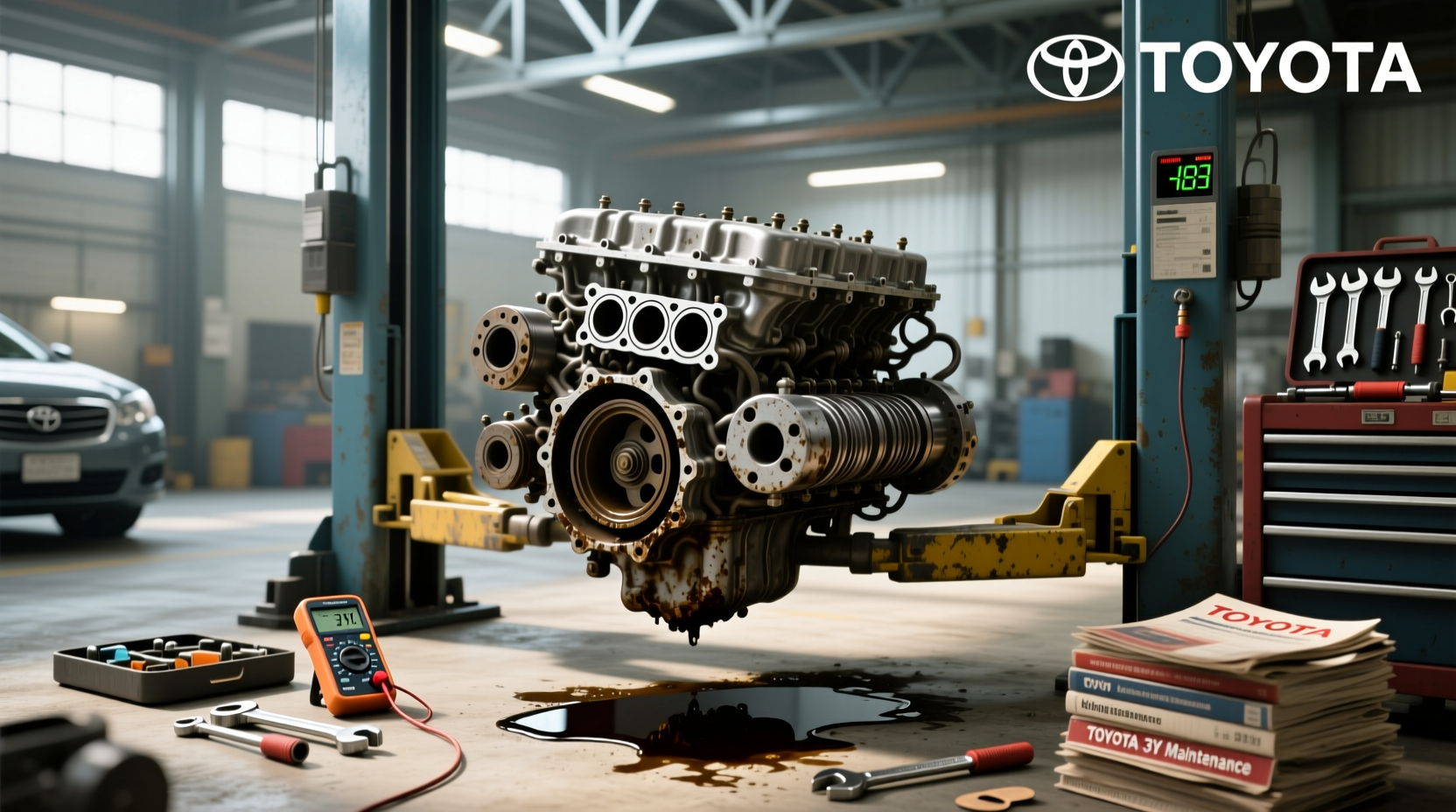
If you're experiencing Toyota 3Y engine problems, you're not alone. This durable 2.0L petrol inline-4 engine, produced from 1982 to 1996, powers many Toyota Hilux, Hiace, Dyna, and utility vehicles worldwide. While known for reliability and fuel efficiency, aging units commonly face issues like overheating, oil consumption, carburetor faults, and head gasket failures. Understanding these common 3Y engine problems early can prevent costly repairs and extend engine life—especially in high-mileage or poorly maintained vehicles.
Understanding the Toyota 3Y Engine: Design and Applications
The Toyota 3Y engine is part of the Y-series family of overhead valve (OHV), naturally aspirated, water-cooled four-cylinder petrol engines 1. Introduced in 1982, it replaced earlier 2Y variants and was used extensively in commercial and off-road applications due to its simplicity, durability, and ease of repair. With a displacement of 1998 cc (2.0L), the 3Y produces around 85–95 horsepower and 135–150 N⋅m of torque, depending on model year and market.
🔧 Key specifications:
| Specification | Details |
|---|---|
| Engine Type | Inline-4, OHV, Naturally Aspirated |
| Displacement | 1998 cc (2.0L) |
| Bore × Stroke | 86.0 mm × 86.0 mm |
| Compression Ratio | 8.8:1 (standard) |
| Fuel System | Carburettor (most models) |
| Cooling System | Water-cooled |
| Oil System | Wet sump |
| Power Output | 85–95 hp @ 4800 rpm |
| Torque | 135–150 N⋅m @ 2800 rpm |
| Applications | Hilux (RN30/40), Hiace (LH100/110), Dyna (YY50), Forklifts |
The 3Y engine was designed for longevity under harsh conditions, making it popular in developing markets, agricultural settings, and fleet operations. However, as these engines age—many now over 30 years old—they begin to exhibit wear patterns and mechanical failures that owners must understand to maintain performance.
Top 5 Common Toyota 3Y Engine Problems
Despite its reputation for toughness, the Toyota 3Y engine is prone to several recurring mechanical and operational issues. Below are the most frequently reported problems, based on owner forums, mechanic reports, and service data.
1. Overheating Due to Cooling System Failures ⚙️
One of the most widespread Toyota 3Y engine problems is overheating. Symptoms include rising temperature gauge readings, coolant boiling, steam from the radiator, and eventual head warping if ignored.
Common causes:
- Faulty thermostat stuck closed
- Radiator clogging due to rust or debris
- Water pump impeller wear or seal leakage
- Air pockets in the cooling system after refill
- Collapsed or cracked hoses reducing flow
🛠️ Solution: Regularly inspect and flush the cooling system every 2 years. Replace the thermostat proactively. Use OEM-spec antifreeze and bleed air from the system properly during maintenance. If overheating persists, pressure-test the radiator and check for head gasket leaks.
2. Excessive Oil Consumption and Burning Smoke 🌫️
Blue or gray smoke from the exhaust, especially during startup or acceleration, indicates oil burning—a sign of internal wear.
Potential root causes:
- Worn piston rings losing compression
- Damaged valve stem seals allowing oil into combustion chambers
- Clogged PCV (Positive Crankcase Ventilation) system increasing crankcase pressure
- High mileage leading to cylinder wall scoring
🔧 Maintenance tip: Perform a compression test and leak-down test to assess engine health. If compression is below 120 psi or varies more than 15% between cylinders, an overhaul may be needed. Replacing valve stem seals is less invasive and often resolves minor oil consumption.
3. Carburetor Issues Leading to Poor Idling or Stalling 🔧
Since most 3Y engines use a carburetor (not fuel injection), fuel delivery problems are common, especially in humid or dusty environments.
Symptoms:
- Hard starting when cold
- Stalling at idle
- Hesitation during acceleration
- Flooded engine smell
Root causes:
- Clogged jets due to dirty fuel or ethanol degradation
- Sticking float or needle valve
- Vacuum leaks in intake manifold or hoses
- Worn accelerator pump diaphragm
🛠️ Fix: Clean the carburetor thoroughly with carb cleaner. Replace worn gaskets and seals. Consider upgrading to a rebuilt carburetor unit or converting to electronic fuel injection (EFI) kits available aftermarket for improved reliability.
4. Head Gasket Failure After Overheating ❗
A blown head gasket is one of the most serious 3Y engine problems, often resulting from prolonged overheating.
Warning signs:
- Mixing of coolant and oil (milky residue under oil cap)
- Bubbles in radiator when engine runs
- Loss of coolant without visible leaks
- Engine misfiring or rough running
🔧 Repair approach: Replacement requires cylinder head removal, surface inspection, and resurfacing if warped. Always replace the thermostat and water pump during reassembly to prevent recurrence. Use a multi-layer steel (MLS) gasket for better durability.
5. Timing Chain Wear and Noise ⏱️
Unlike interference engines, the 3Y uses a timing chain with a guide and tensioner. Over time, these components wear, causing rattling noises on startup.
Indicators:
- “Marbles in a can” noise at cold start
- Noise diminishes as engine warms
- Possible timing misalignment affecting performance
🛠️ Prevention: Change engine oil regularly with proper viscosity (10W-30 or 15W-40). Worn chains should be replaced along with guides and tensioners. Align timing marks carefully during reinstallation.
How to Diagnose 3Y Engine Problems Early
Catching issues before they escalate saves money and downtime. Here’s a diagnostic checklist for common symptoms:
- Check engine oil condition: Milky oil suggests coolant contamination.
- Inspect coolant: Oily film or bubbles indicate combustion gases entering the system.
- Listen for unusual sounds: Knocking, ticking, or rattling may point to bearings, lifters, or timing chain issues.
- Monitor fuel economy: Sudden drop may signal carburetor or ignition problems.
- Perform compression test: Low or uneven readings reveal internal wear.
- Scan for vacuum leaks: Use propane or carb cleaner around intake to detect RPM changes.
📍 Pro Tip: Keep a maintenance log tracking oil changes, coolant flushes, and repairs. This helps identify patterns and verify repair effectiveness.
Is the Toyota 3Y Engine Reliable? Longevity vs. Age-Related Wear
Yes, the 3Y engine is fundamentally reliable—many have surpassed 300,000 km with basic care. However, reliability depends heavily on usage, climate, and maintenance history.
Factors influencing lifespan:
- Operating environment: Dusty, hot climates accelerate wear.
- Fuel quality: Ethanol-blended fuels degrade rubber parts in older carburetors.
- Oil change frequency: Infrequent changes lead to sludge and bearing damage.
- Load conditions: Vehicles used for towing or constant heavy loads experience faster wear.
✅ Well-maintained 3Y engines can last 20+ years. But beyond 15 years, expect increased maintenance needs, especially in regions with poor fuel or service infrastructure.
Common Misconceptions About the 3Y Engine
Several myths persist among owners and mechanics:
- Myth: The 3Y is bulletproof and never needs major work.
Reality: While robust, neglect leads to failure. No engine lasts forever without care. - Myth: All 3Y engines are the same across models.
Reality: Variants exist with different carburetors, manifolds, and emissions controls by region. - Myth: You can swap a 4Y directly into a 3Y vehicle.
Reality: While similar, differences in mounts, wiring, and accessories may require modifications.
Preventive Maintenance Tips for 3Y Engine Owners
Follow this schedule to minimize Toyota 3Y engine problems:
| Interval | Maintenance Task | Purpose |
|---|---|---|
| Every 5,000 km | Oil & filter change | Prevent sludge and wear |
| Every 20,000 km | Inspect belts, hoses, spark plugs | Ensure ignition and cooling function |
| Every 40,000 km | Carburetor cleaning or rebuild | Maintain fuel delivery |
| Every 60,000 km | Coolant flush | Prevent corrosion and overheating |
| Every 100,000 km | Timing chain inspection | Avoid catastrophic failure |
| As needed | Compression test | Assess engine health |
🧼 Additional tips:
- Use non-ethanol fuel if possible, or add a fuel stabilizer.
- Store the vehicle with a full tank to reduce condensation.
- Run the engine regularly—even short trips help prevent gumming.
Aftermarket Support and Replacement Options
Given the age of the 3Y engine, OEM parts are scarce in some regions. However, global suppliers offer new, remanufactured, and long-block assemblies.
🛒 Where to find replacements:
- Alibaba.com: Numerous vendors sell complete 3Y engines (new or reconditioned) for $900–$1,500 USD, often with shipping included 2.
- Local engine rebuilders: Many specialize in older Toyota engines and can restore your unit.
- Junkyards and salvage yards: Source low-mileage used engines from decommissioned vehicles.
🚚 When buying online, confirm compatibility with your chassis code (e.g., Hilux RN40, Hiace LH110). Ask for warranty terms and whether the engine is “long block” (includes internals but not accessories) or “short block” (crank, pistons, block only).
Regional Differences in 3Y Engine Performance
The 3Y engine was sold globally, but specifications varied by market:
- Africa/Middle East: Often higher compression (9.0:1) for better power in hot climates.
- Asia-Pacific: Some models had emission controls or lean-burn tech.
- South America: Used in buses and trucks with reinforced cooling systems.
Always verify local tuning and accessory configurations before swapping or repairing.
When to Rebuild vs. Replace the 3Y Engine
Faced with major issues, owners must decide: repair or replace?
Rebuild if:
- You have mechanical skills or access to a trusted shop.
- The block is sound and only internals are worn.
- You want to retain originality (e.g., classic vehicle).
Replace if:
- The block is cracked or severely corroded.
- Labor costs exceed value of repair.
- You need minimal downtime (e.g., commercial use).
💡 A professionally rebuilt long block typically costs 60–70% of a new imported unit but takes longer to install.
Conclusion: Managing Toyota 3Y Engine Longevity
The Toyota 3Y engine remains a symbol of mechanical simplicity and rugged dependability. While frequent 3Y engine problems like overheating, oil burning, and carburetor faults are well-documented, most are manageable with proactive maintenance and timely repairs. By understanding the design limitations, monitoring key indicators, and following a disciplined service routine, owners can keep these engines running reliably for decades. Whether you’re maintaining a vintage Hilux or operating a fleet van, recognizing the signs of wear early is the best defense against unexpected breakdowns.
Frequently Asked Questions (FAQ)
Q: What is the difference between a 2Y and a 3Y engine?
A: The 3Y has a larger bore (86mm vs 85mm), higher displacement (2.0L vs 1.8L), and slightly more power. It also features updated cooling and lubrication systems for better durability.
Q: Can I upgrade my 3Y engine to fuel injection?
A: Yes, aftermarket EFI conversion kits are available. They improve fuel economy, cold starts, and emissions, though installation requires wiring and tuning expertise.
Q: How much does a 3Y engine replacement cost?
A: Prices range from $900 for a basic long block on Alibaba.com to $2,500+ installed locally, depending on region and labor rates.
Q: Is the Toyota 3Y engine fuel efficient?
A: Yes, it averages 10–13 L/100km (22–29 mpg) in mixed driving, which is efficient for a carbureted 2.0L engine of its era.
Q: Which vehicles use the Toyota 3Y engine?
A: Common models include Toyota Hilux (RN30/40), Hiace (LH100/110), Dyna (YY50), Toyoace, and various forklifts and industrial machines.





 浙公网安备
33010002000092号
浙公网安备
33010002000092号 浙B2-20120091-4