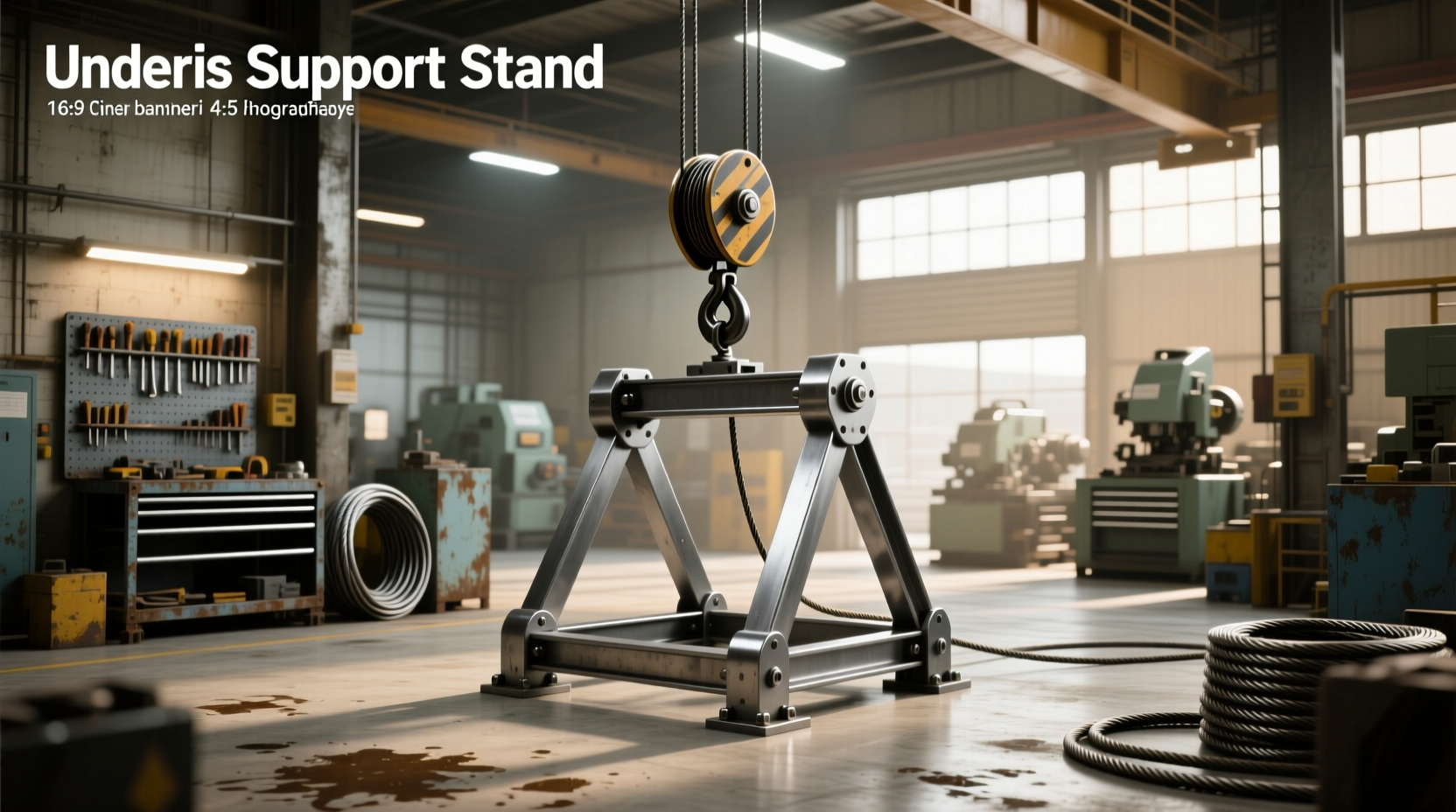
When working beneath a vehicle on a two-post lift, having both hands free while managing heavy components like exhaust systems, transmissions, or engine mounts can be challenging—and dangerous. An under hoist support stand provides critical secondary support, stabilizing suspended parts during service. These tools are essential in professional shops and for serious DIYers using overhead lifts, offering stability, improved ergonomics, and enhanced safety by reducing strain and risk of dropped components.
This guide explores everything you need to know about under hoist support stands: their function, types, load capacities, compatibility with different lift systems, common use cases (such as muffler replacement or transmission work), setup best practices, and key selection criteria based on height range, base stability, saddle design, and material strength. We’ll also address frequent misconceptions, compare related tools like jack stands versus dedicated pipe or exhaust supports, and help you determine whether this tool fits your workshop needs.
What Is an Under Hoist Support Stand?
An under hoist support stand—also known as an exhaust support stand, muffler stand, or transmission pole jack—is a specialized vertical support device designed to hold automotive components securely while they're being serviced underneath a raised vehicle. Unlike standard floor jack stands used for lifting the entire car, these stands support individual parts once they’ve been disconnected from the chassis.
🔧 They typically feature an adjustable-height column with a padded V-head or cradle at the top that gently holds pipes, exhaust systems, or other elongated assemblies. The base is wide and weighted for balance, often including casters for mobility under a lifted vehicle. Some models come with foot pumps or hand cranks for smooth height adjustment without requiring constant repositioning.
These stands are commonly used in conjunction with two-post or four-post vehicle lifts. Their primary role isn’t to lift the vehicle but to provide a stable, hands-free platform for mechanics to perform repairs safely. This makes them especially valuable during tasks such as:
- Exhaust system removal and installation
- Muffler replacement
- Transmission servicing
- Engine mount replacement
- Suspension component maintenance
Why You Need an Under Hoist Support Stand
Working under a lifted vehicle introduces inherent risks. Even when secured properly on jack stands or a hydraulic lift, removing structural elements like exhaust hangers or transmission mounts shifts weight distribution. Without temporary internal support, components can sag, swing unpredictably, or fall—posing injury risks and potential damage.
✅ Using an adjustable under hoist jack stand mitigates these dangers by providing active load-bearing assistance. It allows technicians to detach and reattach parts methodically, without manually holding heavy sections in place. This improves precision, reduces physical fatigue, and enhances workflow efficiency.
In commercial settings, OSHA and similar workplace safety standards emphasize the importance of secondary support mechanisms when performing work under elevated vehicles. While not always legally mandated for personal garages, adopting professional-grade safety practices significantly lowers accident probability.
Different Types of Under Hoist Support Stands
Not all support stands serve the same purpose. Understanding the distinctions helps ensure proper tool selection:
1. Exhaust/Muffler Support Stands
Designed specifically for exhaust systems, these models usually have a V-shaped head lined with rubber or foam padding to prevent scratching metal surfaces. They’re built to handle long, tubular loads and often include swiveling heads to accommodate angled pipe runs.
🔧 Common features:
- Height range: 50–80 inches
- Load capacity: 500–2,500 lbs
- Foldable or rolling designs for storage
- Quick-adjust mechanisms (e.g., gas assist, ratchet)
2. Transmission Pole Jacks
These resemble tall hydraulic jacks mounted on a mobile base. They offer precise vertical control and higher load ratings (often up to 1,000+ lbs) suitable for heavier gearboxes. Many include locking collars or mechanical stops to maintain position during extended work sessions.
3. Universal Pipe Jack Stands
Broadly applicable across industries, these supports work well in automotive contexts too. With wide saddles and high weight limits (up to 2,500 lbs), they’re ideal for supporting large-diameter exhaust manifolds or custom fabrication projects.
4. Stackable or Modular Jack Stands
Less common but useful in tight spaces, these allow incremental height adjustments through interchangeable blocks or telescoping sections. However, they may sacrifice lateral stability compared to single-column units.
| Type | Best For | Avg. Height Range | Typical Load Capacity | Mobility |
|---|---|---|---|---|
| Exhaust Support Stand | Mufflers, tailpipes, catalytic converters | 54–80 in | 500–1,500 lbs | Rolling base |
| Transmission Jack | Automatic/manual transmissions | 30–60 in | 800–2,000 lbs | Wheeled |
| Pipe Jack Stand | Large exhaust systems, industrial piping | 28–52 in (adjustable) | 2,000–2,500 lbs | Folding with rollers |
| Under Hoist Safety Stand | General undercarriage support | 53–79 in | 1,500 lbs | Fixed or rolling |
Key Features to Evaluate Before Buying
Selecting the right under hoist support stand involves more than just price or brand reputation. Consider these technical and practical factors:
📌 Load Capacity
Always choose a stand rated above the maximum expected load. For example, if replacing a dual-exit stainless steel exhaust (~300 lbs), select a model with at least 600-lb capacity for safety margin. Never exceed the manufacturer’s stated limit.
📏 Height Adjustability
The stand must reach from the shop floor to the component when the vehicle is lifted. Most two-post lifts raise cars between 60–72 inches off the ground. Ensure the support stand’s minimum and maximum heights align with your typical working clearance.
⚖️ Base Stability
A broad, low-center-of-gravity base prevents tipping. Look for models with a diameter of at least 12 inches or triangular/tripod bases. Units with locking casters add mobility without sacrificing security once positioned.
🛠️ Saddle Design
Rubberized V-heads protect finished surfaces. Swivel joints allow angular alignment, which is helpful when dealing with offset exhaust paths. Removable pads simplify cleaning and replacement.
⚙️ Adjustment Mechanism
Options include:
- Gas-assist lift: Smooth, spring-loaded extension (like office chairs)
- Threaded screw: Precise but slower; requires manual turning
- Hydraulic pump: Fast, powerful, often foot-operated
- Ratchet/pawl system: Stepwise height changes with secure locking
How to Use an Under Hoist Support Stand Safely
Proper usage ensures both effectiveness and safety. Follow these steps:
- Position the vehicle correctly on the lift, ensuring it's level and centered.
- Begin lowering the lift until the target component (e.g., exhaust mid-pipe) is accessible.
- Place the support stand beneath the section to be held, aligning the saddle directly under the heaviest part.
- Adjust the height gradually until contact is made—do not apply upward pressure yet.
- Slowly raise the stand until it bears slight tension on the component, eliminating slack but not lifting it independently.
- Secure fasteners only after confirming stability. Recheck positioning periodically during disassembly.
- Lower the component slowly when reinstalling or finishing work.
Common Misconceptions About Under Hoist Support Stands
Despite growing adoption, several myths persist:
❌ "It’s Just Like a Floor Jack Stand"
No. Standard jack stands support the vehicle frame. Under hoist support stands stabilize detached components. Confusing the two leads to misuse and unsafe conditions.
❌ "Any Tall Stand Will Work"
While some adapt general-purpose jacks, dedicated models offer better ergonomics, padding, and load distribution tailored to cylindrical objects like exhaust pipes.
❌ "I Can Skip It If I’m Careful"
Human strength has limits. A muffler weighing over 200 pounds cannot be safely held manually while aligning hangers. Overexertion leads to dropped parts or back injuries.
❌ "More Height Means Better"
Taller doesn't always mean safer. Excessively extended columns reduce stability due to leverage. Choose a model whose optimal operating range matches your lift height.
Compatibility With Lift Systems
Most under hoist support stands are universal, but clearance issues can arise depending on lift type:
- Two-post lifts: Ideal for use; ample space between posts allows easy access underneath.
- Four-post lifts: May restrict movement due to cross-members; verify stand footprint clears obstructions.
- In-ground lifts: Rarely interfere, though floor channels might affect base placement.
- Scissor lifts: Limited underbody access; compact folding stands may be necessary.
Before purchasing, measure your lift’s lowest usable clearance and compare it with the stand’s minimum height. Also, consider where you'll store the unit when not in use—many fold down for easier garage organization.
DIY Alternatives and Risks
Some users attempt makeshift solutions like wooden blocks, stacked bricks, or repurposed jacks. While these may seem cost-effective, they introduce serious hazards:
- Lack of secure cradling increases slip risk
- No dynamic load absorption under vibration
- Poor height control leads to misalignment
- Brittle materials can fracture under stress
🛒 Investing in a purpose-built heavy-duty pipe jack stand pays off in longevity, safety, and time saved. Used units from reputable brands often retain value and functionality for years.
Top Brands and Where to Buy
Several manufacturers produce reliable under hoist support equipment. Known for durability and consistent engineering, brands like Huth, JMC Automotive Equipment, Sunex, Sealey, and VEVOR offer various configurations catering to home and professional shops.
Purchasing options include:
- AutoZone – Carries select models; good for immediate pickup
- Home Depot / Lowe’s – Stock basic pipe stands; limited specialty options
- Specialty tool suppliers – Offer full product lines with technical specs
- Online retailers – Broader selection, customer reviews, and competitive pricing
📍 When comparing prices, factor in shipping costs and warranty terms. Some vendors provide repair kits or replacement parts, extending tool life.
Maintenance Tips for Longevity
To keep your support stand functioning reliably:
- Wipe down the column and saddle after each use to remove grease and debris
- Lubricate moving parts (screws, hinges, pistons) quarterly with light machine oil
- Inspect for cracks, weld failures, or worn padding monthly
- Store indoors to prevent rust and corrosion
- Test locking mechanisms regularly to ensure secure hold
Regular inspection prevents sudden failure during use. Replace any damaged component immediately.
When Not to Use an Under Hoist Support Stand
There are scenarios where even a high-quality stand should not be relied upon:
- If the component is corroded and likely to break apart under minimal pressure
- When working alone without a way to quickly release load in emergencies
- If the stand shows visible signs of wear or instability
- On uneven or sloped floors where tipping risk is elevated
- Outside its rated load or height specifications
In such cases, alternative methods like chain hoists or complete removal before disassembly may be safer.
Conclusion: Is an Under Hoist Support Stand Worth It?
For anyone routinely performing undercarriage repairs on lifted vehicles, the answer is yes. An under hoist support stand enhances safety, improves work quality, and reduces physical strain. Whether you're replacing a muffler, rebuilding a transmission, or modifying an exhaust system, having a dedicated support tool streamlines the process and minimizes risk.
The initial investment—ranging from $50 for basic models to $300+ for professional-grade units—is modest compared to potential medical bills or vehicle damage from accidents. By selecting a stand with appropriate capacity, adjustability, and build quality, you gain a versatile asset that lasts for years.
Frequently Asked Questions (FAQs)
Below are answers to common questions about under hoist support stands:
- Can I use a regular jack stand instead of an under hoist support stand?
- No. Regular jack stands are designed to support the vehicle frame, not elongated components like exhaust systems. Using them improperly can lead to instability and damage.
- How much weight can an under hoist support stand hold?
- Most models support between 500 and 2,500 pounds. Always check the manufacturer’s rating and never exceed it. Choose a capacity double the expected load for safety.
- Do I need one for muffler replacement?
- Yes. Mufflers and exhaust sections can weigh hundreds of pounds. A support stand keeps them stable while you remove hangers and flanges, preventing drops and improving accuracy.
- Are under hoist stands compatible with all vehicle lifts?
- Most are universally compatible, but clearance and base size matter. Verify fit with your specific lift model, especially on four-post or scissor lifts with obstructed undercarriage space.
- Can I build my own exhaust support stand?
- While possible, homemade versions lack tested load ratings and safety features. Commercial stands offer predictable performance and are generally more cost-effective over time.





 浙公网安备
33010002000092号
浙公网安备
33010002000092号 浙B2-20120091-4