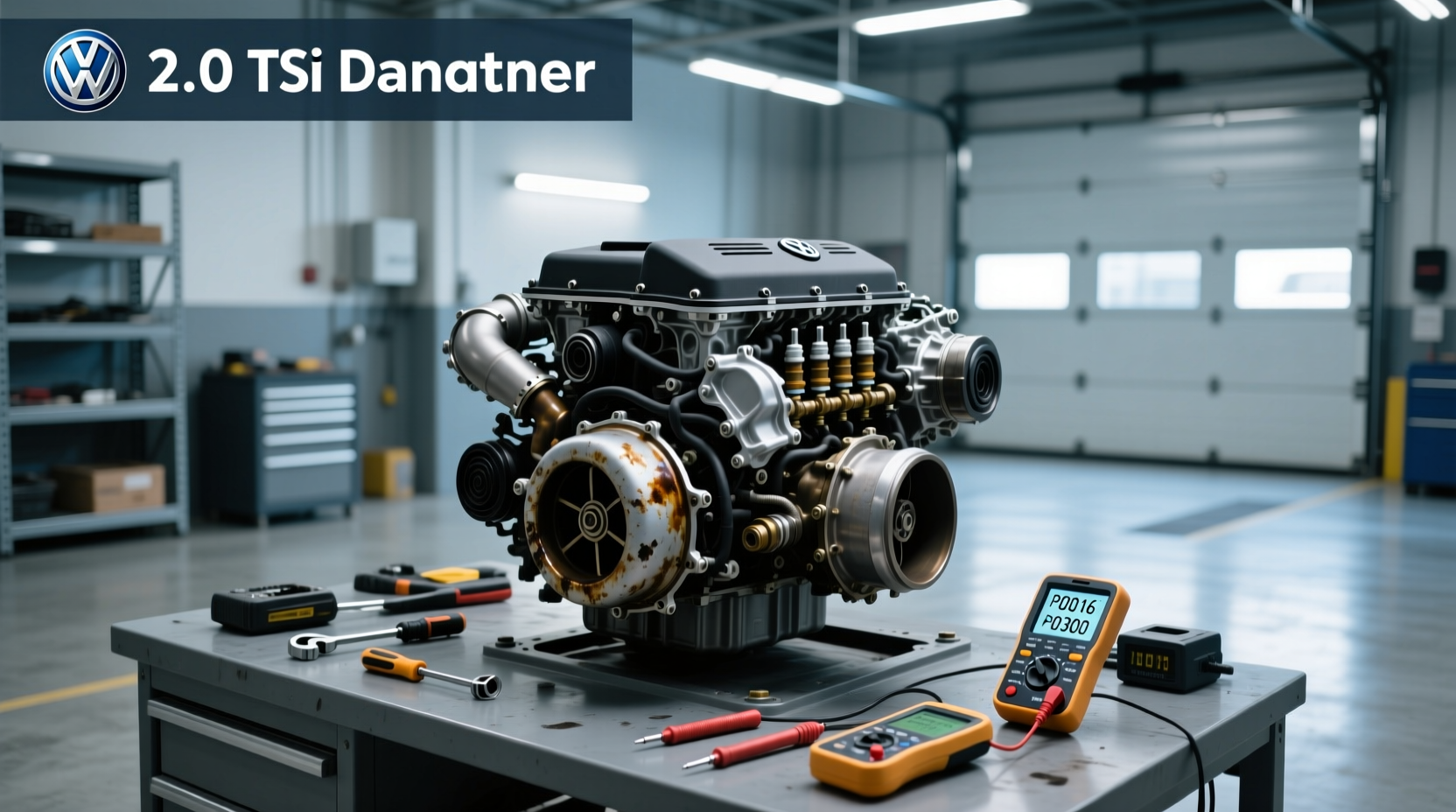
If you own or are considering a Volkswagen with the 2.0 TSI engine, understanding its common mechanical weaknesses is crucial for long-term reliability. The VW 2.0 TSI engine problems most frequently reported include premature timing chain tensioner failure, high-pressure fuel pump (HPFP) malfunctions, and carbon buildup on intake valves—issues that can lead to expensive engine damage if ignored. These problems primarily affect EA888 Gen 1 and Gen 2 engines produced between 2008 and 2015, though later generations have seen significant improvements. Regular maintenance, especially timely oil changes and use of quality fluids, plays a critical role in mitigating these risks. This guide breaks down each major issue, explains root causes, identifies symptoms, and provides actionable steps to extend engine life.
Understanding the VW 2.0 TSI Engine: Design and Evolution
The Volkswagen 2.0 TSI (Turbocharged Stratified Injection) engine has been a cornerstone of VW’s powertrain strategy since its introduction in the mid-2000s. Known for balancing performance and efficiency, this inline-4 turbocharged gasoline engine uses direct fuel injection and advanced combustion cycles like the Budack cycle—a variation of the Atkinson cycle—to improve fuel economy ⚙️.
Over the years, the 2.0 TSI evolved through several generations:
- Gen 1 (EA113/EA888 Gen 1): ~2006–2009 — First widely adopted version; prone to multiple reliability concerns.
- Gen 2 (EA888 Gen 2): ~2009–2015 — Improved cooling and turbo response but still carries over key flaws.
- Gen 3 (EA888 Gen 3): ~2012–present — Major redesign with enhanced durability, better oil management, and reduced carbon buildup risk.
- Gen 4 (EA888 Gen 4): ~2020–present — Latest iteration featuring improved thermal efficiency and emissions control.
While all versions deliver strong performance (typically 200–300 hp depending on tune), the early models—particularly those from 2008 to 2014—are most associated with chronic mechanical failures 1.
Top 5 VW 2.0 TSI Engine Problems and Their Causes
1. Timing Chain Tensioner Failure (Gen 1 & Gen 2)
📍 Most Critical Issue: A failing timing chain tensioner is the number one cause of catastrophic engine damage in early 2.0 TSI engines.
Symptoms:
- Grinding or rattling noise at startup (especially cold starts)
- Check engine light with P0016 or P0017 codes
- Engine misfires or rough idle
- Complete engine seizure in worst cases
Why It Happens:
The hydraulic timing chain tensioner relies on consistent oil pressure to maintain proper chain tension. Over time, sludge buildup from infrequent oil changes or low-quality oil can clog the oil passages leading to the tensioner. Once it fails, the chain slackens, jumps teeth on the camshaft sprockets, and may cause pistons to strike valves—resulting in bent valves or total engine destruction 🔧.
Affected Models:
• Volkswagen Golf GTI (Mk6, Mk5)
• Jetta GLI
• Passat B6/B7
• Audi A4/A5/Q5 with 2.0T
Solution:
Replace the entire timing chain kit—including tensioner, guides, chain, and sprockets—as a preventive measure around 80,000–100,000 miles. Some owners opt for upgraded metal-reinforced tensioners to reduce future risk.
2. High-Pressure Fuel Pump (HPFP) Failure
⛽ Fuel System Weakness: Direct injection requires extremely high fuel pressure (up to 2,000 psi). The HPFP, driven by the camshaft, is a known weak point.
Symptoms:
- Difficulty starting, especially when hot
- Stalling under load
- Loss of power or hesitation during acceleration
- P0087 code (Fuel Rail/System Pressure – Too Low)
Why It Happens:
The HPFP operates under extreme stress and depends on lubrication from the fuel itself. Poor fuel quality or extended intervals between refueling can accelerate wear. Additionally, debris from a failing fuel filter or tank contamination can damage internal components.
Solution:
Replace the HPFP as soon as symptoms appear. Aftermarket units vary in quality—OEM or reputable brands like Bosch are recommended. Consider replacing the fuel filter (if applicable) and cleaning the system.
3. Carbon Buildup on Intake Valves
🧼 Byproduct of Direct Injection: Unlike port-injected engines, the 2.0 TSI sprays fuel directly into the combustion chamber, bypassing the back of the intake valves.Without fuel washing over the valves, oil vapors from the crankcase ventilation (PCV) system accumulate and bake into carbon deposits over time.
Symptoms:
- Reduced throttle response
- Rough idle or stalling at low RPM
- Increased fuel consumption
- Misfire codes (P0300 series)
Prevention & Repair:
• Perform regular walnut blasting every 60,000–80,000 miles
• Use OEM-approved PCV valve and hose upgrades (some later models revised this)
• Run top-tier detergent gasoline (e.g., Chevron Techron, Shell V-Power)
• Avoid excessive short trips that don’t allow the engine to fully warm up
4. Oil Consumption and PCV System Issues
🛢️ Excessive Oil Burn: Some 2.0 TSI engines, particularly Gen 1 and early Gen 2, are known to consume more than 1 quart of oil per 1,500 miles.Cause:
Worn piston rings, turbocharger seal leaks, or a malfunctioning PCV system can draw oil into the combustion chamber. The PCV system, designed to recirculate crankcase gases, can become clogged or fail, causing positive pressure that forces oil into the intake.
Solutions:
• Monitor oil levels monthly and refill as needed
• Upgrade to a revised PCV system (available for many models post-2012)
• Consider an aftermarket oil catch can to trap vapors before they enter the intake
• If consumption exceeds 1 qt/1,000 miles, investigate for internal engine wear
5. Turbocharger Failures
⚡ Turbo Longevity Concerns: While generally robust, the turbocharger can fail prematurely due to oil starvation or overheating.Symptoms:
- Whining or grinding noises from the engine bay
- Loss of boost pressure
- Blue smoke from exhaust (indicating oil burning)
- Check turbo or reduced engine power warnings
Causes:
• Using incorrect oil or exceeding oil change intervals
• Shutting off the engine immediately after hard driving (prevents turbo cooldown)
• Clogged oil feed lines or restricted return lines
Prevention Tips:
• Always use VW 502 00 or 504 00 approved 5W-40 full synthetic oil
• Allow engine to idle for 30–60 seconds after aggressive driving before shutdown
• Replace oil lines and filters during major services
Which VW 2.0 TSI Generation Is Most Reliable?
📊 When evaluating long-term ownership costs, the generation of the 2.0 TSI engine matters significantly.
| Generation | Production Years | Key Issues | Reliability Rating |
|---|---|---|---|
| Gen 1 (EA888) | 2008–2009 | Timing chain, HPFP, carbon buildup | ⭐⭐☆☆☆ |
| Gen 2 (EA888) | 2009–2015 | Timing chain (early), carbon, oil consumption | ⭐⭐⭐☆☆ |
| Gen 3 (EA888) | 2012–2019 | Minimal; rare HPFP or turbo issues | ⭐⭐⭐⭐☆ |
| Gen 4 (EA888) | 2020–present | Too new for long-term data | ⭐⭐⭐⭐★ |
💡 Takeaway: If purchasing used, prioritize Gen 3 engines (2015 and newer). They feature redesigned timing chains with sturdier tensioners, improved PCV systems, and often come with factory updates addressing earlier flaws.
How Long Do VW 2.0 TSI Engines Last?
⏱️ With proper care, a VW 2.0 TSI engine can last 150,000 to 200,000 miles or more. However, lifespan varies dramatically based on maintenance history.
Factors That Extend Engine Life:
- Regular oil changes every 5,000 miles (or annually) using correct VW-spec oil
- Replacing the timing chain assembly before 100,000 miles on Gen 1/2
- Using premium-grade gasoline with detergents
- Performing intake valve cleaning every 60k–80k miles
- Avoiding prolonged idling and short-trip driving
Conversely, neglecting oil changes or ignoring warning signs can result in failure as early as 60,000 miles—especially in high-stress applications like modified or aggressively driven vehicles.
Are Modified 2.0 TSI Engines More Prone to Failure?
🔧 Aftermarket tuning (e.g., ECU remaps, increased boost) is popular among enthusiasts but increases stress on key components.
Risks of Tuning:
- Higher cylinder pressures accelerate timing chain wear
- Increased fuel demand strains HPFP
- Greater heat output stresses turbo and cooling system
- May void any remaining factory warranty
Recommendations:
If modifying, ensure the engine is healthy first. Upgrade supporting components like intercoolers, fuel pumps, and engine mounts. Monitor for knock, boost leaks, and oil condition more frequently.
Regional Differences and Model-Specific Notes
🌐 Reliability can also depend on regional build specifications and climate.
For example:
- In Europe, some markets received stricter emissions tuning, affecting longevity.
- In hot climates (Middle East, Southwest US), cooling system efficiency becomes critical.
- Canadian models may experience more moisture-related PCV issues due to winter conditions.
Additionally, certain models had unique revisions:
- Golf R (Mk7): Uses a more robust version of the Gen 3 engine with improved cooling.
- Tiguan (2018+): Features updated EA888 Gen 3 with revised oil circuitry.
- Passat (B8): Generally more reliable than older B6/B7 variants.
How to Buy a Used VW 2.0 TSI and Avoid Trouble
🛒 Purchasing a pre-owned vehicle with this engine requires diligence.
Checklist Before Buying:
- Service Records: Look for consistent oil changes and timing chain replacement (if applicable).
- OBD2 Scan: Check for stored codes related to timing, fuel pressure, or misfires.
- Oil Consumption Test: Ask for records or perform a 1,000-mile test to measure burn rate.
- Carbon Inspection: Request a borescope inspection of intake valves.
- Model Year: Favor 2015 and newer for Gen 3 advantages.
Avoid cars without maintenance history or those modified without documentation.
Common Misconceptions About the 2.0 TSI
❌ Despite online debates, not all 2.0 TSIs are “lemons.” Many owners report trouble-free experiences beyond 150,000 miles.
Myth #1: “All 2.0 TSIs blow up at 80k miles.”
Reality: Catastrophic failure is usually tied to poor maintenance, not inherent design.
Myth #2: “You can’t fix carbon buildup.”
Reality: Walnut blasting is effective and widely available.
Myth #3: “The engine is unreliable even when maintained.”
Reality: Gen 3 engines have proven durable in independent surveys 2.
Conclusion: Managing Risk with the VW 2.0 TSI
The VW 2.0 TSI engine offers an excellent blend of performance and efficiency, but comes with well-documented vulnerabilities—especially in earlier generations. By understanding the common VW 2.0 TSI engine problems, adhering to strict maintenance practices, and making informed purchasing decisions, owners can avoid the most severe issues. Prioritize regular oil changes, proactive timing chain service, and carbon cleaning to maximize reliability. For buyers, choosing a later-generation model with documented care significantly reduces risk.
Frequently Asked Questions
- Can a failed timing chain destroy my VW 2.0 TSI engine?
- Yes. If the timing chain jumps or breaks due to tensioner failure, the pistons can collide with open valves, causing bent valves, damaged pistons, or complete engine seizure. This often requires a full engine rebuild or replacement.
- How much does it cost to replace a timing chain on a VW 2.0 TSI?
- Labor-intensive, the job typically costs $800–$1,500 depending on location and shop rates. The parts kit (chain, tensioner, guides) ranges from $200–$400. Doing it yourself can save money but requires advanced mechanical skills.
- Is carbon buildup preventable on a 2.0 TSI?
- It cannot be fully prevented due to the nature of direct injection, but it can be managed. Using top-tier gasoline, installing an oil catch can, and performing walnut blasting every 60,000–80,000 miles greatly reduce buildup severity.
- Does the VW 2.0 TSI require premium fuel?
- While not always mandatory, premium gasoline (91+ octane) is strongly recommended. Higher octane helps prevent knocking under boost and supports cleaner combustion, especially in tuned or high-mileage engines.
- Are there recalls related to the 2.0 TSI engine?
- Volkswagen has issued several technical service bulletins (TSBs) and limited recalls related to timing chain issues and PCV system defects. Check your VIN at the NHTSA website (nhtsa.gov/recalls) to see if your vehicle qualifies for free repairs.





 浙公网安备
33010002000092号
浙公网安备
33010002000092号 浙B2-20120091-4