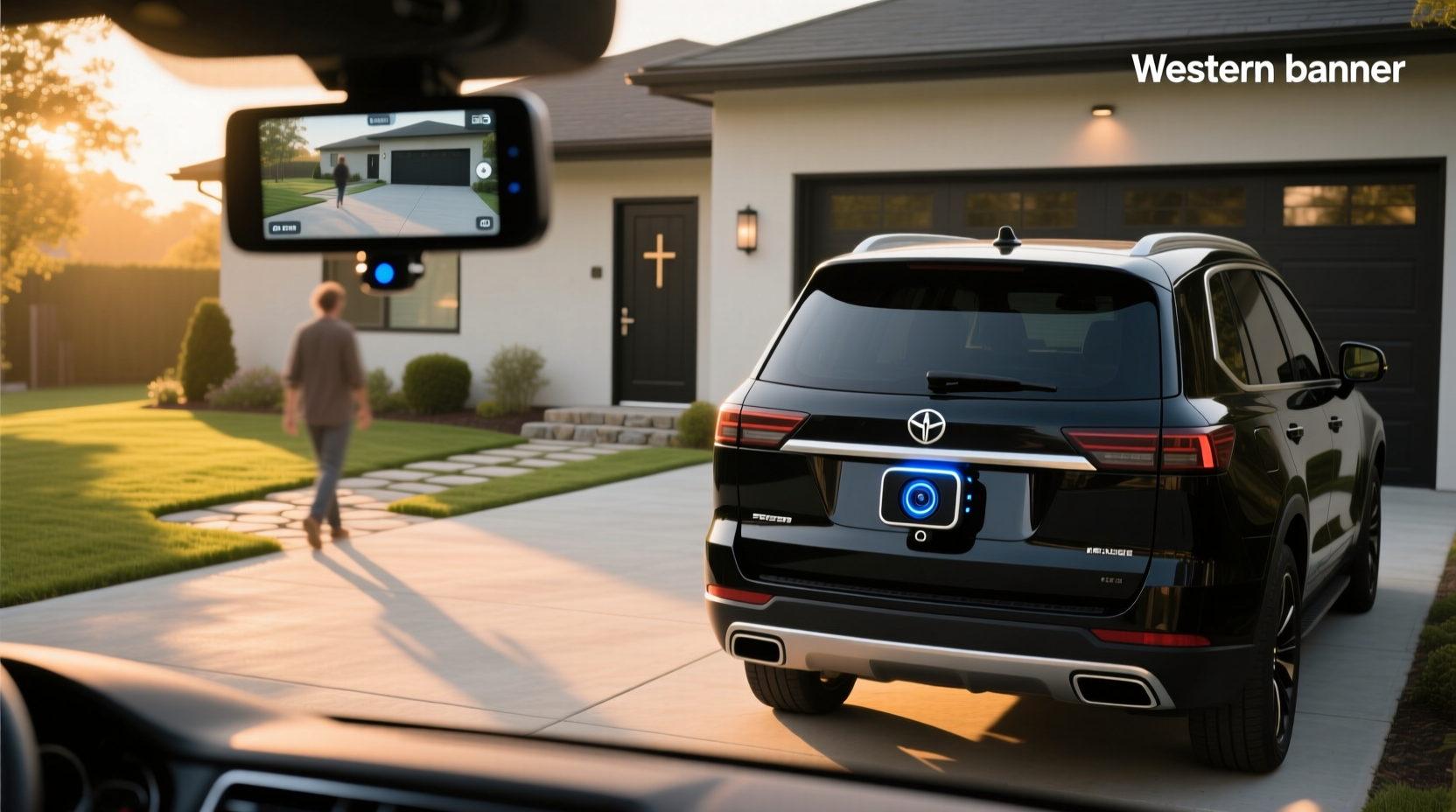
When searching for a wireless reverse camera system for cars and trucks, the most important factors include transmission reliability, night vision quality, weather resistance, and ease of installation. Unlike wired systems, wireless backup cameras transmit video from the rear-mounted camera to an in-cabin display via a built-in transmitter, eliminating long cable runs through the vehicle frame. While convenient, not all models perform equally—especially in environments with high electromagnetic interference or metal-heavy vehicle bodies. This guide breaks down everything you need to know before buying, including performance expectations, compatibility considerations, and real-world limitations.
What Is a Wireless Reverse Camera?
A wireless reverse camera is a rear-view monitoring system that sends live video footage from a camera mounted on the back of a vehicle (such as on the license plate, tailgate, or bumper) to a display screen inside the cabin without using physical video cables. Instead, it relies on radio frequency (RF) or Wi-Fi signals to transmit the image 🔧. The camera activates automatically when the vehicle is shifted into reverse gear, providing drivers with a clear view behind the car to assist with parking, hitching trailers, or navigating tight spaces.
These systems typically consist of three core components: the exterior camera unit, a power connection (usually tied to the reverse light circuit), and a receiver with a display screen. Some kits integrate the receiver into a standalone monitor, rearview mirror display, or even pair with existing infotainment systems via apps 🌐. Because they eliminate the need to route cables through the chassis, wireless setups are often marketed as easier DIY installations compared to traditional wired alternatives.
How Do Wireless Reverse Cameras Work?
At its simplest, a wireless reversing camera uses a digital transmitter embedded in the camera housing to send encrypted video signals to a paired receiver connected to a screen. Most operate on the 2.4 GHz frequency band—the same used by many home Wi-Fi networks and Bluetooth devices—which allows for relatively stable short-range transmission ⚡.
The process works like this: when the driver shifts into reverse, power is sent to the camera. It powers up within seconds and begins transmitting video. The receiver picks up the signal and displays it almost instantly, usually with on-screen guidelines that adjust based on steering angle. Latency—the delay between movement behind the car and its appearance on-screen—is a critical factor; higher-end models maintain latency under 100 milliseconds, while cheaper units may lag by half a second or more, increasing collision risk.
Some advanced models use digital enhanced cordless telecommunications (DECT) or proprietary protocols to reduce interference. Others incorporate lossless compression algorithms to maintain HD clarity over distance. However, signal strength can degrade due to metal obstructions (like spare tires or cargo), moisture buildup, or competing RF sources such as CB radios or inverters.
Key Features to Evaluate Before Buying
Not all wireless backup cameras deliver the same level of performance. Below are essential technical and functional aspects to assess before making a purchase decision.
Transmission Range and Signal Stability ✅
Manufacturers often advertise maximum ranges (e.g., “up to 100 feet”), but real-world performance varies significantly depending on vehicle type and environment. For standard passenger vehicles, a reliable range of 30–50 feet is sufficient. Larger trucks, caravans, or trailers may require extended reach.
Look for models labeled “long-range” or those specifying line-of-sight transmission distances. Systems using 5.8 GHz bands tend to suffer less interference than 2.4 GHz ones but have shorter penetration through solid objects. Interference from nearby electronics—such as inverters, amplifiers, or solar charge controllers—can disrupt the feed, causing pixelation or complete dropout.
Night Vision and Low-Light Performance 🌌
Effective night vision is crucial for safe reversing after dark. Most wireless cameras use infrared (IR) LEDs around the lens to illuminate the area behind the vehicle. Check the number and placement of IR emitters; six or more diodes generally provide better coverage than fewer.
In low-light conditions, image sensors switch to black-and-white mode for improved contrast. High dynamic range (WDR) and wide-dynamic range (HDR) technologies help balance bright headlights and dark shadows. Look for cameras with at least 0.1 lux sensitivity for usable nighttime imaging.
Weather Resistance and Build Quality 🌧️
Since the camera mounts externally, it must withstand rain, dust, extreme temperatures, and road debris. Check the IP (Ingress Protection) rating: IP66 or higher indicates strong protection against water jets and dust ingress. UV-resistant housings prevent yellowing over time, especially in sunny climates like Australia.
Stainless steel or ABS plastic enclosures offer durability without adding excessive weight. Sealed connectors and rubber gaskets around wiring ports further enhance longevity.
Field of View and Image Clarity 🔍
A wider field of view (FOV) lets you see more of what’s behind you—typically between 120° and 170°. However, ultra-wide angles (>150°) may introduce barrel distortion, making distance estimation difficult.
Resolution matters: while many budget models offer 720p HD, 1080p provides noticeably sharper detail. Pair high resolution with a CMOS or CCD image sensor for better color accuracy and motion handling. Note that higher resolution demands more bandwidth, which can strain weaker transmitters.
Power Source and Wiring Integration ⚙️
Most wireless reverse cameras draw power from the vehicle’s reverse light circuit, ensuring activation only during backing maneuvers. This setup conserves battery and prevents unnecessary drain. Installation involves tapping into the reverse light’s positive wire and grounding the negative terminal.
Some newer models support continuous power for security monitoring (e.g., motion-activated recording while parked). These require direct battery connections with fuse protection and should include low-voltage cutoffs to avoid draining the starter battery.
Display Options and Compatibility 📺
The receiving end comes in several forms:
- Standalone monitors: Mounted on the dashboard or windshield, these plug into the cigarette lighter or hardwire into the fuse box.
- Mirror-integrated displays: Replace the factory rearview mirror with one that shows the camera feed when reversing.
- Dual-purpose screens: Combine GPS navigation and dashcam functions with reverse camera input.
Ensure the receiver supports NTSC/PAL format compatibility (NTSC is standard in North America and Australia). Also verify input options: composite AV (RCA) remains common, though some modern units accept HDMI or digital inputs.
| Feature | Budget Models | Premium Models |
|---|---|---|
| Resolution | 480p–720p | 1080p–2K |
| Transmission Band | 2.4 GHz | 5.8 GHz / DECT |
| Latency | 300–500 ms | <100 ms |
| IR Night Vision | 4–6 LEDs | 8–12 LEDs + WDR |
| Weatherproof Rating | IP65 | IP68 |
| Field of View | 120°–140° | 150°–170° (distortion-corrected) |
Pros and Cons of Wireless vs Wired Reverse Cameras
Choosing between wireless and wired systems depends heavily on your technical comfort, vehicle type, and intended usage.
Advantages of Wireless Systems 🚀
- Easier Installation: No need to run cables through door jambs or frame rails—ideal for DIYers 🛠️.
- Flexible Mounting: Suitable for vehicles where routing wires is impractical (e.g., caravans, trailers, boats).
- Upgradability: Can be added to older vehicles lacking factory camera provisions.
- Reduced Labor Cost: Saves time and tools required for complex harnessing.
Disadvantages and Limitations ⚠️
- Signal Interference: Metal structures, electronic noise, and other RF devices can disrupt transmission.
- Battery Drain Risk: Poorly designed receivers left powered continuously may deplete the car battery.
- Limited Range: Effective only within certain distances; not ideal for very long trailers unless using amplified transmitters.
- Security Concerns: Unencrypted feeds could theoretically be intercepted (though rare in practice).
- Latency Issues: Lower-cost models may exhibit noticeable delays, reducing safety margins.
Wired systems, by comparison, offer near-zero latency, immunity to interference, and consistent image quality. They’re preferred in commercial fleets and heavy-duty applications. However, installation complexity increases significantly, particularly in multi-axle trailers or armored vehicles.
Common Use Cases and Applications 📍
Wireless reverse cameras serve various practical purposes beyond basic parking assistance:
Caravanning and Trailer Towing 🏕️
For RV owners and caravan enthusiasts, maintaining visibility around large trailers is challenging. A wireless kit eliminates the need to hardwire through coupling points, allowing quick setup and removal. Look for models tested specifically for trailer use with anti-vibration mounting and extended antennas.
Commercial Fleets and Delivery Vehicles 🚚
Fleet operators install wireless backup systems to reduce accidents during loading dock maneuvers. Since vehicles rotate frequently, easy-install systems lower maintenance overhead. Integration with fleet telematics platforms enables event logging and driver behavior analysis.
Urban Driving and Tight Parking Spaces 🏙️
In congested cities, narrow alleys and crowded lots make visibility critical. Compact wireless monitors can be temporarily mounted, offering flexibility for rental cars or shared vehicles.
Security Monitoring While Parked 🔐
Some dual-function models act as surveillance devices. When equipped with motion detection and loop recording, they capture incidents like hit-and-runs or vandalism. Ensure the system includes parking mode with voltage monitoring to protect the battery.
Installation Tips and Best Practices 🛠️
Even though wireless cameras simplify wiring, proper installation ensures optimal performance.
- Choose the Right Camera Location: Mount centrally above the license plate or on the tailgate center for balanced perspective. Avoid placing near exhaust outlets or mud-prone areas.
- Align the Lens Properly: Angle slightly downward to see curbs and obstacles but ensure the top third captures approaching traffic.
- Secure All Connections: Use heat-shrink tubing or waterproof connectors on spliced wires. Route cables away from sharp edges.
- Test Signal Strength: Activate the system before finalizing mount positions. Move the receiver to different interior locations to identify dead zones.
- Minimize Interference: Keep the camera and receiver away from large metal panels or high-power electrical components.
- Use External Antennas if Needed: For long trailers or obstructed paths, add directional antennas to boost signal stability.
Debunking Common Misconceptions ❗
Several myths persist about wireless reverse cameras that can mislead buyers:
- Myth: 'Completely wireless' means no wires at all. Reality: All cameras require power, meaning at least two wires (positive and ground) must connect to the vehicle’s electrical system. True “wireless” refers only to video transmission.
- Myth: Any smartphone can receive the feed via app. Reality: Only select models support Wi-Fi Direct pairing with mobile devices. Most use dedicated receivers.
- Myth: Higher megapixels always mean better image quality. Reality: Sensor size, lens quality, and low-light processing matter more than resolution alone.
- Myth: Wireless systems are unreliable in rain. Reality: Weatherproof-rated units perform well in wet conditions as long as seals remain intact.
Regional Considerations and Legal Compliance 🌍
Regulations vary by country regarding camera placement, display brightness, and recording capabilities. In Australia, for example, there are no federal laws prohibiting aftermarket reverse cameras, but modifications must not interfere with original safety systems 1. Similarly, in the U.S., FMVSS Standard 111 governs rear visibility but permits aftermarket additions as long as factory compliance isn’t compromised.
In Europe, ECE regulations may require certification for permanently installed electronic equipment. Always check local transport authority guidelines before installing any system that integrates with vehicle controls or records data.
When NOT to Buy a Wireless Reverse Camera
Despite their convenience, wireless systems aren’t suitable for every situation:
- If you drive a heavily modified or metal-intensive vehicle: Thick body panels or Faraday cage effects can block signals.
- If you tow extremely long trailers (>30 ft): Signal degradation becomes likely without repeaters or amplified transmitters.
- If you demand zero-latency response: Professional drivers or racers may prefer wired solutions.
- If your vehicle already has a factory-integrated system: Adding a second camera may cause conflicts or redundancy.
Final Recommendations and Decision Checklist ✅
Before purchasing a wireless reverse camera, ask yourself the following questions:
- Do I need continuous recording or just reverse activation?
- Will the camera be used on a trailer or fixed-body vehicle?
- Is my vehicle prone to RF interference from onboard electronics?
- Do I want integrated audio (e.g., hearing backup alarms)?
- Am I comfortable splicing into factory wiring, or do I need plug-and-play connectors?
Prioritize reliability over flashy features. Look for brands with documented range tests, solid customer support, and accessible firmware updates. Read user reviews focusing on long-term durability rather than initial impressions.
Frequently Asked Questions (FAQ)
Can I install a wireless reverse camera myself?
Yes, most kits are designed for DIY installation. You’ll need basic tools and knowledge of your vehicle’s fuse box and reverse light wiring. Follow included instructions carefully and test before final assembly.
Do wireless reverse cameras work in the dark?
Yes, nearly all models include infrared (IR) LEDs for night vision. Performance varies based on LED count and sensor sensitivity—look for units rated for low-lux conditions (below 0.1 lux).
Why does my wireless camera lose signal sometimes?
Signal dropouts usually result from physical obstructions (metal, water tanks), electromagnetic interference, or weak batteries in receiver units. Try relocating the receiver or upgrading to a model with external antenna support.
Are there completely wireless dash cams available?
While some dash cams run on internal batteries and connect via Wi-Fi, they still require periodic charging. Truly wire-free operation is limited by power constraints and legal requirements for constant power in many regions.
Can I use a wireless reverse camera with my smartphone?
Only specific models support direct Wi-Fi streaming to phones. Most use proprietary monitors or mirror displays. Check product specs for mobile app compatibility before buying.





 浙公网安备
33010002000092号
浙公网安备
33010002000092号 浙B2-20120091-4