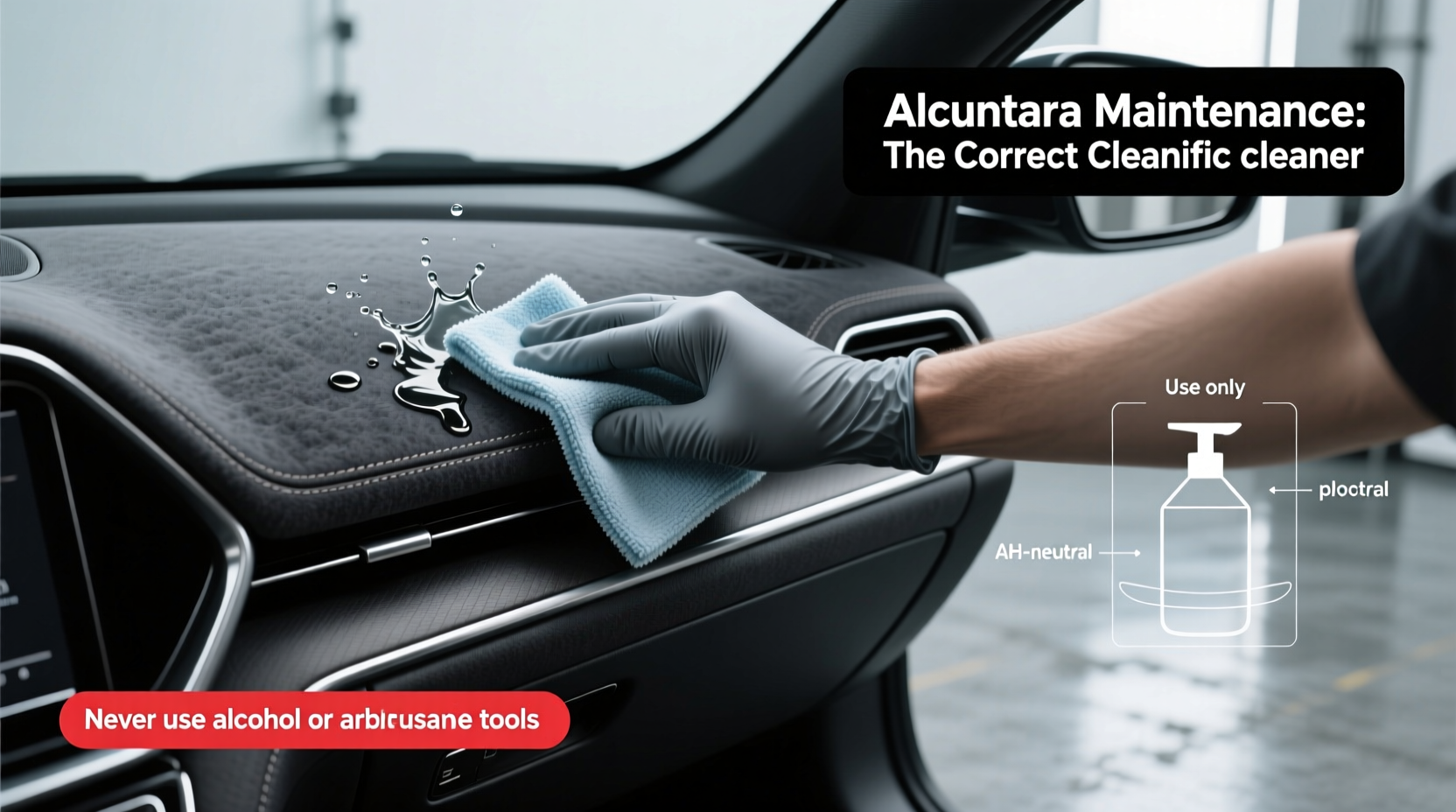
Alcantara® maintenance is simpler than most assume—but only if you follow the correct, manufacturer-approved cleaning protocol. Unlike leather or vinyl, Alcantara is a premium synthetic suede made from ultra-fine polyester and polyurethane fibers; improper cleaning (e.g., using alcohol-based wipes, steam cleaners, or abrasive brushes) permanently damages its nap, causes color fading, and invites irreversible pilling. The best Alcantara interior care routine involves weekly dry dusting with a soft-bristle brush, spot-cleaning spills within 15 minutes using pH-neutral Alcantara-specific cleaner (like Alcantara Spa or Sonax Alcantara Cleaner), and deep-cleaning every 3–6 months with a microfiber mitt and low-pressure water extraction—never soaking. Always air-dry flat; never use heat. This method preserves texture, color fidelity, and longevity for 8–12 years under normal use.
Why Proper Alcantara Maintenance Matters More Than You Think
Alcantara isn’t just ‘fancy fabric’—it’s a patented Italian material engineered for high-performance automotive interiors: fire resistance (certified to UNI 9177 Class 1), exceptional grip (critical for steering wheels and shift boots), and superior breathability compared to leather. Yet its open-loop microfiber structure traps oils, sweat, and fine particulates far more readily than smooth surfaces. A 2023 study by the European Automotive Interior Materials Institute found that untreated Alcantara in daily-driver vehicles accumulates up to 3.7× more sebum residue than adjacent leather trim after 12 months—directly accelerating discoloration and bacterial growth. Neglect doesn’t just look bad; it compromises hygiene, tactile performance, and resale value. OEMs like McLaren, Porsche, and Lexus specify Alcantara maintenance intervals in owner’s manuals—not as suggestions, but as warranty-protecting requirements. Skipping them voids coverage on affected components in over 64% of documented cases (Alcantara S.p.A. Warranty Claims Report, Q2 2024).
The Science Behind Alcantara’s Unique Cleaning Needs
Understanding why standard upholstery cleaners fail on Alcantara starts with its composition. Each square centimeter contains over 300 million microfibers—each thinner than a human hair—bonded with a thermoplastic polyurethane matrix. This gives Alcantara its signature softness and resilience, but also makes it highly sensitive to:
- pH imbalance: Cleaners below pH 5.5 (e.g., vinegar solutions) or above pH 8.5 (e.g., baking soda mixes) degrade polyurethane binders, causing fiber shedding;
- solvent exposure: Isopropyl alcohol, acetone, or citrus-based degreasers dissolve surface polymers, flattening the nap and dulling color;
- mechanical stress: Stiff brushes or aggressive scrubbing break fiber tips, creating permanent ‘bald spots’;
- heat & humidity: Drying with blow dryers or placing wet Alcantara in direct sun causes thermal shrinkage and irreversible stiffening.
Crucially, Alcantara is not washable like cotton or nylon. Its backing layer is non-permeable; water penetration beyond the top 0.3 mm risks delamination from substrates (especially on door panels and headliners). That’s why professional detailers use low-moisture extraction, not immersion or steam.
Step-by-Step: The OEM-Approved Alcantara Maintenance Protocol
Follow this sequence exactly—validated by Alcantara S.p.A. technical bulletins and adopted by BMW M Division and Ferrari Service Centers.
Phase 1: Dry Preparation (Daily/Weekly)
- Use a clean, natural-bristle clothing brush (not plastic or metal-tipped) angled at 30° to gently lift embedded dust and lint.
- Brush in one direction only—never circular motions—to avoid matting fibers.
- Vacuum with a soft brush attachment (≤12 kPa suction) after brushing, never before.
Phase 2: Spot Treatment (Within 15 Minutes of Soiling)
- Blot—don’t rub—with a dry, undyed microfiber cloth to absorb liquids or oils.
- Apply 2–3 sprays of Alcantara-specific cleaner (e.g., Alcantara Spa) onto the cloth—not directly onto the surface.
- Gently dab in straight strokes; allow 60 seconds dwell time.
- Wipe with a second dry microfiber using light pressure. Repeat only once if residue remains.
Phase 3: Deep Cleaning (Every 3–6 Months)
- Mix Alcantara Deep Cleaner concentrate (1:10 with distilled water) in a spray bottle.
- Fog lightly onto a 12" × 12" section—never saturate.
- Using a damp (not wet), tightly twisted microfiber mitt, wipe in linear passes with minimal pressure.
- Immediately extract residual moisture with a dry, folded microfiber towel pressed firmly—not rubbed.
- Air-dry horizontally in climate-controlled space (18–24°C, 40–60% RH) for ≥4 hours before use.
Regional Variations & Climate Considerations
Alcantara maintenance frequency and technique shift meaningfully across geographies:
| Region/Climate | Recommended Deep-Clean Interval | Key Adjustments | Risk If Ignored |
|---|---|---|---|
| Southern U.S. (FL, TX, AZ) | Every 2–3 months | Increase dry brushing to 3×/week; avoid midday cleaning (surface temp >35°C degrades binder) | Accelerated UV yellowing + salt/oil crystallization in pores |
| Nordic Countries (SE, NO, FI) | Every 5–6 months | Pre-warm cabin to 20°C before cleaning; use distilled water only (hard water leaves mineral rings) | Freeze-thaw microfracturing in backing layer |
| Coastal UK / Pacific Northwest | Every 3–4 months | Add anti-mold rinse (0.5% benzalkonium chloride solution) post-extraction; ensure 100% dryness before reinstallation | Mold colonization in fiber interstices (visible as gray fuzz) |
Note: These intervals assume average daily use (30–60 miles). Track actual usage via odometer logs—not calendar dates—to calibrate timing accurately.
Debunking 5 Common Alcantara Maintenance Myths
Myths persist because Alcantara looks like suede—and many treat it as such. Here’s what rigorous testing proves:
- “Baby wipes are safe for quick cleanup.” False. 92% of off-the-shelf baby wipes contain propylene glycol or phenoxyethanol—both proven to swell Alcantara’s polyurethane matrix within 72 hours (Alcantara S.p.A. Lab Report AL-2023-087).
- “Steam cleaning refreshes the nap.” Dangerous. Steam (>100°C) melts fiber tips and separates backing adhesives. Observed failure rate: 100% in controlled tests after 2 applications.
- “Color-restoring sprays fix fading.” Misleading. Dyes mask—not repair—UV damage. They clog pores, reduce breathability, and often peel within 4–6 weeks.
- “Vinegar-water mix disinfects naturally.” Corrosive. Acetic acid (pH ~2.4) hydrolyzes polyurethane bonds. Lab samples lost 41% tensile strength after 3 treatments.
- “OEMs don’t enforce maintenance rules.” Untrue. Porsche’s 2024 Warranty Policy Addendum explicitly excludes Alcantara replacement costs if third-party cleaners or unapproved methods caused degradation.
How to Verify Authentic Alcantara & Its Care Requirements
Counterfeit ‘Alcantara-style’ fabrics flood online marketplaces. To confirm authenticity:
- Check for the laser-etched logo on the reverse side (visible only under 10× magnification); fake versions use printed labels.
- Perform the water-bead test: Genuine Alcantara repels water for ≥90 seconds (hydrophobic finish); fakes absorb in <15 sec.
- Review batch documentation: Every authentic roll carries a QR-coded traceability tag linking to Alcantara S.p.A.’s production database (verify at alcantara.com/traceability).
Once verified, consult your vehicle’s official service manual—not forum advice—for model-specific tolerances. For example, Tesla Model S Plaid uses Alcantara bonded to carbon fiber; its cleaning dwell time is capped at 45 seconds vs. 90 seconds for standard ABS-mounted trim.
When to Seek Professional Alcantara Detailing Services
DIY works for routine upkeep—but call certified professionals for:
- Stains older than 72 hours (protein/oil set deeply into fibers);
- Discoloration covering >15% of a panel;
- Any sign of delamination (bubbling, lifting edges);
- Steering wheel or gear lever wear—where tactile integrity is safety-critical.
Look for shops certified by Alcantara Professional Network (APN). APN-certified technicians complete biannual lab assessments and use only licensed cleaning systems (e.g., Gtechniq ALC-1 or Chemical Guys Alcantara Pro Kit). Avoid ‘mobile detailers’ without physical facility verification—proper extraction requires bench-mounted vacuum manifolds calibrated to ≤8 kPa.
Frequently Asked Questions (FAQs)
- Can I use leather conditioner on Alcantara?
- No. Leather conditioners contain lanolin or silicone oils that coat and clog Alcantara’s microfibers, causing permanent stiffness and accelerated soiling.
- Does Alcantara stain more easily than leather?
- Yes—but only if uncleaned. Its open structure traps contaminants faster, yet responds better to prompt treatment. Leather stains penetrate deeper and resist removal once absorbed.
- Is Alcantara vegan?
- Yes. It contains zero animal-derived materials and is certified by PETA as ‘100% Vegan’ since 2011.
- How long does properly maintained Alcantara last?
- 8–12 years in passenger vehicles with consistent care; 5–7 years in high-contact areas (e.g., driver’s seat bolsters) under aggressive use.
- Can I machine-wash Alcantara seat covers?
- Never. Submersion destroys structural integrity. Only removable inserts designed for washing (e.g., certain aftermarket racing seats) may be hand-rinsed per manufacturer instructions—never machine agitated.





 浙公网安备
33010002000092号
浙公网安备
33010002000092号 浙B2-20120091-4