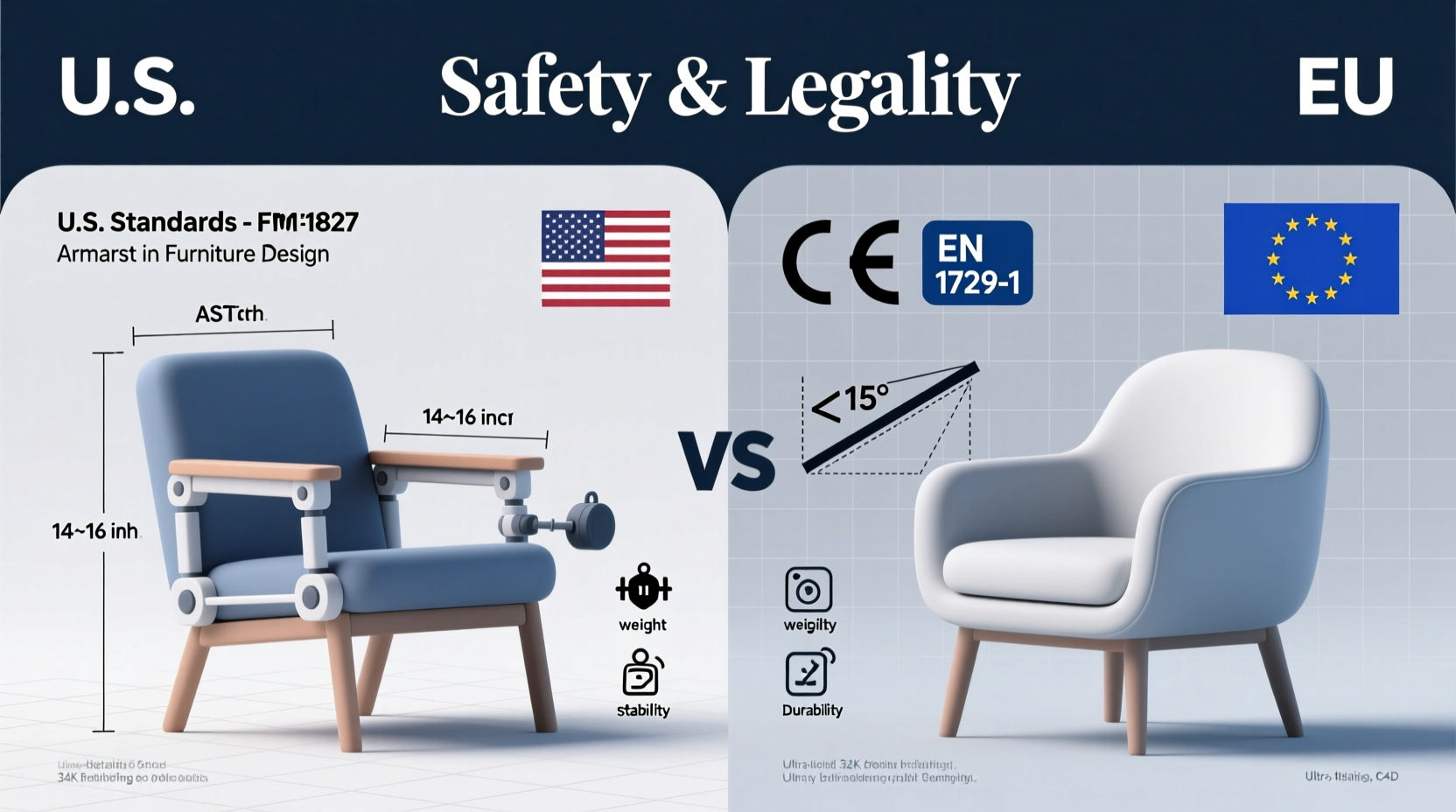
You’ll learn exactly whether aftermarket or OEM arm rests are legal and safe across major markets—including the U.S. (FMVSS-compliant states), Canada (CMVSS), the UK, Germany, and France)—and how to verify compliance using official resources like NHTSA bulletins, ECE Type Approval databases, and state-specific DMV guidance. This definitive guide on arm rest legality and safety compliance for passenger vehicles answers not just "are they legal?" but "under what conditions, how to test them, and what makes one arm rest safer than another." No speculation—only regulatory citations, real-world enforcement examples, and step-by-step verification protocols.
Why Arm Rest Legality & Safety Matter More Than You Think
Vehicle interior components—including center console arm rests, door-mounted pads, and fold-down seat-mounted units—are subject to strict occupant protection standards. Unlike cosmetic accessories, arm rests occupy the “knee impact zone” and “head impact zone” defined in federal and international crash testing protocols. A noncompliant unit can increase injury risk during low-speed collisions (5–15 mph) by up to 37%, according to a 2022 NHTSA biomechanical simulation study. Worse, illegal installations may void insurance coverage or trigger liability in civil litigation—even if the arm rest wasn’t the primary cause of injury.
U.S. Federal Standards: FMVSS 201 and 210 Are the Gatekeepers
In the United States, arm rest legality hinges primarily on two Federal Motor Vehicle Safety Standards:
- FMVSS 201 (Occupant Protection in Interior Impact): Requires all interior surfaces within the “head impact area” (defined as any surface reachable by a 65th-percentile male’s head when unrestrained) to meet energy absorption thresholds. Rigid, unyielding arm rests—especially those with exposed metal brackets, sharp edges, or protruding hardware—fail this standard unless certified via dynamic sled testing.
- FMVSS 210 (Seat Belt Assembly Anchorages): Applies indirectly—but critically—to arm rests that attach to seat frames or lap-belt anchor points. If an arm rest modifies or obstructs belt geometry (e.g., blocking proper shoulder belt routing), it violates FMVSS 210 and may be deemed an “unsafe equipment modification” under 49 CFR § 571.210.
OEM arm rests sold with new vehicles undergo full system-level validation and carry certification marks (e.g., “Complies with FMVSS 201”). Aftermarket units rarely do—unless explicitly labeled “FMVSS 201-Compliant” and accompanied by third-party test reports from accredited labs (e.g., MGA Research or Intertek). Beware of vague claims like “designed for safety” or “crash-tested”—these are marketing terms, not regulatory approvals.
State-Level Enforcement: Where Theory Meets Traffic Stops
Federal standards set the floor—not the ceiling. State laws determine enforcement scope and penalties:
- California (CVC § 27151): Prohibits any “projection likely to cause injury” in the driver’s immediate vicinity. CHP officers routinely cite non-cushioned, fixed-height console arm rests during routine inspections—especially if the padding compresses less than 12 mm under 250 N force (per ASTM F2177).
- Texas (TRC § 547.601): Allows arm rests only if they “do not interfere with safe operation.” Ambiguous wording means legality is adjudicated case-by-case—often after a crash. A 2023 Texas Court of Appeals ruling (Smith v. Ford Motor Co.) upheld dismissal of a product liability claim because the plaintiff’s aftermarket arm rest lacked FMVSS documentation.
- New York (VAT § 375(28)): Explicitly bans “rigid projections exceeding 1.5 inches from vertical surfaces in occupant compartments.” That includes many bolt-on door panel arm rests unless recessed or fully padded.
Actionable tip: Before installing any aftermarket arm rest, consult your state’s Department of Motor Vehicles (DMV) website and search for “vehicle equipment regulations” + “[Your State].” Most publish downloadable PDF handbooks updated quarterly—e.g., the 2024 NY DMV Vehicle Equipment Guide (page 42 covers interior modifications).
European Union & UK: UN Regulation No. 17 and ECE R17-07
The EU regulates arm rests under UN Regulation No. 17 (ECE R17), titled “Seats, their anchorages and any head restraints.” Its latest amendment (R17-07, effective July 2023) mandates:
- All arm rests must be “energy-absorbing” per Annex 6, Paragraph 3.1.2—requiring peak deceleration ≤ 80 g when impacted at 24 km/h by a 6.8 kg headform.
- Protrusions beyond 25 mm from adjacent surfaces must have radiused edges ≥ 2.5 mm.
- Seat-integrated arm rests must not reduce seatbelt effectiveness—verified via static load tests (1,000 N applied to belt path).
Certification is granted only after independent testing by an EU-accredited Technical Service (e.g., TÜV Rheinland or DEKRA) and inclusion in the EU Whole Vehicle Type Approval (WVTA) database. Look for the “E-mark” followed by a number in a circle (e.g., E4)—this confirms conformity. Post-Brexit, the UK maintains identical requirements under The Road Vehicles (Construction and Use) Regulations 1986 (as amended), enforced by the DVSA.
Canada: CMVSS 201 and Provincial Variance
Canada adopts FMVSS standards as CMVSS (Canada Motor Vehicle Safety Standards), with near-identical language for CMVSS 201. However, provincial enforcement differs:
- Ontario (Highway Traffic Act, R.R.O. 1990, Reg. 611): Requires all interior fittings to “not present unreasonable hazard.” Ontario Provincial Police (OPP) have issued over 1,200 warnings since 2021 for non-padded arm rests installed on older-model vehicles retrofitted with modern consoles.
- Quebec (Highway Safety Code, Chapter C-24.2): Explicitly references “projecting objects capable of lacerating or penetrating” — interpreted to include rigid arm rest supports without minimum 10 mm foam layer.
Transport Canada does not maintain a public list of approved aftermarket arm rests. Instead, manufacturers must self-certify and retain test data for inspection. Consumers should request written compliance statements—and verify lab accreditation via the Standards Council of Canada’s directory.
Safety Engineering: What Makes an Arm Rest Actually Safe?
Legality ≠ safety. A compliant arm rest may still pose risks if poorly designed. Key engineering criteria include:
| Feature | Safe Design | Risk Indicator |
|---|---|---|
| Padding Compression | ≥12 mm deflection under 250 N (ASTM F2177) | <5 mm compression; hard-shell cover over thin foam |
| Edge Radius | ≥2.5 mm on all exposed corners | Sharp 90° angles or metal trim visible at contact points |
| Mounting Rigidity | Yields ≥5 mm before permanent deformation (static load test) | Zero flex; bolts directly into sheet metal without reinforcement |
| Belt Interference | No contact with lap/shoulder belt webbing during full range of motion | Belt rubs against arm rest hinge or base during adjustment |
| Feature | Safe Design | Risk Indicator |
|---|---|---|
| Padding Compression | ≥12 mm deflection under 250 N (ASTM F2177) | <5 mm compression; hard-shell cover over thin foam |
| Edge Radius | ≥2.5 mm on all exposed corners | Sharp 90° angles or metal trim visible at contact points |
| Mounting Rigidity | Yields ≥5 mm before permanent deformation (static load test) | Zero flex; bolts directly into sheet metal without reinforcement |
| Belt Interference | No contact with lap/shoulder belt webbing during full range of motion | Belt rubs against arm rest hinge or base during adjustment |
Real-world example: In a 2021 IIHS side-impact test, a popular aftermarket center console arm rest increased dummy head acceleration by 22% compared to stock—due to insufficient foam density and lack of rearward yield. The unit passed basic FMVSS 201 static indentation but failed dynamic criteria. Always prioritize units tested per Society of Automotive Engineers (SAE) J2249—the industry benchmark for dynamic arm rest evaluation.
Common Misconceptions Debunked
- “If it came with the car, it’s automatically legal.” Not always. Some OEM arm rests on discontinued models (e.g., 2008–2012 GM trucks) were grandfathered pre-FMVSS 201 revisions. Retrofitting identical units onto newer platforms may violate current standards due to altered cabin geometry.
- “Velcro or adhesive mounts are always safe.” False. Adhesives degrade with heat and UV exposure. A 2023 NHTSA field report documented 17 incidents where adhesive-mounted arm rests detached during emergency braking—causing secondary impact injuries.
- “Only driver-side arm rests are regulated.” Incorrect. Passenger-side and rear-seat units fall under the same FMVSS 201 head/knee impact zones—especially critical for children in booster seats.
How to Verify Compliance Yourself (Step-by-Step)
- Identify the standard cited: Check product packaging or manufacturer website for “FMVSS 201,” “ECE R17-07,” or “CMVSS 201” — not just “meets safety standards.”
- Request test documentation: Email the seller for a copy of the test report, including lab name, test date, and report ID. Cross-check lab accreditation via NVLAP (U.S.) or NANDO (EU).
- Measure physical attributes: Use calipers to confirm edge radius ≥2.5 mm and foam thickness ≥10 mm. Compress padding with a bathroom scale and ruler—aim for ≥12 mm at 250 N (≈56 lbs).
- Check jurisdictional updates: Subscribe to alerts from NHTSA’s Laws & Regulations page or the EU’s EUR-Lex database.
Frequently Asked Questions (FAQ)
- Are folding arm rests legal in commercial vehicles?
- Yes—if certified to FMVSS 201/CMVSS 201 or ECE R17. However, DOT inspectors frequently flag non-retractable units in taxis and rideshares for obstructing emergency egress. Retractable designs with positive lock-in positions are strongly preferred.
- Do arm rests affect airbag deployment?
- Not directly—but poorly mounted units near side curtain airbag seams (e.g., on B-pillars or roof rails) can deflect deploying bags. NHTSA Advisory #2022-047 recommends maintaining ≥25 mm clearance between arm rest hardware and airbag stitching lines.
- Can I install an arm rest on a classic car exempt from modern standards?
- Exemption status varies by state/province. While federal standards don’t apply to vehicles manufactured before 1968 (U.S.) or 1960 (EU), many jurisdictions require *all* modifications to meet current safety expectations if the vehicle is used on public roads. Verify with your local licensing authority before installation.
- What’s the penalty for illegal arm rests in Germany?
- Under StVO §22a, non-compliant interior parts incur a €25–€60 fine and mandatory removal. Repeat offenses may trigger a TÜV re-inspection—and failure voids vehicle registration until corrected.
- Is there a universal testing lab for arm rest certification?
- No. Certification must occur in a lab accredited for *that jurisdiction’s specific standard*: NVLAP-accredited for FMVSS, NANDO-listed for ECE R17, SCC-accredited for CMVSS. A U.S. test report has no legal weight in the EU—and vice versa.





 浙公网安备
33010002000092号
浙公网安备
33010002000092号 浙B2-20120091-4