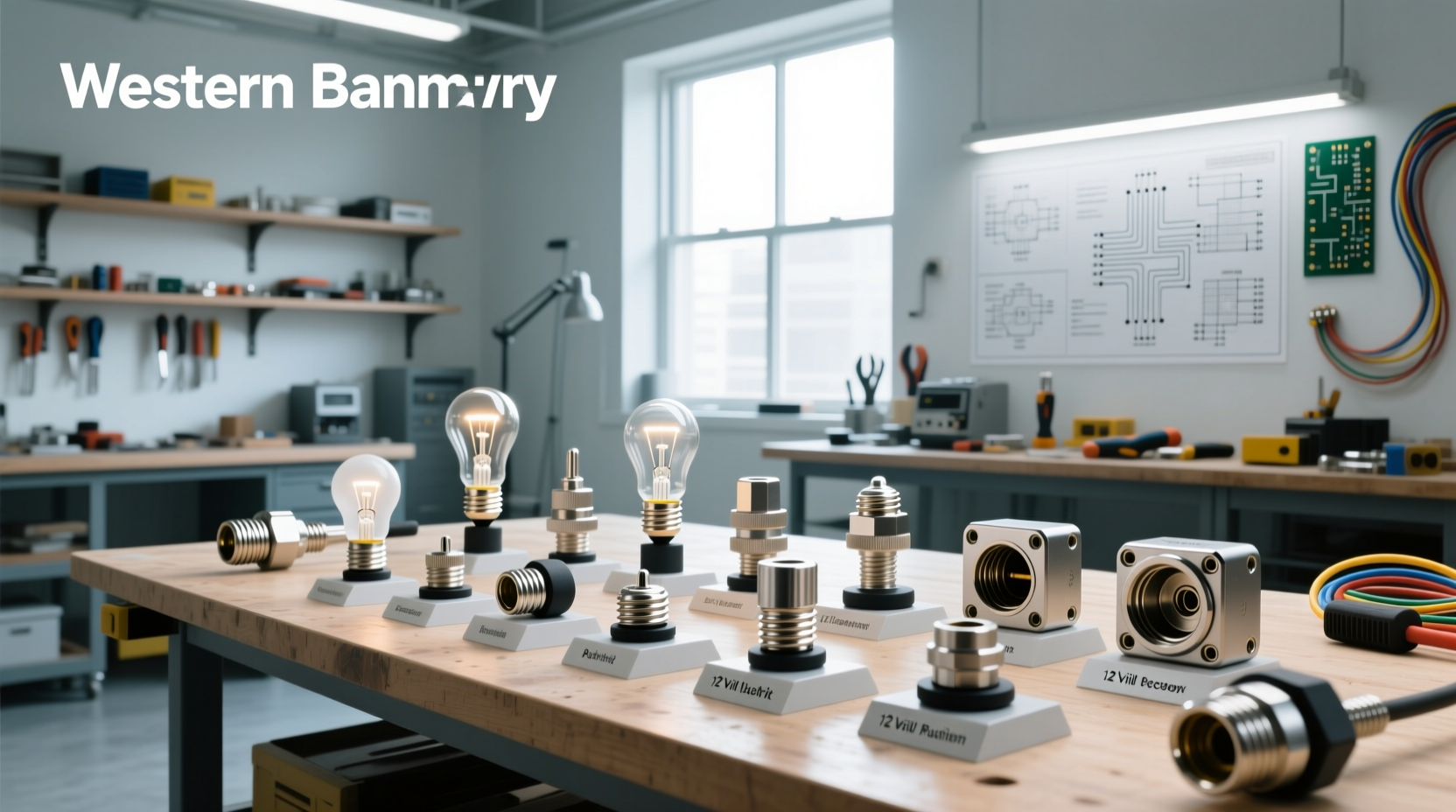
When replacing a burned-out bulb in your vehicle, knowing the correct 12 volt light bulb socket type is essential for proper fit, electrical connection, and long-term reliability. Unlike household sockets, automotive bulb holders are designed for specific bulb bases—such as wedge, bayonet, or plug-in types—and must match both mechanical and electrical specifications. This guide breaks down the most common 12V automotive light bulb socket types, including T10, BA15D, H7, 1157, and more, explaining where they’re used, how they differ, and what to watch for during replacement or upgrades like LED conversions.
Why 12V Automotive Light Bulb Sockets Matter
Most vehicles operate on a 12-volt DC electrical system, making 12V sockets standard across headlights, brake lights, turn signals, dome lights, and license plate illumination. The socket serves as the critical interface between the bulb and the wiring harness. A mismatched or degraded socket can lead to flickering, poor contact, overheating, or complete failure—even with a new bulb installed. Understanding the different types of 12 volt light bulb sockets helps avoid these issues and ensures safe, reliable operation.
Common 12V Light Bulb Socket Types and Their Applications
Below is a breakdown of the most widely used socket types in automotive lighting systems, categorized by design and typical use case.
T10 Wedge Base Socket (e.g., 194, 168 bulbs)
The T10 wedge socket is one of the most common types for small interior and exterior lighting. It accepts bulbs with a plastic base that has two flat metal contacts inserted directly into spring-loaded terminals inside the socket.
- Typical bulbs: 194, 168, W5W
- Used in: Dome lights, map lights, trunk lights, side marker lights, dashboard illumination
- Voltage: 12V
- Connector style: Push-in wedge, no twist required
These sockets are often color-coded black or white and may come pre-wired or as standalone replacements. They are popular in LED retrofits due to their simplicity and compact size.
BA15D and BAY15D Bayonet Sockets
Bayonet-style sockets use a push-and-twist mechanism to lock the bulb in place. These are commonly found in European and Asian vehicles.
- BA15D: Single-contact, used for low-power lamps like instrument panel bulbs
- BAY15D: Double-contact, used for dual-filament bulbs such as 1157 or 7443 in brake/tail lights
- Design: Two pins on the bulb align with slots; twisting locks it securely
- Advantage: Secure connection resistant to vibration
When replacing a BAY15D socket, ensure polarity is maintained—many have offset pins to prevent incorrect installation. These are frequently replaced when corrosion or heat damage affects conductivity.
H7 Socket (Single-Contact Halogen/LED)
The H7 socket is a standardized single-pin base used primarily in halogen and LED headlight assemblies.
- Bulb type: H7 (55W standard), also compatible with some LED equivalents
- Used in: Low beam, high beam, fog lights (depending on vehicle)
- Mounting: Secured via a locking ring or clip behind the headlight housing
- Key feature: Requires heat-resistant materials due to proximity to hot bulbs
H7 sockets are typically part of a larger headlight assembly but can be replaced individually if damaged. When upgrading to LED, verify that the replacement socket supports higher thermal loads and includes proper insulation.
1157 and 7443 Dual-Filament Socket (Turn Signal & Brake Lights)
These sockets accommodate dual-filament bulbs that serve two functions—such as dim (tail) and bright (brake)—in a single unit.
- Bulbs: 1157 (incandescent), 7443 (dual-intensity LED-compatible)
- Socket type: BAY15D (offset double contact)
- Used in: Rear combination lights, turn signals, brake lights
- Contact design: Offset pins ensure correct orientation
Degradation in these sockets often causes one function to fail while the other works—e.g., brake light out but tail light on. Replacement involves disconnecting the harness and removing mounting screws or clips.
H11 and 9005 Sockets (Headlights and Fog Lights)
H11 and 9005 (HB3) sockets are commonly used in projector-style headlights and auxiliary fog lamps.
- H11: Single-beam, often used for low beams or fog lights
- 9005/HB3: High beam applications
- Connector: Plug-in with retaining tab
- Heat resistance: Must withstand temperatures up to 200°C+
These sockets are usually sealed units with rubber gaskets to prevent moisture ingress. Aftermarket LED kits often include upgraded sockets with better heat dissipation and anti-vibration features.
Miniature Screw Base (E10, E14)
Less common than wedge or bayonet types, screw-base sockets appear in older models or specialty applications.
- E10: Small Edison screw, used in instrument clusters
- E14: Also known as 'small edison screw', occasionally found in cabin lights
- Installation: Twist-to-lock, similar to household bulbs but smaller
Due to limited availability and fragility, these are increasingly being phased out in favor of wedge or surface-mount LEDs.
How to Identify Your Vehicle's 12V Bulb Socket Type
Correct identification prevents mismatched purchases and installation errors. Follow these steps:
- Remove the bulb: Access the back of the light housing and gently pull out the bulb. Do not force it.
- Inspect the base: Look at the shape, number of contacts, and locking mechanism.
- Check for markings: Many bulbs and sockets have molded labels indicating type (e.g., “H7”, “T10”).
- Compare visually: Use reference charts or manufacturer diagrams to confirm.
- Consult owner’s manual: Lists bulb types and locations by position.
You can also search using your vehicle’s year, make, model, and light position (e.g., “2018 Honda Civic driver-side brake light bulb type”) to find exact specifications.
Upgrading to LED: Socket Compatibility Considerations
While LED bulbs offer longer life and lower power draw, they introduce unique challenges for 12V sockets:
- Heat management: LEDs generate less radiant heat but require heatsinks near the base, which may not fit tight housings.
- Polarity sensitivity: Some LED bulbs only work when wired correctly; sockets without polarity markings can cause issues.
- Canbus errors: In modern vehicles, low current draw from LEDs may trigger “bulb out” warnings. Resistor-equipped sockets or load resistors may be needed.
- Socket material: Older plastic sockets may warp under prolonged exposure to LED driver heat.
For reliable LED integration, consider using upgraded sockets made from high-temp nylon or PBT plastic, especially in enclosed headlight units.
Signs of a Failing 12V Light Bulb Socket
A faulty socket often mimics bulb failure. Watch for these symptoms:
- Flickering or intermittent operation
- Bulb works in one position but not another
- Visible melting, discoloration, or charring
- Corrosion or green/white buildup on contacts
- Loose fit—bulb wobbles in socket
- Difficulty inserting or removing bulb
If any of these occur, inspect and likely replace the socket. Continuing to use a damaged socket risks short circuits or fire.
Replacing a 12V Light Bulb Socket: Step-by-Step Guide
🔧 Replacing a socket is generally straightforward but requires care to avoid damaging wiring.
- Disconnect battery: Always disconnect the negative terminal before working on electrical components.
- Access the socket: Remove trim panels, headlight assemblies, or taillight housings as needed.
- Unplug wiring harness: Most sockets have a quick-disconnect plug. Press the release tab and pull apart.
- Remove old socket: Unscrew or unclip it from its mount.
- Install new socket: Insert and secure it in place. Ensure seals or gaskets are properly seated.
- Reconnect harness: Match wires by color or label if splicing; otherwise, plug in directly.
- Test before reassembly: Reconnect battery and test all functions.
For hard-to-reach areas, consider buying a pre-wired socket assembly to simplify installation.
Buying Replacement 12V Sockets: What to Look For
🛒 When sourcing a new socket, focus on these factors:
- Exact match: Confirm the socket type (e.g., BAY15D, H7) matches your original.
- Wire length: Pre-wired sockets should have enough slack for routing.
- Material quality: High-temperature resistant plastics perform better over time.
- Sealing: Rubber boots or O-rings help prevent moisture entry.
- Terminal type: Crimp vs. solder connections—soldered is more durable.
- Universal vs. OEM: Universal fits many models but may lack precise mounting; OEM ensures perfect fit but costs more.
Always check reviews for reports of premature failure or fitment issues.
Common Misconceptions About 12V Light Bulb Sockets
❌ Several myths persist among DIYers:
- “Any socket will work if the bulb fits.” – False. Electrical contact alignment, polarity, and heat tolerance vary.
- “LEDs don’t need good sockets because they run cool.” – Misleading. While LEDs emit less infrared heat, their drivers produce conductive heat at the base.
- “I can repair a melted socket with tape or glue.” – Dangerous. Damaged insulation increases fire risk.
- “All 1157 sockets are the same.” – Not true. Some have different pin spacing or wire gauge ratings.
Always prioritize correct part matching over convenience.
Regional Differences and Standards
🚗 While 12V systems are global, socket usage varies slightly by region:
- North America: Heavy use of wedge (T10) and dual-contact bayonet (BAY15D) sockets.
- Europe: More frequent use of H7, H11, and BAU15S (side-contact bayonet).
- Asia: Mix of standards; Japanese models often use proprietary connectors in complex assemblies.
Emissions and safety regulations (like DOT and ECE) influence socket design and testing requirements, so replacements should meet applicable regional standards when available.
Aftermarket vs. OEM Sockets: Is There a Difference?
🏭 OEM (Original Equipment Manufacturer) sockets are engineered to exact vehicle specifications, including temperature rating, vibration resistance, and sealing. Aftermarket options vary:
- Premium aftermarket: Meets or exceeds OEM specs, often with improved materials.
- Budget aftermarket: May use thinner wires, lower-grade plastics, or imprecise tolerances.
For critical safety lights (brake, headlights), OEM or high-quality aftermarket is recommended. For interior lights, budget options may suffice.
Maintenance Tips to Extend Socket Life
🧼 Preventative care reduces the need for replacements:
- Apply dielectric grease to contacts during bulb changes to prevent corrosion.
- Avoid touching halogen bulb glass with bare hands—oil residue can create hot spots.
- Ensure housings are sealed to keep out moisture.
- Inspect sockets annually during routine maintenance.
- Replace frayed or brittle wires before they cause shorts.
Where to Buy Reliable 12V Light Bulb Sockets
🌐 Purchase from reputable suppliers specializing in automotive electrical parts. Look for companies that provide detailed product specifications, application guides, and customer support. Avoid generic listings without clear technical data. Specialty lighting retailers often carry a broader range than general auto parts stores.
Final Thoughts: Choosing the Right 12V Socket for Your Needs
Selecting the correct 12 volt light bulb socket type ensures your vehicle’s lighting remains safe, functional, and compliant with road regulations. Whether replacing a failed unit or upgrading to LED, take time to identify the exact type, assess condition, and choose a high-quality replacement. Never assume compatibility based on appearance alone. With the right knowledge, even complex socket swaps become manageable DIY tasks.
Frequently Asked Questions
- What is the thing that holds a car light bulb called?
- The component that holds a car light bulb is called a bulb socket or lamp holder. It provides electrical connectivity and mechanical support for the bulb.
- Can I replace a 12V light bulb socket myself?
- Yes, most 12V light bulb sockets can be replaced with basic tools and wiring knowledge. Disconnect the battery first, remove the old socket, and install the new one following proper polarity and sealing procedures.
- What causes a 12V light bulb socket to melt?
- Overheating due to high resistance (loose connections, corroded contacts), using a higher-wattage bulb than rated, or poor-quality materials can cause a socket to melt.
- Are all H7 sockets the same?
- Most H7 sockets follow a standard design, but variations exist in wire length, boot style, and terminal quality. Always verify fitment for your specific vehicle.
- Do LED bulbs need special sockets?
- Not always, but some LED upgrades benefit from sockets designed for better heat dissipation or integrated resistors to prevent error messages in modern vehicles.





 浙公网安备
33010002000092号
浙公网安备
33010002000092号 浙B2-20120091-4