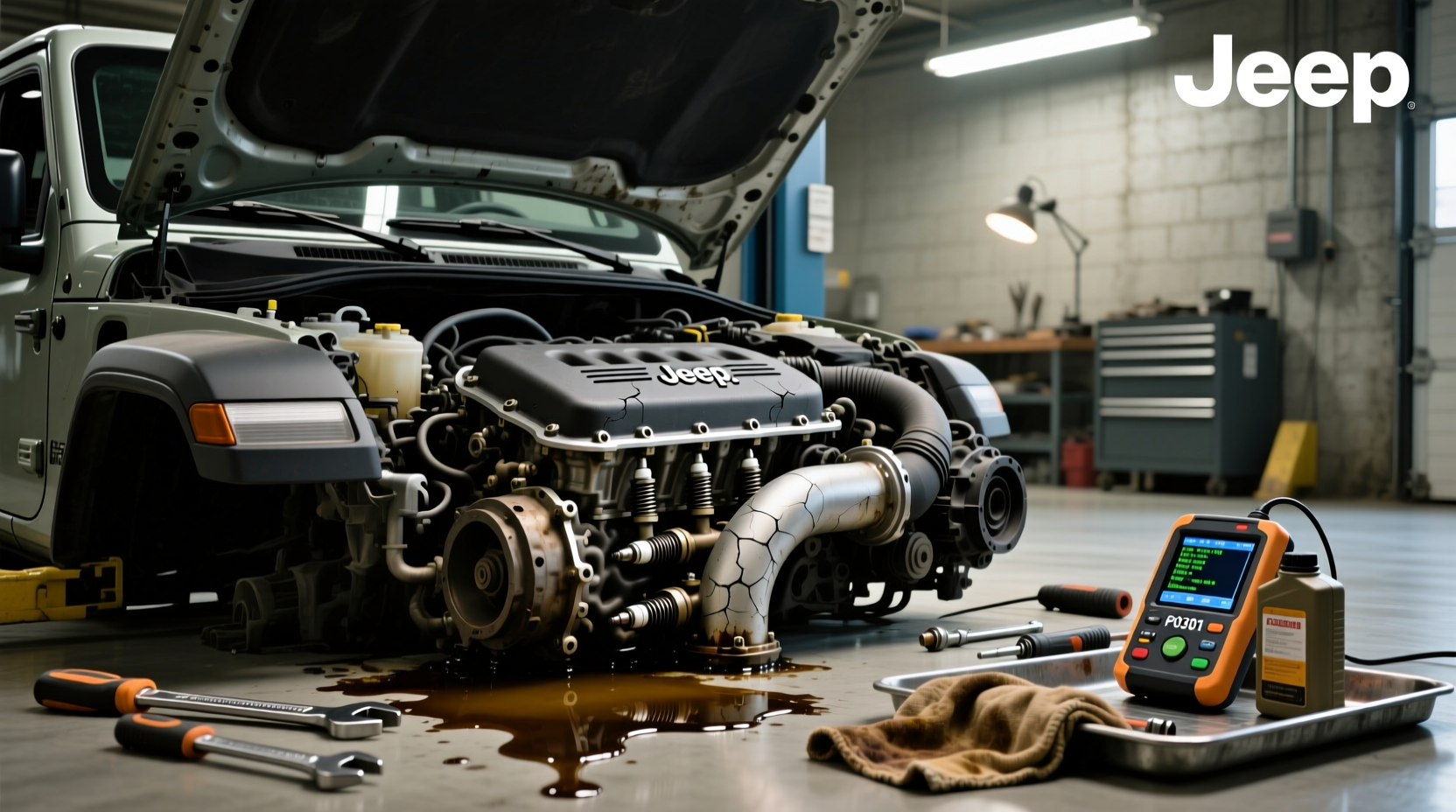
If you're experiencing issues with your 3.7L Jeep engine or considering buying a used Jeep equipped with the PowerTech V6, understanding the common 3.7 L Jeep engine problems is essential. This comprehensive guide breaks down real-world mechanical failures, known design flaws, maintenance pitfalls, and long-term reliability concerns tied to Chrysler's 3.7L V6 engine used in Jeep Liberty, Commander, Grand Cherokee, Dodge Nitro, and Ram trucks from 2002 to 2012. You’ll learn not only what typically goes wrong but also how to spot early warning signs, avoid costly repairs, and assess whether this engine is worth owning today.
Understanding the 3.7L PowerTech V6 Engine
The 3.7L PowerTech V6 engine was introduced by Chrysler in 2002 as part of a broader modular engine family that included the 4.7L V8 1. Designed to replace older inline-six and smaller V6 engines, it powered several SUVs and light trucks across the Jeep and Dodge lineups. Known internally as the EGK engine code, it’s sometimes referred to as the “Dodge 3.7L Magnum” due to branding consistency across Chrysler Group vehicles.
This SOHC (Single Overhead Cam) engine features 24 valves, sequential fuel injection, and dual spark plugs per cylinder—an unusual trait aimed at improving combustion efficiency and emissions control. While marketed for durability and mid-range torque, real-world performance has been mixed, especially beyond 100,000 miles.
Common 3.7 L Jeep Engine Problems: A Detailed Breakdown
Despite its widespread use, the 3.7L V6 has developed a reputation among mechanics and owners for recurring mechanical and electrical issues. Below are the most frequently reported problems, based on forum discussions, repair shop data, and teardown analyses.
1. Timing Chain Tensioner and Guide Failure ⚙️
One of the most critical and expensive failures involves the timing chain system. Unlike traditional timing belts, the 3.7L uses a timing chain—but it relies on plastic guides and a hydraulic tensioner that degrade over time.
- Symptoms: Rattling noise on cold start, especially pronounced in the first 10–15 seconds; check engine light with codes P0016 or P0017 (camshaft/crankshaft correlation).
- Cause: Plastic timing chain guides become brittle and crack; tensioners lose oil pressure, leading to slack in the chain.
- Risk: If left unattended, the chain can jump teeth or break, causing catastrophic internal engine damage.
- Solution: Replace the entire timing chain kit—including guides, tensioner, rails, and sprockets—every 100,000 miles as preventative maintenance.
This issue affects nearly all model years but becomes more prevalent after 2006 when material changes may have reduced guide longevity.
2. Valve Cover Gasket Leaks 🔧
A common yet often overlooked problem is oil leaking from the valve cover gaskets. Due to the engine’s design, oil seeps down the sides and front of the engine, creating messy drips and potential fire hazards near hot exhaust manifolds.
- Symptoms: Oil stains on the engine block, burning smell under the hood, low oil levels without visible external leaks.
- Cause: Rubber gaskets harden and shrink over time; improper torque during previous service can accelerate failure.
- Solution: Replace both left and right valve cover gaskets using OEM-quality parts. Consider upgrading to multi-layer steel (MLS) gaskets if available.
Preventive replacement around 90,000–100,000 miles is recommended, especially if the vehicle has undergone high-heat operation or frequent short trips.
3. Exhaust Manifold Cracking ❗
The cast iron exhaust manifolds on the 3.7L are prone to cracking, particularly on the driver’s side. Thermal cycling and poor casting quality contribute to fatigue fractures.
- Symptoms: Loud ticking or tapping noise on startup that diminishes as the engine warms; visible cracks or soot near manifold bolts.
- Cause: Repeated heating and cooling cycles weaken metal; factory bolts may loosen over time.
- Solution: Replace cracked manifold with an upgraded aftermarket unit made from stronger materials. Use new bolts and proper torque specs.
Some owners report success with stainless steel headers, though installation complexity increases cost.
4. Spark Plug Ejection and Cylinder Head Damage ✨
Perhaps the most notorious issue with the 3.7L engine is spark plug blowout—where one or more spark plugs literally back out of the cylinder head, sometimes ejecting completely.
- Symptoms: Misfire codes (P0300–P0306), rough idle, loss of power, loud popping from the engine bay.
- Cause: The aluminum cylinder heads use steel threaded inserts (threaded sleeves). Over time, thermal expansion differences cause these inserts to loosen, allowing spark plugs to unscrew themselves.
- Risk: If a plug fully ejects, combustion gases escape into the valve cover, damaging coils and potentially destroying the head.
- Solution: Repair requires removing the cylinder head and installing a heli-coil or Time-Sert insert kit. Some remanufactured engines now come with updated heads featuring improved thread designs.
This defect primarily affects early production engines (2002–2007), though cases have been reported up to 2010. Regular inspection of spark plug tightness during maintenance can help catch early movement.
5. Oil Consumption and PCV System Issues 🌐
Many 3.7L engines exhibit higher-than-normal oil consumption, often misdiagnosed as external leaks when the oil is actually being burned in the combustion chamber.
- Symptoms: Needing to add quart of oil every 1,000–2,000 miles; blue-tinted exhaust smoke on startup or acceleration.
- Cause: Worn piston rings or valve stem seals; clogged Positive Crankcase Ventilation (PCV) system increasing crankcase pressure.
- Solution: Clean or replace PCV valve and hoses; perform compression and leak-down tests to assess ring health. In severe cases, engine rebuild may be necessary.
Using higher-viscosity oil (e.g., 10W-30 instead of 5W-20) may reduce consumption temporarily but does not fix underlying wear.
6. Cooling System and Thermostat Failures 🌍
Overheating is another recurring complaint, often linked to thermostat malfunctions or water pump degradation.
- Symptoms: Temperature gauge fluctuating or rising into red zone; heater blowing cold air intermittently.
- Cause: Thermostats sticking closed or open; water pump impeller corrosion; coolant leaks from housing gaskets.
- Solution: Replace thermostat and water pump as a set, flush cooling system, and inspect radiator for flow restrictions.
Due to the engine’s placement in SUVs like the Liberty, airflow limitations can exacerbate cooling issues, especially in stop-and-go traffic.
Model-Year Specific Concerns and Variations
While the core engine architecture remained consistent from 2002 to 2012, certain model years saw incremental updates that affect reliability:
| Model Year | Key Changes | Reliability Impact |
|---|---|---|
| 2002–2005 | Early cylinder head design; original timing chain components | Highest risk of spark plug ejection and chain guide failure |
| 2006–2008 | Revised valve cover gaskets; minor cam phaser updates | Moderate improvement; still vulnerable to manifold cracks |
| 2009–2012 | Better QC; some plants adopted updated tensioners | Fewer reports of major failures; best bet for used buyers |
Jeep Liberty (2002–2012) and Commander (2006–2010) models bear the brunt of owner complaints, while Ram 1500 pickups with the same engine tend to show fewer issues—likely due to better cooling systems and lighter duty cycles.
Is the 3.7L Jeep Engine Reliable? Weighing Pros and Cons
Determining whether the 3.7L V6 is reliable depends heavily on maintenance history, driving conditions, and specific model year.
Advantages ✅
- Sufficient Power: Produces around 210 horsepower and 235 lb-ft of torque—adequate for daily driving and moderate off-roading.
- Spare Parts Availability: Common engine means replacement parts and remanufactured units are widely accessible.
- Simple Design: No turbochargers or direct injection—fewer complex subsystems to fail.
Disadvantages ❌
- Known Structural Flaws: Spark plug ejection and timing chain guide failure are design-related, not just wear items.
- High Repair Costs: Major fixes like head repair or timing chain replacement can exceed $1,500–$2,500.
- Poor Resale Perception: Even well-maintained 3.7L Jeeps suffer from negative reputation, affecting trade-in value.
In comparison to the legendary 4.0L inline-six (discontinued in 2006), the 3.7L offers less low-end torque and lower overall durability. Forums like Allpar and Reddit consistently show preference for the older engine 2.
How to Evaluate a Used Jeep with a 3.7L Engine
If you're shopping for a used Jeep Liberty, Commander, or Nitro, follow these steps to minimize risk:
- Review Service Records: Look for documented timing chain kit replacement, valve cover gasket service, and cooling system work.
- Check for Active Codes: Use an OBD2 scanner to verify no stored misfire or cam correlation codes.
- Inspect Under the Hood: Look for oil residue on the back of the engine—sign of valve cover leaks—and listen for ticking noises at startup.
- Perform a Compression Test: Ensures cylinders are sealing properly, especially important if oil consumption is suspected.
- Ask About Spark Plug History: If the seller hasn’t replaced plugs recently, assume they haven’t been checked for looseness.
Vehicles priced significantly below market average should raise red flags—mechanical issues may already be present or imminent.
Repair vs. Replacement: When to Consider a New Engine
Given the age of these vehicles, engine replacement is increasingly common. Options include:
- Remanufactured Engines: Factory-rebuilt units with updated components (e.g., improved timing chain kits, reinforced cylinder heads). Priced between $3,000–$4,500 including labor.
- Used Engines: Lower cost ($1,500–$2,500), but unknown history increases risk of inherited problems.
- Long Block vs. Short Block: Long blocks include heads and valvetrain; ideal if spark plug damage is confirmed.
Some specialty shops now offer upgraded 3.7L builds with enhanced internals, addressing known weaknesses before installation.
Maintenance Tips to Extend 3.7L Engine Life
Proactive care can significantly improve longevity:
- Change Oil Every 5,000 Miles: Use high-detergent motor oil to keep PCV system clean.
- Replace PCV Valve Annually: Prevents pressure buildup that accelerates oil consumption.
- Monitor Coolant Condition: Flush every 5 years or 60,000 miles to prevent corrosion.
- Inspect Spark Plugs Every 30,000 Miles: Check for looseness or signs of ejection.
- Address Noises Immediately: Don’t ignore cold-start rattles or ticking sounds.
Conclusion: Should You Buy or Keep a 3.7L Jeep?
The 3.7L Jeep engine isn’t inherently bad, but it carries known vulnerabilities that demand attention. With proper maintenance and timely intervention on key failure points—especially the timing chain and cylinder heads—it can deliver acceptable reliability up to 150,000 miles. However, neglect turns manageable issues into expensive breakdowns.
For buyers, late-model examples (2009–2012) with full service records offer the best chance of trouble-free ownership. For current owners, investing in preventive maintenance now can save thousands later.
Frequently Asked Questions
- Is the Jeep 3.7 V6 a good engine?
- The 3.7L V6 provides adequate power but suffers from design flaws like spark plug ejection and timing chain failures. It’s less reliable than the older 4.0L I6 and requires vigilant maintenance to avoid major repairs.
- Who makes the 3.7 Jeep engine?
- The 3.7L PowerTech V6 was designed and manufactured by Chrysler (now part of Stellantis) for use in Jeep, Dodge, and Chrysler vehicles from 2002 to 2012.
- How much horsepower does a 3.7 Magnum V6 have?
- The 3.7L Magnum V6 produces approximately 210 horsepower and 235 lb-ft of torque in most Jeep applications, depending on model year and tuning.
- Which Jeep engine should I stay away from?
- Among older Jeeps, the 3.7L V6 has more reported issues than the durable 4.0L inline-six. If choosing between them, the 4.0L is generally preferred for long-term reliability.
- Can the 3.7L engine be repaired or should it be replaced?
- Minor issues can be repaired, but extensive damage (e.g., from spark plug ejection or chain failure) often makes replacement more cost-effective. Remanufactured engines with updated parts are a solid option.





 浙公网安备
33010002000092号
浙公网安备
33010002000092号 浙B2-20120091-4