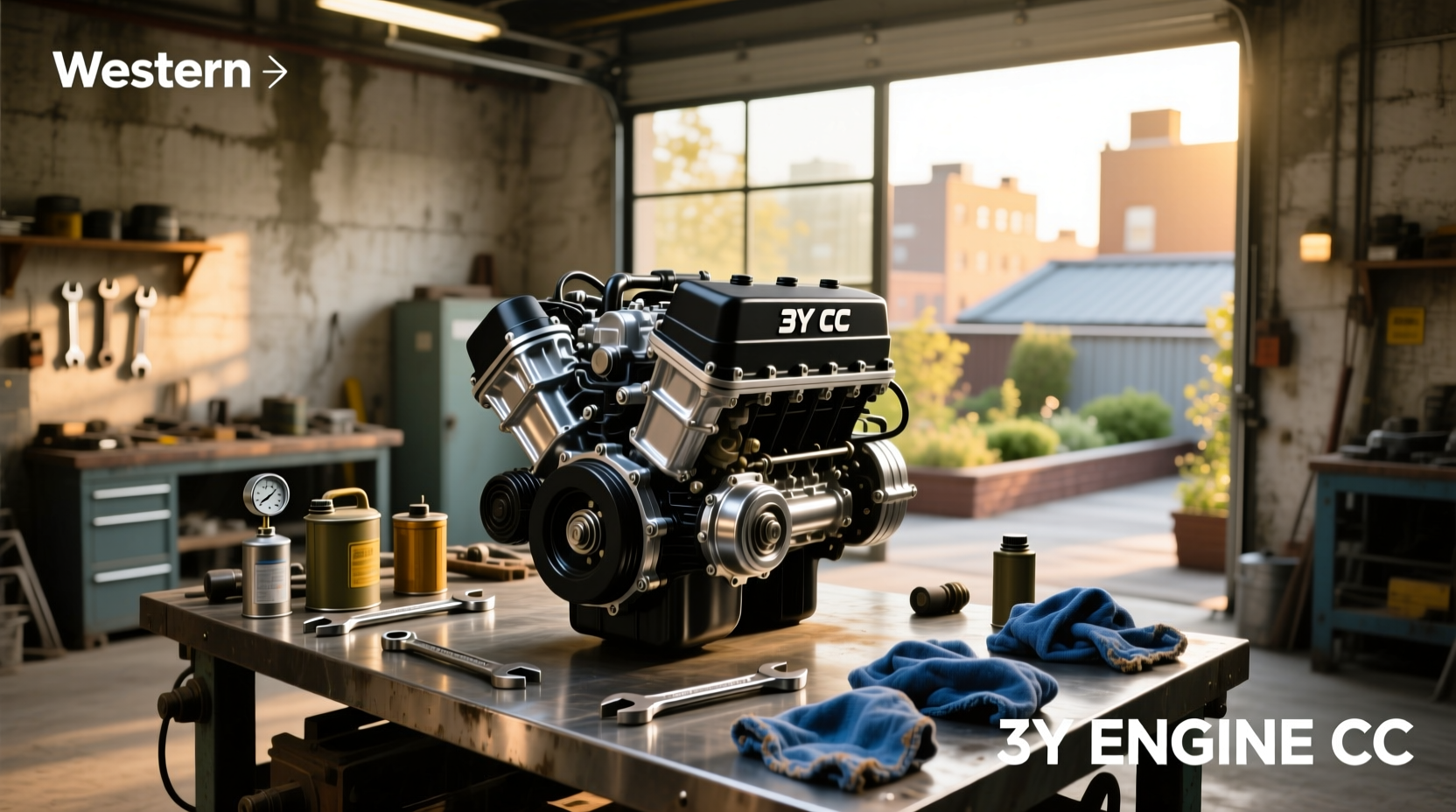
The Toyota 3Y engine has a displacement of 1,998 cubic centimeters (cc), commonly rounded to 2.0 liters—a key specification for anyone searching for 3y engine cc details or evaluating compatibility for vehicle repair, replacement, or restoration projects. This inline-four, gasoline-powered engine was widely used in Toyota’s commercial and utility vehicles from the late 1980s through the early 2000s, including models like the Hiace van, Hilux pickup, and Townace. Understanding the exact engine size, configuration, and real-world performance factors is essential when sourcing a used 3Y engine, comparing it with similar engines like the 2Y or 4Y, or planning a rebuild. In this guide, we break down everything you need to know about the 3Y engine’s displacement, technical specs, reliability, common issues, and practical advice for purchasing a used unit online or locally.
Understanding the 3Y Engine: What Does '3Y' Mean?
The "3Y" designation refers to a generation within Toyota’s Y-series family of overhead valve (OHV) four-cylinder engines. Introduced in the mid-1980s as an evolution of the earlier 2Y engine, the 3Y was designed for durability, ease of maintenance, and fuel efficiency in light-duty commercial applications. It features a cast-iron block, aluminum head, and a simple carbureted fuel system in most configurations. With a bore of 86.0 mm and a stroke of 86.0 mm, the engine achieves a near-square design, contributing to balanced operation and mechanical longevity.
⚙️ Key Specifications at a Glance:
- Engine Code: 3Y
- Displacement: 1,998 cc (2.0L)
- Cylinders: Inline-4
- Valvetrain: OHV, 2 valves per cylinder (8V total)
- Fuel Type: Gasoline (Petrol)
- Aspiration: Naturally aspirated
- Compression Ratio: ~8.8:1 (varies by model year)
- Power Output: Approximately 85–90 horsepower (63–67 kW)
- Torque: Around 140–150 Nm (103–110 lb-ft)
- Fuel System: Carburetor (most models), some later versions with EFI
- Cooling System: Water-cooled
- OEM Applications: Toyota Hiace (LH50/LH60/LH70), Hilux (RN30/RN40), Townace, Liteace
Why Displacement Matters: How 1998cc Impacts Real-World Use
🔍 The 3Y engine's 1,998cc displacement places it in the lower end of the 2.0L category, which influences several performance and regulatory aspects:
Fuel Efficiency vs. Load Capacity: While not a high-performance engine, the 3Y delivers modest fuel economy—typically between 25–30 mpg (9–10 L/100km) under mixed driving conditions—making it suitable for urban delivery vans or rural transport where reliability trumps speed. However, its torque curve peaks at low RPMs, allowing adequate pulling power for lightly loaded trucks but struggling when heavily burdened or climbing steep grades.
Tax and Registration Considerations: In countries like Japan, South Africa, and parts of Southeast Asia, engine displacement directly affects annual road tax, import duties, and registration fees. A 2.0L engine often sits just below higher tax brackets (e.g., above 2,000cc), making the 3Y a cost-effective choice for fleet operators seeking compliance without excess charges.
Aftermarket and Swap Potential: Because of its compact size and widespread availability in junkyards and export markets, the 3Y is sometimes used in engine swaps for older off-road rigs or custom builds. Its 2.0L displacement makes it compatible with many transmission pairings from the same era, though modern emissions standards may limit street legality in regulated regions.
Common Applications: Which Vehicles Use the 3Y Engine?
The 3Y engine was primarily installed in Toyota’s workhorse lineup during the 1990s and early 2000s. Knowing the correct application ensures compatibility when replacing or upgrading:
| Vehicle Model | Chassis Code | Production Years | Notes |
|---|---|---|---|
| Toyota Hiace Van/Truck | LH50, LH60, LH70 | 1989–2004 | Most common application; available in cargo and passenger variants |
| Toyota Hilux Pickup | RN30, RN40 | 1988–1997 | Used in base trim levels; replaced by 3RZ-FE in later models |
| Toyota Townace | CR21, CR31 | 1986–1996 | Similar to Hiace; sold in Japanese domestic market |
| Toyota Liteace | CR41 | 1992–1996 | Smaller variant; some export models equipped with 3Y |
📌 Note: Some export models, particularly in Africa, Latin America, and the Middle East, received the 3Y engine even after discontinuation in Japan due to demand for durable, serviceable powertrains.
3Y vs. Other Y-Series Engines: How Does It Compare?
When researching used engines online, buyers often encounter related models such as the 2Y, 4Y, and 5Y. Understanding the differences helps avoid mismatches:
- 2Y vs. 3Y: The 2Y engine predates the 3Y and shares the same 1,998cc displacement but lacks certain refinements. The 3Y introduced improved cooling, revised intake manifolds, and better vibration damping. Visually, the 3Y has a slightly different valve cover and mounting points.
- 3Y vs. 4Y: The 4Y engine increases displacement to 2,237cc (2.2L), offering more torque and better hill-climbing ability. It’s longer and heavier, so direct swaps require frame modifications. Found in later Hilux and Hiace models.
- 3Y vs. 5Y: The 5Y is a smaller 1.8L (1,762cc) engine used in sedans like the Corona, not typically found in trucks or vans.
✅ Tip: Always verify engine code stamped on the block (usually near the cylinder head or transmission mount) before purchase. Photos from sellers should clearly show this mark to confirm authenticity.
Where to Buy a Used 3Y Engine: Online Marketplaces and Local Sources
🛒 As original 3Y-equipped vehicles age, finding a functional replacement engine often means turning to used or recycled units. Based on current search results, here are the main channels:
Online Export Platforms
Websites like Alibaba.com, GlobalSources.com, and EVERYCAR.jp list numerous Japanese-used 3Y engines sourced from dismantled Hiace vans and Hilux trucks. These are typically low-mileage, rust-free units from non-salvage vehicles.
- Price Range: $400–$850 USD depending on condition, included components (e.g., alternator, starter), and whether it comes with a gearbox.
- Shipping: Often includes sea freight to major ports; air shipping available at premium rates.
- Verification: Reputable suppliers provide VIN-linked history reports, compression test results, and pre-shipment photos.
Regional Suppliers and Wreckers
In North America, companies like Used Engines Inc. (Houston, TX) or local wreckers may carry imported 3Y engines. These offer faster delivery and potential installation support, though prices can be higher due to handling costs.
📍 Tip: Use Google Maps to locate nearby auto recyclers specializing in Japanese imports. Call ahead to confirm stock and testing procedures.
What to Check Before Buying a Used 3Y Engine
Purchasing a used engine involves risk. To minimize surprises, evaluate these critical factors:
1. Mileage and Service History ✅
While full records are rare for exported engines, ask for documented mileage. Units under 100,000 km (62,000 miles) from Japan or New Zealand are generally preferred. Avoid engines from taxi fleets or mining areas unless thoroughly inspected.
2. Physical Condition & Leaks 🔍
Request clear photos of the oil pan, valve cover gasket, rear main seal, and coolant passages. Look for signs of oil seepage, corrosion, or weld repairs—which could indicate prior overheating or neglect.
3. Compression Test Results ⚙️
A healthy 3Y should have compression between 140–170 psi across all cylinders, with no more than 10% variation. Sellers who provide this data demonstrate transparency.
4. Included Components 🧰
Determine if the engine comes with:
- Carburetor or throttle body
- Alternator and starter motor
- Air conditioning compressor
- Exhaust manifold
- Wiring harness and sensors
Missing parts increase labor and procurement costs post-installation.
5. Warranty and Return Policy 📋
Some suppliers offer 30–90 day warranties covering internal failures. Ensure return policies are clear in case the engine arrives damaged or doesn’t match the description.
Common 3Y Engine Issues and Reliability Outlook
❓ Is the 3Y engine reliable? Overall, yes—but with caveats. Built for simplicity and long service life, many 3Y engines exceed 300,000 km with basic maintenance. However, common wear points include:
- Carburetor Deterioration: Ethanol-blended fuels degrade rubber seals over time, leading to poor idle or hard starts.
- Head Gasket Failure: Can occur after prolonged overheating, especially if coolant isn’t changed regularly.
- Lifter Tappet Noise: Hydraulic lifters may develop ticking sounds as they wear, though rarely lead to catastrophic failure.
- Oil Consumption: High-mileage units may burn oil due to worn piston rings or valve guides.
✨ Pro Tip: Consider a reconditioned or rebuilt 3Y engine if you want updated components (e.g., electronic ignition, upgraded gaskets) without sacrificing originality.
Fuel Compatibility and Emissions Considerations
⛽ The 3Y engine runs on regular unleaded gasoline (87 octane). While originally tuned for leaded fuel in some markets, modern formulations work fine due to hardened valve seats in production models.
🌍 However, installing a 3Y engine in a region with strict emissions regulations (e.g., California, EU nations) may pose legal challenges. These engines lack OBD-II systems, catalytic converters (in many configurations), and evaporative emission controls. Always check local laws before importing or swapping.
Cost Breakdown: How Much Should You Pay?
📊 Based on current listings across Alibaba, EVERYCAR.jp, and Facebook marketplace groups:
| Condition | Price Range (USD) | Includes Gearbox? | Typical Source |
|---|---|---|---|
| Used, Tested | $400–$600 | No | Japan, South Africa |
| Used, with Transmission | $700–$900 | Yes | Alibaba suppliers |
| Rebuilt/Remanufactured | $1,200–$2,500 | Optional | Specialty shops |
| New Old Stock (Rare) | $3,000+ | No | Dealer surplus |
⚠️ Beware of deals under $400—these may come from flood-damaged or fire-affected vehicles. Verify origin and testing process carefully.
Installation Tips and Compatibility Checks
🔧 Before installing a 3Y engine, confirm the following:
- Mounting Points: Match engine mounts to your chassis. Older Hilux frames may differ slightly from Hiace setups.
- Transmission Compatibility: The 3Y pairs with R-series manual gearboxes (R150F, etc.) or A340 automatics. Ensure input shaft length and bellhousing pattern align.
- ECU and Wiring: Since most 3Y engines are carbureted, minimal electronics are needed. But verify distributor routing and sensor connections if using a hybrid setup.
- Cooling System: Radiator capacity must meet or exceed OEM specs. Upgrading to an aluminum radiator improves longevity.
Final Thoughts: Is a Used 3Y Engine Worth It?
For owners of aging Toyota vans and pickups, the 3Y engine remains a viable, cost-effective solution for keeping vehicles operational. Its 1,998cc displacement offers a balance of fuel economy and usable power, while global availability of used units keeps replacement affordable. However, success depends on careful supplier vetting, verification of engine health, and understanding regional compliance requirements.
If you're restoring a classic Hiace or maintaining a work truck in a remote area, a genuine Japanese-used 3Y engine from a reputable exporter can extend your vehicle’s life by another decade. Just remember: prioritize transparency, request test data, and double-check fitment before committing.
Frequently Asked Questions
- ❓ What is the exact displacement of the Toyota 3Y engine in cc?
- The Toyota 3Y engine has a displacement of 1,998 cubic centimeters (cc), commonly referred to as 2.0 liters.
- ❓ Can I replace a 2Y engine with a 3Y?
- Yes, the 3Y is a direct upgrade over the 2Y with identical dimensions and mounting points. It offers improved cooling and slightly better efficiency.
- ❓ Are 3Y engines fuel-injected or carbureted?
- Most 3Y engines use a carburetor. A few late-model variants in specific markets may have electronic fuel injection (EFI), but carburetion is standard.
- ❓ How much does a used 3Y engine cost?
- Prices typically range from $400 to $900 USD for tested used units, depending on condition, included parts, and whether it comes with a transmission.
- ❓ Where can I find a reliable used 3Y engine for sale?
- Reliable sources include Japanese export platforms like EVERYCAR.jp, B2B marketplaces like Alibaba.com, and local auto recyclers specializing in Toyota parts.





 浙公网安备
33010002000092号
浙公网安备
33010002000092号 浙B2-20120091-4