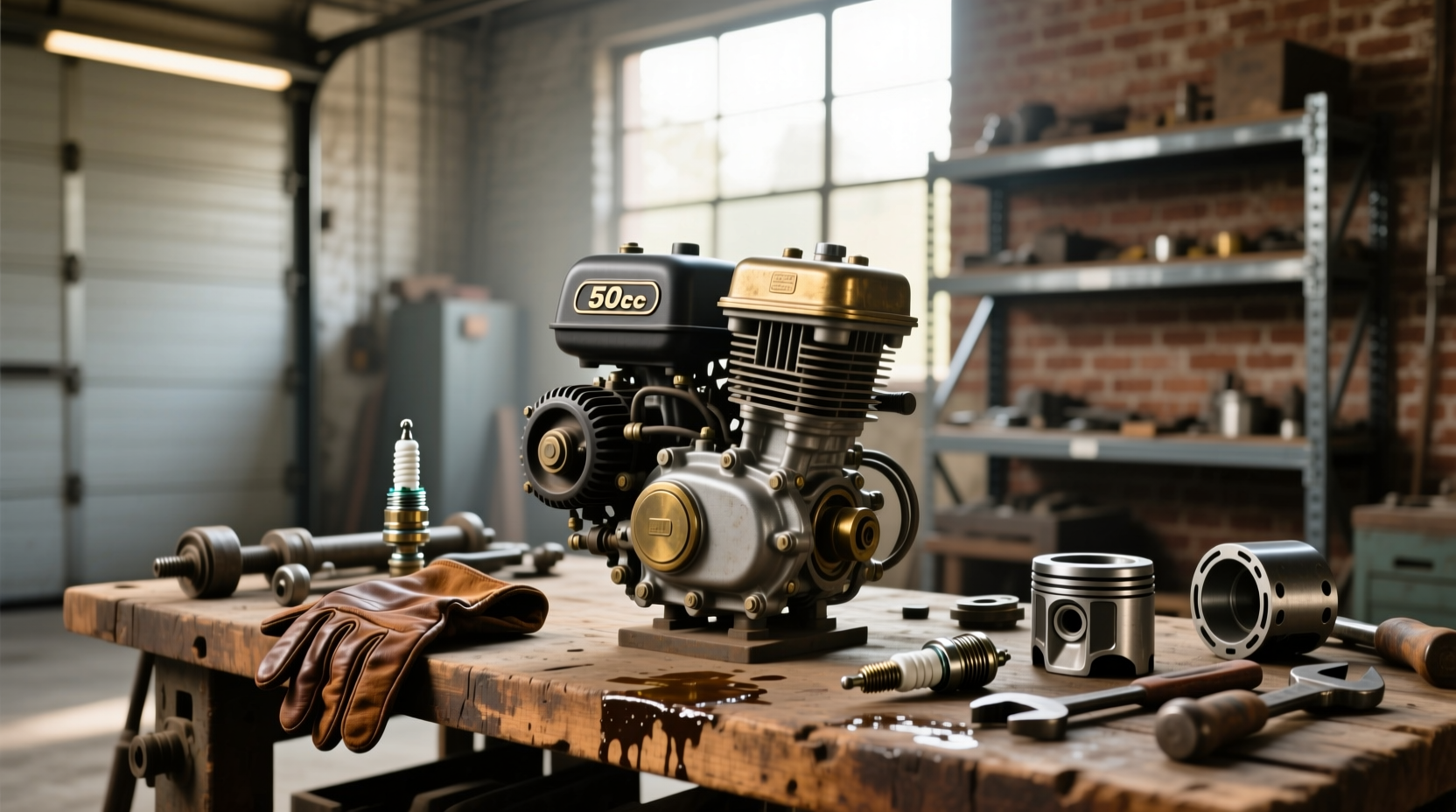
When searching for compact, lightweight power solutions in small vehicles, the 50cc engine 2 stroke stands out as a popular choice across dirt bikes, pocket bikes, scooters, and mini ATVs. These engines deliver high power-to-weight ratios thanks to their simple design and rapid combustion cycle. On average, a stock 50cc two-stroke produces between 3 to 6 horsepower, with modified or racing versions reaching up to 30hp under extreme tuning conditions⚙️. Understanding how these engines function, their performance limits, maintenance needs, and real-world applications helps buyers make informed decisions—especially when comparing them to 4-stroke alternatives or evaluating engine kits online.
How a 50cc Two-Stroke Engine Works
The fundamental principle behind a 50cc 2-stroke engine is its ability to complete a full combustion cycle in just two strokes of the piston—intake/compression and power/exhaust—compared to four in traditional engines. This design allows for more frequent power pulses, resulting in higher RPMs and increased acceleration relative to engine size.
In operation, as the piston moves upward, it creates a vacuum in the crankcase below. This draws in an air-fuel-oil mixture through the intake port. Simultaneously, the rising piston compresses the mixture in the combustion chamber above. Once near top dead center, the spark plug ignites the compressed fuel, forcing the piston down in the power stroke. As it descends, it first uncovers the exhaust port, allowing burnt gases to escape, then the transfer port, which routes fresh mixture from the crankcase into the cylinder. The cycle repeats every revolution, making 2-stroke engines inherently more powerful per displacement than their 4-stroke counterparts.
This simplicity comes at a cost: less precise control over scavenging (removal of exhaust gases), higher emissions, and greater oil consumption due to pre-mixed lubrication. However, for lightweight recreational machines where weight savings and peak power matter most, this trade-off is often acceptable.
Performance Metrics: Horsepower and Top Speed
One of the most frequently asked questions about 50cc two-stroke engines is: how fast can they go? The answer depends heavily on several factors including gearing, vehicle weight, aerodynamics, and whether the engine is stock or modified.
A typical stock 50cc 2-stroke engine used in mini dirt bikes or pocket bikes generates around 3 to 6 horsepower, enabling speeds between 25 to 40 mph (40–65 km/h). Some high-performance builds—such as those featured in enthusiast videos modifying port timing, increasing compression, or adding forced induction—report outputs exceeding 28–30 hp⚡. While such figures may be optimistic or measured under ideal test conditions, they illustrate the potential for significant gains through tuning.
For example, a well-tuned racing 50cc two-stroke with optimized exhaust systems (like expansion chambers), high-compression heads, and performance carburetors can approach or slightly exceed 50 mph (80 km/h) in optimal setups. However, these modifications typically reduce engine longevity and require frequent maintenance.
| Engine Type | Avg. HP Output | Top Speed (Typical) | Fuel Mix Required | Common Use Cases |
|---|---|---|---|---|
| Stock 50cc 2-Stroke | 3–6 hp | 25–40 mph | Pre-mix (oil + gas) | Dirt bikes, scooters, mini ATVs |
| Tuned/Racing 50cc 2-Stroke | 10–30 hp | 45–60+ mph | High-ratio pre-mix | Racing, land speed records |
| Stock 50cc 4-Stroke | 2–4 hp | 20–35 mph | No oil mix needed | Commuter scooters, mopeds |
Applications and Common Vehicle Types
The versatility of the 50cc 2-stroke engine makes it suitable for various small-engine applications:
- Dirt Bikes & Pocket Bikes: Lightweight frames paired with aggressive gearing allow for quick acceleration. Many entry-level youth dirt bikes use 49–50cc two-strokes for training and recreation🛒.
- Scooters and Mopeds: Though less common today due to emission regulations, some older European and Asian models utilized 2-stroke engines for their simplicity and responsiveness.
- Mini ATVs and Quad Kits: Replacement engines in the 49/50cc range are widely available for quads, especially for repair or upgrade purposes🔧.
- Bicycle Engine Kits: Aftermarket 2-stroke motor kits (often labeled as 49cc or 50cc) convert standard bicycles into motorized transport. These usually include a pull-start engine, CDI ignition, carburetor, and mounting hardware.
These engines are particularly favored in DIY and hobbyist communities due to their mechanical simplicity and ease of modification. Unlike larger engines, they don’t require complex valve trains or oil pumps, reducing both cost and assembly time.
2-Stroke vs. 4-Stroke: Key Differences
Choosing between a 2-stroke and 4-stroke 50cc engine involves understanding core operational and practical differences:
Power Delivery
Two-stroke engines produce power on every revolution of the crankshaft, while 4-strokes do so every other revolution. This gives 2-strokes a distinct advantage in throttle response and peak power output. For riders seeking snappy acceleration—especially in off-road or track environments—this trait is highly desirable.
Fuel and Lubrication
A major drawback of 2-stroke engines is the need for pre-mixing oil with gasoline (typically at ratios like 50:1 or 40:1). Alternatively, some models use an oil injection system. In contrast, 4-stroke engines have separate oil reservoirs and do not burn oil during combustion, leading to cleaner operation and lower maintenance frequency.
Emissions and Noise
Due to incomplete scavenging and burning of oil, 2-stroke engines emit more hydrocarbons and particulates. Most modern urban areas restrict or ban their use in street-legal vehicles. Additionally, they tend to be louder due to high-RPM operation and resonant exhaust systems.
Maintenance and Longevity
While mechanically simpler, 2-stroke engines often require more frequent attention. Spark plugs foul faster, air filters clog quicker due to oily intake streams, and piston rings wear faster under high heat. However, rebuilds are generally easier and cheaper than for 4-strokes.
Purchasing Considerations: What Buyers Should Know
If you're considering buying a 50cc 2-stroke engine—whether complete, as a kit, or for replacement—it’s essential to evaluate several key aspects before committing:
Verify Engine Specifications
Many listings, especially on global marketplaces, label engines as “50cc” when they’re actually 49cc. While legally classified together in many jurisdictions, slight variations exist in bore and stroke. Always check actual displacement, compression ratio, and ignition type (CDI vs. points).
New vs. Used Engines
New engines from suppliers often come fully assembled with carburetors, air filters, starters, and exhausts included. Used engines—like vintage Honda PC50 units—may offer authenticity but require inspection for compression loss, corrosion, or worn bearings📍. Compression testing is recommended before installation.
Complete Engine vs. Kit
A complete engine includes all components necessary for operation: cylinder, piston, crankshaft, carburetor, CDI box, flywheel, and starter mechanism. A bare engine lacks peripherals and requires sourcing parts separately. Engine kits may also include mounting brackets, throttle cables, and fuel tanks depending on vendor.
Compatibility and Mounting
Ensure the engine’s mounting pattern, shaft orientation (horizontal vs. vertical), and output shaft diameter match your frame or drivetrain. For bicycle conversions, confirm sprocket alignment and chain tensioning options.
Regulatory Compliance
In regions like the EU or California, emissions standards severely limit the legality of new 2-stroke engines in road-going vehicles. Even if technically functional, operating a non-compliant engine may result in fines or registration denial. Always verify local laws before purchase.
Maintenance Tips for Longevity
Proper care significantly extends the life of a 50cc two-stroke engine. Follow these best practices:
- Use Fresh Fuel Mix: Stale gasoline degrades within 30 days. Always mix only what you’ll use within a few weeks unless using a stabilizer.
- Check Air Filter Regularly: A dirty filter causes rich running and carbon buildup. Clean foam filters with mild soap and re-oil before reinstalling.
- Inspect Spark Plug Frequently: Look for signs of fouling, overheating (white tip), or incorrect gap. Replace annually or after 50 hours of runtime.
- Avoid Prolonged Idling: Two-strokes cool poorly at low RPMs. Extended idling can lead to overheating and piston seizure.
- Break-In Period: Run the first 2–3 tanks of fuel at varying RPMs without full throttle to seat piston rings properly.
Common Misconceptions About 50cc Two-Stroke Engines
Several myths persist about small-displacement two-strokes. Addressing them improves buyer awareness:
Myth: All 50cc Engines Are the Same
Reality: Design matters. Chinese-made replica engines vary in quality. Some lack proper heat treatment or precision machining. OEM-spec engines (e.g., from original manufacturers) tend to perform better and last longer.
Myth: You Can Easily Upgrade to 60mph
Reality: Achieving 60 mph requires extensive modifications—including porting, big-bore kits, and forced induction—that compromise reliability. Realistic expectations should align with stock capabilities unless building a dedicated race machine.
Myth: Two-Strokes Are Obsolete
Reality: While phased out of mainstream transportation, 2-strokes remain dominant in niche markets like chainsaws, weed trimmers, motocross (in certain classes), and amateur racing due to unmatched power density.
Tuning and Performance Modifications
For enthusiasts aiming to extract more performance from a 50cc 2-stroke, several upgrade paths exist:
- Expansion Chamber Exhaust: Properly tuned headers increase power by harnessing pressure waves to improve scavenging efficiency.
- Porting: Modifying intake, transfer, and exhaust port shapes and timings can boost airflow and power output. Requires expertise to avoid compromising durability.
- Carburetor Upgrades: Larger carbs (e.g., 12mm or 14mm) allow more air/fuel flow. Must be matched with exhaust and air filter changes.
- High-Compression Heads: Increase compression ratio (e.g., from 9:1 to 12:1) for greater thermal efficiency and power, but require higher-octane fuel and careful tuning.
- Supercharging/Turbocharging: Rare but possible; increases intake pressure to force more mixture into the cylinder. Adds complexity and heat load.
Each modification affects engine balance and stress levels. Without proper cooling, lubrication, and tuning, even minor upgrades can lead to premature failure.
Where to Buy 50cc 2-Stroke Engines
Engines are available through various channels:
- Specialty Retailers: Companies focused on mini bikes, scooters, or ATV parts often carry tested, compatible engines with customer support.
- Online Marketplaces: Platforms like Alibaba list numerous suppliers offering complete 2-stroke engines in the 50cc range🌐. When purchasing internationally, consider shipping costs, import duties, and warranty limitations.
- Used Markets: eBay and local classifieds offer used engines, sometimes from discontinued models. Inspect thoroughly and request compression test results.
When evaluating sellers, look for clear specifications, warranty terms, and responsive communication. Avoid vendors who provide vague descriptions or no technical documentation.
Environmental and Regional Considerations
Environmental regulations play a growing role in the availability and usability of 2-stroke engines. In Europe, the Euro 5 emissions standard effectively bans new 2-stroke scooters from public roads. Similarly, the U.S. EPA has strict rules limiting hydrocarbon emissions from small off-road engines (SORE).
As a result, many newer 50cc-powered vehicles use 4-stroke engines that meet current standards. However, private-use applications—such as closed-course racing, farm equipment, or trail-only riding—still permit 2-stroke usage in most areas.
Always verify local regulations before installing or operating a 2-stroke engine in any vehicle intended for public roads or regulated trails.
Frequently Asked Questions
- Can a 50cc 2-stroke engine reach 40 mph?
- Yes, a well-maintained 50cc two-stroke in a lightweight vehicle like a pocket bike can reach 40 mph under optimal conditions. Aerodynamics, gearing, and engine condition all influence final speed.
- How much horsepower does a 50cc 2-stroke engine produce?
- Stock engines typically produce 3 to 6 horsepower. Highly modified versions with performance parts can generate up to 30 hp, though such outputs are rare and short-lived without expert tuning.
- What is the difference between a 49cc and 50cc engine?
- There is minimal practical difference. Both displacements fall within the same regulatory category in most countries. The naming often reflects marketing or slight manufacturing variances rather than meaningful performance gaps.
- Do 50cc two-stroke engines need mixed fuel?
- Yes, most require a pre-mix of gasoline and 2-stroke oil (commonly at 50:1 ratio). Some advanced models feature automatic oil injection systems that eliminate manual mixing.
- Are 50cc 2-stroke engines reliable for daily use?
- They can be reliable for light use but require more frequent maintenance than 4-strokes. Due to higher emissions and noise, they are generally not recommended for daily commuting in regulated urban areas.





 浙公网安备
33010002000092号
浙公网安备
33010002000092号 浙B2-20120091-4