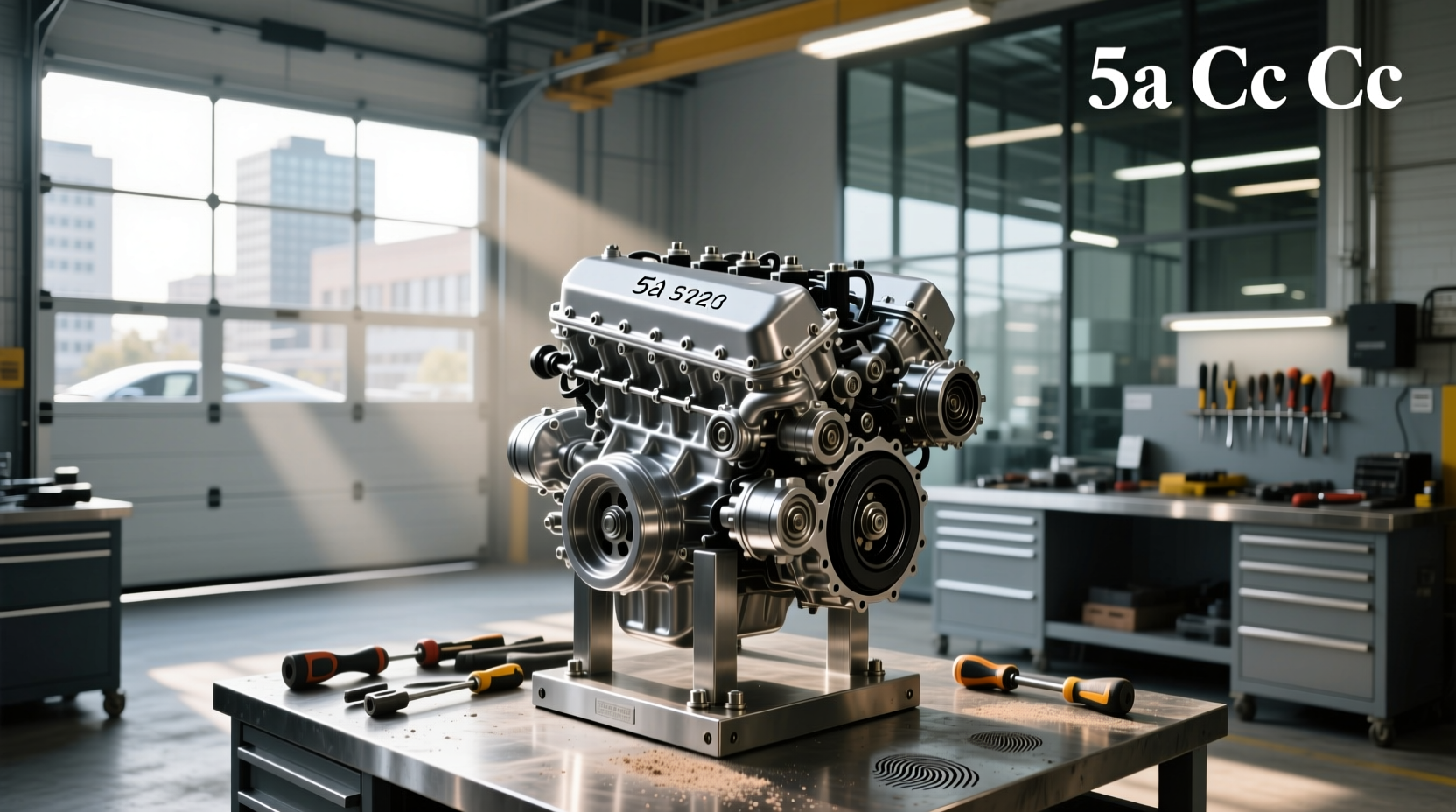
The Toyota 5A engine has a displacement of 1,498 cc (1.5 liters), making it a compact and efficient inline-four gasoline engine widely used in economy cars during the 1990s and early 2000s. Known for its durability and ease of maintenance, the 5A-FE variant is particularly popular among drivers seeking reliable daily transportation with low fuel consumption and long-term dependability ✅. This article explores everything you need to know about the 5A engine’s specifications, real-world performance, common vehicle applications, and how it compares to related engines like the 4A and 7A families ⚙️.
Understanding the 5A Engine: A Brief Overview
The Toyota 5A series is part of the broader A-family of inline-four engines produced by Toyota Motor Corporation from the late 1980s through the early 2000s 🏭. These engines were designed with simplicity, cost-efficiency, and longevity in mind, targeting entry-level sedans and hatchbacks such as the Toyota Corolla, Sprinter, and Tercel. Among the variants, the 5A-FE (Fuel Efficient) became the most widespread due to its balance of power, economy, and reliability.
With a total displacement of 1,498 cubic centimeters, or approximately 1.5L, the 5A-FE delivers around 104 horsepower and 100 lb-ft of torque, depending on the model year and market. It features a cast-iron block and aluminum head, overhead camshaft (SOHC) design, and four valves per cylinder — a configuration that was modern for its time and contributed to smooth operation and good thermal efficiency 🔧.
Exact Specifications of the 5A-FE Engine
To fully understand what makes the 5A engine relevant even today, especially in markets where used Japanese imports are common, let's break down its technical specs:
| Specification | Value |
|---|---|
| Engine Family | Toyota A-Series |
| Configuration | Inline-4 (Straight Four) |
| Displacement | 1,498 cc (1.5 L) |
| Bore × Stroke | 78.7 mm × 77.0 mm |
| Valvetrain | DOHC, 16-valve (4 per cylinder) |
| Aspiration | Naturally Aspirated |
| Fuel System | Multi-point Fuel Injection (MPFI) |
| Compression Ratio | 9.3:1 (standard) |
| Max Power Output | 104 hp @ 6,000 rpm |
| Max Torque | 99–100 lb-ft @ 4,400 rpm |
| Oil Capacity | 3.7 quarts (with filter) |
| Cooling System | Liquid-cooled |
| Block Material | Cast Iron |
| Head Material | Aluminum |
These figures are consistent across most global markets, though minor variations exist based on emissions standards and tuning preferences 1. For example, North American models may have slightly detuned outputs compared to JDM (Japanese Domestic Market) versions due to stricter emission regulations.
Common Vehicles Using the 5A Engine
The 5A-FE engine was primarily installed in compact Toyota models aimed at budget-conscious buyers who valued fuel economy and mechanical simplicity. Some of the most common vehicles equipped with this engine include:
- Toyota Corolla (E90, E100, E110 generations; 1987–2002)
- Toyota Sprinter (EP71, EE96, EE100)
- Toyota Tercel (third and fourth generations)
- Toyota Paseo / Cynos (early models)
- Toyota Sera (some variants)
- Toyota Corsa / Vios (certain Asian and African markets)
In addition, some rebadged variants appeared under other brands within the Toyota Group, including certain Daihatsu and Perodua models sold in Southeast Asia. Its widespread use means replacement parts and complete engines remain readily available, especially via Japanese used auto exporters and online marketplaces like alibaba.com 🌐.
Reliability and Longevity: How Many Miles Can a 5A Engine Last?
One of the most frequently asked questions regarding the 5A engine is: how long can it last? Based on user reports, mechanic feedback, and field data from high-mileage examples, a well-maintained 5A-FE engine can easily exceed 300,000 kilometers (186,000 miles), with many reaching 400,000 km (250,000 mi) or more without major overhauls ❓.
Key factors contributing to this impressive lifespan include:
- Simplified design: Fewer complex components mean fewer failure points.
- Durable construction: Cast-iron block provides excellent strength and heat resistance.
- Conservative tuning: The engine operates well below stress limits, reducing wear.
- Easy access to service points: Routine tasks like spark plug changes, timing belt replacements, and oil changes are straightforward.
However, longevity depends heavily on regular maintenance. Neglecting oil changes, ignoring coolant flushes, or delaying timing belt replacement (recommended every 90,000–105,000 miles) can lead to premature failure. Also, while interference engines, the 5A-FE will suffer valve damage if the timing belt breaks — so timely replacement is critical ⚠️.
Performance Characteristics and Fuel Efficiency
The 5A engine was never intended for high performance. Instead, it prioritizes smoothness, responsiveness at low RPMs, and excellent fuel economy. In city driving, expect around 26–28 mpg (9–10 L/100km), while highway efficiency reaches up to 34–36 mpg (6.6–7 L/100km) under optimal conditions.
Drivers often describe the driving experience as “adequate” rather than exciting. The engine produces peak torque just above mid-range RPMs (~4,400 rpm), which means acceleration feels best when the engine is moderately revved. However, overtaking on highways or climbing steep hills requires downshifting, especially when carrying passengers or cargo.
Fuel compatibility is limited to regular unleaded gasoline (87 octane). There is no benefit to using premium fuel, as the compression ratio is relatively low (9.3:1). The engine does not support forced induction out of the factory, though some enthusiasts have added turbochargers in modified builds — typically requiring upgraded internals and careful tuning ⚡.
Comparison: 5A vs. 4A vs. 7A Engines
Within Toyota’s A-engine family, several variants share architecture but differ in size, output, and application. Understanding these differences helps clarify why someone might choose one over another.
| Engine | Displacement (cc) | Horsepower | Torque (lb-ft) | Notable Features |
|---|---|---|---|---|
| 4A-FE | 1,587 cc | 102 hp | 101 lb-ft | Slightly larger bore; smoother idle |
| 5A-FE | 1,498 cc | 104 hp | 100 lb-ft | More compact; better low-end response |
| 7A-FE | 1,762 cc | 105–115 hp | 110–115 lb-ft | Larger displacement; improved torque |
While the 4A-FE has a slightly larger displacement (1.6L), the 5A-FE offers comparable power with marginally better fuel economy due to reduced internal friction and lighter weight. The 7A-FE, introduced later, bridges the gap between economy and usability, offering stronger low-end torque thanks to its longer stroke and increased displacement — ideal for heavier vehicles like the Corolla sedan or Matrix.
Enthusiasts sometimes debate whether the 5A or 7A is superior. For pure reliability and simplicity, the 5A wins. For daily drivability and load-carrying ability, the 7A is generally preferred 👥.
Aftermarket Support and Common Upgrades
Although not a performance-focused engine, the 5A-FE has a modest following in grassroots tuning circles. Common modifications include:
- Intake and exhaust upgrades: Cold air intakes and less restrictive exhaust systems improve breathing and add slight gains in power.
- ECU reflashing or piggyback controllers: Allows fine-tuning of air/fuel ratios and ignition timing for optimized performance.
- Header installation: A 4-into-1 header can enhance exhaust scavenging and increase mid-range torque.
- Used engine swaps: Because of their availability and affordability, many owners replace worn-out engines with JDM-sourced units purchased via platforms like alibaba.com 🚚.
It’s important to note that aggressive modifications can compromise the engine’s legendary reliability unless accompanied by proper cooling, lubrication, and monitoring systems. Turbocharging, while possible, usually requires forged pistons, strengthened rods, and an intercooler setup to prevent detonation.
Purchasing a Used 5A Engine: What to Look For
If you're considering buying a used 5A engine — whether for replacement or restoration — there are several key indicators of quality and condition:
- Origin and mileage: JDM engines typically have lower wear due to strict inspection standards (Shaken) and higher build quality control.
- Leak inspection: Check for oil seepage around the valve cover gasket, oil pan, and rear main seal.
- Compression test results: Request documented compression numbers (should be above 160 psi per cylinder, with no more than 10% variation).
- Timing belt history: Confirm whether it has been replaced recently — crucial for interference engines.
- Accessories included: Determine if the engine comes with manifolds, ECU, wiring harness, or mounts — affects labor and compatibility.
Prices for used 5A-FE engines vary significantly by region and supplier. On international export platforms, expect to pay between $400 and $900 USD, depending on completeness and shipping terms 📍. Always verify seller reputation and request video proof of engine operation before purchase.
Common Misconceptions About the 5A Engine
Despite its popularity, several myths persist about the 5A engine:
- Myth: The 5A engine is underpowered and useless.
Reality: While not fast, it’s perfectly suited for urban commuting and light-duty use. Its efficiency and reliability make it ideal for developing markets. - Myth: All 5A engines are the same.
Reality: Differences exist between early and late models, including intake manifold design, sensor placement, and emissions equipment. - Myth: You can swap in any A-series engine without modification.
Reality: Mounting points, wiring harnesses, and transmission compatibility must be verified. A 4A-FE may fit physically, but ECU mismatch could cause issues.
Maintenance Tips to Maximize 5A Engine Life
To get the most out of your 5A engine, follow these best practices:
- Change engine oil every 5,000–7,500 miles using quality 10W-30 or 5W-30 motor oil.
- Replace the timing belt every 90,000–105,000 miles, along with the water pump and tensioners.
- Inspect spark plugs every 30,000 miles; replace with OEM-recommended iridium or platinum types.
- Flush coolant every 60,000 miles to prevent corrosion and overheating.
- Clean throttle body and idle air control valve annually to maintain smooth idle and throttle response.
Using genuine or high-quality aftermarket filters (oil, air, fuel) also contributes to sustained performance. Avoid short-trip driving whenever possible, as frequent cold starts accelerate wear and moisture buildup in the oil.
Frequently Asked Questions (FAQs)
Below are answers to some of the most commonly searched questions related to the 5A engine:
- ❓ What is the exact displacement of the Toyota 5A engine in cubic centimeters?
- The Toyota 5A-FE engine has a displacement of 1,498 cc, commonly rounded to 1.5 liters.
- ❓ Which cars use the 5A engine?
- The 5A-FE was primarily used in the Toyota Corolla (E90–E110), Sprinter, Tercel, and select Paseo and Sera models from the late 1980s to early 2000s.
- ❓ Is the 5A engine reliable?
- Yes, the 5A-FE is known for exceptional reliability when maintained properly. Many examples exceed 300,000 km (186,000 miles) without major repairs.
- ❓ What’s the difference between 5A and 4A engines?
- The 4A-FE has a larger displacement (1,587 cc vs. 1,498 cc), slightly different power delivery, and is found in earlier Corollas. The 5A-FE is slightly more fuel-efficient and compact.
- ❓ Can I buy a used 5A engine online?
- Yes, used 5A-FE engines are widely available through Japanese exporters and industrial suppliers, including alibaba.com, often priced between $400 and $900 USD depending on condition and shipping.





 浙公网安备
33010002000092号
浙公网安备
33010002000092号 浙B2-20120091-4