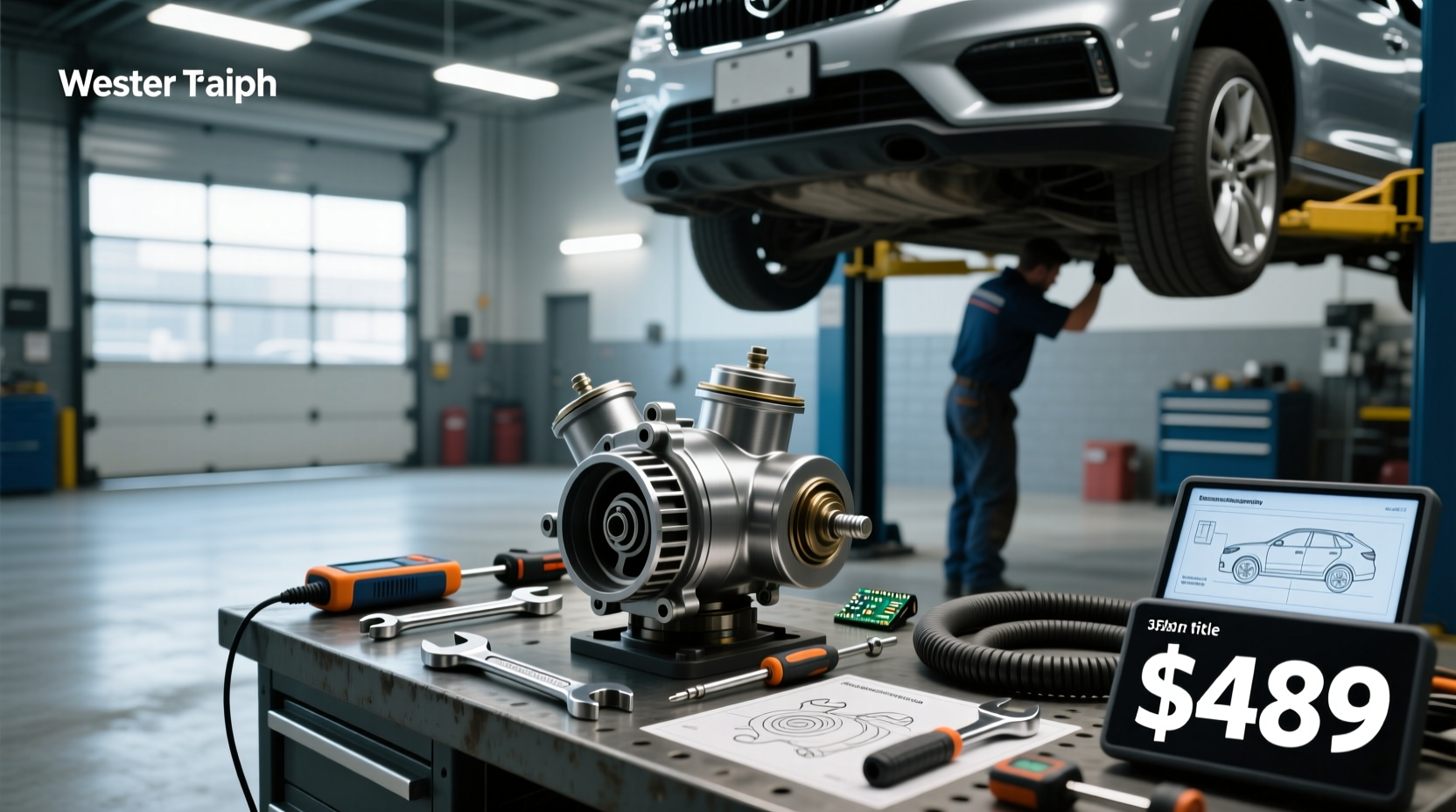
If you're seeing an illuminated ABS warning light or experiencing brake pedal pulsation during normal stops, you may be facing a failing ABS pump — and wondering how much does ABS pump replacement cost. On average, total costs range from $800 to $1,500 in the United States, with parts accounting for $400–$900 and labor adding another $300–$600. However, prices vary significantly based on vehicle make, model, location, and whether you choose new, remanufactured, or used components. This guide breaks down every factor influencing ABS pump replacement cost, helps you recognize early symptoms, compares repair vs. replacement options, and offers practical tips to avoid overpaying.
What Is an ABS Pump and Why Does It Matter?
The Anti-lock Braking System (ABS) pump is a critical component of your vehicle’s safety system ⚙️. It works in tandem with wheel speed sensors, hydraulic valves, and the ABS control module to prevent wheel lockup during hard braking. When sensors detect a wheel about to lock, the ABS controller signals the pump to modulate brake pressure rapidly, allowing the wheel to continue rotating and maintaining steering control.
Modern ABS units are often integrated assemblies that combine the pump motor, hydraulic valve block, and electronic control unit (ECU) into one sealed unit 1. Because of this integration, when one part fails — such as the pump motor seizing or internal valves clogging — the entire unit typically needs replacement or professional remanufacturing.
Symptoms of a Failing ABS Pump
Catching issues early can help avoid more expensive damage or unsafe driving conditions. Common signs include:
- 📍 ABS Warning Light On: A steady or flashing ABS light on the dashboard is the most direct indicator.
- 🔧 Brake Pedal Pulsation During Normal Stops: If you feel vibration under light braking, it may signal erratic pump activation.
- ⚙️ Increased Stopping Distance: Without proper ABS function, wheels may lock prematurely on wet or slippery roads.
- ❗ Hard Brake Pedal: Loss of power assist in some systems due to failed pump operation.
- 📌 Traction Control or Stability Control Warnings: These systems rely on ABS data; failure disables them too.
While these symptoms suggest ABS pump problems, they can also stem from faulty wheel speed sensors or wiring issues. Always perform diagnostic scanning before assuming the pump itself is at fault.
Factors That Influence ABS Pump Replacement Cost
There is no one-size-fits-all answer to how much an ABS pump replacement will cost. Several variables affect both parts and labor pricing:
1. Vehicle Make and Model ✅
Luxury and European vehicles generally have higher replacement costs due to complex integrated systems and proprietary parts. For example:
- 🚘 Toyota Camry (2010–2015): $700–$1,000
- 🚘 Honda Accord (2013–2017): $750–$1,100
- 🚘 BMW 3 Series (E90/F30): $1,200–$1,800
- 🚘 Mercedes-Benz C-Class (W204/W205): $1,300–$2,000+
Some manufacturers seal the ECU to the pump housing, requiring coding and VIN pairing after installation — increasing labor time and technician expertise required.
2. Type of ABS Unit Chosen 🛒
You have several options when replacing an ABS pump, each with trade-offs in cost, reliability, and warranty:
| Option | Avg. Cost | Pros | Cons |
|---|---|---|---|
| New OEM | $800–$1,400 | Guaranteed fit, full warranty, no reprogramming needed | Most expensive option |
| Remanufactured | $400–$700 | Cost-effective, tested performance, includes core return program | Quality varies by supplier; may require coding |
| Used/Salvage | $200–$500 | Lowest upfront cost | No warranty; unknown history; may fail soon after install |
| Aftermarket New | $500–$900 | Better pricing than OEM, sometimes improved design | Mixed reviews; compatibility not always perfect |
Choosing a remanufactured unit from a reputable rebuilder can save hundreds without sacrificing reliability — especially if it includes bench testing and lifetime warranties.
3. Labor Rates by Region and Shop Type 🏭
Labor costs vary widely depending on where you live and who performs the work:
- 🏙️ Urban Dealerships: $120–$200/hour; typical job takes 2–3 hours
- 🏘️ Independent Mechanics: $80–$120/hour; often faster turnaround
- 🚗 Chain Auto Centers: May offer flat-rate pricing around $350–$500 for labor
In high-cost areas like New York City or San Francisco, expect labor charges to push total bills toward the upper end of the range. Rural areas may see lower hourly rates but fewer specialists trained on advanced ABS systems.
4. Additional Services Required 🔧
Replacing the ABS pump isn’t just a swap-and-go job. Several follow-up procedures add time and cost:
- 🔋 System Bleeding: Air must be removed from the hydraulic lines using specialized equipment (often requires scan tool).
- 📱 Module Coding/Programming: Especially on BMW, Mercedes, Audi, and Land Rover models, the new or remanufactured unit must be matched to the vehicle’s VIN.
- 🔄 Calibration & Sensor Checks: Ensure all four wheel speed sensors are functioning post-installation.
- 📊 Diagnostic Scan Reset: Clear stored fault codes and verify system readiness.
These steps can add 1–2 additional labor hours, particularly if complications arise.
New vs. Remanufactured ABS Pumps: Which Is Better?
When weighing options, many drivers ask: Should I buy new or go with remanufactured? Here's a balanced comparison:
New ABS Pump
✅ Advantages:
- Factory fresh, never installed
- Full manufacturer warranty (typically 1–3 years)
- No core return requirement
- Plug-and-play in most cases
- Significantly higher cost (often double reman)
- Longer wait times for delivery
- May still require programming
Remanufactured ABS Pump
✅ Advantages:
- Lower cost (saves $300–$600 on average)
- Quick shipping (many suppliers keep inventory)
- Rigorously tested for functionality
- Often comes with lifetime exchange warranty
- Requires returning old unit (core charge)
- Rebuilt quality depends on vendor
- May need reprogramming even if original was plug-and-play
For most drivers, a high-quality remanufactured ABS pump from a trusted rebuilder offers the best value without compromising safety.
Can You Replace the ABS Pump Yourself?
While technically possible, DIY ABS pump replacement is not recommended for beginners ⚠️. Consider the following challenges:
- 🛠️ Requires specialty tools: brake bleeder machine, OBD2 scanner capable of activating ABS pump, torque wrench.
- 💧 Risk of introducing air into the brake system, leading to soft pedal or brake failure.
- 💻 Need for module programming/coding on many modern vehicles.
- ⚖️ Safety implications: Improper installation could disable all anti-lock braking.
If you’re experienced with brake systems and have access to the right tools, replacing the unit yourself can save $300–$600 in labor. But unless you’re confident in bleeding the system and verifying operation, professional installation is strongly advised.
Is It Safe to Drive With a Bad ABS Pump?
You can usually still drive with a failed ABS pump — but with important caveats 👥.
- ✔️ Regular braking function remains intact in most cases.
- ❌ However, during emergency stops or on slick surfaces, wheels may lock up, increasing skid risk.
- 🚫 Traction control and electronic stability control are typically disabled when ABS fails.
According to discussions on mechanic forums like r/MechanicAdvice, many users report driving months with the ABS light on without incident — but emphasize that it reduces safety margins significantly 2. It’s acceptable for short-term use if avoiding heavy rain, snow, or high-speed driving — but not a long-term solution.
How to Reduce ABS Pump Replacement Costs
Here are five proven strategies to lower your out-of-pocket expense:
1. Get Multiple Quotes 📊
Call at least three shops — including dealerships, independents, and brake specialists — and ask for itemized estimates. Be sure quotes include parts, labor, taxes, and any programming fees.
2. Consider Rebuilding Instead of Replacing 🧰
Some companies specialize in repairing ABS pumps rather than replacing them. Services like ECU Testing or AA Reman offer repair kits or bench repair for $200–$400, which includes cleaning solenoid valves, replacing seals, and testing output pressure 3. This avoids labor-intensive removal and reinstall if done off-vehicle.
3. Buy Online and Install Locally 🌐
Purchase a remanufactured unit from a reputable online supplier (look for lifetime warranties and free returns), then take it to a local mechanic for installation. This often cuts $200–$400 compared to dealer pricing.
4. Check Warranty Coverage ✈️
Some extended warranties or service contracts cover ABS components. Also, certain remanufacturers offer nationwide warranty networks — useful if you travel frequently.
5. Time Your Repair Wisely ⏱️
Schedule repairs during shop promotions or slower seasons (e.g., spring or summer). Some shops offer discounts on diagnostics or bundle services.
Common Misconceptions About ABS Pump Replacement
Several myths persist that can lead to poor decisions:
- ❌ Myth: The ABS pump is just a simple motor — I can clean it myself.
Reality: Modern units contain precision-machined valves and sealed electronics. Cleaning won’t fix worn motors or corroded circuits. - ❌ Myth: If the ABS light is on, the pump must be replaced.
Reality: Faulty sensors, damaged wiring, or blown fuses can trigger the same warning. Always diagnose first. - ❌ Myth: Aftermarket ABS pumps are unreliable.
Reality: Many meet or exceed OEM specs, especially those from established rebuilders with rigorous testing protocols.
Final Thoughts: Balancing Cost, Safety, and Reliability
The average ABS pump replacement cost falls between $800 and $1,500, but smart consumers can reduce this through informed choices. Prioritize accurate diagnosis, consider remanufactured or repaired units, compare labor rates, and avoid unnecessary replacements driven by misdiagnosis. While the repair isn’t cheap, restoring full ABS functionality enhances safety, especially in adverse weather or emergency situations. Delaying repair increases risk — so address the issue promptly, but do so wisely.
Frequently Asked Questions
Can I drive my car with a bad ABS pump?
Yes, in most cases regular braking still works. However, you lose anti-lock protection, increasing the risk of wheel lockup during hard stops, especially on wet or icy roads. Avoid aggressive driving until repaired.
How long does it take to replace an ABS pump?
Typically 2–4 hours, depending on vehicle complexity and whether programming is required. Some models require removing subframes or suspension components for access.
Do I need to bleed the brakes after replacing the ABS pump?
Yes, absolutely. Air introduced during disconnection must be removed using a pressure bleeder or scan tool-assisted bleeding procedure to ensure proper brake function.
Can a bad ABS pump cause the check engine light to come on?
Not directly, but it may trigger the ABS light, traction control light, or stability control warning. In some vehicles, persistent ABS faults can log codes that indirectly affect engine management systems.
Is there a way to test an ABS pump before replacement?
Yes. A qualified technician can use a scan tool to activate the pump motor and monitor current draw, check for error codes, and inspect hydraulic response. Voltage drop tests and fuse checks are also part of standard diagnostics.




 浙公网安备
33010002000092号
浙公网安备
33010002000092号 浙B2-20120091-4