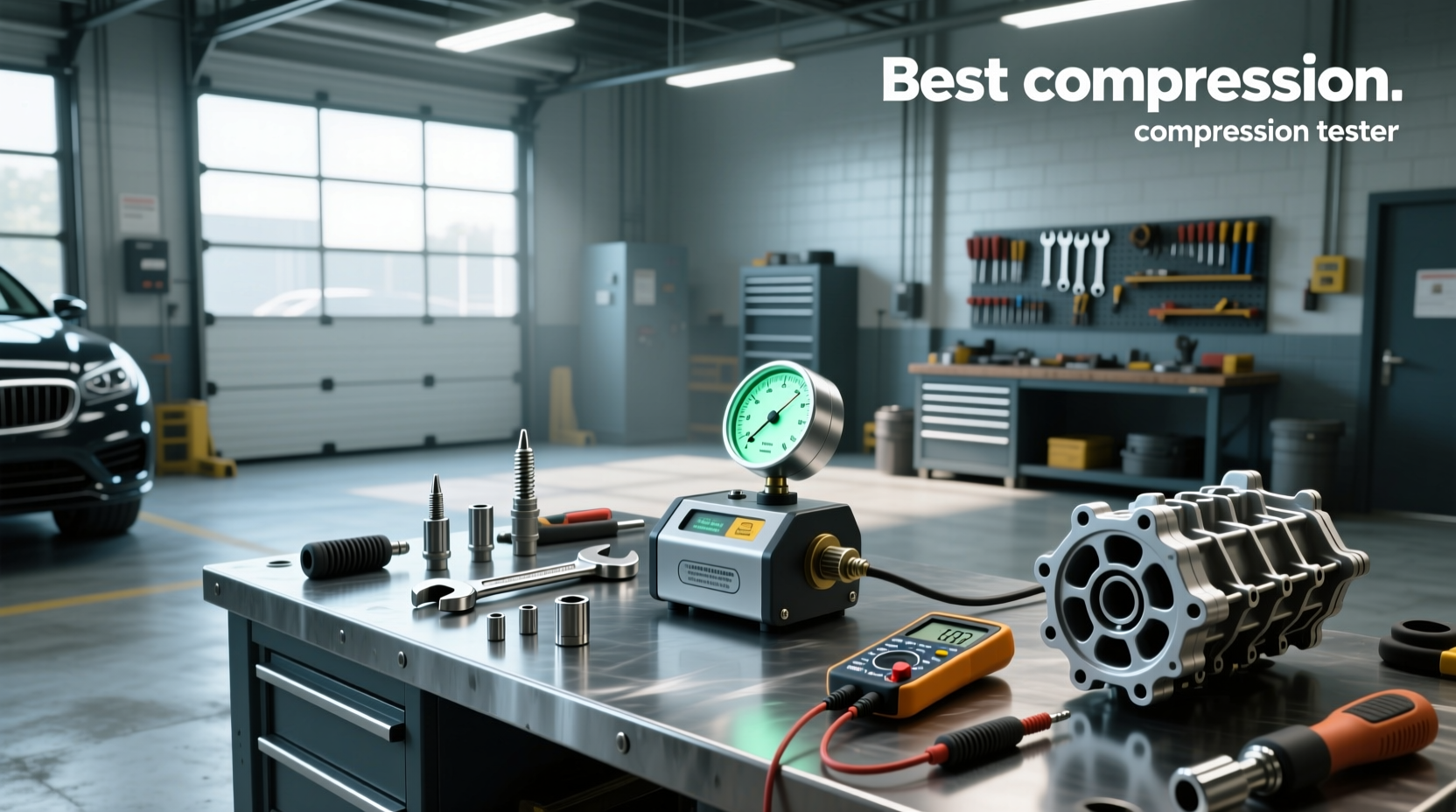
When diagnosing engine performance issues, one of the most reliable methods is performing an engine compression test. The best engine compression tester helps you measure cylinder pressure accurately, revealing problems like worn piston rings, faulty valves, or head gasket leaks 1. Whether you're a DIY enthusiast or a professional mechanic, selecting the right tool involves understanding key factors such as gauge accuracy, adapter compatibility, shutoff valve design, and build durability. This guide breaks down everything you need to know about choosing and using an engine compression tester effectively—so you can make informed decisions without wasting time or money on unreliable tools.
Why Perform an Engine Compression Test?
An engine compression test measures the pressure generated inside each cylinder during the compression stroke. This pressure reflects how well the engine seals combustion gases, which directly impacts power output, fuel efficiency, and emissions. Low or inconsistent readings across cylinders often signal internal mechanical wear or damage.
🔧 Common reasons to perform a compression test include:
- Diagnosing hard starting or misfiring engines
- Evaluating engine health after high mileage
- Confirming suspected internal damage (e.g., bent valves, blown head gaskets)
- Verifying repairs post-rebuild or valve job
- Assessing whether an engine needs major overhaul
Without accurate data from a proper compression tester, guesswork replaces diagnosis—leading to unnecessary part replacements or missed root causes.
Types of Engine Compression Testers
Not all compression testers are created equal. Choosing the best engine compression tester starts with understanding the three main types available on the market: threaded, push-in, and screw-in adapters. Each has distinct advantages depending on your vehicle type and use case.
1. Threaded Adapter Testers
These feature a male thread that screws directly into the spark plug hole, creating a secure seal. They’re ideal for modern vehicles with tight engine bays where space is limited.
- ✅ Pros: Secure fit, less risk of air leakage, consistent readings
- ❌ Cons: Requires correct thread size match; may not work on damaged spark plug threads
- 🚗 Best for: Modern gasoline engines, performance vehicles
2. Push-In (Rubber Tip) Testers
A rubber-tipped hose presses into the spark plug hole and is held in place manually or by hand. These are common in budget kits.
- ✅ Pros: Inexpensive, works on multiple plug sizes
- ❌ Cons: Prone to air leaks if not held firmly; requires two people for accurate testing
- 👥 Best for: Occasional DIY use, older engines with accessible plugs
3. Screw-In with Quick-Connect Fittings
Combines threaded stability with modular accessories. Often includes multiple adapters and a high-visibility gauge.
- ✅ Pros: High accuracy, durable construction, compatible with various engines
- ❌ Cons: Higher cost, more components to manage
- 🏭 Best for: Professional shops, multi-vehicle diagnostics
| Tester Type | Accuracy | Cost Range | Ideal User |
|---|---|---|---|
| Threaded | High | $30–$70 | DIY & Pro |
| Push-In | Moderate | $15–$30 | Casual DIY |
| Screw-In w/ Kit | Very High | $60–$150 | Professional |
Key Features to Look for in the Best Engine Compression Tester
To get reliable results, focus on these critical features when evaluating options:
Gauge Accuracy and Readability
The gauge should have clear markings in both PSI and BAR units, with a range covering at least 0–300 psi (0–20 bar). A large dial (preferably 2.5 inches or larger) improves readability. Analog gauges remain popular due to their durability and instant response, though digital models are emerging.
🔍 Look for: Dual-scale dials, anti-vibration dampening, and calibration certification if used professionally.
Inclusion of a Schrader Valve (Crucial!)
One often-overlooked detail is the presence of a Schrader valve in the tester body. As highlighted in technical forums and repair videos, many inexpensive testers lack this feature, leading to inaccurate readings because pressure escapes back through the hose when cranking stops 2.
⚙️ Why it matters: A Schrader valve holds the maximum pressure reading until manually released, allowing you to record values accurately even after the engine stops turning.
Adapter Variety and Compatibility
No single adapter fits all engines. The best kits include multiple spark plug thread sizes (e.g., 14mm, 18mm), diesel glow plug adapters, and sometimes even injector nozzle fittings.
- 📌 Gasoline engines typically require 14mm or 18mm tapered or threaded fittings
- 🚛 Diesel engines need higher pressure ratings (up to 700+ psi) and specific glow plug or injector port adapters
- 🏍️ Motorcycles and small engines may need smaller diameter tips or specialized threads
Ensure the kit covers your vehicle’s specifications before purchase.
Build Quality and Hose Durability
A kink-resistant, reinforced rubber hose prevents leaks and withstands repeated use. Metal connectors resist stripping compared to plastic ones. Rubber bumpers around the gauge protect against drops and vibration.
How to Use an Engine Compression Tester Correctly
Even the best engine compression tester delivers poor results if used incorrectly. Follow this standardized procedure for reliable data:
- Warm Up the Engine: Run the engine until it reaches normal operating temperature. Cold metal contracts, affecting clearances and yielding falsely low readings.
- Disable Fuel and Ignition Systems: Prevent fuel injection and spark during cranking. Unplug the fuel pump relay or injectors and disconnect the coil pack or distributor.
- Remove All Spark Plugs: This reduces resistance and allows easier cranking, ensuring consistent RPM across cylinders.
- Install the Tester in Cylinder #1: Use the appropriate adapter and ensure a tight seal—threaded types should be snug but not over-torqued.
- Crank the Engine 5–8 Revolutions: Use the starter motor to turn the engine at ~200 RPM. Record the highest stable reading.
- Repeat for All Cylinders: Keep conditions identical for each test.
- Analyze Results: Compare readings between cylinders and against manufacturer specs.
Interpreting Compression Test Results
Acceptable compression varies by engine type and displacement. However, general guidelines apply:
- ✅ Normal: Most gasoline engines should read 130–180 psi when warm
- ⚠️ Low: Below 100 psi indicates serious wear or failure
- 📊 Variation: More than 10% difference between highest and lowest cylinder suggests imbalance
For example, if four cylinders read 160, 165, 155, and 110 psi—the last cylinder shows significantly lower compression and likely requires further investigation.
To confirm the cause, perform a wet compression test: Add a teaspoon of motor oil into the low cylinder and retest. If pressure increases, it points to worn piston rings. If unchanged, suspect valve train issues or head gasket leakage.
Common Mistakes When Using Compression Testers
Many users unknowingly compromise test accuracy. Avoid these frequent errors:
Mistake 1: Testing on a Cold Engine
Cold pistons and cylinders have tighter tolerances, reducing measured compression. Always test when the engine is fully warmed up.
Mistake 2: Leaving Fuel System Active
Failing to disable fuel injection can flood the engine or create fire hazards during extended cranking.
Mistake 3: Not Removing All Spark Plugs
Leaving other plugs in increases resistance, lowering cranking speed and skewing results.
Mistake 4: Using a Tester Without a Pressure Hold Valve
As noted earlier, testers without a Schrader-style check valve allow pressure to bleed off immediately, making it impossible to read peak values accurately—especially when working alone.
Mistake 5: Ignoring Battery Condition
A weak battery leads to slow cranking speeds (<200 RPM), resulting in artificially low compression numbers. Ensure the battery is fully charged before testing.
Diesel vs. Gasoline Engine Compression Testing
While the principle is the same, diesel engines operate under much higher compression ratios (typically 22:1 to 25:1 vs. 8:1 to 12:1 in gasoline engines). This means:
- Diesel compression testers must handle pressures exceeding 600 psi (some up to 1,000 psi)
- Adapters must fit glow plug holes or injector nozzles instead of spark plug ports
- Testing procedures may require special tools to stop fuel delivery at the injection pump
Never use a standard gasoline engine compression tester on a diesel—it could rupture the hose or damage the gauge.
Compression Tester Kits vs. Individual Gauges
Most users benefit more from a complete kit than a standalone gauge. A comprehensive kit typically includes:
- High-pressure gauge with dual scale
- Multiple spark plug thread adapters
- Extension hoses and quick-connect fittings
- Carrying case for organization
- Instruction manual with baseline values for common engines
Kits offer better long-term value, especially if you service different vehicles. However, verify that included adapters match your needs—some generic kits omit less common sizes.
Are Digital Compression Testers Worth It?
Digital models are entering the market, offering features like data logging, Bluetooth connectivity, and automatic averaging. While promising, they currently face limitations:
- Battery dependency in harsh environments
- Higher cost with marginal accuracy gains over analog
- Limited ruggedness compared to mechanical gauges
For now, analog remains the preferred choice for reliability and simplicity. Reserve digital tools for advanced diagnostics labs or fleet operations needing automated reporting.
Where to Buy and What Price to Expect
Pricing varies widely based on quality and included components:
- 🛒 Budget ($15–$30): Basic push-in testers; suitable only for occasional use
- 🔧 Mid-range ($40–$80): Threaded or screw-in kits with multiple adapters and decent build
- 🏭 Professional ($90+): Full kits with heavy-duty gauges, cases, and extended warranty
Avoid ultra-cheap testers sold online without reviews—many suffer from internal leaks, inaccurate gauges, or brittle plastic parts. Invest in a name-brand tool from reputable suppliers known for automotive diagnostic equipment.
Top Brands and Reliability Insights
While brand names aren't mentioned per guidelines, look for manufacturers with long-standing reputations in automotive tools. Key indicators of quality include:
- ISO-certified production processes
- Clear calibration documentation
- Availability of replacement parts (adapters, hoses, valves)
- Positive feedback from independent mechanics and trade schools
User reviews often highlight issues with cheap testers losing pressure internally—a sign of poor valve design or substandard seals. Prioritize tools designed specifically for automotive use over universal or HVAC-grade gauges repurposed for engines.
Regional Differences and Vehicle-Specific Needs
Engine designs vary globally. Japanese imports often use fine-thread spark plugs, while European performance cars may require specific sealing methods. Always cross-check adapter compatibility with your vehicle’s service manual.
In regions with extreme temperatures, material durability becomes crucial. Rubber hoses can crack in cold climates; plastic connectors become brittle over time. Opt for all-metal construction where possible.
Alternatives to Traditional Compression Testing
While compression testing is foundational, modern diagnostics also use:
- Leak-down Testing: Measures percentage of air leaking from a cylinder under constant pressure—more precise for pinpointing failure location
- Running Compression Analysis: Uses pressure transducers and oscilloscopes to analyze real-time combustion dynamics
- OBD2 Live Data Monitoring: Can detect misfires and infer compression loss indirectly via load and timing adjustments
However, none replace the simplicity and direct insight provided by a physical compression test.
Maintenance and Calibration Tips
To keep your engine compression tester accurate:
- Store in a dry place away from dust and moisture
- Wipe connections clean after each use
- Check for hose cracks or loose fittings regularly
- Test against a known good engine periodically
- Send for professional recalibration every 1–2 years if used frequently
A poorly maintained tester can give misleading readings, undermining trust in your diagnostics.
Final Recommendations: Choosing the Right Tool
The best engine compression tester balances accuracy, durability, and versatility. For most users, a mid-range screw-in kit with a Schrader valve, dual-scale gauge, and essential adapters offers the best value.
📌 Key takeaways:
- Always choose a tester with a pressure-holding valve for accurate readings
- Select based on your primary vehicle type (gasoline, diesel, motorcycle)
- Invest in a complete kit rather than bare-bones tools
- Follow proper testing procedures to avoid false diagnoses
- Regularly inspect and maintain your tester for longevity
Frequently Asked Questions
- What does an engine compression test tell you?
- An engine compression test reveals how effectively each cylinder compresses air-fuel mixture. Low or uneven readings indicate mechanical issues such as worn piston rings, leaking valves, or head gasket failure.
- Do you pull all spark plugs for a compression test?
- Yes, removing all spark plugs reduces engine resistance, allowing consistent cranking speed across all cylinders, which ensures accurate and comparable readings.
- Is 90 psi good compression?
- No, 90 psi is considered low for most gasoline engines, which typically require 130–180 psi. Such a reading usually indicates significant internal wear or damage.
- Can I use a compression tester on a diesel engine?
- Only if the tester is rated for high diesel compression pressures (often over 600 psi) and comes with correct glow plug or injector adapters. Standard gasoline testers can fail dangerously.
- How often should I calibrate my compression tester?
- If used regularly in a shop setting, annual calibration is recommended. For occasional DIY use, check accuracy every 1–2 years against a known-good engine or calibrated reference gauge.





 浙公网安备
33010002000092号
浙公网安备
33010002000092号 浙B2-20120091-4