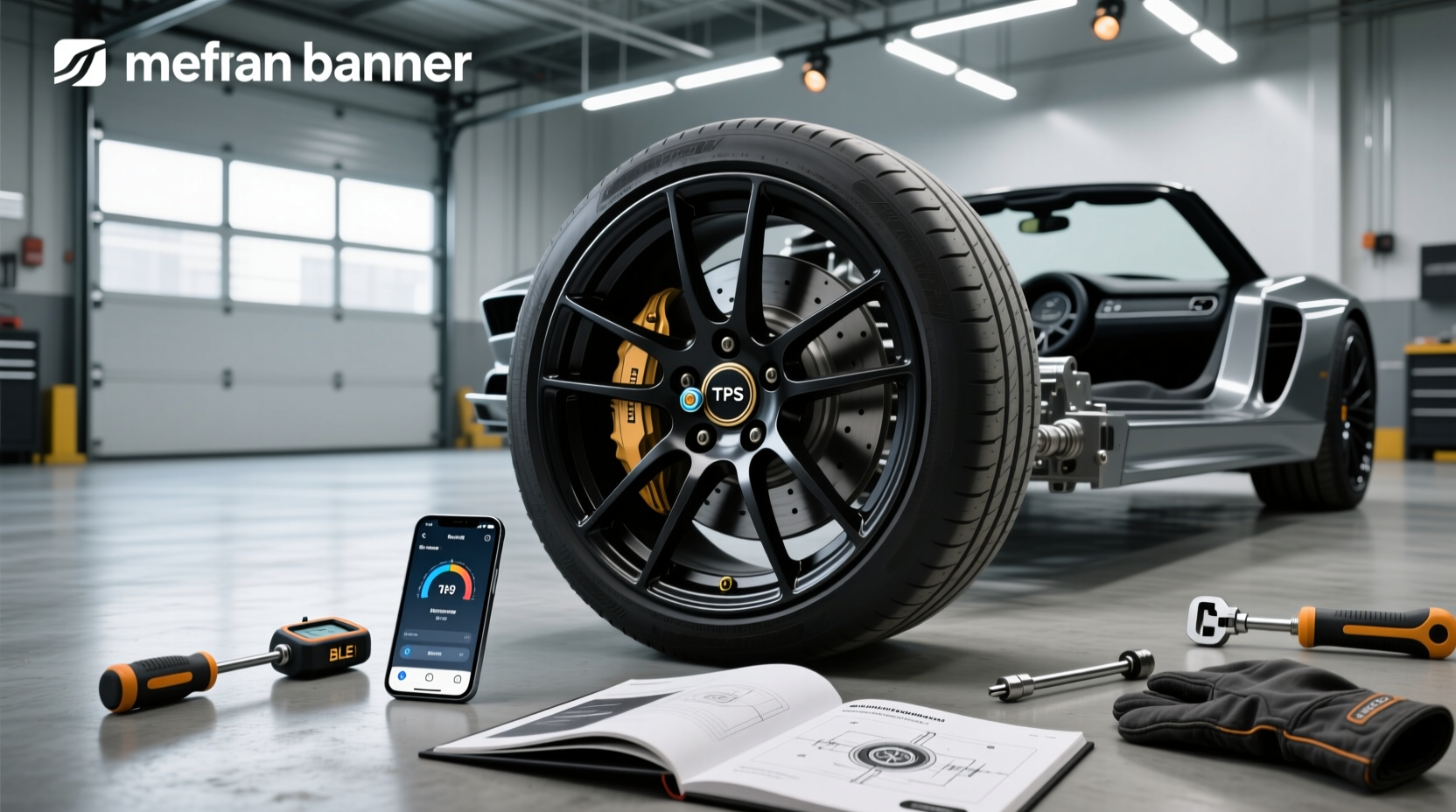
🔍 Bluetooth Low Energy (BLE) TPMS sensors are transforming how drivers monitor tire pressure in real time. Unlike older radio-frequency (RF) systems that rely on proprietary receivers, BLE-enabled tire pressure monitoring sensors transmit data directly to smartphones or vehicle infotainment units via standard Bluetooth protocols. This shift enables seamless integration with mobile apps, broader device compatibility, and easier diagnostics without specialized tools 🌐. If you're searching for a modern, flexible way to track tire health—especially for RVs, EVs, motorcycles, or aftermarket upgrades—a BLE TPMS sensor system may be the right solution.
This guide breaks down everything you need to know about BLE TPMS technology: how it works, key advantages over conventional TPMS, installation considerations, app compatibility, limitations, and common misconceptions. We’ll also explore use cases across vehicle types, compare internal vs. external sensor designs, and help you decide whether this technology fits your needs ✅.
What Is a BLE TPMS Sensor?
A BLE TPMS sensor is a tire pressure monitoring device that uses Bluetooth Low Energy wireless communication instead of the traditional 315 MHz or 433 MHz RF signals. These sensors are typically mounted inside the tire (valve-stem style) or attached externally as caps, and they continuously measure air pressure and temperature ⚙️.
The data is transmitted using energy-efficient Bluetooth protocols to nearby receiving devices such as:
- Smartphones (iOS and Android)
- Tablets
- Aftermarket head units
- Dedicated display screens
- Onboard diagnostic gateways in newer vehicles
Because BLE operates on a universally supported standard, users can access live readings through downloadable apps without needing proprietary hardware 👥. This makes BLE TPMS particularly appealing for DIY installations, fleet management, and custom vehicle builds where flexibility matters.
How Does BLE Differ from Traditional TPMS?
To understand why BLE is gaining traction, it helps to compare it against two main types of legacy TPMS: direct and indirect.
| Feature | Traditional Direct TPMS (RF) | Indirect TPMS (via ABS) | BLE TPMS Sensor |
|---|---|---|---|
| Signal Type | Radio Frequency (315/433 MHz) | N/A – Uses wheel speed sensors | Bluetooth Low Energy (2.4 GHz) |
| Data Accuracy | High – measures actual pressure | Moderate – estimates based on rotation | High – direct measurement |
| Device Compatibility | Vehicle-specific receiver only | Limited to OEM systems | iOS, Android, tablets, smart displays |
| Installation Complexity | Moderate to high (OEM tools often needed) | None (software-based) | Low to moderate (app-guided setup) |
| Battery Life | 5–10 years (non-replaceable) | N/A | 2–5 years (varies by model) |
| User Accessibility | Dashboard alerts only | Same as above | Real-time app viewing, logs, sharing |
As shown, BLE TPMS offers superior user control and transparency compared to both RF-based and indirect methods 🔍. However, it does not replace factory-installed systems unless specifically designed to integrate or reprogram the ECU.
Key Advantages of BLE TPMS Sensors
There are several compelling reasons why consumers and technicians are turning to BLE-based solutions:
📱 Universal App Integration
One of the biggest benefits is that most BLE TPMS sensors work with free or low-cost mobile applications available on the Apple App Store and Google Play. Users can view real-time pressure and temperature readings, set custom alarm thresholds, log historical data, and even share reports 📊.
For example, some apps allow multiple users to monitor the same vehicle remotely—ideal for shared fleets or family vehicles. Others support geotagging so you can see when and where a pressure drop occurred.
🔧 Simplified Installation & Relearning
Unlike traditional TPMS sensors that require OBD-II tools or specific drive cycles to register, many BLE models auto-pair upon inflation or activation. Some simply screw onto the valve stem like a cap and start transmitting immediately after calibration within the app ⏱️.
This makes them ideal for:
- Aftermarket upgrades
- Seasonal tire changes (e.g., switching between summer and winter tires)
- DIY conversions (like EV retrofits)
- Motorcycles and bicycles (where space and weight matter)
🌐 No Proprietary Receiver Needed
Traditional TPMS requires a dedicated receiver module built into the car. BLE eliminates this dependency by leveraging existing Bluetooth hardware in phones or aftermarket stereos. That reduces cost and complexity, especially for older vehicles lacking native TPMS support 🚗.
📈 Real-Time Monitoring and Alerts
BLE sensors typically update every 1–5 seconds, providing near-instant feedback during driving. You can receive push notifications if pressure drops below safe levels, helping prevent blowouts, uneven wear, or fuel inefficiency due to underinflation ⚠️.
Common Use Cases and Vehicle Applications
BLE TPMS isn’t just for passenger cars. Its versatility makes it suitable across various platforms:
🚐 RVs and Trailers
Recreational vehicles often have long axles and heavy loads, increasing the risk of undetected tire failure. BLE TPMS kits with extended range (up to 30 feet) let drivers monitor all wheels from inside the cabin or even outside via smartphone 🏕️.
🔋 Electric Vehicles (EVs)
Many EV owners retrofit BLE sensors when upgrading wheels or converting non-TPMS rims. Since EVs are more sensitive to rolling resistance, maintaining optimal tire pressure improves range. Some BLE systems also integrate with CAN bus adapters to feed data into dash displays ✨.
🏍️ Motorcycles and Bicycles
Due to limited dashboard space, motorcyclists benefit greatly from phone-based monitoring. Compact BLE sensors fit discreetly on valve stems and provide alerts without distracting the rider. Similarly, e-bike riders use miniaturized versions to avoid flats on long rides 🚴♂️.
🚛 Commercial Fleets and Towing Equipment
Fleet managers appreciate BLE’s ability to track multiple vehicles through centralized apps. Data logging supports compliance with safety regulations and maintenance scheduling 📋.
Types of BLE TPMS Sensors: Internal vs. External
When choosing a BLE TPMS sensor, one of the first decisions is whether to go with an internal (stems) or external (caps) design.
Internal BLE Sensors (Valve-Mounted)
These replace the entire valve core assembly and sit inside the tire, similar to OEM sensors. They offer better protection from theft and weather but require professional installation involving dismounting the tire 🔧.
Pros:
- Better aerodynamics
- Less prone to tampering
- More accurate readings (less affected by ambient conditions)
- Longer lifespan (if sealed properly)
Cons:
- Higher upfront cost
- Requires tire shop service for replacement
- Battery not replaceable in most models
External BLE Sensors (Screw-On Caps)
These attach directly to the existing valve stem like a cap. Installation is tool-free and reversible, making them popular for temporary setups or seasonal use 🛠️.
Pros:
- Easy DIY installation
- Lower price point
- Replaceable batteries
- No tire dismounting required
Cons:
- More vulnerable to damage or theft
- Potential leakage at connection point
- May interfere with automatic air pumps at gas stations
- Slightly less precise due to exposure
Compatibility Considerations
Not all BLE TPMS sensors work with every vehicle or smartphone. Here are key factors to verify before purchase:
📱 App Support (iOS vs. Android)
Check whether the manufacturer provides a stable, regularly updated app. Look for features like multi-language support, offline logging, and background operation. Some apps only run on certain OS versions or lack CarPlay/Android Auto integration 🔗.
📡 Bluetooth Version Requirements
Most BLE TPMS sensors use Bluetooth 4.0 or higher. Ensure your phone or receiver supports the required version. Older smartphones (pre-2016) may not connect reliably or at all ❗.
🚗 Vehicle Fitment (Valve Hole Size, Pressure Range)
Verify that the sensor fits your rim’s valve hole diameter (common sizes: 0.453” and 0.625”). Also confirm the operating pressure range matches your vehicle’s specs—some sensors max out at 87 PSI, which may not suffice for trucks or commercial vans 📈.
🔁 Relearn Procedure and ECU Interaction
If replacing OEM sensors, determine whether the vehicle will accept BLE units natively. Most modern cars expect RF signals and won't recognize Bluetooth transmissions unless paired with a gateway adapter. In such cases, you may still need to perform a TPMS reset procedure manually after installation ⚙️.
Potential Limitations and Challenges
Despite its advantages, BLE TPMS isn't perfect. Be aware of these potential drawbacks:
📶 Signal Range and Interference
BLE has a shorter effective range than RF—typically up to 30 meters line-of-sight. Thick metal bodies, electronic interference, or parking in underground garages can disrupt connectivity 🌍.
🔋 Battery Replacement and Lifespan
Internal BLE sensors usually have sealed batteries lasting 2–5 years. Once depleted, the whole unit must be replaced. External models often use CR1632 or similar replaceable cells, offering longer usability with periodic maintenance 🔋.
🔐 Security and Privacy Risks
Since BLE broadcasts openly, there's a theoretical risk of spoofing or tracking. While rare in practice, choose sensors that support encryption or randomized MAC addresses to reduce exposure 🛡️.
📉 Lack of Standardization
Unlike ISO-standardized RF TPMS, BLE implementations vary widely between brands. There’s no universal protocol, so apps and sensors aren’t interchangeable. Switching brands usually means starting over with setup and calibration 🔄.
How to Install a BLE TPMS Sensor (Step-by-Step Overview)
While exact steps depend on the product, here’s a general outline:
- Choose the Right Sensor Type: Decide between internal (valve-mounted) or external (cap-style) based on your needs and technical comfort level.
- Prepare Tools: For internal sensors: tire iron, torque wrench, rubber sealant. For external: just hand-tighten or light wrench.
- Install Sensors: Mount internal sensors after dismounting tires; screw external ones directly onto valves.
- Download App: Install the companion app from the official store.
- Pair Devices: Open the app, initiate pairing mode (often by inflating/deflating briefly), and assign positions (LF, RF, LR, RR).
- Calibrate: Follow in-app instructions to confirm readings match known values.
- Test Drive: Take a short trip to ensure alerts trigger correctly and signal remains stable.
📹 Video tutorials from independent creators (such as those on YouTube channels focused on automotive tech) can provide visual guidance for specific models 1.
Are BLE TPMS Sensors Legal and Reliable?
In most countries, including the U.S. and EU, TPMS is mandated for new vehicles—but only factory-installed or certified aftermarket RF systems qualify for compliance ✅. Using a BLE-only system doesn’t violate laws, but it may not satisfy inspection requirements if the OEM system is disabled.
You cannot legally disable the original TPMS warning light without consequences in regulated regions. Therefore, many users run BLE systems alongside functional OEM sensors rather than replacing them outright.
Reliability depends on build quality and environment. Well-sealed industrial-grade sensors (like those from Bosch or Sensata) undergo rigorous testing for vibration, moisture, and temperature extremes 2. Cheaper consumer-grade models may fail prematurely under harsh conditions.
Myths and Misconceptions About BLE TPMS
Let’s clear up some common misunderstandings:
- ❌ "BLE replaces my car’s built-in TPMS."
✅ Not automatically. Most vehicles don’t interpret Bluetooth signals as valid TPMS input. You’ll likely still see the TPMS warning light unless you retain or reprogram the original system. - ❌ "All BLE sensors work with any app."
✅ False. Each brand uses proprietary firmware. You can’t pair a FoBo sensor with a TireMinder app, for instance. - ❌ "Bluetooth drains my phone battery fast."
✅ Minimal impact. BLE is designed for low-power operation. Background scanning uses negligible energy compared to GPS or video streaming. - ❌ "Anyone can hack my tire data."
✅ Extremely unlikely. While theoretically possible, no widespread incidents exist. Risk is far lower than other connected devices like smart locks.
Final Recommendations: Who Should Buy a BLE TPMS Sensor?
Consider a BLE TPMS sensor if you:
- Want real-time smartphone alerts beyond the dashboard
- Own a vehicle without factory TPMS (classic cars, trailers, motorcycles)
- Need flexible monitoring across multiple vehicles or tires
- Prefer DIY installation without special tools
- Value data logging and historical trends
Avoid relying solely on BLE TPMS if:
- Your local regulations require OEM-compliant TPMS
- You frequently drive in remote areas with poor phone connectivity
- You’re unwilling to recharge or replace batteries periodically
- You expect plug-and-play compatibility with your car’s display
Frequently Asked Questions (FAQs)
- Can I use a BLE TPMS sensor with my smartphone?
- Yes, provided your phone supports Bluetooth 4.0 or later and the sensor manufacturer offers a compatible iOS or Android app. Most modern smartphones meet these requirements.
- Do BLE TPMS sensors work with all vehicles?
- They can be installed on nearly any vehicle with pneumatic tires, but they don’t always integrate with the car’s onboard computer. They function best as supplemental monitors unless paired with a gateway interface.
- How long do BLE TPMS sensor batteries last?
- Internal sensors typically last 2–5 years; external models with replaceable batteries can last longer with maintenance. Lifespan depends on transmission frequency and environmental conditions.
- Can I replace just the valve on a BLE TPMS sensor?
- Only if the sensor is designed for serviceability. Most internal units are sealed and non-serviceable. External cap-style sensors sometimes allow valve core replacement, but check the manufacturer’s specifications.
- Is it illegal to disable the original TPMS when using BLE sensors?
- In many regions, disabling the factory TPMS triggers a persistent dashboard warning and may fail safety inspections. It’s recommended to keep the original system active while using BLE as an additional monitoring tool.




 浙公网安备
33010002000092号
 浙B2-20120091-4