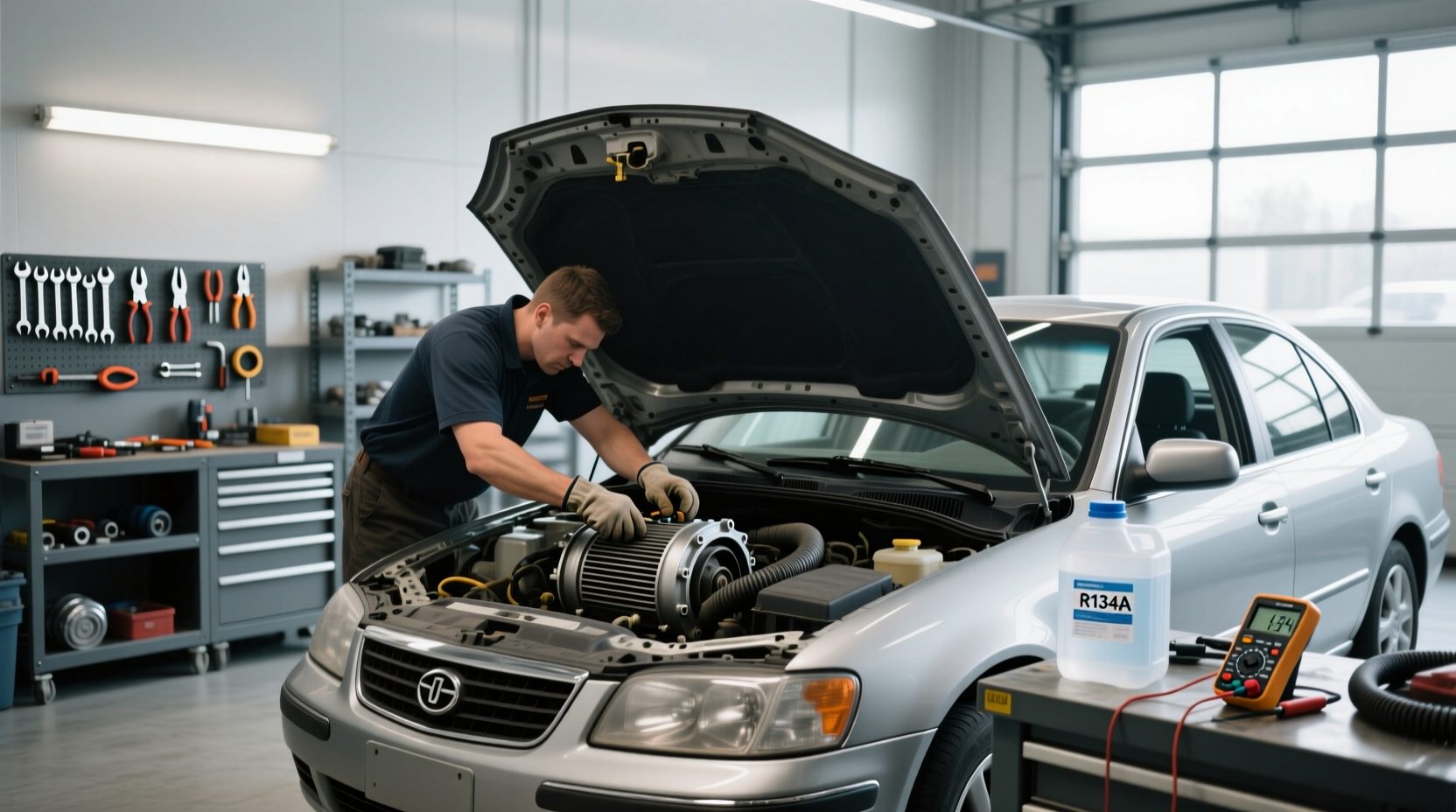
When your car’s air conditioning blows warm air or makes grinding noises, the culprit is often a failing car AC compressor replacement. As the heart of the cooling system, the compressor circulates refrigerant under pressure to remove heat from the cabin. If it fails, comfort drops fast—especially in summer. Replacing it typically costs between $800 and $1,500, with parts ranging from $200 to $700 and labor taking several hours due to system evacuation and vacuuming requirements1. This guide breaks down everything you need to know: signs of failure, cost factors, replacement steps, and whether it’s worth fixing versus selling the vehicle.
What Does a Car AC Compressor Do?
The AC compressor plays a central role in your vehicle's climate control system ⚙️. It pressurizes low-pressure refrigerant gas into a high-pressure, high-temperature state before sending it to the condenser. Once cooled and liquefied, the refrigerant moves through the expansion valve and evaporator, absorbing heat from inside the cabin and releasing it outside.
There are several types of compressors used in modern vehicles:
- Reciprocating compressors: Use pistons to compress refrigerant; common in older models.
- Scroll compressors: Employ a spiral mechanism for smooth operation and higher efficiency. \li> Swash plate compressors: Compact design ideal for front-wheel-drive vehicles.
- Variable displacement compressors: Adjust output based on cooling demand, improving fuel economy.
- Electric compressors: Found in hybrids and EVs, they operate independently of engine speed ✨.
Understanding these types helps when sourcing replacements, especially if upgrading or retrofitting an older model.
Common Signs Your AC Compressor Is Failing
Recognizing early warning signs can prevent further damage to the AC system and reduce repair costs. Here are key indicators 🔍:
1. Warm Air Blowing from Vents
If turning on the A/C delivers lukewarm or hot air instead of cool airflow, the compressor may not be engaging or circulating refrigerant properly. However, this symptom alone isn’t conclusive—it could also indicate low refrigerant levels, a faulty blend door actuator, or electrical issues like a blown fuse.
2. Unusual Noises (Grinding, Squealing, Clicking)
Noise is one of the clearest signals of mechanical trouble. A seized bearing or worn clutch often produces a grinding or growling sound when the compressor engages. A squealing noise might point to a slipping drive belt, while a loud click followed by silence could mean the magnetic clutch isn’t engaging.
3. Visible Leaks or Oil Residue Around the Compressor
Refrigerant oil leaking around the compressor shaft or connections suggests internal seal failure. Look for greasy deposits near hose fittings or the pulley assembly. Since refrigerant carries oil throughout the system, any leak reduces lubrication and increases wear.
4. Compressor Clutch Doesn’t Engage
With the engine running and A/C turned on, observe the center hub of the compressor pulley. If it remains stationary while the outer pulley spins, the clutch isn’t engaging. Causes include low refrigerant pressure (triggering the low-pressure cutoff switch), a failed clutch coil, wiring issue, or blown relay.
5. Tripped Circuit Breaker or Blown Fuse
Electrical faults in the compressor circuit can trip safety mechanisms. Check the fuse box under the hood and consult your owner’s manual for the correct amperage rating. Replacing a blown fuse without diagnosing the root cause may lead to repeated failures.
How Long Do Car AC Compressors Last?
Most compressors last between 10 to 12 years or 150,000 miles under normal driving conditions 🌍. However, lifespan varies significantly based on climate, usage frequency, maintenance, and system cleanliness. In regions with extreme heat—like Arizona or Texas—the AC runs longer each day, increasing stress on components.
Regular use—even during winter months—helps keep seals lubricated and prevents moisture buildup in the system. Contrary to popular belief, using the AC occasionally in cold weather does not harm the engine and can prolong compressor life.
Cost of Replacing a Car AC Compressor
Replacement costs vary widely depending on vehicle make, model, labor rates, and whether additional components need servicing. Below is a breakdown of average expenses across different scenarios:
| Vehicle Type | Average Part Cost | Labor Hours | Total Estimated Cost |
|---|---|---|---|
| Compact Sedan (e.g., Honda Civic) | $250–$400 | 2–3 hrs | $700–$900 |
| SUV (e.g., Toyota Highlander) | $300–$550 | 3–4 hrs | $900–$1,300 |
| Pickup Truck (e.g., Ford F-150) | $350–$600 | 3–4 hrs | $950–$1,400 |
| Import Luxury (e.g., BMW 3 Series) | $500–$800 | 4–5 hrs | $1,200–$1,800 |
These figures assume standard repairs without major complications. Additional charges apply if the system requires flushing due to contamination or if other parts like the condenser or accumulator fail simultaneously.
Factors That Influence Replacement Cost
- Compressor Type: Remanufactured units cost less than new OEM ones but must meet reliability standards.
- Refrigerant Type: Older R-134a systems are cheaper to service than newer R-1234yf models, which require specialized equipment.
- Shop Location: Labor rates range from $80/hour in rural areas to over $150/hour in metropolitan centers.
- Diagnostics Fee: Some shops charge $100+ just to confirm the compressor is faulty.
- System Evacuation & Recharge: Mandatory step costing $100–$200, often overlooked in part-only quotes.
Can You Replace a Car AC Compressor Yourself?
While technically possible, replacing an AC compressor is not recommended for beginners 🔧. The process involves handling refrigerants, which are regulated substances requiring EPA certification to recover and recycle legally in the U.S.2 Additionally, improper installation can introduce moisture or debris into the system, leading to premature failure.
Steps Involved in Professional Replacement
- Recover Refrigerant: Use a recovery machine to extract remaining coolant safely.
- Remove Ancillary Components: Depending on the vehicle, this may include the radiator fan, shroud, or even the condenser.
- Disconnect Lines and Electrical Connector: Cap all openings immediately to prevent contamination.
- Install New Compressor: Torque mounting bolts to specification; some models require pre-filling with oil.
- Replace Receiver/Drier or Accumulator: Always change this component to ensure moisture absorption.
- Evacuate System: Vacuum for at least 30 minutes to remove air and moisture.
- Recharge with Correct Amount of Refrigerant: Follow manufacturer specs precisely.
- Test Operation: Monitor pressures, temperature drop, and clutch engagement.
DIYers who attempt this job without proper tools risk incomplete evacuation, incorrect refrigerant charge, or cross-contamination—all of which shorten system life.
Is It Worth Fixing a Failed AC Compressor?
This decision depends on several factors beyond just cost ❓:
1. Vehicle Age and Mileage
If your car has over 150,000 miles and multiple aging systems (transmission, suspension, etc.), investing $1,200+ in AC repair may not offer good return. However, if the vehicle is otherwise reliable and well-maintained, restoring comfort enhances resale value.
2. Climate and Usage Needs
In desert climates where summer temperatures exceed 100°F, functional AC is essential for safety and comfort. In milder regions, temporary discomfort may justify delaying repair.
3. Trade-In Value Impact
Cars advertised with “AC not working” sell for significantly less. According to industry data, non-functional AC can reduce trade-in value by $500–$1,000 depending on region and vehicle type3.
4. Alternative Cooling Solutions
Tinted windows, sunshades, and ventilated seats help manage heat but don’t replace actual cooling. Driving with windows down increases drag and noise, reducing fuel economy.
Common Misconceptions About AC Compressor Failure
Several myths persist among drivers and even some mechanics:
- Myth: Adding more refrigerant fixes poor cooling. Reality: Overcharging harms performance and risks damaging the compressor.
- Myth: All compressors fail due to age. Reality: Many failures result from lack of use, moisture ingress, or contaminated oil.
- Myth: Any compressor will fit as long as the bolt pattern matches. Reality: Refrigerant type, oil compatibility, and displacement must match original specifications.
- Myth: Replacing only the compressor is enough. Reality: Metal shavings from a failed unit can clog the condenser; flushing or replacement is often needed.
Choosing Between New, Remanufactured, or Used Compressors
When sourcing a replacement, consumers face three main options:
New OEM or Aftermarket
OEM (Original Equipment Manufacturer) compressors offer guaranteed fit and performance but come at a premium price. Aftermarket brands vary in quality—some meet OE standards, others cut corners. Research brand reputation before purchasing.
Remanufactured Units
These are rebuilt using cleaned housings and new internal parts. They undergo testing and typically come with warranties. While cost-effective, quality depends on the rebuild process. Choose suppliers with strong return policies.
Used Parts from Salvage Yards
Lowest upfront cost, but highest risk. There’s no way to verify internal wear or prior damage. Most professionals advise against used compressors unless it’s a short-term fix for a low-value vehicle.
Preventing Future AC Compressor Failures
You can extend compressor life with simple habits:
- Run the AC Monthly, even in winter, to keep seals lubricated.
- Use Recirculation Mode in heavy traffic to reduce load.
- Address Small Issues Early, such as weak airflow or intermittent cooling.
- Have the System Serviced Every 3–5 Years, including inspection of belts, hoses, and refrigerant level.
Regional Differences in Repair Practices
In hotter climates like Florida or Nevada, AC reliability is prioritized during vehicle inspections. Some states include HVAC functionality in safety checks for commercial fleets. Conversely, in colder northern states, minor AC issues may be deferred until warmer months.
Labor rates also differ geographically. Urban repair centers in California or New York charge more than independent shops in the Midwest. Shopping around and getting multiple quotes can save hundreds.
When to Consider Selling Instead of Repairing
If your car is approaching end-of-life and faces other major repairs (engine, transmission), spending over $1,000 on AC may not make financial sense. Evaluate total ownership cost and compare against the value of a newer, more efficient model. For example, upgrading to a hybrid could eliminate future AC compressor concerns altogether, thanks to electric-driven systems.
Final Checklist Before Proceeding With Replacement
Before authorizing work, ask your mechanic:
- Has a full diagnostic been performed, including pressure tests?
- Will the receiver/drier or accumulator be replaced?
- Is system flushing necessary?
- What type and amount of refrigerant will be used?
- Do you provide a warranty on parts and labor?
- Can I see the old part after removal?
Getting clear answers ensures transparency and builds trust in the repair process.
Frequently Asked Questions (FAQ)
- Can I drive my car with a bad AC compressor?
- Yes, in most cases. The compressor is belt-driven, so as long as the pulley spins freely, it won’t affect engine operation. However, if the clutch seizes or the bearing locks up, it can snap the serpentine belt, disabling power steering or alternator function.
- How long does it take to replace a car AC compressor?
- Typically 3 to 5 hours, depending on vehicle complexity. Some models require radiator removal, adding time. Include extra time for system evacuation and recharge.
- Is it okay to replace just the compressor without flushing the system?
- No. If the compressor failed mechanically, metal particles likely contaminated the system. Flushing removes debris, protecting new components. If the condenser can’t be flushed effectively, replacement is required.
- Does a new AC compressor come with oil?
- Some do, but many require adding specified oil during installation. The amount and type (PAG oil, usually) depend on the vehicle and refrigerant. Never reuse old oil.
- Can I buy a compressor online and have a shop install it?
- Yes, many independent shops accept customer-supplied parts. However, they may not warranty the part itself and could charge full labor rates. Confirm policy beforehand.





 浙公网安备
33010002000092号
浙公网安备
33010002000092号 浙B2-20120091-4