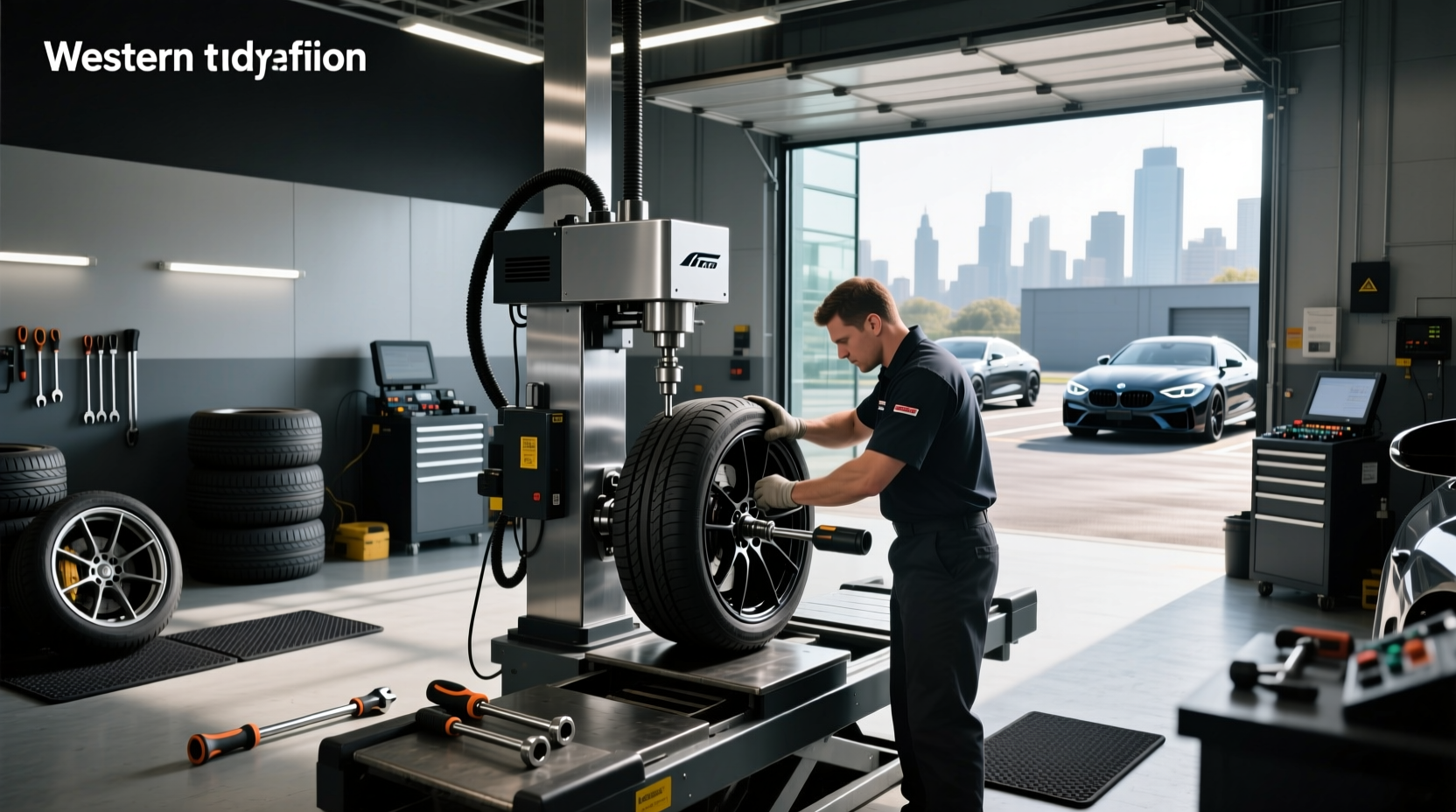
If you're wondering how to change car tyres efficiently and safely, investing in the right car tyre changer can be a game-changer—especially if you maintain multiple vehicles or run a small workshop. A proper tyre changing machine simplifies mounting and demounting tires without damaging rims, improves safety, and saves time compared to manual methods. But with options ranging from under $200 manual tools to $3,000+ fully automatic systems, choosing the right one depends on your vehicle type, frequency of use, available space, and compressed air supply. This guide breaks down everything you need to know about car tyre changers—from technical specs like required PSI and compressor size, to practical considerations such as rim protection features and ease of operation.
What Is a Car Tyre Changer and How Does It Work?
A car tyre changer (also known as a tire mounting machine) is a mechanical device designed to remove and install tyres onto rims safely and efficiently. Unlike hand tools that require significant physical effort and risk scratching wheels, a dedicated tyre changer uses clamps, bead breakers, mounting heads, and turntables to automate much of the process. These machines are standard in professional garages but are increasingly used by serious DIYers and home mechanics who want precision and consistency.
The basic operation involves securing the wheel on a centering cone, breaking the bead (the sealed edge of the tyre against the rim) using a lever or pneumatic arm, unseating one side of the tyre, lifting it over the rim edge with a mounting spoon or bar, rotating the wheel while guiding the second side off, then reversing the steps when installing a new tyre. Advanced models do this with minimal user input thanks to power-assisted arms and tilt-back spindles.
Types of Car Tyre Changers: Manual vs. Semi-Automatic vs. Fully Automatic
Not all tyre changers are created equal. The type you choose directly affects speed, safety, and learning curve. Here’s a breakdown of the three main categories:
🔧 Manual Tyre Changers
These are the most affordable options, typically priced under $500. They rely entirely on human force for bead breaking and tyre mounting. Some include basic assist arms, but users must apply downward pressure during installation.
- Best for: Occasional home use, vintage cars, low budget
- Pros: Low cost, simple design, no air compressor needed
- Cons: Physically demanding, higher risk of rim damage, slower operation
- Example use case: Changing winter tyres twice a year on a personal sedan
⚙️ Semi-Automatic Tyre Changers
This is the sweet spot for many workshops and advanced DIYers. These machines use compressed air to power the bead breaker and mounting head. Once set up, they guide the tyre on and off with minimal manual intervention.
- Best for: Regular maintenance shops, mobile technicians, performance enthusiasts
- Pros: Faster than manual, reduces labor strain, better rim protection
- Cons: Requires a reliable air compressor (typically 80–120 PSI), higher upfront cost ($1,500–$2,500)
- Key feature: Tilt-back spindles allow easier access to tight-fit tyres
🏭 Fully Automatic Tyre Changers
Used in high-volume service centers, these systems perform nearly every step automatically. After loading the wheel, the machine centers it, breaks the bead, removes the old tyre, lubricates the new tyre, mounts it, and inflates it—all with push-button control.
- Best for: Commercial tyre shops, fleet services
- Pros: Maximum efficiency, consistent results, reduced training time
- Cons: Expensive ($3,000+), large footprint, complex maintenance
- Note: Often integrated with balancing machines in combo units
What PSI Do You Need for a Car Tyre Changer?
One of the most frequently asked questions is: “What psi is needed for a tyre machine?” Most semi-automatic and automatic tyre changers require an air supply between 80 and 120 PSI. However, the critical factor isn’t just pressure—it's also air volume, measured in cubic feet per minute (CFM).
A typical industrial tyre changer may demand 15–25 CFM at 90 PSI. If your compressor can't sustain that flow rate, the tool will stall or operate sluggishly. For example, a small 2-gallon portable compressor won’t suffice, even if it reaches 120 PSI. Instead, a minimum 60-gallon tank with a 5–7 HP motor is recommended for continuous use.
| Type of Tyre Changer | Required PSI | Recommended CFM | Air Compressor Suggestion |
|---|---|---|---|
| Manual | None | N/A | Not required |
| Semi-Automatic | 80–120 PSI | 15–25 CFM | 60-gallon, 5+ HP compressor |
| Fully Automatic | 90–120 PSI | 20–30 CFM | Dual-tank system or rotary screw |
How Big of an Air Compressor Do I Need?
The question “How big of an air compressor do I need to run a tyre machine?” has no one-size-fits-all answer. It depends on the changer’s specifications and your usage pattern. For occasional use (e.g., changing four tyres once a month), a 20-gallon compressor with 4 CFM output might work if you allow recovery time between cycles. But for back-to-back jobs, undersized compressors lead to overheating and inconsistent performance.
Always check the manufacturer’s stated CFM requirement and match it with your compressor’s sustained output, not peak. Also, ensure your hoses are at least 3/8-inch diameter and no longer than 25 feet to minimize pressure drop.
Compatibility: What Wheel Sizes Can a Tyre Changer Handle?
Most car tyre changers support rim diameters from 10 to 24 inches, which covers passenger cars, SUVs, and light trucks. However, some heavy-duty models go up to 28 inches for commercial applications. Always verify the machine’s maximum tyre width capacity—usually around 12–14 inches—as wider performance or off-road tyres may exceed standard limits.
Be mindful of low-profile tyres (e.g., 35-series or lower), which have stiffer sidewalls and are harder to mount. Machines with dual-speed motors or enhanced torque help here. Similarly, run-flat tyres and alloy rims require extra care to avoid chipping or cracking.
Rim Protection: Avoiding Damage During Tyre Changes
One major concern among users is rim damage. Even experienced technicians can scratch expensive alloy wheels if the changer lacks proper safeguards. Look for these features:
- Rubber-coated clamps: Prevent metal-on-metal contact
- Swivel-mounted mounting heads: Allow smoother tracking along the rim edge
- Non-marring spoons: Made from composite materials instead of steel
- Tilt-back spindles: Improve clearance for tight-fitting tyres
YouTube tutorials often highlight how improper technique—like forcing the mounting bar—causes more damage than the machine itself1. Proper lubrication of the tyre bead and controlled rotation speed are equally important.
Space and Installation Requirements
Before purchasing, assess your workspace. A typical semi-automatic tyre changer weighs between 200–300 kg (440–660 lbs) and occupies roughly 1m x 1.5m of floor space. Ensure your garage or shop has:
- Level concrete flooring (to prevent tipping)
- Ceiling clearance (some models extend upward when tilting)
- Proximity to a 220V power outlet (for motorized units)
- Access to a compressed air line (or room for a standalone compressor)
Shipping costs can be high due to weight—some vendors charge $400+ for delivery. Check whether assembly is included or if you’ll need tools and technical knowledge to set it up.
Cost Analysis: Are Tyre Changers Worth the Investment?
The question “Are tyre changers worth the cost?” depends on your situation. Let’s break it down:
✅ When It Makes Sense:
- You own multiple vehicles requiring seasonal tyre swaps
- You’re tired of paying $50–$100 per changeover at local shops
- You value precision and want to protect expensive rims
- You offer mobile tyre services or run a side business
❌ When It Might Not Be Worth It:
- You only change tyres once every few years
- You lack storage space or air infrastructure
- You’re uncomfortable with mechanical tasks
- You drive older cars with steel rims and standard tyres
At an average shop cost of $80 per change, a $1,700 machine pays for itself after about 20 wheels—or five full changes on a single vehicle. Add in convenience and time savings, and the value proposition strengthens for frequent users.
Popular Models and Price Ranges in the Market
Based on current listings across Australian suppliers like Supercheap Auto AU, Tufflift, and Joel’s Garage Gear, here’s an overview of available options:
| Model Type | Price Range (AUD) | Key Features | Suitable For |
|---|---|---|---|
| SCA Portable Manual Changer | $160 | Compact, no air needed | DIY beginners, budget users |
| Tufflift Semi-Auto | $1,700 | Tilt-back, 10–24" support | Home workshops, small garages |
| DS-706C3 (Aussie Car Hoist) | $2,400–$2,600 | 1.1kW motor, 218kg weight | Heavy-duty use, SUVs/trucks |
| John Bean Professional Series | $3,000+ | Fully automatic, brand reliability | Commercial tyre shops |
Note: Prices vary based on import duties, shipping, and included accessories. Some sellers offer bundles with balancers, which can improve overall value.
Safety Tips and Best Practices
Using a car tyre changer safely requires more than just following instructions. Follow these best practices:
- Always deflate the tyre completely before starting—never attempt to break the bead on an inflated tyre.
- Use approved tyre lubricant (not dish soap, which can degrade rubber over time).
- Check TPMS sensors before removing the tyre; they can be damaged by mounting tools if not retracted or removed.
- Secure the wheel properly on the centering cone to prevent wobbling during rotation.
- Wear safety glasses—bead explosions, though rare, can cause injury.
Common Misconceptions About Tyre Changers
Several myths persist about tyre changing machines:
- Myth: Any changer can handle all tyre types.
Reality: Run-flats, ultra-low profiles, and reinforced sidewalls may exceed machine capabilities. - Myth: More power means better performance.
Reality: Excessive force increases rim damage risk. Precision matters more than brute strength. - Myth: All automatic machines are plug-and-play.
Reality: Many require calibration, regular maintenance, and skilled operators.
Regional Considerations: Availability and Support in Australia
In Australia, availability of parts and technical support varies by brand. Domestic suppliers like Burson Automotive, Supercheap Auto, and Joel’s Garage Gear offer localized warranties and faster delivery times compared to importing from Alibaba.com. While international platforms may list cheaper units (e.g., $750 on AliExpress), hidden costs like customs fees, missing manuals, or lack of spare parts can make them less economical long-term.
Additionally, voltage standards differ—Australian outlets are 230V, so imported 110V machines require transformers, which add complexity and fire risk.
Maintenance and Longevity
To extend the life of your car tyre changer:
- Lubricate moving parts monthly (pivot points, lift columns)
- Inspect rubber seals and air hoses for cracks
- Replace worn mounting spoons and clamps promptly
- Keep the turntable clean and free of debris
Well-maintained machines can last 10+ years, especially in low-to-moderate use environments.
Alternatives to Full-Sized Tyre Changers
If space or budget is limited, consider:
- Manual tyre levers: Inexpensive but risky for alloys
- Harbor Freight-style attachments: Convert floor jacks into basic changers2
- Portable bead breakers: Help loosen beads before manual removal
These are stopgap solutions and don’t replace a real machine for repeated use.
Conclusion: Making the Right Choice for Your Needs
Selecting a car tyre changer comes down to matching the machine’s capabilities with your actual usage patterns, vehicle types, and workshop setup. Don’t overspend on automation if you only change tyres twice a year. Conversely, don’t skimp on safety and durability if you service clients regularly. Focus on key factors: rim compatibility, air requirements, build quality, and ease of maintenance. With the right research and realistic expectations, a tyre changer can become one of the most valuable tools in your automotive toolkit.
Frequently Asked Questions
- Can I use a car tyre changer on truck tyres?
- Some heavy-duty models support light truck and 4x4 tyres up to 24 inches. Verify the machine’s max tyre width and rim diameter before use. Standard car changers may lack the torque needed for larger, stiffer tyres.
- Do I need special training to operate a tyre changer?
- No formal certification is required, but watching instructional videos and practicing on older wheels helps build confidence. Understanding wheel anatomy and proper lubrication techniques reduces the risk of damage.
- Why does my tyre changer struggle with low-profile tyres?
- Low-profile tyres have stiff sidewalls that resist mounting. Ensure adequate lubrication, correct clamp pressure, and use machines with adjustable speed or tilt-back functionality for better leverage.
- Can I install a tyre changer myself?
- Yes, most units come with assembly instructions. However, due to their weight and electrical requirements, having two people and basic mechanical skills is advisable. Some vendors offer installation services for an additional fee.
- Are imported tyre changers from Alibaba reliable?
- While some users report success, imported machines often lack local warranty support, clear manuals, or compatible voltage. Spare parts may be hard to source, making repairs difficult. Domestic suppliers usually offer better long-term reliability.





 浙公网安备
33010002000092号
浙公网安备
33010002000092号 浙B2-20120091-4