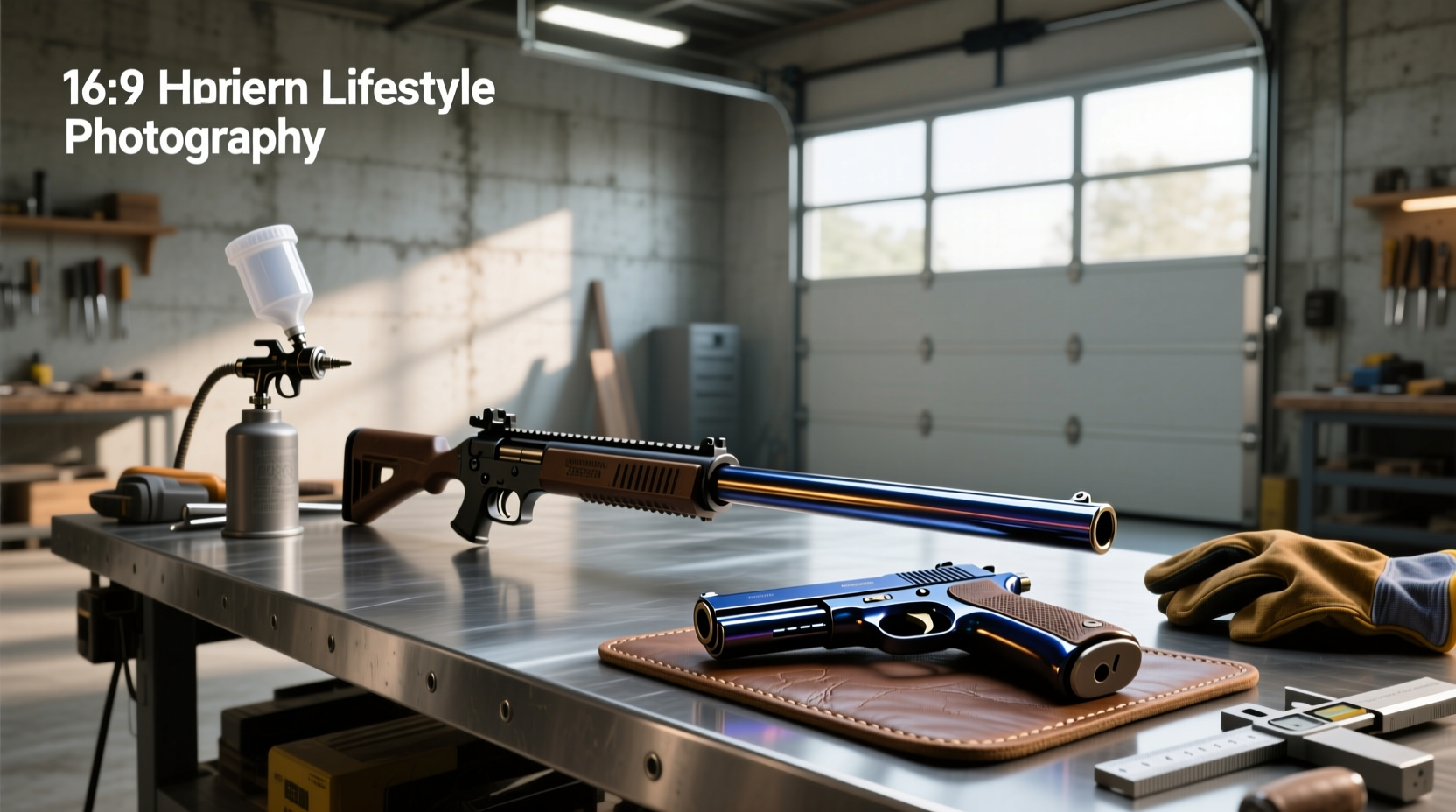
Cerakote ceramic coating is a high-performance, thin-film protective finish engineered to enhance durability, corrosion resistance, and aesthetic appeal across a wide range of materials including metal, plastic, polymer, and wood ✅. Unlike traditional waxes or sealants that sit on the surface, Cerakote chemically bonds at a microscopic level, forming a hard, resilient layer capable of withstanding extreme temperatures, abrasion, and chemical exposure ⚙️. This makes it especially valuable in demanding environments such as automotive engines, firearms, aerospace components, and industrial machinery 🏭.
Developed using advanced ceramic-based technology, Cerakote coatings are available in multiple series—each tailored for specific applications like high heat resistance (V-Series), friction reduction (Micro Slick), UV stability (C-Series), or decorative finishes 🔧. While often compared to alternatives like powder coating or standard paint protection films, Cerakote stands out due to its ability to be precisely applied in thin layers without compromising strength or dimensional accuracy ✨. Whether you're protecting a rifle barrel from rust, enhancing engine component longevity, or adding a custom color finish to wheels, understanding how Cerakote works—and when it’s most effective—is key to making informed decisions about material protection.
What Exactly Is Cerakote?
Cerakote is not a single product but a comprehensive line of ceramic-enhanced coatings manufactured by NIC Industries under the Cerakote® brand name. These coatings utilize a proprietary blend of inorganic ceramic particles suspended in a resin matrix, which cures into an extremely durable film upon application and proper curing 1. The result is a finish that offers superior hardness, thermal stability, and resistance to wear compared to many conventional paints and platings.
The formulation allows Cerakote to adhere strongly to substrates through both mechanical bonding (surface preparation) and chemical interaction during the curing process. Once cured—either via air drying or oven baking depending on the series—the coating becomes inert and highly resistant to solvents, acids, and environmental degradation 🌍. This versatility has led to widespread adoption beyond military and law enforcement sectors into consumer markets such as automotive detailing, motorcycle customization, and even household tools.
Different Types of Cerakote Coatings
Not all Cerakote products are created equal. They are categorized into distinct series based on intended use, cure method, and performance characteristics:
- C-Series: Designed for general-purpose use on metals and some plastics; ideal for automotive parts, handrails, and outdoor equipment. Offers excellent UV resistance and comes in various gloss levels and colors 🎨.
- V-Series: Engineered for extreme heat resistance (up to 1800°F / 982°C), commonly used on exhaust manifolds, turbo housings, and firearm barrels 🔥.
- GL-Series (Glacier): Formulated for cryogenic conditions, useful in aerospace and deep-freeze industrial applications ❄️.
- FX-Series: Decorative coatings with unique visual effects like metallic flakes, hammered textures, or translucent tints—popular for custom builds 👥.
- MS-Series (Micro Slick): Dry-film lubricants that reduce friction in moving parts such as bolts, slides, and internal engine components ⚙️.
Each type requires specific surface prep, application technique, and curing protocols. Choosing the wrong series for your project can lead to premature failure or subpar results.
How Is Cerakote Applied?
Applying Cerakote properly involves several critical steps. Skipping or rushing any phase compromises adhesion and long-term performance. Here’s a breakdown of the standard process:
- Surface Preparation: This is arguably the most crucial step. The substrate must be completely clean, free of oils, rust, old finishes, and contaminants. For metal, this typically involves degreasing with acetone or alcohol, followed by abrasive blasting (e.g., sandblasting or media blasting) to create a profile that enhances mechanical adhesion 🧼.
- Masking: Areas not meant to be coated are carefully masked off using high-temperature tape or plugs to prevent overspray.
- Application: Cerakote is usually sprayed using a high-volume low-pressure (HVLP) spray gun for even distribution. Brush or dip methods may be used for small items, though they yield less consistent thickness control.
- Drying: After application, the part is allowed to flash off (let solvents evaporate) for 5–10 minutes.
- Curing: Most Cerakote formulations require thermal curing in an oven at specified temperatures (typically 250°F–350°F) for one hour. Air-cure versions exist but offer lower durability ⏱️.
DIY kits are available for home users, but professional-grade results generally require controlled workshop conditions, proper ventilation, and calibrated equipment 🛠️.
Can You Apply Cerakote at Home?
Yes, Cerakote can technically be applied at home, especially with starter kits designed for beginners. However, success depends heavily on environment, tools, and skill level 🏠. Without proper masking, temperature control, and curing ovens, the risk of runs, poor adhesion, or uneven coverage increases significantly.
Home applicators often struggle with achieving the same consistency and durability seen in professionally finished pieces. Additionally, safety precautions must be observed: Cerakote emits fumes during spraying and curing that require adequate ventilation or respirator use. Oven curing also demands a dedicated, well-ventilated space away from living areas.
If you lack experience with spray finishing or don’t have access to a suitable workspace, hiring a certified Cerakote applicator may be more cost-effective in the long run. Many shops advertise “Cerakote near me” services and specialize in firearms, wheels, or performance parts 📍.
Benefits of Using Cerakote
Cerakote offers several compelling advantages over traditional finishes:
- Exceptional Durability: Resists chipping, scratching, and fading better than most paints and powder coats.
- High-Temperature Resistance: Certain formulations maintain integrity under sustained heat far exceeding typical operating conditions.
- Chemical & Corrosion Resistance: Protects against salt, moisture, fuels, oils, and cleaning agents.
- Aesthetic Flexibility: Available in hundreds of colors and textures, enabling full customization.
- Thin-Film Advantage: Adds minimal thickness, preserving tight tolerances in precision components.
- Friction Reduction: Micro Slick variants improve movement efficiency in mechanical systems.
These properties make Cerakote particularly attractive for high-stress applications where reliability matters most.
Limits and Disadvantages of Cerakote
Despite its strengths, Cerakote isn't a universal solution. Key drawbacks include:
- Cost: Professional application can range from $50 to over $300 per item depending on complexity and size 💸.
- Labor Intensity: Requires meticulous prep work and precise execution; mistakes are difficult to fix post-cure.
- Curing Requirements: Thermal curing limits usability on heat-sensitive substrates like certain plastics or assembled electronics.
- Scratch Visibility: High-gloss or dark-colored finishes may show fine scratches more readily than matte options.
- Not Self-Healing: Unlike some modern clear bras or ceramic paint protectants, Cerakote cannot repair minor surface marring.
- Warranty Limitations: Performance claims assume correct application; DIY errors void warranty support.
Additionally, while marketed as 'ceramic,' Cerakote is not pure ceramic—it's a composite coating. Consumers sometimes confuse it with silica-based ceramic coatings used in auto detailing, which serve different purposes.
Cerakote vs. Other Coating Technologies
Understanding how Cerakote compares to alternative finishes helps clarify its niche:
| Feature | Cerakote | Traditional Paint | Powder Coating | Silica-Based Ceramic Coating |
|---|---|---|---|---|
| Thickness | Thin film (~0.5–2 mils) | Variable | Thick (~3–10 mils) | Ultra-thin (~0.1–0.3 mils) |
| Heat Resistance | Up to 1800°F (V-Series) | Moderate | Up to 400°F | Limited (~500°F max) |
| UV Resistance | Excellent (C-Series) | Fair to Poor | Good | Very Good |
| Application Method | Spray + Oven Cure | Spray/Brush | Electrostatic + Bake | Hand-applied liquid |
| DIY Feasibility | Moderate (with kit) | High | Low | High |
| Primary Use Case | Functional + Decorative | Decorative | Industrial Protection | Paint Enhancement |
This comparison shows Cerakote occupies a middle ground between heavy-duty industrial coatings and consumer-friendly treatments, excelling where performance outweighs ease of use.
Common Applications Across Industries
Cerakote sees diverse usage across sectors:
- Firearms: One of the earliest adopters; used to protect slides, barrels, and receivers from sweat, dirt, and repeated firing stresses 🔫.
- Automotive: Applied to calipers, suspension components, intake manifolds, and custom trim for both function and style 🚗.
- Aerospace: Used on turbine blades and landing gear components exposed to extreme thermal cycling.
- Military & Tactical Gear: Enhances durability of knives, magazines, and optics mounts in harsh field conditions.
- Consumer Products: Found on flashlights, watches, bike frames, and even kitchen tools for improved grip and corrosion resistance.
The choice of series depends on operational demands. For example, a brake caliper might use C-Series for color retention and chip resistance, while an exhaust header would require V-Series for heat management.
How Long Does Cerakote Last?
Under optimal conditions—with proper surface prep, correct application, and appropriate curing—Cerakote can last 10 years or more without significant degradation ⏳. Manufacturer testing suggests minimal color fade, no delamination, and retained hardness after thousands of hours of accelerated weathering.
However, real-world lifespan varies based on exposure. A firearm stored indoors will outlast one used daily in humid coastal environments. Similarly, engine components subjected to constant thermal cycling may eventually develop micro-cracks over time. Regular inspection and maintenance (like cleaning with non-abrasive agents) help extend service life.
Is Cerakote Worth the Investment?
Whether Cerakote is worth the cost depends on your goals:
- For functional protection: Yes—if you need reliable defense against heat, friction, or corrosion in mission-critical parts.
- For aesthetics only: Possibly overkill; less expensive powder coating or wet paint may suffice.
- For collectible or high-value items: Often justified as added value and preservation measure.
- For temporary or disposable items: Likely not cost-effective.
Consider total ownership cost: factor in labor, prep materials, oven requirements, and potential rework if initial attempts fail. In many cases, paying a professional ensures better ROI than trial-and-error DIY projects.
Where to Buy Cerakote and Find Applicators
Cerakote is sold directly through authorized distributors and the official website (cerakote.com). Individual bottles start around $35, while complete starter kits—including sprayer, gloves, and instruction guides—range from $450 to $1,695 🛒. Bulk pricing is available for commercial users.
To find a qualified applicator, visit the Cerakote website’s "Find an Applicator" tool, which lets you search by location and specialty (e.g., firearms, automotive). Certification doesn’t guarantee quality, so check reviews, request samples, and ask about warranty policies before committing.
Final Considerations Before Choosing Cerakote
Before proceeding with a Cerakote treatment, evaluate these factors:
- Material Compatibility: Confirm the substrate is suitable. Some plastics and composites may not withstand curing temperatures.
- Part Disassembly: Components should be stripped down to bare material; assembled units risk trapped moisture or incomplete coverage.
- Color Matching: Swatches may differ slightly from screen previews; order physical samples when exact match is critical.
- Lead Time: Professional shops often have waitlists, especially for popular finishes like Flat Dark Earth or Tungsten.
- Post-Coat Machining: Cerakote cannot be machined after curing; final dimensions must be set beforehand.
Also, understand that while Cerakote improves surface properties, it does not replace structural integrity. Cracked or weakened parts should be repaired or replaced prior to coating.
Frequently Asked Questions (FAQ)
- Can I apply Cerakote without an oven?
- Some air-cure formulations (like AC-series) exist, but they offer reduced durability compared to oven-cured versions. For maximum performance, thermal curing is strongly recommended.
- Does Cerakote stop rust completely?
- When properly applied, Cerakote creates a near-impermeable barrier that prevents oxygen and moisture from reaching the metal, effectively inhibiting rust formation. However, damage to the coating can expose underlying material.
- How do I clean Cerakote-coated surfaces?
- Use mild soap and water with a soft cloth or sponge. Avoid harsh solvents, abrasive pads, or pressure washing close-up, as these can degrade the finish over time.
- Can Cerakote be removed?
- Yes, but it requires aggressive methods such as sandblasting, chemical strippers, or grinding. It is intentionally difficult to remove once cured.
- Is Cerakote food safe?
- No standard Cerakote formulation is certified for direct food contact. Do not use on cookware, utensils, or food-processing surfaces unless explicitly labeled as compliant with FDA regulations.





 浙公网安备
33010002000092号
浙公网安备
33010002000092号 浙B2-20120091-4