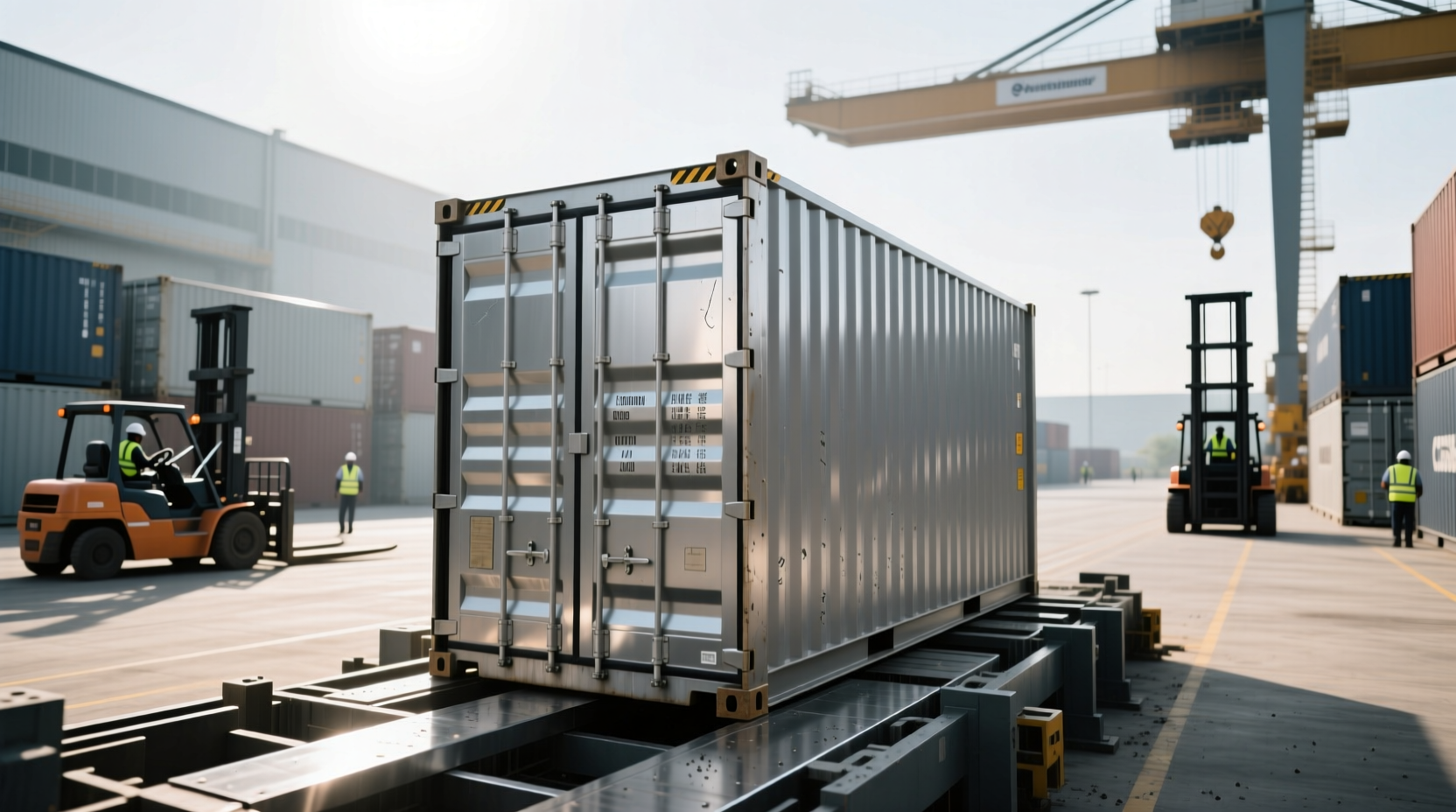
Container corner castings—also known as corner fittings—are standardized steel components located at each of the eight corners of an ISO shipping container. These robust metal fittings are essential for lifting, securing, stacking, and transporting containers safely across ships, trucks, and rail systems. Understanding what container corner casting is, its structural role, and compliance with ISO 1161 standards can help ensure safe handling, prevent damage during transit, and support successful container modifications for storage, housing, or industrial use.
Why Container Corner Castings Are Critical in Global Shipping
Every intermodal shipping container relies on a system of eight corner castings—four on top and four on the bottom—to form a secure, interconnected transport network. These castings allow cranes to lift containers using twist locks, enable them to be stacked up to nine high on cargo vessels, and ensure stability when mounted on chassis or flatbed trailers 🚚. Without properly functioning corner castings, containers cannot be safely moved or secured, posing risks to cargo, infrastructure, and personnel.
The design of corner castings follows international standards defined by the International Organization for Standardization (ISO), specifically ISO 1161:2018, which specifies exact dimensions, strength ratings, hole configurations, and material requirements 1. This global standardization ensures compatibility across ports, transport modes, and equipment worldwide, making it possible to move a container from Shanghai to Rotterdam without mechanical mismatches.
Structure and Design of Corner Castings
A typical container corner casting is forged from high-tensile steel, usually grade Q355B or equivalent, capable of withstanding vertical loads exceeding 15,000 kg per corner under dynamic conditions. The casting features multiple openings:
- Top aperture: Receives crane spreader pins for vertical lifting ⚙️
- Side holes: Accept twist locks for horizontal coupling between containers
- Bottom cavity: Engages with chassis or trailer corner posts for road transport
- Dovetail grooves: Prevent lateral movement during stacking
The precise geometry of these holes ensures that only compatible locking mechanisms engage correctly. Misalignment or deformation—even minor bending—can compromise safety and lead to catastrophic failure during transport.
| Feature | Description |
|---|---|
| Material | High-tensile steel (typically Q355B or ASTM A572) |
| Standard | ISO 1161:2018 |
| Dimensions (approx.) | 220mm x 170mm x 160mm (HxWxD) |
| Weight per unit | ~12–15 kg |
| Lifting capacity (vertical) | Up to 40,000 lbs dynamic load |
| Stacking strength | Rated for 9-high stacks under ISO rules |
| Hole diameters | Top: 185mm; Side: 22mm; Bottom: 185mm |
Common Applications of Corner Castings
While primarily designed for maritime logistics, corner castings have found expanded uses due to their durability and modularity ✨:
1. Intermodal Transport
This is the primary function. At seaports, gantry cranes insert spreader beams into the top corner castings to hoist containers onto ships. On land, semi-trailers use locking mechanisms that connect to the bottom castings to secure containers during highway transport.
2. Multi-Level Stacking
Shipping containers are often stacked vertically on vessels and in storage yards. Upper containers rest directly on the bottom castings of those beneath them. The alignment and integrity of these fittings determine whether the stack remains stable under rough seas or strong winds.
3. Structural Modifications for Buildings
In container architecture—such as homes, offices, or pop-up retail spaces—corner castings serve as anchor points for foundations, lifting during placement, and even structural reinforcement when multiple units are joined. Architects and builders rely on these fittings to position containers accurately and securely.
4. Anchoring and Securing
For permanent installations like on-site storage or modular buildings, corner castings are used with ground anchors or concrete footings to prevent shifting or tipping, especially in high-wind zones.
Finding Replacement Corner Castings: What You Need to Know
If a corner casting becomes cracked, bent, or corroded beyond repair, replacement may be necessary—especially before reuse in active shipping. However, not all replacements are equal 🔧.
When sourcing new or replacement corner castings, verify the following:
- Compliance with ISO 1161: Look for certification markings such as "ISO 1161" or "ABS Approved"
- Orientation: Top vs. bottom, left vs. right—some designs are asymmetrical and must be installed correctly
- Weldability: Ensure the replacement is made from weldable steel and matches the original container’s material grade
- Supplier reputation: Purchase from reputable industrial suppliers specializing in container parts, not generic hardware stores
Replacement sets typically come in packages of eight (for full container reconditioning) and range in price from $40 to over $60 per unit depending on quality and certification level. Some vendors offer pre-welded assemblies for easier installation.
How to Inspect Corner Castings for Damage
Regular inspection is crucial, especially if the container has been dropped, overloaded, or exposed to harsh environments. Here's a practical checklist ❓:
- Visual examination: Check for cracks, dents, or missing sections around the base and internal cavities
- Hole deformation: Use a gauge or pin to test if the top and side holes maintain their circular shape
- Corrosion: Heavy rust inside the socket can weaken structural integrity—clean and treat early signs
- Misalignment: Compare diagonals; if one corner sits higher than the opposite, the frame may be twisted
- Twist lock engagement: Simulate locking with a manual twist lock to ensure smooth insertion and rotation
Any sign of fatigue or distortion means the casting should be replaced before further use in lifting or stacking operations.
DIY and Modification Considerations
Many people modify shipping containers for backyard sheds, studios, or emergency shelters. While this avoids commercial shipping regulations, structural safety still matters.
⚠️ Important note: Removing or welding near corner castings can alter stress distribution and reduce overall strength. If you're cutting near a corner or removing doors/windows close to the casting, consult an engineer familiar with container structures.
Some users install aftermarket accessories like Domino Clamps or bolt-on brackets that attach to the existing corner casting without modification, allowing for easy mounting of solar panels, awnings, or decking supports. These solutions preserve the original structure while expanding functionality.
Common Misconceptions About Corner Castings
Despite their importance, several myths persist among non-industry users:
Misconception 1: “They’re just for lifting”
Reality: While lifting is a key function, corner castings also handle compressive loads during stacking, resist lateral forces during transport, and provide attachment points for securing cargo within multi-container setups.
Misconception 2: “Any metal box at the corner will do”
Reality: Non-standard fittings may look similar but lack certified strength or dimensional accuracy. Using uncertified replacements violates international safety protocols and could void insurance claims after an accident.
Misconception 3: “I can weld anything onto them freely”
Reality: Welding generates heat that can anneal hardened steel, reducing tensile strength. Always follow proper procedures, including pre-heating and post-weld stress relief, and avoid welding directly into load-bearing areas unless done by certified professionals.
Regional Differences and Regulatory Compliance
Although ISO 1161 is globally recognized, enforcement varies. In North America and Europe, regulatory bodies such as the U.S. Department of Transportation (DOT) and European Union Agency for Railways enforce strict adherence to container safety standards. Containers used commercially must pass periodic inspections, including checks on corner casting integrity.
In contrast, some developing regions may accept older or repaired containers with damaged castings for domestic use, where rigorous transport standards aren't enforced. However, exporting such containers later may require costly reconditioning.
If you plan to move your container internationally, ensure all corner castings meet current ISO specifications regardless of local practices.
Can You Use a Container Without Functional Corner Castings?
Yes—but with major limitations ⚠️:
- Not for lifting: Cranes cannot safely pick up a container without intact top castings
- No stacking: Placing another container on top becomes extremely hazardous
- Transport restrictions: Most trucking companies refuse to haul containers with compromised corner fittings
Such containers may still serve as static storage units if placed on level ground and anchored independently. But any future mobility or resale value drops significantly.
Buying Tips: How to Choose the Right Corner Casting
Whether replacing one damaged unit or reconditioning an entire container, consider these factors:
- Certification: Prioritize products labeled ISO 1161 compliant or approved by classification societies like ABS, DNV, or LR
- Origin: Castings from established manufacturers in South Korea, Germany, or the U.S. tend to have tighter quality control than unbranded imports
- Finish: Look for hot-dip galvanized or powder-coated finishes to resist corrosion in coastal or humid climates
- Compatibility: Confirm fitment with your container’s make and model—some specialized containers (e.g., refrigerated or tank models) may have slight variations
Avoid cheap knockoffs sold online without documentation. While tempting, substandard castings pose serious safety risks and may fail under normal operational loads.
Cost and Availability
Individual corner castings typically cost between $40 and $70 each when purchased separately. Full sets of eight range from $300 to $600, depending on brand and certification. Industrial suppliers often sell them in pairs or quads for partial repairs.
Availability is generally good through specialized container part distributors, though lead times may vary based on location and demand. In North America, companies like Conexwest, Tandemloc, and Container Modification World stock ISO-compliant fittings with detailed specs available online.
Installation Best Practices
Replacing a corner casting requires precision welding by a qualified technician. Key steps include:
- Remove damaged casting carefully without weakening surrounding structure
- Clean and prepare mating surfaces thoroughly
- Align new casting exactly using jigs or templates
- Use appropriate welding technique (SMAW or GMAW) with matching electrodes
- Inspect welds via visual or ultrasonic testing
Improper installation can create weak points that fail under stress. Never attempt this repair without proper tools and expertise.
Future Trends in Container Corner Technology
While the basic ISO 1161 design has remained largely unchanged since the 1970s, emerging trends include:
- Smart corner fittings: Embedded sensors to monitor load, tilt, and impact during transit
- Composite materials: Research into lighter, corrosion-resistant alternatives while maintaining strength
- Modular connectors: Quick-swap systems for temporary building applications
However, widespread adoption depends on regulatory approval and industry consensus. For now, traditional steel castings remain the gold standard.
Summary: Key Takeaways
Container corner castings are far more than simple metal brackets—they are engineered safety components vital to global logistics. Whether you're transporting goods, converting a container into a workspace, or simply storing equipment, understanding their role helps you make informed decisions about maintenance, repair, and usage.
Remember:
- There are eight corner castings per container—four top, four bottom
- All must conform to ISO 1161 for safe international transport
- Damaged or missing castings compromise lifting, stacking, and securing capabilities
- Replacements must be certified, properly installed, and matched to orientation
- Even stationary containers benefit from intact castings for anchoring and positioning
Frequently Asked Questions
Below are answers to common questions users have after learning about container corner castings:
- What is another name for container corner casting?
- It is also commonly referred to as a corner fitting or corner block. All three terms describe the same ISO-standardized component used for lifting and connecting shipping containers.
- How many corner castings does a standard shipping container have?
- A standard ISO shipping container has eight corner castings—two at each of the four vertical corners (one on top and one on the bottom).
- Can I replace a broken corner casting myself?
- While technically possible, replacement requires precision welding and knowledge of structural integrity. It's strongly recommended to have it done by a certified container repair professional to ensure safety and compliance.
- Are all container corner castings the same size?
- Yes, all standard ISO containers use corner castings that comply with ISO 1161 specifications, ensuring uniform dimensions and compatibility across global shipping networks.
- Where can I buy replacement corner castings?
- You can purchase them from industrial suppliers specializing in container parts, such as Conexwest, Tandemloc, or Container Modification World. Avoid uncertified sellers offering low-cost alternatives without ISO compliance documentation.





 浙公网安备
33010002000092号
浙公网安备
33010002000092号 浙B2-20120091-4