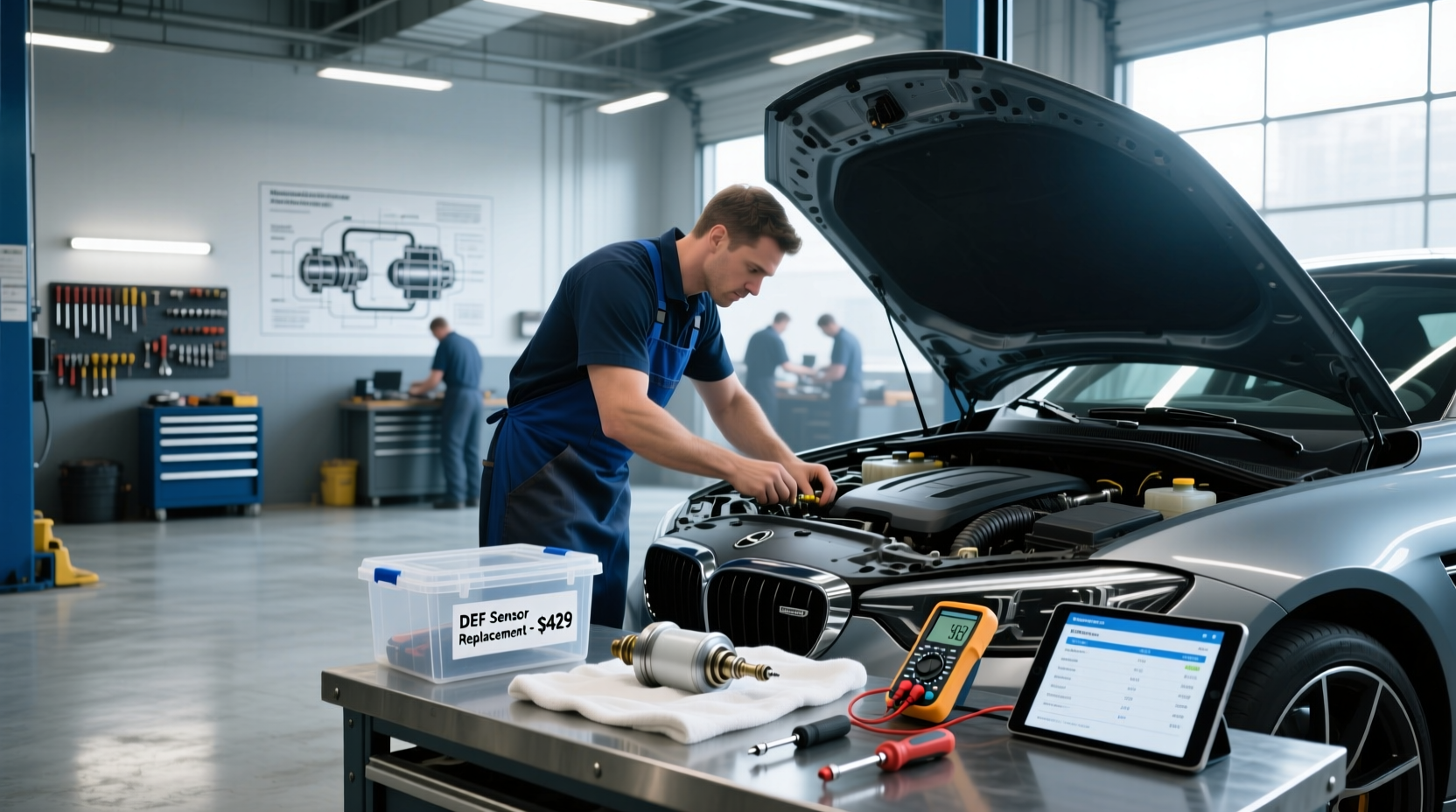
Replacing a diesel exhaust fluid (DEF) sensor typically costs between $250 and $800, with most vehicle owners paying around $400–$600 for parts and labor. This range varies significantly depending on vehicle make, model, engine type, and whether the sensor is part of a combined DEF sending unit that includes level, temperature, and quality monitoring ⚙️1. For heavy-duty trucks or agricultural equipment, costs can exceed $1,000 due to proprietary sensors and complex integration 🔧.
What Is a DEF Sensor and Why It Matters
A DEF sensor is a critical component in modern diesel vehicles equipped with Selective Catalytic Reduction (SCR) systems. Its primary role is to monitor the level, temperature, and sometimes the chemical concentration of diesel exhaust fluid in the DEF tank. When functioning properly, it ensures the SCR system reduces nitrogen oxide (NOx) emissions effectively, helping vehicles meet environmental regulations ✅.
The sensor sends real-time data to the engine control module (ECM), which uses this information to manage dosing accuracy. If the sensor fails or provides inaccurate readings, the vehicle may enter derate mode—reducing engine power—or refuse to restart once turned off ❗. This makes timely diagnosis and repair essential for fleet operators and individual owners alike.
\p>Common Symptoms of a Failing DEF Sensor
Recognizing early warning signs can help prevent costly downtime or compliance issues. Key indicators include:
- Dashboard Warning Lights: The ‘Check Engine’ light or a specific ‘DEF System’ alert appears on the instrument cluster 📌.
- Reduced Engine Performance: Power loss or throttle limitation due to incorrect DEF readings ⚡.
- Inaccurate DEF Level Readings: The gauge shows low fluid when the tank is full, or vice versa 📊.
- Failed Emissions Test: Improper SCR function leads to higher NOx output during inspection 🔍.
- Difficulty Starting: Some models prevent engine startup if DEF quality or level cannot be verified ✈️.
Ignoring these symptoms can lead to immobilization of the vehicle, especially in commercial applications where uptime is crucial 🚚.
Types of DEF Sensors and Their Functions
Not all DEF sensors are created equal. Understanding the differences helps clarify why replacement costs vary so widely.
Single-Function vs. Multi-Sensor Units
Basic DEF level sensors only measure fluid volume using float mechanisms or ultrasonic technology. These are generally less expensive—typically under $150 for the part alone—and easier to replace 🛠️.
In contrast, many modern vehicles use integrated DEF sending units that combine three functions:
- Level Detection: Tracks how much DEF remains in the tank.
- Temperature Monitoring: Ensures fluid doesn’t freeze or degrade in extreme heat.
- Quality/Concentration Sensing: Verifies the urea solution is at the correct 32.5% concentration 2.
These smart sensors often require calibration after installation and communicate digitally with the ECM, increasing both part and labor costs 💼.
Vehicle-Specific Design Differences
Heavy-duty trucks from manufacturers like Freightliner, International, or Kenworth often use proprietary sensors with embedded software protocols. Replacing them may require dealer-level diagnostic tools for programming, adding $100–$200 to service fees ⏱️.
Light-duty diesels such as the Ram 1500 EcoDiesel or Jeep Grand Cherokee CRD use more standardized components, though integration with the chassis control module still demands precision 👥.
| Sensor Type | Average Part Cost | Labor Time | Total Estimated Cost |
|---|---|---|---|
| Basic Level Sensor | $75–$150 | 1–1.5 hours | $200–$350 |
| Integrated Sending Unit | $200–$500 | 2–3 hours | $400–$800 |
| Commercial Truck Sensor (e.g., Cummins ISX) | $400–$900 | 2.5–4 hours | $600–$1,500 |
| OEM vs Aftermarket Option | 30–50% cheaper aftermarket | Same | Save $100–$300 |
Factors That Influence DEF Sensor Replacement Cost
Several variables affect the final price you’ll pay. Being aware of them allows for better budgeting and decision-making.
1. Vehicle Make and Model
Premium brands like Mercedes-Benz, Volvo, and Ford often charge more for OEM parts and specialized diagnostics. For example, replacing a DEF sensor on a 2020 Freightliner Cascadia can cost nearly double that of a similarly equipped RAM truck due to electronic complexity 🌐.
2. Part Availability and Branding
Genuine OEM sensors usually come with higher reliability and warranty coverage but at a premium price. Aftermarket alternatives from reputable suppliers can offer savings of up to 50%, though compatibility must be verified carefully 📋.
3. Labor Rates by Region
Mechanic hourly rates vary widely across the U.S. In rural areas, labor may run $80–$100/hour, while urban centers or dealership networks charge $130–$180/hour. Always request a detailed quote before approving work 📍.
4. Diagnostic Fees
Many shops charge a separate fee ($75–$150) just to read fault codes and confirm the sensor is faulty. However, some credit this toward the total repair cost if work proceeds ✅.
5. Additional Repairs Needed
Sometimes, what appears to be a bad DEF sensor is actually caused by contaminated fluid, frozen lines, or wiring damage. A thorough inspection should rule out these issues first to avoid unnecessary replacements 🧰.
Can You Replace a DEF Sensor Yourself?
DIY replacement is possible for mechanically inclined owners, especially on simpler systems. Here’s what you need to know:
Pros of DIY Replacement
- Cost Savings: Avoid $100–$300 in labor charges 🛒.
- Faster Turnaround: No waiting for shop availability ⏱️.
- Learning Opportunity: Gain insight into your vehicle’s emission system 🔧.
Cons and Risks
- Improper Installation: Leaks or poor electrical connections can trigger new warnings ❌.
- No Calibration Tools: Some sensors require reprogramming using scan tools not available to consumers 💻.
- Voided Warranty: Tampering with emission components may violate warranty terms on newer vehicles ⚖️.
If attempting a DIY fix, ensure you purchase the correct part number, follow manufacturer torque specs, and reset any stored codes using an OBD-II scanner compatible with diesel systems 📎.
How to Diagnose a Bad DEF Sensor Accurately
Before spending money on a new sensor, verify the problem exists. Misdiagnosis is common because DEF-related faults often stem from other causes.
Step-by-Step Diagnosis Process
- Scan for Trouble Codes: Use a capable OBD-II tool to retrieve codes like P2047 (DEF injection malfunction) or P205A (DEF quality issue) 🔍.
- Inspect Wiring and Connectors: Check for corrosion, bent pins, or moisture ingress at the sensor harness 🧼.
- Verify Fluid Quality: Ensure DEF is uncontaminated and meets ISO 22241 standards; impurities can fool the sensor 🧫. \li> Test Voltage and Resistance: Compare readings against factory specifications using a multimeter ⚡.
- Consult Service Manual: Refer to wiring diagrams and test procedures unique to your vehicle model 📝.
In some cases, cleaning the sensor tip with distilled water and allowing it to dry fully resolves intermittent errors—especially if exposure to dust or road grime occurred 🌍.
Is It Safe to Drive With a Faulty DEF Sensor?
Short-term driving may be possible, but long-term operation carries risks:
- Regulatory Compliance: Vehicles may fail emissions inspections or violate Clean Air Act provisions 🔗.
- Engine Derate Risk: After multiple warnings, the ECM may limit speed or prevent restarts ❗.
- Increased Maintenance Costs: Incorrect DEF dosing accelerates catalyst degradation in the SCR system 💸.
For commercial fleets, unplanned downtime can result in missed deliveries and contractual penalties. Prompt attention is strongly advised 🚚.
Ways to Reduce DEF Sensor Replacement Costs
You don’t have to accept the highest quote. Consider these strategies:
- Get Multiple Quotes: Compare prices from independent diesel specialists, dealerships, and mobile mechanics 📈.
- Ask About Aftermarket Options: Confirm compatibility and warranty terms before choosing non-OEM parts ✅.
- Bundled Services: Schedule the replacement alongside other maintenance (e.g., oil change, DPF check) to reduce per-hour labor costs 💼.
- Check Warranty Coverage: Some DEF system components are covered under federal emissions warranties for up to 8 years or 80,000 miles (light-duty) or 85,000 miles (heavy-duty) 3.
- Preventative Maintenance: Regularly inspect connectors and keep the DEF tank sealed to avoid contamination 🧼.
Common Misconceptions About DEF Sensors
Several myths persist about DEF sensors and their replacement:
Myth 1: “All DEF Sensors Are the Same”
Reality: Designs vary by manufacturer, function, and communication protocol. Swapping sensors without verification leads to compatibility issues ❌.
Myth 2: “You Can Use Water or AdBlue Alternatives”
Reality: Non-standard fluids damage sensors and SCR catalysts. Only use API-certified DEF meeting ISO 22241 🌐.
Myth 3: “Cleaning Fixes Everything”
While cleaning can resolve surface contamination, internal electronic failure requires replacement. Don’t delay necessary repairs based on temporary fixes ⚠️.
Regional and Industry-Specific Considerations
Cold climates increase strain on DEF systems since fluid freezes at 12°F (−11°C). Sensors with built-in heaters or advanced thermal monitoring are more common in northern states and Canada, affecting replacement pricing 🔧.
In agriculture and construction, machines like Bobcat loaders or telehandlers use ruggedized DEF sensors designed for vibration resistance. These cost more but last longer in harsh environments 🏭.
Fleet managers should consider bulk purchasing agreements or service contracts to lock in lower labor rates across multiple vehicles 📊.
When to Seek Professional Help
While basic troubleshooting is accessible, certain situations demand expert intervention:
- Presence of multiple related trouble codes
- Need for software recalibration post-replacement
- Uncertainty about wiring integrity or ECM communication
- Operating under strict regulatory oversight (e.g., EPA, CARB)
Professional technicians have access to factory-level tools and technical service bulletins that improve diagnostic accuracy and repair success rates ✅.
Final Thoughts: Balancing Cost, Reliability, and Compliance
The cost of DEF sensor replacement isn’t just about the part—it reflects the complexity of modern diesel emissions systems. While prices range from $250 to over $1,500, understanding your vehicle’s specific needs helps avoid overspending.
Always prioritize accurate diagnosis over quick fixes, explore both OEM and aftermarket solutions responsibly, and maintain records of all repairs for warranty validation. By doing so, you ensure reliable performance, regulatory compliance, and long-term cost efficiency ✨.
Frequently Asked Questions
Can you clean a DEF level sensor instead of replacing it?
Yes, in some cases. If the sensor is coated with residue or minor corrosion, carefully cleaning it with distilled water and letting it air dry may restore function. However, internal electronic failures require replacement 🧼.
How do you reset the DEF sensor after replacement?
After installing a new sensor, use a diesel-capable OBD-II scanner to clear fault codes and, if required, perform a sensor calibration or initialization routine. Some vehicles auto-learn the new component; others need manual input via the scan tool 🔧.
What happens when a DEF sensor goes bad?
A failing DEF sensor can cause incorrect fluid level readings, improper dosing, SCR system inefficiency, warning lights, reduced engine power, or even prevent the engine from starting after shutdown ❗.
Where is the DEF sensor located on most vehicles?
The DEF sensor is typically mounted on or inside the DEF tank, which is usually near the diesel fuel filler or under the hood, depending on the vehicle design. Consult your owner’s manual or service documentation for exact location 📍.
Are aftermarket DEF sensors reliable?
Some aftermarket sensors are well-engineered and carry solid warranties, but quality varies. Verify compatibility with your make/model/year and look for certifications like ISO 22241 compliance. When in doubt, consult a trusted mechanic before installing non-OEM parts ✅.





 浙公网安备
33010002000092号
浙公网安备
33010002000092号 浙B2-20120091-4