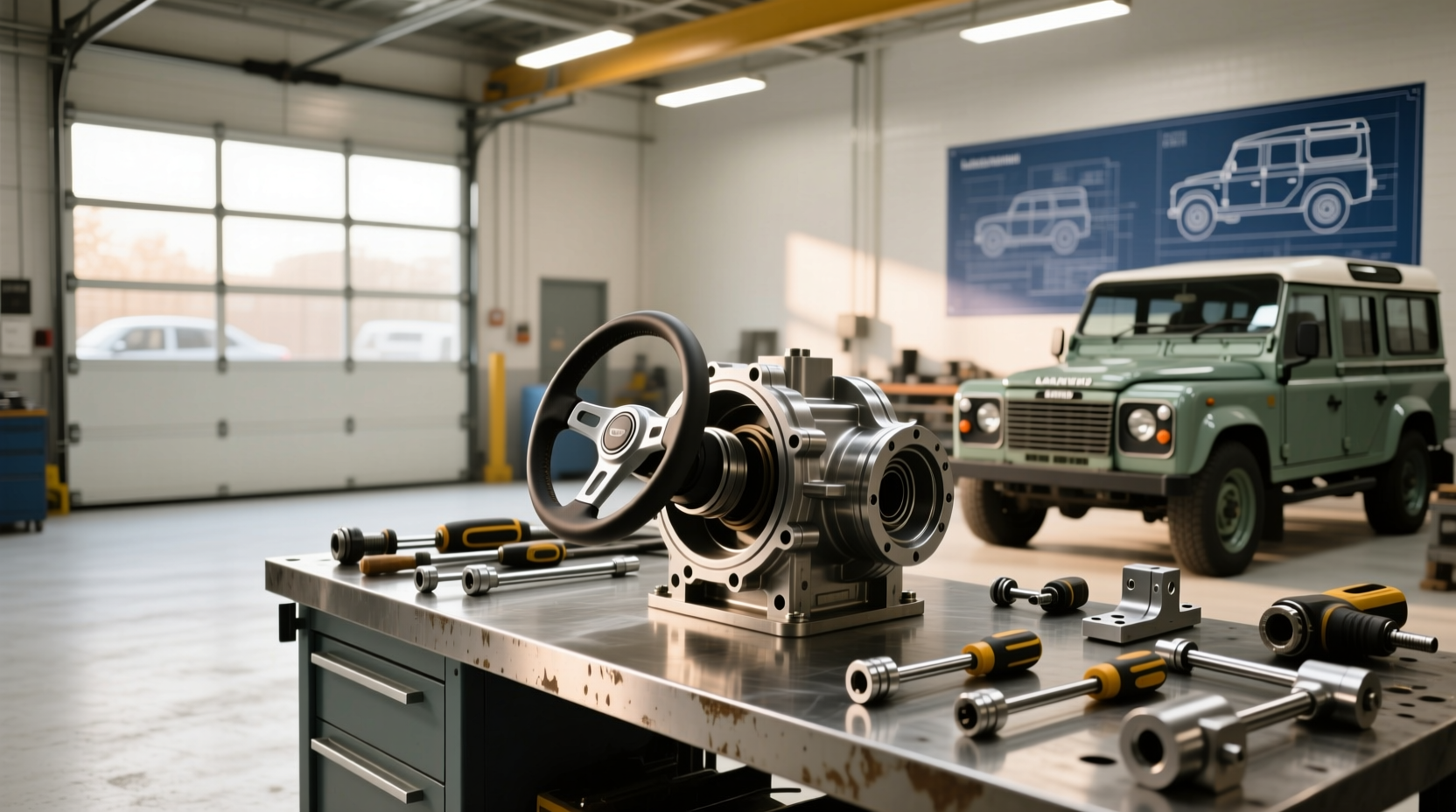
If you're searching for a Land Rover Defender steering box, chances are you're dealing with play in the steering, fluid leaks, or a complete failure that's making your vehicle unsafe to drive. This comprehensive guide breaks down everything you need to know about identifying problems, selecting the right replacement—whether OEM, remanufactured, or upgraded—and installing it correctly without costly mistakes. We’ll cover compatibility across Defender 90, 110, and 130 models from 1983–2016, compare 4-bolt vs. 6-bolt designs, evaluate brands like Adwest, Truwsteer, and Rovers North, and help you avoid common pitfalls when sourcing from online marketplaces.
What Is a Defender Steering Box and Why Does It Matter?
The steering box is a critical component in older Land Rover Defenders, which use a recirculating ball-and-nut design rather than the rack-and-pinion system found on most modern vehicles. Mounted on the chassis frame near the front axle, this mechanical unit converts the rotational input from the steering wheel into lateral movement that turns the wheels via drag links and tie rods ⚙️.
In the Defender’s rugged off-road configuration, the steering box bears immense stress—especially if running larger tires, driving aggressively over rough terrain, or lacking regular maintenance. Over time, internal wear, seal degradation, or pitting on the worm gear can lead to imprecise steering, dangerous free play, or total loss of control ❗.
Because the Defender was produced for over three decades (1983–2016), there are variations in steering box design depending on model year, drive side (LHD/RHD), and whether it’s a Series III-derived early model or later Puma-engine version ✈️. Understanding these differences is essential before purchasing any replacement.
Common Symptoms of a Failing Defender Steering Box
Recognizing early warning signs can prevent breakdowns or accidents. Here are the most frequent indicators:
- Excessive steering wheel play: More than 1–2 inches of movement before the wheels respond indicates internal wear.
- Steering fluid leaks: Reddish fluid pooling near the front crossmember suggests worn seals or gaskets 🧼.
- Clunking or knocking noises when turning, especially at low speeds or over bumps.
- Stiff or inconsistent steering effort, often worsening as the vehicle warms up.
- Wandering or drifting on straight roads, requiring constant correction.
Before replacing the box, rule out other causes such as loose track rod ends, worn panhard rod bushes, or incorrect toe alignment. A thorough inspection of all steering linkages is crucial ✅.
Types of Defender Steering Boxes: 4-Bolt vs. 6-Bolt
One of the first decisions you’ll face is choosing between a 4-bolt and 6-bolt steering box. These refer to the number of mounting bolts securing the unit to the chassis:
| Feature | 4-Bolt Steering Box | 6-Bolt Steering Box |
|---|---|---|
| Production Era | Pre-1998 (mostly) | Post-1998 (Puma models) |
| Model Compatibility | Defender 90/110/130, Discovery 1, RRC | Late-model Defenders (1998–2016) |
| Mounting Pattern | Square pattern with four bolts | Rectangular with six bolts |
| Interchangeability | Not directly interchangeable | Requires chassis mods to swap |
| Availability | Widely available; many repro options | Fewer aftermarket choices |
You cannot simply bolt a 6-bolt box onto a pre-1998 chassis without modification, and vice versa. Some owners retrofit newer boxes for improved reliability, but this requires welding new brackets or using adapter kits 🔧.
OEM vs. Aftermarket vs. Remanufactured: What’s Best?
When replacing your steering box, you have several sourcing options:
OEM (Original Equipment Manufacturer)
Genuine Land Rover units are rare and expensive—often exceeding $2,000. While they offer perfect fitment and factory tolerances, availability is limited since production ended in 2016. Used OEM units may be sourced from salvage yards but carry unknown wear history 📋.
Aftermarket New Units
Brands like Truwsteer, Adwest, and Simmonites manufacture new steering boxes designed to replicate or improve upon the original design. These typically range from $600–$800 and come with warranties. Many include upgrades like needle bearings instead of bushings or improved seal materials ✨.
Adwest, in particular, has a strong reputation among restorers for precision machining and durability. Their 4-bolt boxes are commonly recommended for pre-Puma Defenders 1.
Remanufactured Units
Rebuilt boxes from companies like Advantage Steering or UK-based Steering Specialists Limited are cost-effective alternatives ($400–$700). They disassemble used cores, replace worn internals (worm gear, sector shaft, seals), and reassemble to meet functional specs.
Quality varies significantly based on the rebuilder’s process. Look for units that include updated components and come with a warranty. Avoid no-name remans sold solely on price—they may fail prematurely due to undetected core damage 🔍.
Can You Use a Discovery 2 Steering Box on a Defender?
A frequently asked question in forums is whether a Discovery Series II (1999–2004) steering box can be used on a Defender. The short answer: no, not directly.
While both vehicles share some power steering components, the mounting points, input shaft spline count, and output arm geometry differ. However, some DIYers have adapted Disco 2 boxes by modifying brackets and adjusting linkage lengths—but this introduces alignment risks and isn’t recommended for daily drivers ⚠️.
Additionally, the hydraulic pressure and flow requirements may vary between systems, potentially leading to poor response or pump strain. Stick to Defender-specific units unless you’re undertaking a full steering system redesign with expert guidance.
Chinese-Made Steering Boxes: Quality or Risk?
Many budget-friendly options originate from Chinese manufacturers, often listed on platforms like eBay or AliExpress with prices as low as $190–$250. While tempting, these units carry significant risk:
- Inconsistent metallurgy: Softer gears wear quickly under load.
- Poor seal quality: Early leakage is common.
- Misaligned housings: Can cause binding or premature failure.
- Lack of technical support: No access to rebuild kits or engineering advice.
Some users report success after thorough bench testing and preemptive seal replacement, but others experience failures within months 📊. If opting for a lower-cost unit, consider treating it as a temporary fix or plan to rebuild it immediately upon receipt.
How to Install a Defender Steering Box: Key Steps
Replacing the steering box is a moderate-to-advanced job requiring mechanical skill and proper tools. Below is a step-by-step outline:
- Disconnect battery and relieve pressure from the power steering system.
- Drain power steering fluid and disconnect hoses using line wrenches to avoid rounding fittings.
- Remove the pitman arm from the output shaft. A puller is usually required.
- Unbolt the steering box from the chassis (4 or 6 bolts depending on model).
- Disconnect the steering shaft coupling at the column end.
- Install the new box, aligning it carefully to avoid binding.
- Reattach pitman arm and tighten to spec (typically ~100 ft-lbs).
- Reconnect hoses and refill fluid with correct type (e.g., ATF or specified synthetic).
- Bleed the system thoroughly by turning lock-to-lock with engine off, then running idle.
- Check for leaks and test drive cautiously at low speed initially.
Improper installation—such as overtightening the pitman nut or misaligning the steering coupler—can destroy a new box in minutes ⚡. Always consult a service manual (like the RAVE manual for Land Rover) for torque specs and alignment procedures.
Upgrading Your Steering Box: Is It Worth It?
Standard steering boxes work well when maintained, but some owners seek upgrades for better feel or durability:
- Adjustable preload: Allows fine-tuning of gear mesh to reduce play.
- Nickel-plated internals: Resist corrosion and wear.
- Improved sealing systems: Reduce leak risk in harsh environments.
- Drop-arm integrated designs: Simplify linkage setup.
True upgrades (like those from Adwest or heavy-duty Truwsteer variants) are engineered for longevity, not just bolt-on convenience. However, avoid “quick fix” kits that claim to eliminate play with shims or oversized bearings—they often mask deeper issues and accelerate wear elsewhere in the system.
Where to Buy a Defender Steering Box: Trusted Sources
With so many sellers online, choosing a reliable supplier matters:
- Rovers North: US-based specialist offering Adwest and OEM-spec parts with technical support 🌐.
- Atlantic British: Long-standing importer with curated inventory and restoration expertise 2.
- Legends Global Parts: Sells new Truwsteer units with multi-year warranties.
- Steering Specialists Limited (UK): Leading remanufacturer with global shipping 🚚.
Avoid generic auto parts sites that don’t specialize in Land Rovers. Look for vendors who provide detailed fitment guides, rebuild options, and post-sale support.
Cost Breakdown: How Much Should You Expect to Pay?
Pricing varies widely based on condition and origin:
| Type | Average Price (USD) | Lifespan Estimate |
|---|---|---|
| New Aftermarket (Adwest/Truwsteer) | $600–$800 | 8–15 years |
| Remanufactured (Certified) | $400–$700 | 5–10 years |
| Budget Chinese Unit | $180–$260 | 1–4 years (varies) |
| Genuine OEM (Used) | $300–$600 | Depends on condition |
Factor in labor if having it installed professionally ($300–$600), plus fluid and potential bracket modifications for non-direct swaps.
Final Tips Before You Buy
Before ordering any steering box:
- Confirm your model year and bolt pattern—double-check VIN or chassis stamp.
- Determine drive side (LHD/RHD): Mounting orientation differs.
- Ask about return policies and core charges, especially for remans.
- Verify included components: Does it come with pitman arm, seals, hardware?
- Inspect upon arrival: Check for casting flaws, smooth operation, and packaging integrity.
Never install a steering box without bench-testing its rotation and checking for binding. A small investment in diligence prevents major safety issues down the road.
Frequently Asked Questions
- How do I know if my Defender steering box is bad?
- Look for excessive steering wheel play, fluid leaks, clunking noises when turning, or wandering on straight roads. Perform a dry check by having someone turn the wheel slightly while you inspect for movement at the pitman arm and housing.
- How much does it cost to replace a Defender steering box?
- Parts range from $180 for budget imports to $800 for premium new units. With professional labor, total cost typically falls between $600 and $1,400 depending on location and shop rates.
- Can I rebuild my existing steering box instead of replacing it?
- Yes, many boxes are rebuildable using kits that include seals, bearings, and wear plates. However, if the worm gear is pitted or the housing damaged, replacement is safer. Rebuilding requires precision tools and cleanliness.
- Are electric power steering conversions possible for Defenders?
- Yes, but rare. EPS conversions require custom mounting, ECU integration, and steering column adaptation. Most owners stick with hydraulic systems for simplicity and off-road reliability.
- What fluid should I use in my Defender steering box?
- Most use automatic transmission fluid (ATF Type F or Dexron III), though some prefer synthetic gear oil. Always follow your vehicle manual or component manufacturer’s recommendation.





 浙公网安备
33010002000092号
浙公网安备
33010002000092号 浙B2-20120091-4