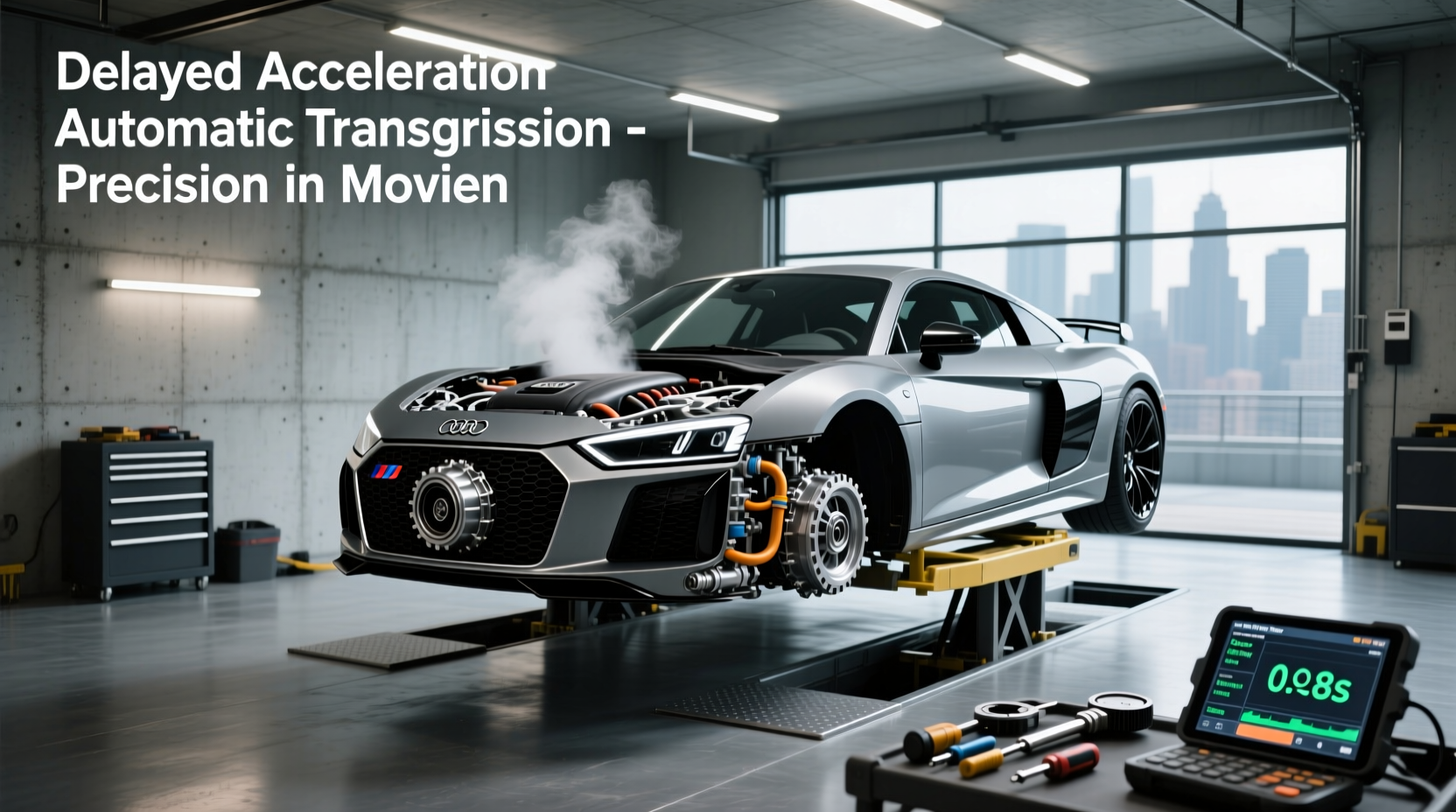
Delayed acceleration in automatic transmission vehicles is a common but concerning issue that often points to underlying mechanical or hydraulic problems. If your car hesitates when you press the gas pedal—especially after shifting into drive or during gear changes—it may be due to low or degraded transmission fluid, a faulty shift solenoid, or even torque converter wear ⚙️. These symptoms are frequently reported in models with adaptive transmission learning systems, where driving patterns influence shift timing 1. Ignoring delayed engagement can lead to increased wear, reduced fuel efficiency, and costly repairs down the line.
What Causes Delayed Acceleration in Automatic Transmissions?
Understanding the root cause of delayed acceleration starts with knowing how an automatic transmission operates. Unlike manual systems, automatics rely on hydraulic pressure, electronic controls, and precise fluid dynamics to engage gears smoothly. When any part of this system fails or degrades, it disrupts the timing and force needed for immediate response. Below are the most frequent culprits behind sluggish performance.
1. Low or Contaminated Transmission Fluid
Transmission fluid serves three critical roles: lubrication, cooling, and hydraulic pressure generation. When fluid levels drop due to leaks or evaporation over time, there isn’t enough volume to build the necessary pressure for prompt gear engagement ⚡.
Additionally, old or dirty fluid loses its viscosity and thermal stability. Oxidation from heat cycles creates sludge, which clogs narrow fluid passages inside the valve body. This restricts flow and delays signal transmission from the transmission control module (TCM) to the solenoids.
🔍 How to check: Use the dipstick (engine running, warmed up, parked on level ground). Look for color and smell. Fresh fluid is bright red and slightly sweet-smelling. Dark brown or black fluid with a burnt odor indicates degradation and needs replacement 2.
2. Faulty Shift Solenoids
Solenoids are electromagnetic valves that regulate fluid flow to different parts of the transmission based on input from sensors and the TCM. A worn or stuck solenoid can delay or block fluid delivery, causing hesitation during upshifts or downshifts.
For example, if the 3-4 shift solenoid is malfunctioning, the transmission might wait longer than normal before engaging fourth gear, especially under light throttle conditions. Some vehicles will set diagnostic trouble codes (DTCs) like P0753 (Shift Solenoid A Electrical), which can be read using an OBD-II scanner.
🔧 Symptoms include:
- Noticeable pause between pressing the accelerator and vehicle response
- Erratic shifting patterns
- Illuminated check engine light
3. Worn Clutches or Bands
Inside the transmission, clutches and bands apply pressure to hold gears in place. Over time, these friction materials wear down, especially if the vehicle has been driven aggressively or with low fluid levels.
Worn components slip more easily, requiring higher RPMs to generate enough grip for movement. This results in a lag between throttle input and actual acceleration. In severe cases, the transmission may fail to engage at all.
🏭 Note: Internal wear usually develops gradually. Drivers often report that the delay worsens over months, particularly in stop-and-go traffic or hilly terrain where frequent shifts occur.
4. Torque Converter Problems
The torque converter connects the engine to the transmission and multiplies torque at low speeds. It contains a lock-up clutch that engages at highway speeds to improve efficiency.
If the torque converter’s internal seals degrade or the lock-up clutch fails, it can cause slippage and delayed power transfer. Symptoms include:
- High engine RPM with little vehicle movement
- Shuddering during takeoff
- Overheating transmission warnings
5. Transmission Control Module (TCM) or Sensor Failures
Modern transmissions depend heavily on electronics. The TCM uses data from various sensors—including vehicle speed, throttle position, and engine load—to determine optimal shift timing.
A faulty sensor sending incorrect data can trick the TCM into delaying shifts. For instance, a failing throttle position sensor (TPS) might report lower throttle input than actual, leading the transmission to upshift too early or hesitate during acceleration.
✅ Troubleshooting tip: Reset the TCM by disconnecting the battery for 15 minutes. This clears learned adaptations and forces a relearn cycle. However, if the problem persists, deeper diagnostics are required.
6. Clogged Transmission Filter
While not always present in newer sealed units, many automatics have a replaceable filter inside the transmission pan. Its job is to trap debris and prevent contaminants from reaching sensitive components.
When the filter becomes clogged—often due to lack of maintenance or previous internal damage—it restricts fluid flow. This leads to poor pressure regulation and delayed engagement, especially when the vehicle is cold.
🧼 Prevention: Replace the filter every 60,000–100,000 miles during fluid changes, depending on manufacturer recommendations and driving conditions.
Driving Conditions That Exacerbate Delayed Shifting
Environmental and behavioral factors can influence how noticeable transmission delays are. Several Reddit users have noted differences based on regional driving habits 3.
Hilly vs. Flat Terrain
Vehicles driven primarily in mountainous areas develop shift maps optimized for climbing and engine braking. When brought to flat highways, they may hold gears longer than expected, creating a perception of sluggishness.
Conversely, cars conditioned to high-speed cruising may struggle with responsive shifting in city environments. Adaptive learning systems adjust over time, but sudden changes in terrain can create temporary mismatches.
Cold Weather Operation
In colder climates, transmission fluid thickens, slowing hydraulic response. Most manufacturers design systems to compensate, but older or poorly maintained transmissions show pronounced delays until operating temperature is reached.
📌 Tip: Allow your vehicle to idle for 30–60 seconds after startup in sub-freezing temperatures. Avoid aggressive acceleration until the transmission warms up.
Stop-and-Go Traffic Impact
Frequent shifting in urban settings increases heat buildup and accelerates fluid breakdown. Combined with marginal fluid levels, this can amplify delay symptoms. Drivers in cities should monitor fluid condition more frequently and consider auxiliary coolers for towing or heavy use.
How to Diagnose Delayed Acceleration at Home
You don’t need specialized tools to identify potential issues. Follow these steps to assess your vehicle’s condition:
- Check Fluid Level and Condition – As mentioned earlier, inspect the dipstick. Top off if low, but avoid overfilling.
- Scan for Error Codes – Use an affordable OBD-II reader ($20–$40) to check for stored codes. Focus on P0700 series (transmission-related).
- Perform a Stall Test (with caution) – With foot firmly on brake, shift into Drive and gently press accelerator to wide open throttle. Note RPM before movement begins. Normal stall speed is 1,800–2,500 RPM; higher readings suggest slippage.
- Observe Shift Pattern Consistency – Drive under consistent conditions (e.g., same route, same temperature) and note whether delays are random or repeatable.
When to Seek Professional Help
While some fixes—like topping off fluid or replacing a solenoid—are manageable for DIYers, internal transmission work requires expertise and proper equipment.
📍 Visit a specialist if you experience:
- Persistent delay despite fluid top-off
- Burning smell or smoke from under the hood
- Complete failure to engage gears
- Fluctuating tachometer readings during steady driving
Can Software Updates Fix Transmission Delays?
In modern vehicles, yes. Many automakers release TCM firmware updates to refine shift logic, improve cold-start behavior, or correct known bugs.
For example, certain Mazda models received recalls for adaptive transmission calibration issues that caused prolonged first-gear holds. Similarly, GM and Ford have issued bulletins addressing harsh or delayed shifts through reprogramming.
🌐 Action step: Contact your local dealership or use your VIN on the NHTSA website (nhtsa.gov/recalls) to check for open service campaigns.
Misconceptions About Delayed Acceleration
Several myths persist about what causes slow shifting. Let’s clarify them:
Misconception 1: “It’s Just How the Car Drives”
While some transmissions are tuned for comfort over responsiveness, a *new* or worsening delay is never normal. Factory settings do not deteriorate without a mechanical or fluid reason.
Misconception 2: “Changing Fluid Fixes Everything”
While fresh fluid helps, it won’t repair worn clutches or broken solenoids. In high-mileage transmissions, a sudden fluid change can dislodge debris and trigger failures. Always assess overall health first.
Misconception 3: “Only High-Mileage Cars Are Affected”
Even new vehicles can suffer from manufacturing defects, software glitches, or improper break-in procedures. Reports exist of delayed engagement in cars under 20,000 miles.
Preventive Maintenance Tips
Proactive care extends transmission life and prevents performance issues:
- Follow Manufacturer Service Intervals – Don’t assume ‘lifetime’ fluid lasts forever. Many require changes by 100,000 miles.
- Install a Transmission Cooler – Especially useful for towing or hot climates.
- Avoid Riding the Brake in Drive – This increases internal pressure and wear during idle.
- Use the Correct Fluid Type – Mismatched fluids (e.g., ATF+4 in a Dexron system) can damage seals and valves.
| Issue | Common Symptoms | Potential Fix |
|---|---|---|
| Low Fluid | Delayed engagement, whining noise | Top off or repair leak |
| Faulty Solenoid | Erratic shifts, CEL on | Replace solenoid pack |
| Worn Clutches | Slipping, high RPM lag | Rebuild or replace |
| TCM Issue | Inconsistent behavior | Reflash or replace |
| Clogged Filter | Slow warm-up response | Clean or replace |
Final Thoughts
Delayed acceleration in automatic transmission vehicles is not something to ignore. While minor delays can stem from simple causes like low fluid, persistent or worsening hesitation signals deeper issues. Early diagnosis and proper maintenance can prevent expensive overhauls and keep your vehicle running smoothly.
Whether you're dealing with a daily commuter or a weekend cruiser, understanding the interplay between fluid, electronics, and mechanical components empowers you to make informed decisions. Pay attention to changes in performance, act promptly, and consult professionals when in doubt.
Frequently Asked Questions
Q: Why does my transmission take so long to go into gear?
A: This is often due to low fluid levels, a clogged filter, or worn internal seals that reduce hydraulic pressure. Cold weather can also temporarily increase engagement time.
Q: Can low transmission fluid cause delayed acceleration?
A: Yes. Low fluid reduces hydraulic pressure needed for timely gear engagement, leading to hesitation and potential overheating.
Q: What does a slow transmission mean?
A: It means the transmission is not responding immediately to throttle input, usually due to fluid, electronic, or mechanical faults within the system.
Q: How to fix slow shifting transmission?
A: Start by checking fluid level and condition. Then scan for error codes. Depending on findings, you may need to replace solenoids, flush the system, or seek professional repair.
Q: Is delayed shifting dangerous?
A: While not immediately hazardous, it can compromise vehicle control during merging or passing. Continued neglect may lead to complete transmission failure.





 浙公网安备
33010002000092号
浙公网安备
33010002000092号 浙B2-20120091-4