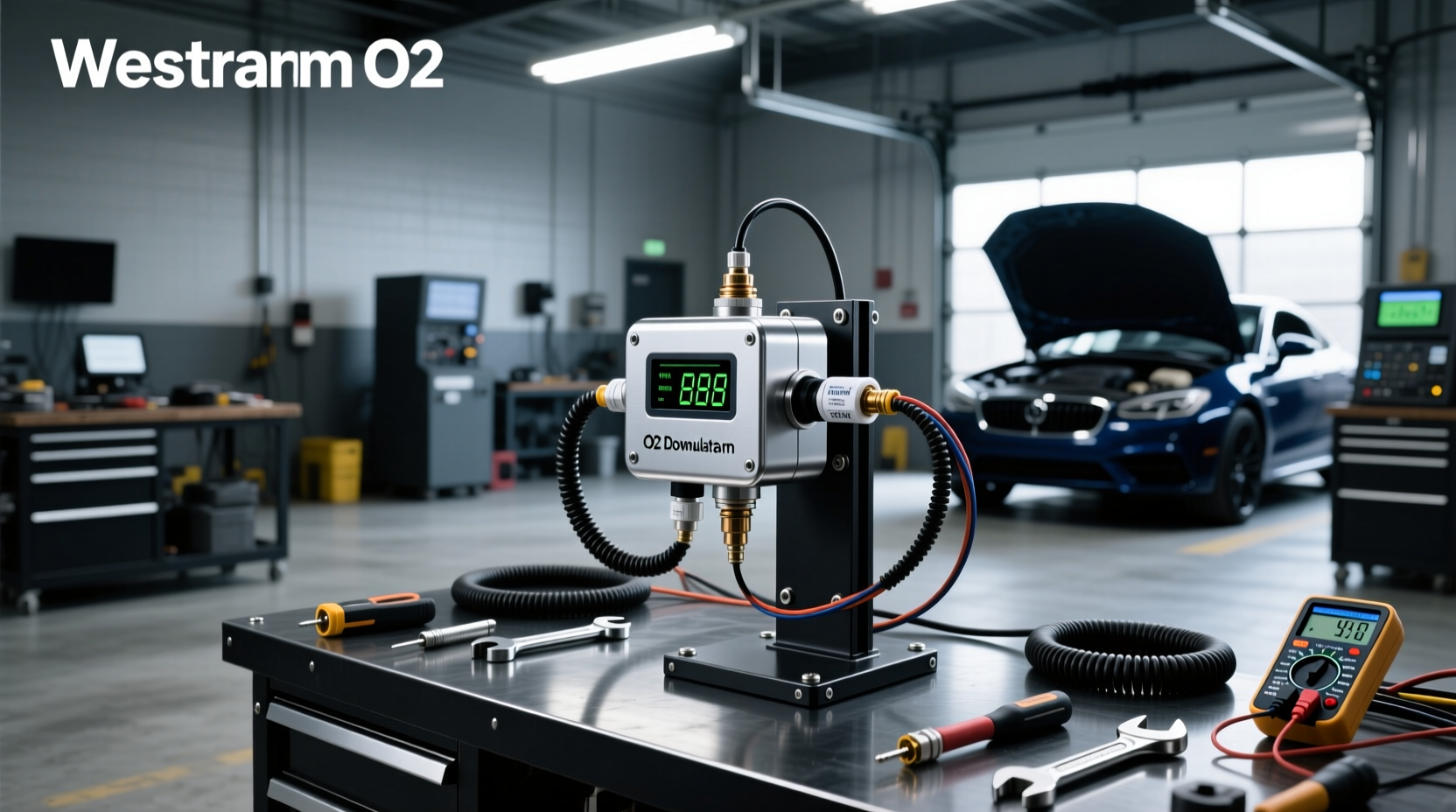
A downstream O2 sensor simulator is an electronic device designed to mimic the signal of a post-catalytic converter oxygen sensor, commonly used to prevent check engine lights after catalytic converter removal or modification. This solution is often explored by vehicle owners dealing with persistent P0420 or P0430 diagnostic trouble codes (DTCs), especially in modified, off-road, or older vehicles where emissions compliance is not required 1. While functional in certain scenarios, its use involves technical, legal, and environmental trade-offs that every user should understand before installation.
Understanding the Role of Oxygen Sensors in Vehicle Emissions
Oxygen sensors, also known as O2 sensors, are critical components in modern fuel-injected engines. They monitor the amount of oxygen in the exhaust stream and provide real-time feedback to the engine control unit (ECU). This data allows the ECU to adjust the air-fuel mixture for optimal combustion efficiency, performance, and emissions control.
Most vehicles manufactured since the mid-1990s feature at least two oxygen sensors:
- Upstream O2 sensor: Located before the catalytic converter, this sensor measures oxygen levels in raw exhaust gases and helps regulate fuel trim.
- Downstream O2 sensor: Positioned after the catalytic converter, its primary function is to monitor the efficiency of the catalyst by comparing oxygen content before and after treatment.
When the downstream sensor detects little variation in oxygen levels—indicating the catalyst is storing oxygen effectively—the ECU interprets this as proper converter operation. If the signal shows excessive fluctuation (similar to the upstream sensor), the system assumes the converter is inefficient, triggering a P0420 or P0430 code.
What Is a Downstream O2 Sensor Simulator?
A downstream O2 sensor simulator replaces the actual post-cat sensor signal with a stable, simulated output that mimics a functioning catalytic converter. Instead of sending dynamic voltage fluctuations (typically between 0.1V and 0.9V), the simulator outputs a steady or oscillating signal within the expected range (e.g., 0.45V average), convincing the ECU that the converter is working normally.
These devices come in several forms:
- Passive resistor-based simulators: Simple circuits using resistors and sometimes capacitors to generate a fixed voltage signal.
- Active signal generators: More advanced units that produce a realistic waveform resembling a healthy downstream sensor.
- Programmable modules: Some allow tuning of output frequency and amplitude for compatibility across different vehicle platforms.
They are typically wired between the ECU harness and the removed or disabled oxygen sensor, acting as a bridge that maintains communication without relying on physical exhaust gas analysis.
Why Do People Use O2 Sensor Simulators?
There are several practical reasons why drivers consider using a secondary O2 sensor simulator, though motivations vary significantly based on vehicle usage and location:
🔧 To Eliminate Persistent Check Engine Lights
One of the most common triggers is the P0420 code (“Catalyst System Efficiency Below Threshold”). Even if the engine runs fine, this code can cause the check engine light to remain on, which may be annoying or fail state emissions inspections in regulated areas.
🚗 After Catalytic Converter Removal
In off-road or racing applications, catalytic converters are often removed to reduce backpressure and increase exhaust flow. Since the downstream sensor will detect no change in oxygen levels without a functioning catalyst, a simulator prevents error codes.
💰 Cost Avoidance
Replacing a failing catalytic converter can cost hundreds or even thousands of dollars. For older vehicles nearing end-of-life, some owners opt for a temporary fix like a simulator instead of investing in expensive repairs.
🛠️ In Custom Exhaust or Engine Builds
Performance enthusiasts modifying their exhaust systems may remove factory emission controls. A simulator ensures the ECU doesn’t throw errors due to missing sensor feedback.
How Does a Dummy O2 Sensor Work?
The term “dummy O2 sensor” is often used interchangeably with “O2 sensor simulator,” though technically, a dummy sensor might refer to a non-functional placeholder, while a simulator actively generates a signal.
Here’s how a basic 4-wire downstream O2 sensor simulator functions:
- Power Supply: Draws power from the sensor circuit (usually heater wires).
- Signal Generation: Uses internal circuitry (resistors, op-amps, or microcontrollers) to create a voltage signal between 0.2V and 0.8V.
- Output Stability: Maintains a moderate oscillation pattern to simulate normal post-converter behavior, avoiding suspicion from the ECU.
- Grounding: Completes the circuit through the vehicle chassis or dedicated ground wire.
Some users build DIY versions using resistors (commonly 100kΩ–1MΩ) connected between the signal and reference lines. However, these passive solutions may not work reliably on all vehicles, particularly those with more sophisticated monitoring algorithms.
Legal and Environmental Considerations
While technically feasible, the use of an O2 sensor simulator for emissions bypass raises important legal and ethical questions.
⚠️ Is It Legal?
In many countries, including the United States under the Clean Air Act, tampering with emissions control systems is illegal for street-driven vehicles. The Environmental Protection Agency (EPA) prohibits:
- Removing or disabling catalytic converters.
- Bypassing or simulating O2 sensors to hide emissions violations.
This applies even if the vehicle passes tailpipe emissions tests. The law targets the integrity of the entire system, not just final output.
📍 Regional Differences Matter
Emissions enforcement varies widely:
- States with strict inspections (e.g., California, New York): Using a simulator could lead to fines, failed registration, or inspection penalties.
- States without mandatory testing: Enforcement is minimal, but federal law still applies.
- Off-road-only vehicles: Modifications are generally permitted if the vehicle is never operated on public roads.
Always verify local regulations before making any changes.
🌍 Environmental Impact
Catalytic converters reduce harmful pollutants such as carbon monoxide (CO), hydrocarbons (HC), and nitrogen oxides (NOx). Disabling them—even with a simulator—increases emissions unless replaced with equally effective alternatives.
DIY vs. Commercial O2 Sensor Simulators
Users have two main paths: building a homemade version or purchasing a pre-made unit.
| Feature | DIY Simulator | Commercial Simulator |
|---|---|---|
| Cost | Low ($1–$10) | Moderate to high ($10–$170) |
| Complexity | Requires soldering & wiring knowledge | Plug-and-play installation |
| Reliability | Varies; may trigger other codes | Generally stable across models |
| Adjustability | Limited | Often tunable output |
| Warranty/Support | None | Sometimes available |
🔧 Building Your Own: What You Need to Know
A simple DIY O2 sensor signal simulator hack involves connecting a resistor between the signal and reference wires of the downstream sensor connector. Common values range from 300kΩ to 1MΩ, depending on the vehicle make and model.
Steps:
- Unplug the downstream O2 sensor.
- Identify signal and reference wires (consult service manual).
- Solder a resistor across these two wires.
- Insulate connections properly.
- Reconnect to ECU harness.
However, success is not guaranteed. Modern ECUs perform rationality checks, such as verifying heater circuit resistance or expecting specific signal patterns. A static signal may be flagged as faulty.
Vehicle Compatibility and Technical Challenges
Not all vehicles respond the same way to simulated signals. Key factors include:
✅ Factory Programming Differences
Manufacturers implement O2 sensor monitoring differently:
- Honda/Acura: Known for aggressive catalyst monitoring; passive simulators often fail.
- Ford: Some models accept basic resistor fixes, others require active simulation.
- Toyota/Lexus: May require precise voltage modulation to avoid secondary diagnostics.
- GM: Varies by year; newer models use wideband sensors that are harder to simulate.
⚙️ Wideband vs. Narrowband Sensors
Most downstream sensors are narrowband (zirconia type), producing a binary-rich/lean signal. These are easier to simulate. However, some modern vehicles use wideband sensors even post-cat, which require complex current-based signaling and are much harder to emulate accurately.
🔍 ECU Learning and Adaptation
Even if a simulator initially works, the ECU may adapt over time and detect inconsistencies. This can result in delayed fault codes or reduced drivability.
Alternatives to Using a Simulator
Before resorting to a simulator, consider these more sustainable options:
🔄 Replace the Catalytic Converter
If the converter is genuinely failing, replacement with an OEM or certified aftermarket unit resolves the root issue and keeps the vehicle legal for road use.
🧪 Clean or Diagnose the Existing System
Sometimes, a P0420 code stems from:
- Fouled spark plugs causing incomplete combustion.
- Oil or coolant contamination in the exhaust.
- Exhaust leaks upstream of the sensor.
- Malfunctioning upstream O2 sensor affecting fuel trims.
A full diagnostic scan can identify whether the problem lies elsewhere.
🛣️ Use an Off-Road-Only Setup
For dedicated track or trail vehicles, removing emissions equipment is acceptable as long as the vehicle remains off public roads. In such cases, a simulator serves a legitimate purpose.
Common Misconceptions About O2 Simulators
Despite growing popularity, several myths persist:
❌ "It Improves Fuel Economy"
No evidence supports improved fuel efficiency from using a simulator. Any perceived gains likely stem from coincidental driving habits or placebo effect.
❌ "It’s Undetectable by Mechanics"
Skilled technicians using advanced scan tools can detect abnormal sensor behavior, missing heater circuits, or implausible data streams.
❌ "All Cars Accept Simple Fixes"
Older vehicles (pre-2000) may tolerate basic resistor tricks. Newer ones with enhanced diagnostics usually reject crude simulations.
Installation Tips and Best Practices
If you decide to proceed with a post-cat O2 sensor simulator, follow these guidelines:
- Verify Wiring First: Use a multimeter to confirm pinout configuration before connecting anything.
- Use Heat-Shrink Tubing: Protect solder joints from moisture and vibration.
- Avoid Grounding Errors: Incorrect grounding can damage the ECU or create false signals.
- Test Before Finalizing: Run the engine and monitor for unexpected codes before sealing the enclosure.
- Label the Modification: Mark the harness or ECU so future owners or mechanics know modifications exist.
Final Thoughts: When Is It Appropriate?
A downstream O2 sensor simulator can serve a practical role in specific contexts—particularly for off-road builds, show cars, or temporary fixes during repair planning. However, it is not a substitute for proper maintenance or emissions compliance on street-driven vehicles.
Before installing one, ask yourself:
- Is my vehicle subject to emissions testing?
- Am I modifying it for off-road use only?
- Have I ruled out simpler causes of the DTC?
- Do I understand the legal risks involved?
Answering these honestly helps ensure responsible decision-making.
Frequently Asked Questions
- Can I pass an emissions test with an O2 sensor simulator?
- It depends on the test method. If only a visual inspection is performed, a simulator may prevent a check engine light. However, if the inspector checks live data or performs a functional test, abnormal sensor readings may be detected. In many jurisdictions, using a simulator itself constitutes a violation regardless of tailpipe results.
- Will a downstream O2 sensor simulator damage my engine?
- No direct engine damage occurs from using a simulator. However, ignoring a real catalytic converter failure can lead to increased exhaust temperatures, poor fuel economy, or damage to other components over time.
- Can I reuse the original O2 sensor with a simulator?
- Yes, some setups allow retaining the original sensor while inserting the simulator into the circuit. Others replace the sensor entirely. Either way, ensure proper electrical isolation and waterproofing.
- Are there wireless O2 sensor simulators?
- True wireless simulators do not exist because the device must interface directly with the ECU’s analog signal lines. Some programmable tuning devices influence O2 sensor interpretation via CAN bus, but they are not standalone simulators.
- Does an O2 sensor simulator work on diesel engines?
- Most diesel vehicles use different emissions systems (e.g., diesel particulate filters, NOx traps). Standard gasoline O2 simulators are generally incompatible. Specialized solutions exist but are rare and application-specific.





 浙公网安备
33010002000092号
浙公网安备
33010002000092号 浙B2-20120091-4