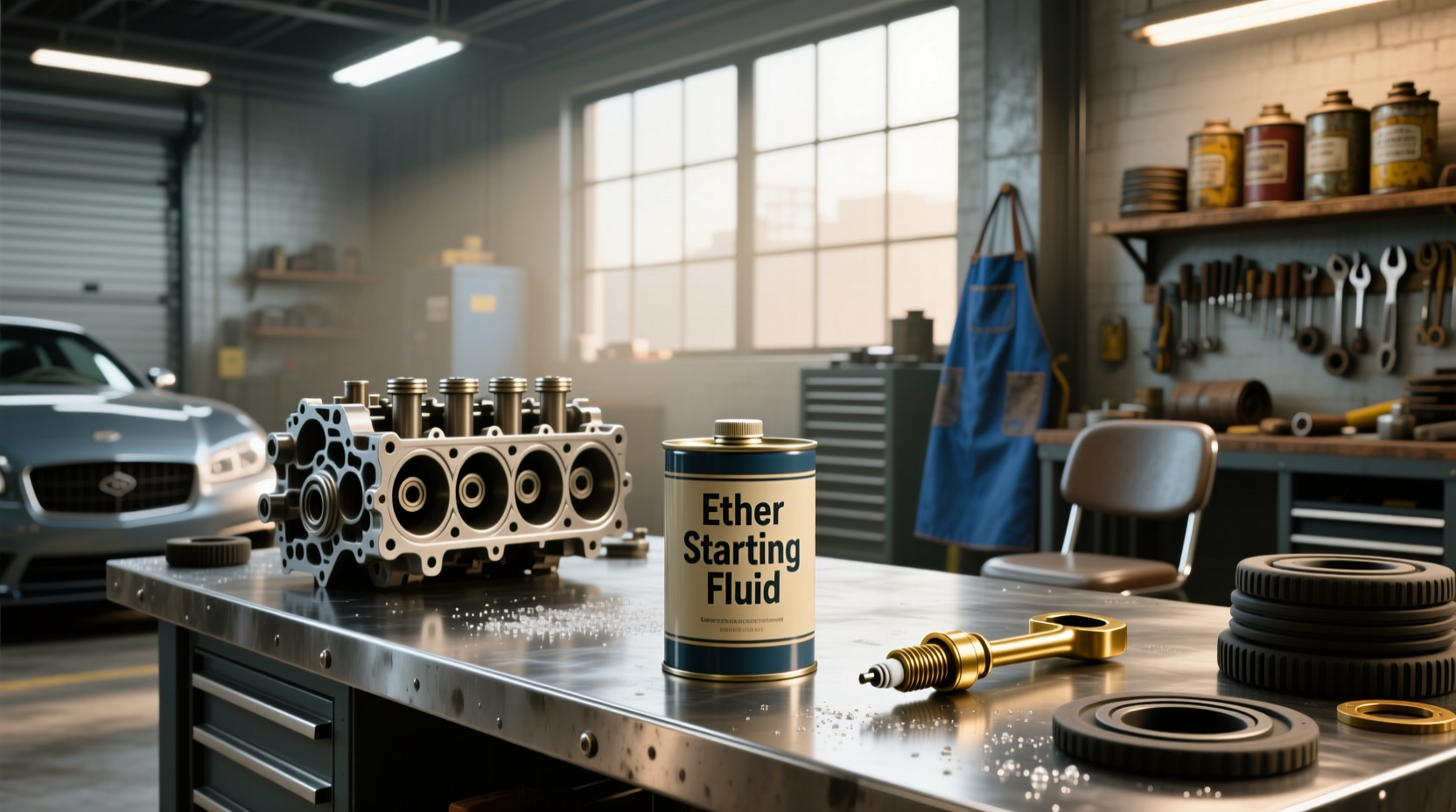
✅ Ether starting fluid can help start hard-to-crank engines in cold weather, but improper use may lead to engine damage. This guide explains exactly how it works, where and when to use it safely, and what risks you should know—especially for gasoline and diesel engines. Whether you're dealing with a lawn mower, classic car, or diesel truck, understanding the role of engine starting fluid spray is key to avoiding costly mistakes.
What Is Ether Starting Fluid and How Does It Work?
🔧 Ether starting fluid, often labeled simply as "starting fluid," is a highly volatile, flammable liquid designed to assist in igniting internal combustion engines during cold starts or when fuel delivery is compromised. The primary active ingredient in most formulations is diethyl ether, which has a very low auto-ignition temperature—meaning it ignites easily even in frigid conditions 1.
This makes it effective for engines that struggle to start due to poor vaporization of fuel at low temperatures. When sprayed into the air intake or carburetor, the ether vapor mixes with air and combusts quickly upon spark plug ignition, helping turn over stubborn engines.
⚙️ Unlike regular gasoline, ether doesn't require extensive atomization to burn efficiently. This characteristic allows it to jump-start engines when normal fuel flow isn't sufficient—such as in older vehicles with worn fuel pumps, clogged injectors, or carburetion issues.
Common Scenarios Where Starting Fluid Helps
📌 Users typically reach for starting fluid in specific situations:
- Cold Weather Starts: Below-freezing temperatures reduce fuel volatility, making it harder for gasoline to vaporize. Ether remains effective down to -40°F (-40°C).
- Fuel System Diagnostics: Mechanics sometimes use ether spray as a diagnostic tool. If an engine starts briefly with ether but won’t run on its own, the issue likely lies in fuel delivery—not ignition or compression.
- Long-Term Storage Vehicles: Cars or equipment stored for months may have degraded fuel or dry cylinders. A quick burst of ether can initiate combustion until fresh fuel circulates.
- Small Engines: Lawnmowers, chainsaws, snowblowers, and outboard motors often benefit from starting fluid when damp or stale-fueled.
Where Do You Spray Starting Fluid? (Step-by-Step)
📍 Proper application matters. Spraying in the wrong location can cause damage or be ineffective. Here's how to apply ether starting fluid correctly based on engine type:
For Gasoline Engines with Carburetors
- 🔸 Remove the air filter cover or disconnect the intake hose.
- 🔸 Locate the carburetor throat (the opening leading to the engine).
- 🔸 Spray 1–3 seconds of starting fluid directly into the intake manifold.
- 🔸 Immediately attempt to start the engine.
For Fuel-Injected Gasoline Engines
⚠️ Caution: These systems are more sensitive. Only use ether if you suspect fuel pump failure or extremely lean conditions.
- 🔸 Disconnect the air intake tube near the throttle body.
- 🔸 Spray a short burst (1–2 seconds) into the intake duct.
- 🔸 Reconnect and try starting.
For Diesel Engines
Diesel engines rely on compression heat to ignite fuel, not spark plugs. Cold cylinders may not reach ignition temperature, especially in winter.
- 🔸 Remove the air cleaner assembly.
- 🔸 Spray ether into the intake while cranking (never pre-spray and wait).
- 🔸 Limit duration to 2 seconds max per attempt.
- 🔸 Stop after 3 unsuccessful tries to avoid hydrolock risk.
❗ Important: Never spray ether into a turbocharger inlet or near electronic sensors. High-pressure sprays can damage delicate components.
Can Starting Fluid Damage an Engine? Key Risks Explained
⚡ While ether starting fluid can be useful, misuse poses real dangers. Let’s break down the main concerns:
1. Pre-Ignition and Detonation
Ether burns faster than gasoline. In high-compression engines (especially performance or turbocharged models), this rapid combustion can cause premature detonation—also known as knocking or pinging. Over time, this stresses pistons, rods, and head gaskets.
2. Oil Wash-Down Effect
When ether enters the combustion chamber without lubricating properties, it can wash away oil film from cylinder walls. This increases metal-to-metal contact during startup, accelerating wear—particularly problematic in two-stroke engines or older designs with marginal oiling.
3. Hydrolock Risk in Diesel Engines
Because ether is a liquid, excessive spraying can flood the cylinder. Since liquids don’t compress, attempting to crank the engine may result in hydrolock—a condition where hydraulic pressure bends connecting rods or cracks engine blocks.
4. Damage to Oxygen Sensors and Catalytic Converters
In modern fuel-injected vehicles, unburned ether residue can pass through the exhaust system and coat oxygen sensors or overheat catalytic converters. This may trigger check engine lights or lead to expensive emissions system repairs.
Is WD-40 a Substitute for Starting Fluid?
❓ Many people ask: Can I use WD-40 instead of starter fluid? The short answer is no—not reliably.
WD-40 is primarily a water-displacing solvent with some light lubricants. While it is flammable, its flash point is much higher than ether, meaning it won’t ignite easily under cold conditions. Additionally, WD-40 leaves behind oily residues that can gum up carburetors or foul spark plugs over time.
✅ True starting fluids contain additives like upper cylinder lubricants and rust inhibitors specifically formulated for repeated safe use. Some premium products even include anti-corrosion agents to protect fuel systems during storage.
Diesel vs. Gasoline: Are There Different Types of Starting Fluid?
📋 Not all starting fluids are created equal. While many brands market universal formulas, there are subtle differences tailored to engine types:
| Feature | Gasoline-Oriented Fluid | Diesel-Oriented Fluid |
|---|---|---|
| Primary Solvent | Diethyl ether | Dimethyl ether or ether blend |
| Ignition Speed | Faster burn | Moderate burn rate |
| Lubricity Additives | Present | Higher concentration |
| Recommended Use | Carbureted or port-injected engines | Direct-injection diesels |
| Risk Level | Moderate (knock-prone) | High (hydrolock potential) |
✨ Tip: Look for labels indicating "safe for diesel" or "lubricated formula." These often contain additional esters or synthetic oils to cushion internal parts during cold cranking.
How Often Should You Use Starting Fluid?
⏱️ Starting fluid should never be part of routine operation. It’s meant for emergency or diagnostic use only. Frequent reliance suggests an underlying problem such as:
- Failing fuel pump
- Clogged fuel filter
- Weak battery affecting injector pulse
- Malfunctioning glow plugs (diesel)
- Thermostat or coolant sensor issues
If your vehicle requires starting fluid regularly, it’s time for professional diagnosis. Continuing to use ether masks deeper mechanical faults and increases long-term wear.
Safety Tips When Handling Ether-Based Products
🛒 Ether is highly flammable and pressurized. Follow these safety practices:
- Store upright in a cool, dry place away from heat sources.
- Use only in well-ventilated areas—fumes are toxic if inhaled excessively.
- Avoid skin contact; prolonged exposure can cause dermatitis.
- Keep away from children and pets.
- Never smoke or use near open flames during application.
- Dispose of empty cans at hazardous waste facilities—do not puncture.
Alternatives to Ether Starting Fluid
🌐 If you're concerned about engine safety or environmental impact, consider these alternatives:
1. Block Heaters (Diesel & Gasoline)
Electric block heaters warm the engine coolant, improving cold starts without chemical aids. Common in northern climates.
2. Battery Warmers
Cold batteries lose cranking power. Insulated blankets or heating pads maintain optimal voltage output.
3. Fuel Additives
Products like dry gas or winter-grade stabilizers lower the freezing point of fuel and improve cold-flow properties.
4. Glow Plug Timers (Diesel)
Upgraded controllers extend pre-heating cycles, ensuring adequate cylinder temperature before cranking.
Debunking Common Myths About Starting Fluid
🔍 Misinformation abounds online. Let’s clarify some widespread myths:
Myth #1: “Engines Get Addicted to Starting Fluid”
❌ Not literally true. However, frequent use often correlates with unresolved mechanical issues, creating dependency—not chemical addiction.
Myth #2: “Any Flammable Spray Will Work”
❌ False. Hairspray, brake cleaner, or propane may ignite but lack proper formulation for controlled combustion and can damage seals or sensors.
Myth #3: “Spray More for Better Results”
❌ Dangerous. Excess fluid raises hydrolock and backfire risks. Always follow product instructions (usually 1–3 seconds).
Myth #4: “It’s Safe for All Engines”
❌ No. Modern direct-injection gasoline engines (GDI) and common-rail diesels are especially vulnerable to damage from ether-based sprays.
When to Avoid Using Starting Fluid Entirely
❗ Despite its convenience, there are clear cases where starting fluid should not be used:
- Newer Vehicles (Post-2000): Sophisticated ECUs, lean-burn strategies, and tight tolerances make them less tolerant of external combustibles.
- Engines with Known Compression Issues: Low compression means weak intake vacuum, reducing ether draw-in effectiveness.
- Turbocharged or Supercharged Engines: Risk of igniting residual oil in intercoolers or blow-off valves, potentially causing explosions.
- Vehicles with Active DPFs (Diesel Particulate Filters): Uncontrolled combustion can overheat filters, leading to melting or regeneration failure.
- After Recent Major Repairs: If rebuilding the engine, use only manufacturer-recommended priming procedures.
Best Practices Summary
✅ To use ether starting fluid safely and effectively:
- Use only as a last resort or diagnostic aid.
- Spray into the air intake or carburetor throat—not the spark plug holes.
- Limited to 1–3 seconds per attempt.
- Attempt starting immediately after spraying.
- Allow 15–30 seconds between attempts to prevent flooding.
- Inspect fuel system if repeated use is needed.
- Wear gloves and eye protection.
Frequently Asked Questions (FAQs)
- Can ether starting fluid damage a gasoline engine?
- Yes, if overused. It can cause pre-ignition, wash down cylinder lubrication, and harm oxygen sensors or catalytic converters in modern vehicles.
- Where should I spray starting fluid on a diesel engine?
- Spray it into the intake manifold after removing the air filter. Never spray directly into the glow plug chamber or turbo inlet.
- Is starting fluid the same as carb cleaner?
- No. Carb cleaner is designed to dissolve deposits and is not intended for combustion assistance. It lacks the volatility and safety additives of true starting fluid.
- Can I make my own starting fluid?
- No. Homemade mixtures are unsafe and unpredictable. Commercial products are precisely formulated for balanced performance and minimal risk.
- How long does starting fluid remain effective?
- Unopened cans last 3–5 years. Once opened, shelf life drops due to propellant leakage. Check for weak spray or separation before use.





 浙公网安备
33010002000092号
浙公网安备
33010002000092号 浙B2-20120091-4