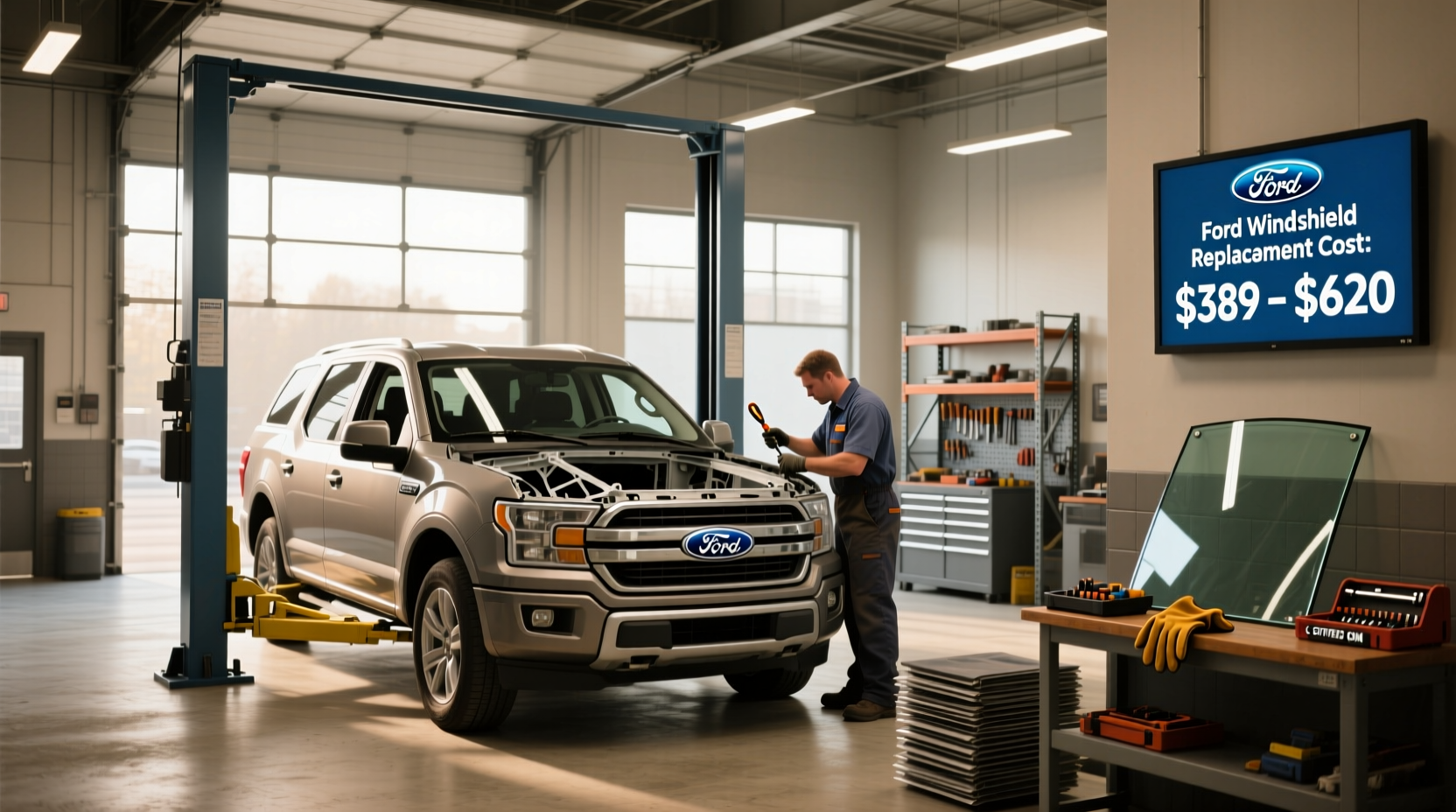
Ford windshield replacement cost typically ranges from $190 to $850, depending on vehicle model, glass type, location, and whether advanced driver assistance systems (ADAS) require recalibration. For example, a 2019–2024 Ford Edge windshield replacement can cost between $330 and $550 for OEM glass with installation, while models with rain sensors or heads-up displays may exceed $700 due to added calibration needs 📊. Understanding these variables helps avoid overpaying and ensures safe, proper installation ✅.
Why Ford Windshield Replacement Costs Vary
The total cost of replacing a Ford windshield isn’t fixed—it changes based on several interrelated factors. Unlike basic auto parts, windshields are structural components that affect safety, aerodynamics, and sensor functionality. This complexity leads to wide pricing variation across regions and service providers.
Vehicle Model and Year Impact Final Price
Different Ford models use distinct windshield designs. The Ford F-150, Explorer, and Edge each have unique curvature, thickness, and mounting specifications. Newer models (2018 and later) often include features like embedded antennas, rain-sensing wipers, or camera mounts for adaptive cruise control ⚙️. These integrations increase part cost and labor time.
For instance, a 2015 Ford Edge without ADAS might need a windshield priced around $260, whereas a 2022 Edge with lane-keeping assist could require a $400+ OEM unit plus $150 in calibration fees 🔧.
OEM vs Aftermarket vs Recycled Glass: What’s the Difference?
Three main types of replacement glass exist:
- OEM (Original Equipment Manufacturer): Made by the same supplier as your original windshield (e.g., AGC, Fuyao). Matches factory specs exactly but costs more—typically $300–$600 per unit.
- Aftermarket: Produced by third-party manufacturers. Often fits well but may differ slightly in tint, thickness, or sensor placement. Prices range from $150–$350.
- Recycled/Used Glass: Salvaged from junkyard vehicles. Can be as low as $100–$200 but carries risks: potential micro-cracks, outdated coatings, or missing compatibility with modern electronics.
While recycled options appear economical, they’re not recommended for vehicles with ADAS because precise optical alignment is critical ❗.
| Glass Type | Average Cost | Pros | Cons |
|---|---|---|---|
| OEM | $300–$600 | Precise fit, full ADAS support, warranty included | Higher upfront cost |
| Aftermarket | $150–$350 | Budget-friendly, widely available | Potential fit issues, limited calibration support |
| Recycled | $100–$250 | Lowest price, eco-friendly option | Risk of defects, no warranty, unsafe for ADAS |
Labor and Installation Fees
Labor accounts for 30–50% of total replacement cost. Most shops charge $100–$200 for removal and installation. The process involves cutting urethane seals, prepping the frame, applying new adhesive, and setting cure time ⏱️. Rush services may reduce downtime but increase labor rates.
Improper installation can lead to leaks, noise, or even windshield ejection during rollover accidents. Certified technicians follow OEM procedures, including using correct primers and curing agents ✨.
ADAS Calibration: A Hidden Cost Many Overlook
If your Ford has features like lane departure warning, automatic emergency braking, or adaptive cruise control, the forward-facing camera mounted behind the windshield must be recalibrated after replacement ⚡. This step ensures sensors read road markings and distances accurately.
Calibration adds $100–$300 to the bill and requires specialized software and equipment. Some mobile services offer this on-site; others require dealership-level tools 🌐. Skipping calibration compromises safety and may void warranties.
Regional Differences in Pricing
Where you live significantly affects cost. Urban areas like New York or Los Angeles often have higher labor rates than rural locations. States with strict emissions or safety inspections (e.g., California, Massachusetts) may mandate certified installers, limiting competition and raising prices.
Data shows average replacement costs by region:
- West Coast: $400–$750
- Midwest: $300–$550
- Southeast: $280–$500
- Northeast: $380–$700
Shipping costs also influence glass pricing, especially for less common models or newer generations where inventory is limited 🚚.
Dealer vs Independent Installer: Which Is Better?
Many owners wonder whether to go through a Ford dealership or an independent auto glass shop.
Dealership Advantages
- Access to OEM-only parts directly from Ford supply chain 🏭
- Technicians trained specifically on Ford systems
- Seamless integration with scheduled maintenance records
- Warranty honored under factory coverage if within term
Independent Shop Benefits
- Lower overhead = competitive pricing 💬
- Faster appointment availability
- Mobile service options (they come to you) 📍
- Broad experience across multiple brands
However, not all independents handle ADAS calibration. Always ask: “Do you perform dynamic or static ADAS recalibration?” If they hesitate, consider another provider ❓.
Insurance Coverage: Will Your Policy Pay?
Comprehensive insurance typically covers windshield replacement with little or no deductible. Some states (like Florida, Kentucky, South Carolina) require insurers to waive deductibles for glass claims—a policy known as “full glass coverage” 1.
To file a claim:
- Contact your insurer to confirm coverage details.
- Choose an approved repair network or submit an out-of-network invoice.
- Provide photos of damage and estimate.
- Schedule service once authorization is received.
Using insurance avoids out-of-pocket expenses and preserves OEM-quality repairs. However, frequent claims could impact premiums long-term.
When Repair Is an Option Instead of Replacement
Not every crack requires full replacement. According to National Windshield Repair Association guidelines, chips smaller than a dollar bill (about 1 inch) and cracks under 6 inches may qualify for repair 🔍.
Repair involves injecting resin into the damaged area to prevent spreading. It costs $50–$100 and takes 30 minutes. While it doesn’t remove the blemish completely, it restores structural integrity and clarity.
Repair is ideal when:
- The damage is central and not obstructing vision
- No moisture or debris inside the laminate layer
- It’s not near the edge (within 2 inches)
- Your vehicle lacks HUD or camera systems sensitive to distortions
Delaying repair beyond 2 weeks increases risk of contamination and spread, making replacement necessary later ❗.
How to Get an Accurate Estimate
To compare quotes fairly:
- Identify your exact model year and trim. Features matter—check if your car has rain-sensing wipers or a heads-up display.
- Get written estimates that break down:
– Glass type (OEM/aftermarket)
– Labor cost
– ADAS calibration fee (if applicable)
– Warranty terms - Vet the installer: Ask about certifications (e.g., AGRSS), years in business, and customer reviews.
- Check warranty length: Reputable companies offer 1-year leak-free guarantees at minimum.
Avoid shops offering “too good to be true” deals under $200 for late-model Fords—corners are likely being cut.
Common Misconceptions About Windshield Replacement
Several myths persist that mislead consumers:
- Myth: All windshields are the same. Reality: Optical clarity, UV protection, and acoustic dampening vary significantly between OEM and budget glass.
- Myth: You can drive immediately after installation. Reality: Adhesive needs 1–3 hours of cure time before safe driving. Manufacturers recommend waiting at least one hour ⏱️.
- Myth: Insurance will raise rates after one glass claim. Most insurers treat glass claims separately from accident claims and won’t penalize drivers for them.
- Myth: DIY kits save money. Improper installation risks water intrusion, wind noise, and airbag malfunction in collisions.
Steps to Take Before Scheduling Replacement
Prepare your vehicle and documentation ahead of time:
- Clean interior dash and cowl area to prevent dust from entering during removal.
- Remove toll tags, dashcams, or phone mounts attached to windshield.
- Verify registration and insurance documents for claims processing.
- Park in a covered or indoor space the night before to keep the area dry.
- Clear snow or ice in winter months to allow proper adhesion.
What to Expect During Service
A professional replacement follows a standardized procedure:
- Protection Setup: Technicians cover hood, fenders, and interior with protective films.
- Trim & Molding Removal: Carefully detach exterior moldings and interior header panel.
- Old Glass Removal: Cut urethane bead using specialized tools without damaging pinch weld.
- Frame Prep: Clean old adhesive, apply anti-corrosion primer, and inspect for rust.
- New Glass Installation: Position windshield with precision, press into place, and secure with temporary clamps.
- Sealant Application: Apply OEM-specified urethane adhesive with consistent bead width.
- Cure Time: Allow 60–90 minutes for initial bond formation before releasing clamps.
- Reassembly: Reinstall trim, reconnect electronics, test wiper operation.
- ADAS Calibration: Perform static (in-shop) or dynamic (road test) recalibration if needed.
Total time: 2–3 hours, depending on complexity.
Post-Replacement Care Tips
After installation, follow these best practices:
- Wait at least one hour before driving.
- Avoid automatic car washes for 48 hours.
- Leave windows slightly cracked open for 24 hours to equalize pressure.
- Don’t remove retention tape for at least 48 hours.
- Monitor for leaks, whistling sounds, or loose moldings.
Long-Term Value Considerations
Choosing cheaper glass may seem cost-effective now but can lead to higher expenses later. Poorly fitting windshields contribute to:
- Increase in cabin noise
- Reduced rollover protection
- Misaligned sensors causing false alerts
- Water leaks damaging airbags or electrical modules
Investing in quality installation pays off in safety, comfort, and resale value.
Summary: Key Takeaways
Replacing a Ford windshield involves more than just swapping glass. Total cost depends on model-specific design, ADAS requirements, geographic location, and installer expertise. Typical costs range from $190 to $850, with most mid-range Fords falling between $350 and $500. OEM glass with proper ADAS calibration offers the safest, longest-lasting solution—even if it costs more upfront.
Always get itemized quotes, verify technician qualifications, and understand warranty coverage before proceeding. When in doubt, prioritize safety over savings.
Frequently Asked Questions
How much does it cost to replace a windshield on a Ford F-150?
Replacement costs for a Ford F-150 typically range from $300 to $600, depending on cab configuration, trim level, and whether the model includes advanced safety features requiring calibration.
Can I replace my Ford windshield myself?
While DIY kits exist, improper installation risks leaks, noise, and compromised safety. Given the windshield's role in structural integrity and airbag deployment, professional installation is strongly recommended.
Does Ford warranty cover windshield replacement?
Standard bumper-to-bumper warranties don’t cover accidental damage. However, if a defect exists in materials or workmanship (e.g., delamination, faulty heating elements), it may be covered under Ford’s limited glass warranty for up to three years.
How long does it take to replace a Ford windshield?
Most replacements take 2 to 3 hours, including removal, installation, adhesive curing, and ADAS recalibration. Plan for a half-day commitment to ensure safe completion.
Is it cheaper to repair or replace a cracked windshield?
Repair is significantly cheaper ($50–$100) and effective for small chips or short cracks. However, larger damage or edge fractures require replacement, which costs $300–$850 depending on vehicle and glass type.





 浙公网安备
33010002000092号
浙公网安备
33010002000092号 浙B2-20120091-4