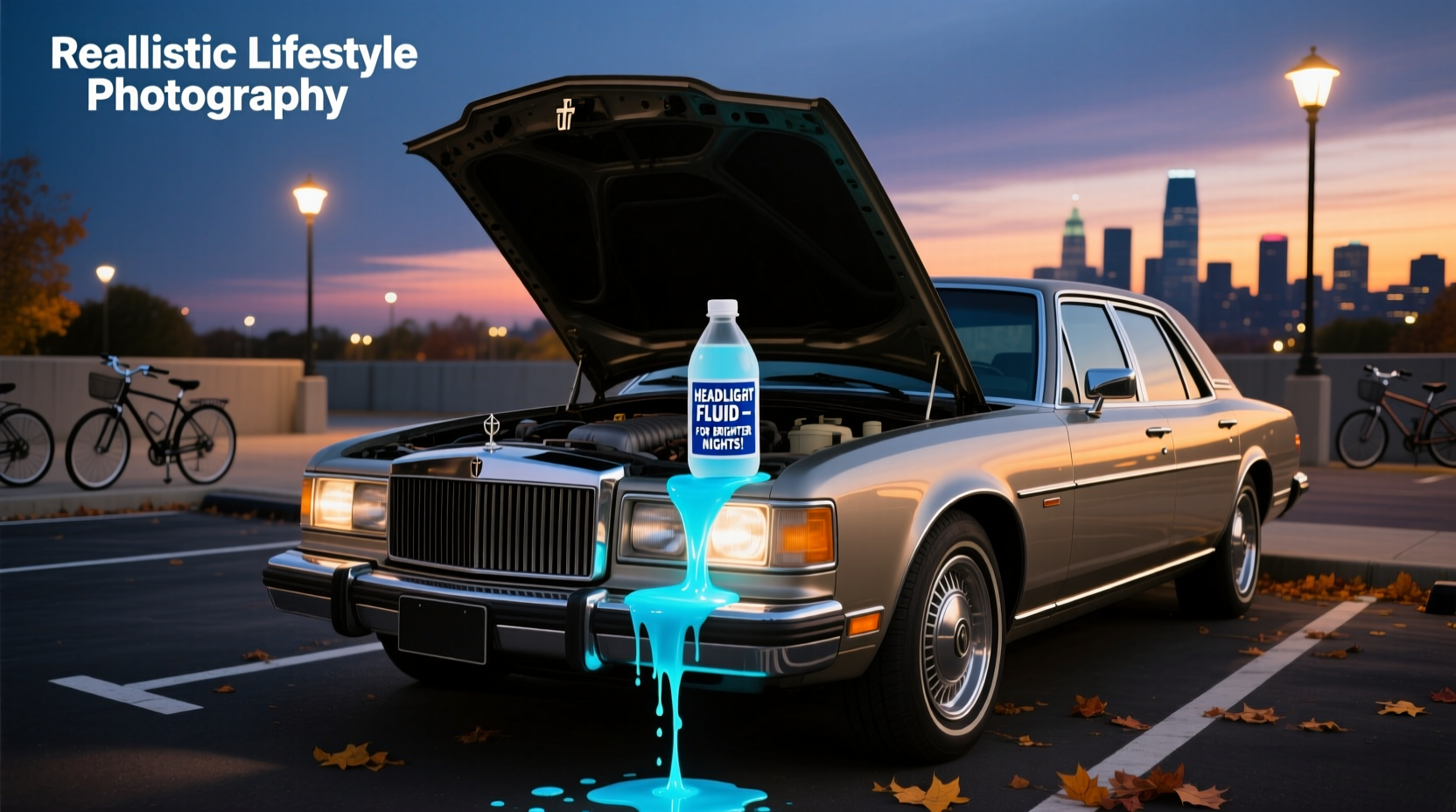
🔧 The term 'headlight fluid' is not a real automotive product—it's an internet joke poking fun at car owners who misunderstand vehicle maintenance. If you've searched for 'headlight fluid' or seen products labeled as such online, you're not alone. Many consumers are misled by humorous listings or parody items sold under names like 'headlight repair liquid' or 'headlight restoration fluid.'1 But here’s the truth: no official car manufacturer includes a 'headlight fluid' in any service manual, and there's no reservoir under your hood labeled for it. This article explains the origins of the headlight fluid joke, why it persists, how it affects consumer behavior, and most importantly—what you should actually do when your headlights go foggy or yellowed.
Understanding the Headlight Fluid Myth
The idea of 'headlight fluid' stems from a long-standing prank often played on new drivers or unsuspecting car owners. Someone might ask, “When was the last time you checked your headlight fluid?” knowing full well that no such thing exists. It’s similar to asking someone to top off their 'windshield wiper antifreeze' (which also isn’t standard) or check the 'air in the tires with nitrogen only.'
Despite being a joke, this myth has gained traction online due to the rise of e-commerce platforms where sellers list fictional or satirical products. A quick search shows numerous results for 'headlight restoration liquid,' 'car headlight repair fluid,' and even bulk packaging like 600ml or 800ml bottles—all implying some sort of chemical solution can fix cloudy headlights.2 While some of these liquids contain actual polymers or sealants used in real restoration kits, many are marketed misleadingly, capitalizing on confusion.
Why Do People Believe in Headlight Fluid?
There are several reasons why the headlight fluid joke continues to fool people:
- Lack of automotive knowledge: Not every driver understands how modern headlights work. With complex systems like HID, LED, and adaptive lighting, it's easy to assume there's a fluid involved in maintaining brightness.
- Misleading product titles: Online marketplaces often allow vague or exaggerated product naming. Terms like 'restoration fluid' sound technical and convincing, especially if paired with before-and-after photos.
- Social reinforcement: Memes, forum jokes, and viral videos have normalized the concept. Some YouTube videos even pretend to demonstrate 'how to refill headlight fluid,' further blurring the line between satire and reality.
This confusion creates real-world consequences. Drivers may delay proper maintenance, waste money on ineffective sprays, or feel embarrassed about asking basic questions.
Real Causes of Faded or Cloudy Headlights
Unlike the fictional need for 'fluid,' real headlight degradation comes from physical and environmental factors:
- UV Exposure: Prolonged sunlight breaks down polycarbonate lenses, causing oxidation and hazing.
- Oxidation: Over time, oxygen and pollutants react with the plastic surface, turning it yellow or brown. \li>
- Scratches and abrasions: Road debris, improper cleaning, or automatic car washes can create micro-scratches that scatter light.
- Moisture ingress: Cracked seals allow water inside the housing, leading to condensation and internal fogging.
None of these issues are solved by pouring a liquid into a non-existent reservoir. Instead, they require direct treatment of the lens surface or mechanical repair.
What Actually Works for Headlight Restoration?
If your headlights are dim, yellowed, or hazy, here are proven methods—none of which involve 'fluid' injection:
1. DIY Sanding and Polishing Method ✅
This is one of the most effective ways to restore clarity. It involves progressively finer grits of sandpaper followed by polishing compound:
- Wash and dry the headlight thoroughly 🧼
- Mask off surrounding paint with tape 📎
- Wet-sand with 600-grit paper to remove deep oxidation
- Progress to 1500- and 3000-grit for smoothing
- Buff with a polishing compound using a microfiber pad or rotary tool ⚙️
- Apply a UV-protective sealant to prevent rapid re-oxidation ✨
This method can restore up to 90% of original clarity and lasts 1–3 years depending on climate and exposure.3
2. Chemical Restoration Kits 🔧
Many kits sold online combine abrasives, cleaners, and protective coatings. These are different from 'liquid-only' solutions because they include physical tools like pads, cloths, and sanding films. Look for kits that specify multiple steps—not just a spray-on application.
Effectiveness varies based on severity of damage. Light haze may respond well to chemical treatments alone, but heavily oxidized lenses still require manual sanding.
3. Professional Detailing Services 🏭
Auto detailers use industrial-grade polishers and high-quality sealants. They can achieve longer-lasting results than DIY methods, especially when combined with ceramic coatings.
Cost typically ranges from $75 to $150 per pair, depending on location and vehicle type. For older vehicles or those in sunny climates, professional service offers better durability.
4. Replacement Lenses or Assemblies 🚗
In cases of deep cracking, severe yellowing, or moisture buildup inside the housing, replacement may be the best option. OEM or aftermarket units vary in price from $50 to $300+ per side.
While more expensive upfront, new assemblies provide perfect clarity and eliminate future restoration needs—at least for several years.
| Restoration Method | Cost Range | Time Required | Durability | Best For |
|---|---|---|---|---|
| DIY Sanding & Polish | $15–$40 | 1–2 hours | 1–3 years | Budget-conscious owners, moderate oxidation |
| Chemical Kit (No Sanding) | $20–$35 | 30–60 min | 6–18 months | Light haze, temporary fix |
| Professional Service | $75–$150 | 1–2 hours (shop time) | 2–5 years | Premium finish, busy owners |
| Lens Replacement | $100–$600+ | 1–3 hours | 5+ years | Severe damage, cracked housings |
Are 'Headlight Repair Liquids' Completely Useless?
Not all products labeled as 'headlight fluid' are scams. Some contain UV-blocking sealants or polymer-based coatings designed to be applied after sanding. However, they are not standalone fixes. Think of them like sunscreen for your headlights—they help preserve clarity but don’t reverse existing damage.
Be cautious of claims like:
- “Just spray and shine”
- “No sanding needed”
- “Instant permanent fix”
These are red flags. Real restoration requires surface preparation. Any liquid claiming to penetrate sealed headlight assemblies without disassembly is likely ineffective.
How to Spot Fake or Misleading Products Online
When shopping for headlight restoration supplies, watch for these warning signs:
- Vague descriptions: Phrases like “magic formula” or “secret ingredient” instead of listing components.
- No instructions: Legitimate kits explain step-by-step usage. If it skips sanding or prep, it’s probably not thorough.
- Over-the-top before/after images: Photos that look digitally enhanced or lack context (e.g., no model/year of car).
- Price too good to be true: Extremely cheap 800ml bottles shipped from overseas may contain nothing more than water and dye.
Always read independent reviews and look for video demonstrations showing full process—not just the final wipe-down.
Regional Differences in Headlight Maintenance
Climate plays a major role in headlight longevity:
- Sunny regions (Arizona, Spain, Australia): UV radiation accelerates oxidation. Restorations may last less than a year without UV sealant.
- Cold climates (Canada, Scandinavia): Salt and road chemicals increase corrosion risk. Seals degrade faster, allowing moisture inside.
- Tropical areas (Southeast Asia, Florida): High humidity and frequent rain promote mold growth inside housings if seals fail.
In these environments, regular inspection and preventive care are essential. Even newly restored headlights benefit from wax coating or garage storage when possible.
Common Misconceptions About Headlight Care
Beyond the 'fluid' myth, other misunderstandings persist:
- Myth: All foggy headlights need restoration.
Reality: Internal fogging due to broken seals requires drying or resealing—not polishing the outside. - Myth: Toothpaste works as well as professional compounds.
Reality: While mildly abrasive, toothpaste lacks consistency and can leave swirl marks. It’s not formulated for plastic optics. - Myth: Clear nail polish protects headlights.
Reality: It yellows quickly and peels within weeks. Use proper automotive-grade UV sealant instead.
How to Verify Information Before Buying
To avoid falling for marketing gimmicks:
- Check manufacturer documentation: Your owner’s manual won’t mention 'headlight fluid.'
- Search reputable auto forums (e.g., Reddit r/MechanicAdvice, CarTalk communities) for user experiences.
- Look for third-party testing videos that compare methods side-by-side.
- Avoid products that rely solely on stock images or influencer endorsements without technical details.
When in doubt, consult a local mechanic or detailer. Most will gladly show you the difference between external haze and internal moisture.
Conclusion: The Truth Behind the Joke
The 'headlight fluid' joke persists because it highlights a gap in public understanding of automotive systems. While harmless as a prank, it becomes problematic when commercialized through misleading product listings. Real headlight restoration requires physical intervention—whether sanding, sealing, or replacing—not pouring magic liquids into imaginary tanks.
By understanding the science behind headlight degradation and focusing on proven techniques, you can maintain safe night visibility and extend the life of your vehicle’s lighting system. Don’t let a joke cost you time or money—know what works, what doesn’t, and how to tell the difference.
Frequently Asked Questions
- ❓ Can I use WD-40 to clean my headlights?
- No, WD-40 is not designed for plastic lenses. It may temporarily improve clarity but leaves a greasy residue and degrades plastic over time.
- ❓ Is there any situation where 'headlight fluid' would make sense?
- No. Headlights are sealed units. There is no functional fluid inside modern halogen, LED, or HID assemblies that requires refilling.
- ❓ How often should I restore my headlights?
- Every 2–5 years depending on climate and exposure. Vehicles in sunny or salty environments may need it more frequently.
- ❓ Can I prevent headlight yellowing?
- Yes. Applying a UV-resistant clear coat after restoration and parking in shade or garages helps significantly.
- ❓ Are headlight restoration kits worth it?
- For mild to moderate oxidation, yes—especially if they include sanding materials and sealant. Avoid single-solution kits promising instant results.





 浙公网安备
33010002000092号
浙公网安备
33010002000092号 浙B2-20120091-4