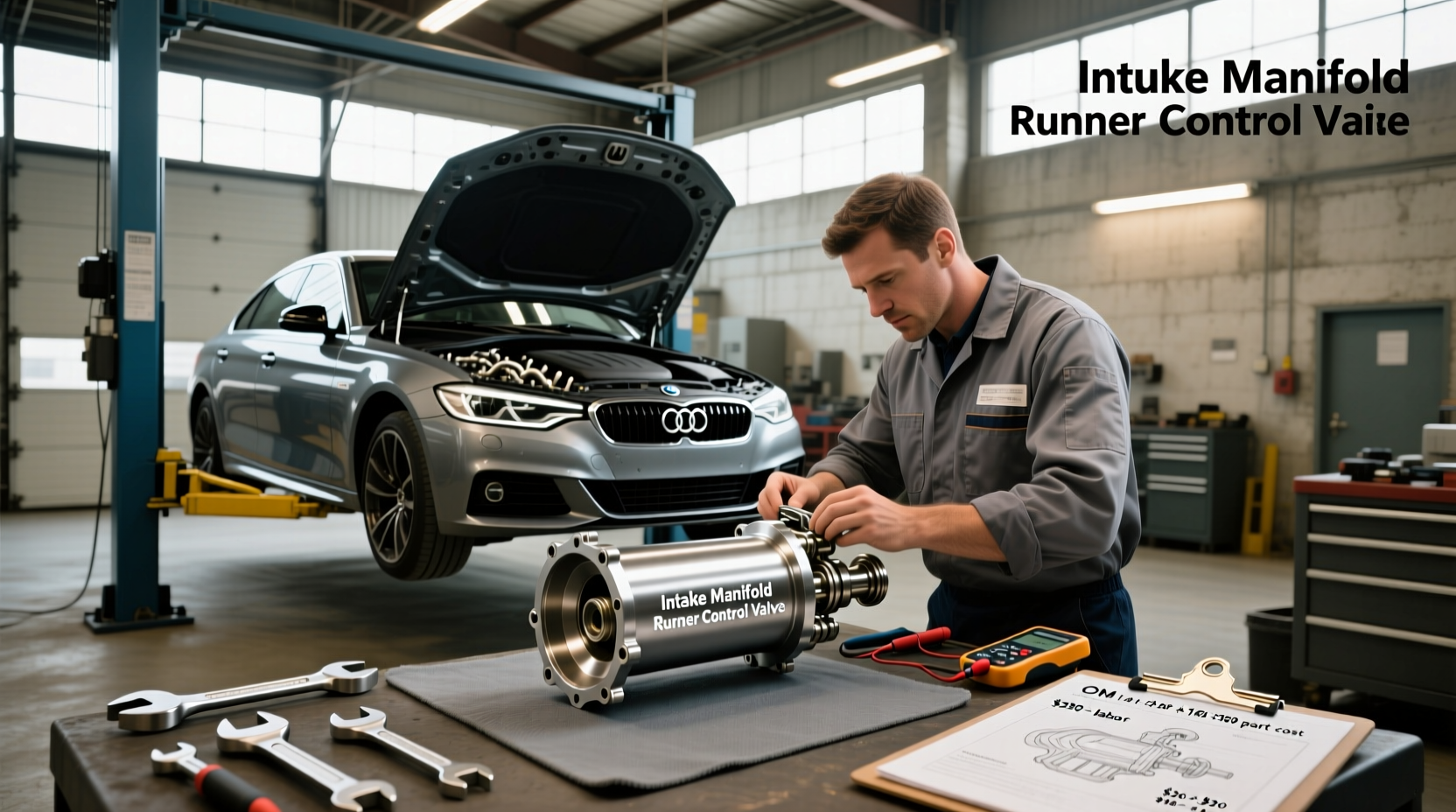
If you're searching for intake manifold runner control valve replacement cost, you're likely facing a check engine light, rough idling, or poor fuel economy—and want to know what to expect before visiting a mechanic. The total cost typically ranges from $250 to $650, with parts averaging $80–$200 and labor $150–$450 depending on vehicle make and accessibility ⚙️. This guide breaks down everything affecting price, common symptoms of failure, and whether a DIY approach could save you hundreds.
What Is an Intake Manifold Runner Control (IMRC) Valve?
The intake manifold runner control (IMRC) valve is a crucial component in modern engines equipped with variable intake manifolds ✨. Its primary function is to regulate airflow into the engine by adjusting the length of the intake runners based on engine speed and load 🔧. At low RPMs, longer runners improve torque; at higher RPMs, shorter runners boost horsepower. This dynamic adjustment enhances both performance and fuel efficiency.
The IMRC system usually consists of flaps inside the intake manifold, a control valve (often vacuum-operated), and an electronic solenoid that receives signals from the engine control module (ECM). When the ECM detects specific driving conditions, it activates the solenoid, which directs vacuum pressure to open or close the flaps via the control valve.
Over time, carbon buildup, vacuum leaks, or mechanical wear can cause the valve or its actuator to stick or fail. When this happens, the engine can't optimize airflow, leading to drivability issues and triggering diagnostic trouble codes like P2004, P2005, or P2015.
Common Symptoms of a Failing IMRC Valve
Recognizing early signs of IMRC valve problems can help prevent further engine damage and reduce repair costs ❗. Here are the most frequently reported symptoms:
- Check Engine Light (CEL): One of the first indicators. Codes such as P2004 (Intake Manifold Runner Control Stuck Open) are directly linked to IMRC issues 🔍.
- Reduced Engine Performance: You may notice sluggish acceleration, hesitation during throttle application, or lack of power at certain RPMs ⚡.
- Poor Fuel Economy: Since the engine isn’t optimizing air intake, fuel combustion becomes less efficient, increasing consumption 📈.
- Unusual Noises: A fluttering, tapping, or whistling sound under the hood—especially during acceleration—can indicate a stuck or loose flap inside the manifold 🌐.
- Rough Idling or Stalling: Improper air distribution can disrupt idle stability, particularly when the engine is cold ❄️.
Ignoring these symptoms can lead to long-term engine inefficiency or even damage to other components like sensors or catalytic converters.
Factors That Influence Replacement Cost
The final price for replacing an intake manifold runner control valve isn't fixed—it varies significantly based on several key factors:
1. Vehicle Make and Model 🏭
Different vehicles have vastly different engine layouts. For example:
- In many Ford trucks (e.g., F-150 with 4.6L/5.4L V8), the IMRC system is prone to failure due to plastic flaps breaking. Replacing the entire manifold may be necessary, pushing costs toward $600+.
- Chrysler and Dodge models (like the Dodge Avenger or Chrysler Sebring) often use replaceable solenoid valves, making repairs cheaper (~$250–$400).
- Volkswagen and Audi TDI engines sometimes require removal of multiple components just to access the valve, increasing labor time.
- BMW and Jeep models may integrate the valve into the manifold assembly, meaning a full replacement rather than a simple valve swap.
2. Part Design: Replaceable Valve vs. Integrated Manifold
This is one of the biggest cost drivers:
- Standalone Valve/Solenoid: On some vehicles, only the solenoid or vacuum control valve needs replacement. These parts typically cost $50–$150 and take 1–2 hours to install.
- Integrated Flap Actuator: In others, the actuator motor is built into the manifold. If it fails, the whole intake manifold must be replaced—a part that can cost $300–$800 alone.
| Vehicle Example | Typical Part Cost | Typical Labor Cost | Total Estimated Cost |
|---|---|---|---|
| Ford F-150 (4.6L) | $350 (manifold) | $400 (4 hrs) | $750 |
| Dodge Avenger (2.4L) | $90 (valve) | $200 (2 hrs) | $290 |
| BMW X5 (3.0L) | $180 (valve) | $350 (3.5 hrs) | $530 |
| VW Tiguan (2.0T) | $120 (solenoid) | $280 (2.5 hrs) | $400 |
| Jeep Patriot (2.4L) | $220 (actuator) | $300 (3 hrs) | $520 |
3. Labor Rates by Region and Shop Type 👥
Labor rates vary widely across regions and service providers:
- National averages: $90–$150 per hour.
- Dealerships: Often charge premium rates ($130–$180/hr) but offer OEM parts and factory-trained technicians.
- Independent shops: Typically more affordable ($80–$120/hr), especially if they specialize in your vehicle brand.
- Mobile mechanics: Services like YourMechanic may offer flat-rate pricing with lower overhead.
4. Additional Repairs Needed
Sometimes, what appears to be an IMRC valve issue turns out to be related:
- Cracked vacuum lines feeding the valve
- Failed IMRC actuator motor
- Carbon-clogged flaps requiring cleaning instead of replacement
- ECM software glitches fixable via reprogramming
A thorough diagnosis is essential to avoid unnecessary replacements.
Can You Drive With a Bad IMRC Valve?
You can drive with a faulty IMRC valve—but not without consequences ⚠️. While the engine will still run, it operates in a “limp mode” where airflow isn’t optimized. This leads to:
- Increased emissions
- Higher fuel consumption
- Potential misfires or stalling
- Risk of failing emissions testing in regulated states
If the flaps inside the manifold break off, they could be sucked into the cylinders, causing catastrophic engine damage. Therefore, while short-distance driving might be safe temporarily, prompt repair is strongly advised.
How Long Does the Replacement Take? ⏱️
Replacement time depends heavily on engine design:
- Simple cases: 1–2 hours (e.g., accessible solenoid on inline-4 engines).
- Moderate complexity: 2.5–4 hours (V6/V8 engines with limited space).
- Complex jobs: 4–6 hours (when intake manifold removal is required).
Some vehicles require recalibration or relearning procedures after installation. Always confirm whether your model needs a post-repair reset using a scan tool.
DIY Replacement: Is It Worth It? 🛠️
For experienced DIYers, replacing the IMRC valve can save $150–$400 in labor costs. However, consider these points before starting:
Pros of DIY:
- Significant savings on labor
- Ability to inspect related components (vacuum lines, connectors)
- Opportunity to clean carbon deposits while accessing the area
Cons of DIY:
- Requires intermediate-to-advanced mechanical skills
- Special tools may be needed (torque wrench, OBD2 scanner)
- Risk of damaging electrical connectors or vacuum hoses
- Incorrect installation can trigger new codes or performance issues
Steps for a typical replacement:
- Disconnect the battery to prevent electrical shorts.
- Remove air intake box or ducting for access.
- Locate the IMRC valve (usually on or near the intake manifold).
- Disconnect electrical connector and vacuum lines.
- Remove mounting bolts and extract old valve.
- Install new valve, reconnect all lines, and torque bolts properly.
- Reconnect battery and clear error codes with a scan tool.
- Test drive and verify no warning lights return.
Tutorials on platforms like YouTube can provide visual guidance specific to your model. Search for “how to replace intake manifold runner control valve [your year/make/model]” for step-by-step videos.
How to Diagnose IMRC Problems Accurately 🔍
Before spending money on parts, ensure the problem is actually the valve:
- Scan for Trouble Codes: Use an OBD2 scanner to check for P2004, P2005, P2015, or manufacturer-specific codes.
- Visual Inspection: Look for cracked vacuum lines, loose connections, or oil contamination.
- Actuator Test: Apply vacuum manually using a hand pump to see if the valve moves smoothly.
- Listen for Movement: Have someone cycle the system while you listen for clicking or movement sounds.
- Check for Carbon Buildup: Remove the valve and inspect internal passages for blockages.
Sometimes, the issue isn’t the valve itself but a failed sensor or wiring problem. A multimeter can test solenoid resistance—compare readings to specifications in your service manual.
Where to Buy Replacement Parts 🛒
You don’t need to buy from the dealership to get reliable parts:
- OEM-equivalent brands: Dorman, Standard Motor Products, and ACDelco offer high-quality replacements at lower prices.
- Aftermarket options: Available through auto parts stores like AutoZone or CarParts.com—with online ordering and in-store pickup.
- Used parts: Salvage yards or online marketplaces may offer tested units, but reliability varies.
Always match the part number to your VIN or engine type. Installing the wrong valve can cause improper operation or trigger false codes.
Preventing Future IMRC Issues 🧼
To extend the life of your IMRC system:
- Use high-quality gasoline with detergent additives to reduce carbon buildup.
- Change engine oil regularly—sludge and blow-by gases contribute to clogging.
- Inspect vacuum lines during routine maintenance.
- Address check engine lights promptly to avoid compounding issues.
Myths and Misconceptions About IMRC Valves ❓
Let’s clarify some common misunderstandings:
- Myth: “Replacing the IMRC valve always requires removing the intake manifold.”
- Truth: Only true on certain models. Many allow valve replacement without full disassembly.
- Myth: “A P2004 code means I need a new manifold.”
- Truth: It indicates the runner is stuck open—but the cause could be vacuum leak, wiring, or actuator failure.
- Myth: “This repair isn’t urgent because the car still runs.”
- Truth: Long-term neglect risks engine damage and reduced efficiency.
When to Seek Professional Help ✅
Consider professional assistance if:
- You’re unsure about diagnosing the root cause.
- The repair requires intake manifold removal.
- Your vehicle needs ECU recalibration after replacement.
- You lack the proper tools or workspace.
A certified technician can perform a comprehensive inspection and ensure the fix lasts.
Final Thoughts
The intake manifold runner control valve replacement cost varies between $250 and $650 on average, but can exceed $800 on complex engines. Understanding your vehicle’s specific setup, recognizing early symptoms, and choosing between DIY and professional repair are key to managing expenses effectively. Always prioritize accurate diagnosis over guesswork, and remember that timely intervention prevents more costly damage down the road.
Frequently Asked Questions
- Can I drive with the intake manifold runner control valve stuck open?
- Yes, but with reduced performance, increased fuel consumption, and potential long-term engine risks. Repair should not be delayed.
- Is a P2004 code expensive to fix?
- Not necessarily. While some vehicles require manifold replacement (~$700+), others only need a $90 solenoid and minor labor. Diagnosis is critical.
- What does the intake manifold runner control valve do?
- It adjusts the length of intake runners to optimize airflow based on engine speed, improving torque at low RPM and power at high RPM.
- How long does it take to replace an IMRC valve?
- Between 1 and 6 hours, depending on vehicle design. Most replacements take 2–4 hours.
- Can I clean the IMRC valve instead of replacing it?
- Sometimes. If carbon buildup is the issue, cleaning may restore function. However, mechanical wear or broken flaps require replacement.




 浙公网安备
33010002000092号
浙公网安备
33010002000092号 浙B2-20120091-4